Amelia H. Lovelace
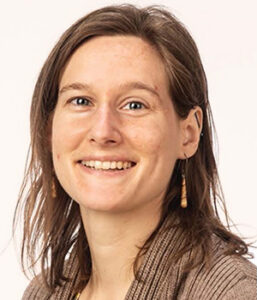
Dr. Amelia H. Lovelace (she/her) is a postdoctoral researcher in Dr. Wenbo Ma‘s group at The Sainsbury Laboratory (TSL). Her current research focuses on characterizing effector proteins from the citrus greening pathogen ‘Candidatus Liberibacter asiaticus’. In general, she is interested in pathogenic bacterial interactions with plants. Amelia is an assistant feature editor for MPMI and enjoys sharing her passion for science communication with others.
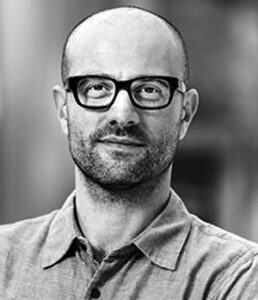
Prof. Cyril Zipfel (he/him) is chair of Molecular and Cellular Physiology at the University of Zurich, Switzerland, and is a senior group leader at The Sainsbury Laboratory (TSL) in Norwich, UK. In general, his group studies immunity and signaling mediated by plant receptor kinases. He has been widely recognized for his contributions to the field of MPMI, including being elected to the European Molecular Biology Organization (EMBO) and being awarded the Charles Albert Shull Award from the American Society of Plant Biologists (ASPB) and the Tsuneko & Reiji Okazaki Award from Nagoya University, Japan.
I had the pleasure of interviewing Cyril. We discussed the evolution of his research interests throughout his career, as well as his approach to mentorship and his personal life. Cyril is a keynote speaker for the IS-MPMI Congress Meeting in Rhode Island, USA. The title of his talk is “Connecting the Dots of Surface Immune Signaling.”
Background
In 2018, he moved his group to the University of Zurich, Switzerland, where he is now professor of Molecular and Cellular Plant Physiology. His lab currently supports two-dozen members across two institutes and countries (TSL and UZH). He describes his lab as more of a signaling lab than an MPMI lab, as this move has allowed him to participate in more interdisciplinary research. He currently collaborates with many colleagues, ranging from structural biologists to chemists to systems biologists, who have given him a more holistic approach to studying plant signaling.
Interview Summary
Prof. Zipfel’s success has been due, in part, to the tremendous support from his mentors. When asked how they have influenced his own mentorship style, Cyril stated that he takes aspects that work for him and his group. In academia, there, unfortunately, is generally little management training, and of the courses he has taken, he has learned to pick what fits best for him and his group based on an individual’s personality and project. Everyone has different needs, thus it is important to tailor your mentorship to each person. Now that his lab has expanded to around 25 members, he breaks down his group into 5 subgroups based on research topic. Within each group there is no team leader, but he always pairs a Ph.D. student with a postdoc to ensure that the students have someone on which they can rely. Given that his team is split between two different locations, he has subgroup meetings every other week and a long weekly lab meeting with his entire group.
It’s hard to believe that it has been almost 20 years since publishing his FLS2 Nature paper. What’s even more surprising is how much we still don’t know about plant innate immunity!
When asked to comment on this and identify research directions that he finds most exciting, Cyril stated that his lab is more interested in receptor kinases in general, which, yes, are involved in plant immunity, but are also involved in regulating other stress responses. There are still many mechanisms yet to be explored. This includes investigating the biochemical and structural biology of these receptor kinases, signaling and regulation of plant immunity cross-talk, execution function of immunity, stress-regulating signaling peptides, translational application of these receptors, and synthetic biology or bioengineering of these signaling pathways. His lab members are kept busy exploring all these diverse avenues. Cyril is impressed by the undergraduate students whom he could mentor in recent years as part of the UZH International Genetically Engineered Machine (iGEM) team. As many of these students are traditionally more attracted to biomedicine, Cyril gets joy out of showing them the power that plants can provide to the field of synthetic biology. As for what the future holds for plant signaling, he remarked that previous findings have used crude methods to answer general questions. He hopes to answer these same questions but in a more precise way. For instance, on a single-cell level how does one cell activate a stress response and signal to a neighboring cell? Developing technologies to achieve this precision will be key to advancing the field of plant immunity.
When asked if he has any advice for early-career researchers, he stated that there were three aspects in one’s work life that are important for success: 1) Having a project or research topic that excites you; 2) working with a mentor or group that you respect and that respects you; and 3) having a safe environment outside of work that can fulfill your other needs in life. Ideally, you want to have all three, but he cautions that if you have to compromise to only compromise on one. Which one you choose to compromise on depends on your own personality and needs. Prof. Zipfel is not immune to imposter syndrome either. He reflects on his feelings of early success in his career and remembers worrying whether he was just lucky. These thoughts fueled him to push further, and his work has provided a landscape for further discovery of plant immunity and plant signaling. Cyril strives for balance in his personal life. He enjoys cooking every day to decompress after work. He tries to not work on weekends (except when there is a tight deadline) and uses this time to listen to live music and explore cities around the world.