
Ani Chouldjian and Jennifer D. Lewis
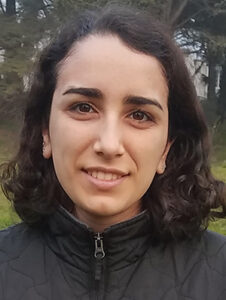
Ani Chouldjian is currently a senior at the University of California, Berkeley, majoring in microbial biology. She is interested in plant–microbe interactions, infectious diseases, and genetics. After graduation she wishes to take a year or two off from school to pursue research opportunities and later enter a microbiology and immunology Ph.D. program.
Jennifer Lewis is a principal investigator at the U.S. Department of Agriculture and an adjunct associate professor at UC Berkeley. Her lab studies the plant immune system and its response to the bacterial pathogen Pseudomonas syringae. The Lewis lab is committed to diversifying plant sciences. To encourage this, they are performing interviews with prominent scientists in the field to discuss their research and their perspectives on diversifying science.
Dr. Valerie M. Williamson
Dr. Valerie M. Williamson is a professor emeritus at UC Davis in the Department of Plant Pathology. Throughout her career at UC Davis, she has studied the Mi gene, a gene found in tomato, which confers resistance to root-knot nematodes, such as Meloidogyne incognita. M. incognita infects thousands of crops and forms biotrophic interactions with host roots. These nematodes establish feeding sites on tomato plant roots and release chemicals that induce nuclear division of root cells without cytokinesis, leading to the formation of enlarged cells called galls. The Mi gene, like other resistance genes, has conserved leucine-rich repeat (LRR), leucine zipper (LZ), and nucleotide binding-site (NBS) domains, which allow for pathogen recognition and signal transduction; therefore, tomato plants that have this gene are resistant to root-knot nematodes.
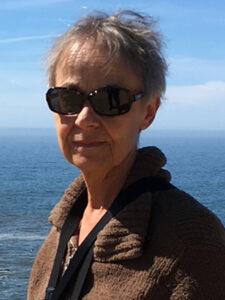
Dr. Williamson’s greatest scientific achievement was cloning the Mi gene, which allowed for its insertion into plants that are susceptible to root-knot nematode infection. This gene was discovered in a wild tomato plant and had other “bad” genes associated with it. Cloning the gene allowed Dr. Williamson’s lab to insert the Mi gene, alone, into other plant genomes to see it could confer resistance to nematodes. When asked why she thinks her research is important for the future, Dr. Williamson said,
This root knot nematode is all over the world, every continent has it, except Antarctica; it’s a huge problem in agriculture everywhere, and the way it’s controlled is with pesticides. And, they’re nasty pesticides, and there is a need to come up with new control measures. So, modifying [plants] with the Mi gene would be another control. Another project that I’ve been working on for the past 10 years is trying to figure out what attracts nematodes to roots. If you could understand what attracted them to roots and repel them, or trap them so that they are not attracted to roots anymore, that would be another way of controlling them.
Dr. Williamson’s discovery and cloning of the Mi gene was monumental; however it took some time for her to find what she is truly passionate about. Dr. Williamson grew up in a town in New Hampshire and had never planned to become a plant pathologist. Instead, her plan had been to become a medical technician. She said, “I was assuming that I would probably do some kind of medical technician type of work, because that’s the only thing I knew about that would be a good career. I loved biology, and I had always loved biology.”
As a first-generation college student, she attended Northeastern University for her undergraduate education, where she participated in a cooperative education program. The program encompassed six months of schooling and six months of clinical experience that focused on blood research. However, this type of research did not interest her. She said, “I did some karyotyping of human chromosomes, drawing blood, and analyzing blood—but I didn’t really like that.”
While looking for other research opportunities during her undergraduate education, Dr. Williamson was discouraged at times from pursuing a career in science and faced gender-based discrimination. She said, “Yes, there have been discouraging things. When I was an undergraduate and was doing these research stints in different places, there was one place I went to. They said that they had never had a woman before, and if they hired me, they would have to put in a new restroom.”
Although she was discouraged at times, Dr. Williamson did not give up. After graduation, she married a man in the army and moved to Alaska with him, where she obtained a job at the University of Alaska’s Institute of Marine Science. There she did research on trace metal contaminants of sea water; however, she was more interested in the biological samples that her colleagues were collecting. She said, “The people around me were collecting biological samples, and I thought that was much more interesting. I was frustrated because I was really interested in science, but I couldn’t do what I wanted to do. When you’re a technician, you can’t do what you want to do. You have to do what you’re assigned.”
Wanting to learn more about research, Dr. Williamson applied and was accepted into a biochemistry graduate program at UC Davis. Her thesis work was on RNA polymerase in Bacillus subtilis, and she received her Ph.D. degree in biochemistry in 1978. After obtaining her Ph.D. degree, Dr. Williamson became a postdoctoral fellow at the University of Washington in Seattle, where she worked on alcohol dehydrogenase in yeast. She said, “I got excited about alcohol dehydrogenase, so I cloned the gene that encodes it, which turned out to be very useful.” Alcohol dehydrogenase is an enzyme that converts acetaldehyde into ethanol during glucose fermentation in yeast. It is used in industry to reduce ketones into chiral alcohols.
After completing her postdoc, Dr. Williamson accepted a job in Dublin, CA, at a company called Arco Plant Cell Research Institute. During this time, oil was scarce due to the Cold War, and a lot of effort was being put into biofuel production. While there, she continued studying yeast and alcohol dehydrogenase, because the company was interested in fermentation. While working at Arco Plant Cell Research Institute, Dr. Williamson noticed that her colleagues were working on plants, and so she decided to start a project on plants as well. She said, “The other people hired there were doing research on plants, so I decided to start a project on plants. I started looking into what I would like to do. I knew that I liked nematodes, because I had met some C. elegans researchers in Seattle, and I looked into plant pathogens and thought I want to do something on plant–pathogen interactions.” However, when oil prices lowered, the company decided not to pursue agricultural research anymore. The company was sold, and at the same time, a position opened up in the Department of Nematology at UC Davis.
At the time, Dr. Williamson was not confident in her abilities to become a faculty member. She said, “I did not plan on being a faculty member. I thought that was something that I could not handle. There weren’t many role models of women being successful in it. They were mostly men then.” However, when Dr. Williamson applied for the UC Davis faculty position, she got the job.
When she started working at UC Davis, Dr. Williamson did feel the pressure of being one of the only women in a faculty position. She said, “When I first started at UC Davis, a lot of the committees I would get put on I would be the only woman there. I would be stuck onto all these committees because they wanted to have a woman there. That’s kind of hard on the woman or minority to be the only one, and you also get stuck with a lot of stuff.” Times did improve, however; Dr. Williamson persevered and found what she was most passionate about. She has been doing research as a UC Davis faculty member on the Mi gene and root-knot nematodes ever since.
When asked if she sees growth in the inclusion of women and minorities in STEM, she said,
It’s improved enormously since I started, and I think the women are holding their own really well. It’s not like we had to put them there so that we could have more women. We have a better proportion [of women]. They are really making major contributions and that helps too, because then you get more [women] in. They see that women can do this, and they can do a really good job in this.
There are a lot of young people who don’t realize that [research] is a career option, and for them to see it, they need to be given chances in high school or early undergrad [courses] to just see what science is.
Minorities have been harder to get in science. Maybe they are still at the stage where they need to be exposed more. Interacting with high-school teachers is a good way [and] having summer programs where they come in and look at labs and hang around the labs. It’s really good to have undergraduates in the lab, especially [students] who have not been exposed to science and have these programs where they come in and make friends with people who have been more exposed to science.
Although Dr. Williamson is now retired, she continues to perform research. Mi gene-resistant nematodes have been found throughout California; therefore, Dr. Williamson is initiating efforts to find differences between resistant and nonresistant nematodes through comparison of their genomes.
In her free time, Dr. Williamson likes to travel, be outside, and hike along the coast at Point Reyes and Bodega Bay. She also likes to garden because she can “look at [her] plants and think about their diseases.”