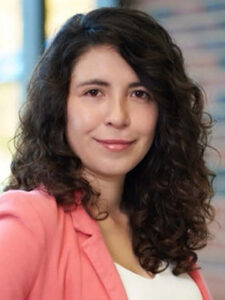
Sandra Gomez is a Ph.D. candidate at Purdue University working on effector proteins in Zymoseptoria tritici. Her research integrates computational biology with molecular plant pathology techniques. In addition to her primary work, she has collaborated on projects involving comparative genomics of extremophilic fungi within Dothideomycetes, isothermal amplification methods for pathogen detection, and transcriptomics analysis of Phyllachora maydis. Alongside her Ph.D. degree, Sandra is earning a concentration in computational life sciences. Her passion for bioinformatics led her to a co-op internship in computational biology at Corteva AgriscienceTM, where she worked for six months under the supervision of Dr. Achal Rastogi on the Biologicals and Natural Product Discovery team. This experience played a key role in shaping her career path. She interviewed Dr. Rastogi to gain insights into his perspective on the career transition from academia to industry and the advice he has to offer to the new generation of scientists.
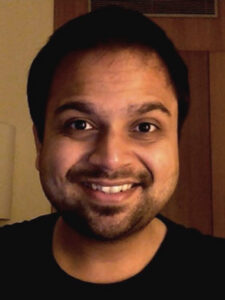
Dr. Achal Rastogi is a senior data scientist at Corteva AgriscienceTM. He holds a Ph.D. degree in bioinformatics from Ecole Normale Supérieure, France, and an M.S. degree in bioinformatics from Jamia Millia Islamia, India. His professional journey includes significant roles at Corteva, ENS, Genoscope (CEA), Personal Genomics Institute, ICGEB, and NIPGR. He has authored numerous high-impact publications in the field of microbial ecology and bioinformatics and has received several prestigious awards, including the Early Career Achievement Award from Corteva AgriscienceTM. Dr. Rastogi is dedicated to advancing microbial genomics and bioinformatics for crop health and is currently focusing on biologicals and natural product discovery.
1. Can you describe your path to becoming a senior data scientist at Corteva AgriscienceTM?
I have been fortunate to be able to work with some of the best people and research groups, and I owe my progress to their support. I began with an M.S. degree in bioinformatics from Jamia Millia Islamia in India, followed by a Ph.D. degree in bioinformatics from Ecole Normale Supérieure in France. My professional career started with research roles at the National Institute of Plant Genome and Research (NIPGR) and the International Center for Genetic Engineering and Biotechnology (ICGEB) in India, where I developed my skills in genomics data analytics and machine learning while working with plant and viral genomes. I then worked as a researcher at the Personal Genomics Institute in South Korea, focusing on human genomics. My Ph.D. and postdoctoral research at ENS and Genoscope (CEA) in France introduced me to microbial ecology and diatom biology and allowed me to delve into big data analytics. In 2018, I transitioned from academia to industry and joined Corteva as a bioinformatics scientist, where I advanced my learning toward sustainability and applied genomics and got the opportunity to explore insect biology. Currently, my research focuses on microbial genomics for biological and natural product discovery.
2. Can you tell us about your past and present research?
During my Ph.D. research with Prof. Leila Tirichine in Chris Bowler‘s lab at Ecole Normale Supérieure, Paris, I studied the interplay between genomics and epigenomics to understand how microbial populations adapt to changing environment. By analyzing the genetic diversity and population structure of Phaeodactylum tricornutum, a marine model diatom species, we demonstrated how genetic variations support adaptability. Concurrently, my work on histone modifications, specifically H3K27me3, supported the idea that epigenetic regulation enables rapid responses to environmental changes in this species. This integrative approach established a crucial crosstalk between stable genetic variations and flexible epigenetic changes, which together enhance the resilience and ecological success of diatoms. During my postdoctoral studies with Prof. Olivier Jaillon at Genoscope, I extended my research to study these complex interactions, leading to insights into the molecular functional preferences of microbial communities in the open ocean. After transitioning to industry, I have leveraged my bioinformatics and data science expertise in leading complex research projects aligned with sustainable crop protection and active discovery and product development.
3. What skills are most important in your role as senior data scientist?
In my role as a senior data scientist, several skills are crucial for success. First, a strong foundation in data science and computational biology is essential—this is what I bring to the table. Proficiency in programming languages like Python, R, and Bash, as well as experience with high-performance computing and cloud platforms is vital for handling large-scale genomics data. Leading projects requires effective management and leadership abilities for guiding teams and ensuring timely delivery of high-quality results. I work with large, dynamic, and interdisciplinary teams, so communication skills are necessary to collaborate and bring a clear understanding of complex scientific problems. Continuous learning and adaptability are also critical given the fast-paced nature of the field.
4. How do you define success in your role?
Success in my role at Corteva is defined by the expertise and impact that I bring to projects and the organization. This includes delivering high-quality, reproducible data and analysis workflows, advancing our understanding of microbial genomics, and accelerating the discovery of new biologicals and natural products. Success also means fostering collaboration across diverse teams, mentoring colleagues, and continuously improving our data science capabilities. Ultimately, it’s about driving innovation, achieving our research goals, and contributing to the broader scientific community while ensuring that our work translates into tangible benefits for our stakeholders and customers.
5. How do you stay current with developments in your field?
Big thanks to social media platforms and active academic social networks! It is easier than ever to follow what’s new—I read, attend seminars, and talk to people around me to stay current. I prioritize continuous education to update my skills time-to-time through formal and, many times, through self-guided training. Also, I mentor students and interns, which allows me to stay connected with fresh perspectives and emerging technologies in the field. Most importantly, active contributions and collaborations on scientific projects keep me curious, which I believe is the key driver that pushes me to learn more.
6. What are some common misconceptions about your field of expertise?
There are several common misconceptions about the field of bioinformatics. One major misconception is that it’s solely about coding and data analysis. While these are important aspects, bioinformatics requires a deep understanding of biological concepts and the ability to interpret complex biological data. Another misconception is that bioinformatics is only relevant to academic research. In reality, it has significant applications in various industries, including agriculture, healthcare, and pharmaceuticals, where it drives innovation and is key to product development. Also, some people think that bioinformatics is a solitary field, but collaboration is a key component, involving teamwork with scientists, researchers, and engineers. Bioinformatics is constantly evolving with new technologies and methodologies, requiring continuous learning and adaptation.
7. What advice would you give to people starting in the job market or looking for a career like yours?
The current job market is very dynamic, but the foundation of it hasn’t changed and will never change. Organizations need to attract talent to grow and stay competitive. Based on your career aspirations and training, seek out suitable open positions and apply with dedication. Pay close attention to job descriptions for the roles you aspire to, identify any skill gaps, and work on advancing your expertise. While focusing on your technical skills, invest time in improving your communication and soft skills. Last, be patient and persistent; the job search can be challenging, but staying focused and positive will help you find the right opportunity.
8. Can you share a memorable experience or achievement in your career?
I have had many! One that is close to my heart is the day I defended my Ph.D.—becoming a scientist had always been my dream. There was not a single crazy moment on that day, everything was blissful. I still clearly recall each moment of the day, from picking the right outfit to setting up the defense room to welcoming my thesis advisor and committee members. The presentation went smoothly, the audience was engaged, and I had a wonderful, thought-provoking discussion with the committee members—it all felt so right. Then, the president of the committee congratulated me on successfully obtaining a Ph.D. degree—that was the moment! We celebrated with a fantastic after-party, and I ended the day with a pleasant walk along the Seine with my wife.
9. Oh, by the way. How could people find you on social media?
I am active on LinkedIn and am always happy to connect.
10. Is there anything else you would like to share in your Spotlight? If so, what is it?
Drive yourself with a purpose for an enriching career journey. When deciding between career options weigh three things and maneuver accordingly. Do you love what you do? Does the world need what you do? Are you good at what you do?