Category: ​​​Interactions Archives​

Welcome New IS-MPMI Members

Bhuwan Abbot
Ademola Adewuyi
Priscilla Tijesuni Adisa
Durga Venkata Ravi Teja Amulothu
Chunpeng An
Victoria Armer
Claude Becker
Josh William Bennett
Miroslav Berka
Veronika Berková
Anika Damm
Axelle Eliane Deroubaix
Ruoqi Dou
Nawaraj Dulal
Denise Caldwell
Arianna Capparotto
Jijie Chai
Balakumaran Chandrasekar
Yi-Chen Chang
Sydney Chen
Yao Chen
Yi-Feng Chen
Paula Collado Cordon
Marina Soneghett Cotta
Ishani Shankar Das
Buddhika Amarasinghe Dahanayaka
Frederickson Entila
Tzion Fahima
Liz Florez
Patricia Gallardo
Man Gao
Dablieny Hellen Garcia Souza
Lorenzo Gastelum Mena
Susana Giraldo Ramirez
Libia Fernanda Gómez-Trejo
Caroline Gutjahr
Kira Gysel
Manisha Haag
Max Hayhurst
Sofia Hernandez Luelmo
Johannes Herpell
Mariana Herrera Corzo
Muhammad Taufiq Hidayat
Karen Vanesa Hobecker
Fernando Matias Hurtado, Sr.
Seonghan Jang
Zhihao Jiang
Linnan Jie
Christian-Frederic Kaiser
Janani Kalaivani Sivakumar
Shubhangi Kalla
Amandeep Kaur
Abul Khayer
RJong Hum Kim
Gregory Knight
Stanislav Kopriva
Darius Kosmützky
Christine Kraus
Jenna Krumbach
Tyler Marzucco Lee
Volker Lipka
Yinuo Liu
Yujing Liu
Zhaohui Liu
Juan Carlos Lopez-Agudelo
Shuyi Luo
Joy Lyu
Riikka Mäkilä
Christian Mandelli
Clemence Marchal
Ann-Kathrin Maurer
David Colin McLean
Athira Menon
Fantin Mesny
Federico Gabriel Mirkin
Ishani Mondal
Arijit Mukherjee
Pratchaya Pramoj Na Ayutthaya
Daniela Negrete-Moreno
Bruno Ngou
Dalton Ngu
Ha Truong Nguyen
Bridget O’Banion
Erika Ono
Oloyede Joshua Oyekanmi
Ceren Özdemir
Shaojun Pan
Sooyeon Park
Imani Pascoe
Micaela Peppino
Leon Pierdzig
Delphine Maya Pott
Ram Sevak Raja Kumar
Chloe Ramirez
Lindsey E. Reid
Julia Retzlaff
Clemence Andrea Rodney
Sophie Charlotte Sent
Raphael Schaal
Ina Schlathoelter
Monja Schmid
Mariana Schuster
Kyungyong Seong
Anjana Sharma
Chaonan Shi
Wei Shi
Smita Of Shrestha
Yang Si
Abram William Smith
Mitchell Sorbello
Zarah Sorger
Thomas Spallek
Marta Suarez-Fernandez
Oliver Sulkowski
Huang Tan
Chika Tateda
Rachel Tavares
Corinna Thurow
Olivia Tjahjono
Yerisf Carla Torres Ascurra
Natsuki Tsuchida
Colin Turnbull
Kerstin Unger
Andrea Vadillo Dieguez
Katarina Petra Van Midden
Renzo Villena
Liyuan Wang
Qi Wang
Shaogan Wang
Wei Wang
Zonghua Wang
Hua Wei
Siyuan Wei
Katherine Wheeler
Sarah Wolf
Hyeonu Yang
Heejin Yoo
Yanrong You
Ziyue Zeng
Leonie Margarete Zott​​

IS-MPMI Satellite Meeting: Building Careers in Molecular Plant-Microbe Interactions Through Effective Mentoring

2025Congress logo

 Date: July 13, 2025
Duration: 12:30-2:45 p.m.

Mentorship provides enormous support and guidance in building successful careers for mentees. The MPMI Assistant Feature Editors (AFEs) aim to provide a platform for early career attendees to learn and understand the effect of mentorship on career development. The Building Careers in Molecular Plant-Microbe Interactions Through Effective Mentoring satellite meeting is intended to serve as a space to explore the influence of mentorship in career growth. Participants will hear talks from academic and industry professionals, sharing the role of mentors in shaping their careers, how to approach a potential mentor, and different mentoring styles. The talks will be followed by small group discussions, including one mentor, that delve into the specifics of mentorship and fostering personal growth and career advancement. The workshop offers a unique opportunity for both mentors and mentees to network and build meaningful connections.

We acknowledge the support of organizations such as the Donald Danforth Plant Science Center, Terrana Biosciences, and Corteva AgriscienceTM. The workshop is offered at an affordable rate of $10. Registration is now open, and spots are limited. More details will be shared following registration.

For more details, please feel free to reach out to the organizing committee: Ruby Tiwari (AFE, MPMI Journal), Meenu Singla-Rastogi (AFE, MPMI Journal), Jawahar Singh (AFE, MPMI Journal), Ved Prakash (AFE, MPMI Journal), Ashley Nelson (graduate student, North Dakota State University), Namrata Jaiswal (research molecular biologist, USDA ARS, Purdue University).

2025 IS-MPMI Awards Announced

​IS-M​PMI is pleased to announce this year’s awards recognizing the outstanding service, scientific innovations, and significant accomplishments of our members. Congratulations to Roger Innes on receiving the Outstanding Achievement Award and Sebastian Eves-van den Akker on receiving the Early Career Achievement Award. Awardees will be recognized and celebrated at the IS-MPMI 2025 Congress.

Outstanding Achievement Award

This award recognizes an investigator who has a high international reputation as a research leader for groundbreaking and original research in the area of molecular plant-microbe interactions. The award also recognizes their strong commitment to one or more activities that advance the IS-MPMI field, including teaching, mentoring, educational outreach, international collaborations, service to the community, and/or advancing diversity, equity, inclusion, and belonging.​

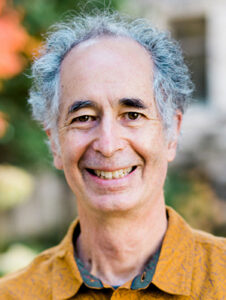
Distinguished Professor Roger Innes
Indiana University

04SocNews Innes

Roger Innes holds the Class of 1954 Professorship in Biology at Indiana University-Bloomington. He received his Ph.D. degree in molecular, cellular and developmental biology at the University of Colorado-Boulder, and completed post-doctoral research at the University of California-Berkeley, where he helped develop Arabidopsis as a model system for studying molecular plant-microbe interactions. He is an elected Fellow of the American Association for the Advancement of Science and the American Academy of Microbiology and is the immediate past president of the International Society of Molecular Plant-Microbe Interactions. He also served as president of the North American Arabidopsis Steering Committee (NAASC). His current research focuses on molecular mechanisms underlying the plant immune system and development of novel strategies for engineering disease-resistant crops. Over the course of his career, Dr. Innes has contributed to several seminal discoveries in plant-microbe interactions. These include the discovery that legumes secrete isoflavanoids from their roots to induce expression of nodulation genes in Rhizobium; the identification of the first avirulence proteins in Pseudomonas syringae that are recognized by Arabidopsis (AvrRpt2, AvrB and AvrPphB); the identification and cloning of the Arabidopsis NLR genes RPM1 and RPS5, which were among the first NLR genes cloned from plants; and development of the “guard model” for NLR protein function, whereby NLR proteins sense modifications of host proteins targeted by pathogen effectors. Most recently, his group has shown that plants secrete extracellular vesicles and RNA in response to pathogen infection, with the surprising discovery that plant leaves are coated by RNA, which is likely to impact the microbes that colonize leaf surfaces.

Early Career Achievement Award

This award recognizes an outstanding investigator who is known internationally as an emerging research leader in the area of molecular plant-microbe interactions.

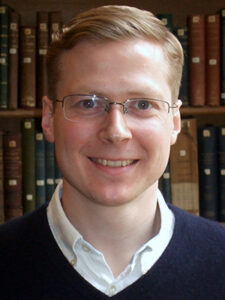
Professor Sebastian Eves-van den Akker
University of Cambridge

04SocNews Eves vanden Akker

Sebastian Eves-van den Akker received his B.S. degree in biology (2007–2010) from the University of Leeds, and his Ph.D. degree in plant pathology (2010–2014) from the University of Leeds (with Prof. Peter Urwin) and the James Hutton Institute (with Prof. John Jones). In late 2014, Sebastian was awarded an Anniversary Future Leaders Fellowship from the Biotechnology and Biological Sciences Research Council and moved to the University of Dundee (with Prof. Paul Birch) and the John Innes Centre (with Prof. Mark Banfield). In 2018, he moved to the University of Cambridge to establish the Plant-Parasite Interactions group in the Department of Plant Sciences and was made a Fellow of King’s College Cambridge. In 2024 he was made Professor of Biotic Interactions. From undergraduate to professor, Sebastian has worked on one problem: plant-parasitic nematodes. Today, the lab tends to look at questions from a genetic perspective, investigating the genes that control the dialogue between the two kingdoms. The sustaining interest has been that the outcome of this communication dictates plant organ development, animal sex determination, and ultimately human food insecurity.

Call for Junior Board Member Nominations

04SocNews JrBoard Noms

Join us in making a difference—become a junior board member and help shape the future of IS-MPMI! Do you want to contribute your voice, ideas, and leadership to IS-MPMI? Nominations for two junior board member seats on the IS-MPMI Board of Directors are being accepted through March 21, 2025.

Submit your nomination today!

Nominate IS-MPMI’s Next Leaders!

04SocNews Board Noms

Are you interested in contributing to the leadership and future direction of IS-MPMI? IS-MPMI professional members are encouraged to submit a nomination for the office of president-elect and director on the IS-MPMI Board of Directors through March 21, 2025.

Submit your nomination today!

Science Communication with Priya Sengupta, Part III

Priyamedha Sengupta, Postdoctoral Researcher, Centre of Research on Agricultural Genomics (CRAG), Spain, and Junior Member IS-MPMI Board of Directors

Priya tells us about the next stage of her outreach journey.

03InterOutreach Sengupta

I am Priyamedha Sengupta, postdoctoral researcher at CRAG, Spain, and junior member of the IS-MPMI Board of Directors. Coincidentally, I have been affiliated with institutions having the letter C in their names (University of Calcutta, India, M.S. degree in botany [2017]; University of Cologne, Germany, Ph.D. degree in natural sciences [2023]). My research primarily involves good and bad (but never ugly) microbes of Arabidopsis thaliana.

Science Is Wonderful!

I graduated with a Ph.D. degree from the University of Cologne in January 2023, and after a series of celebrations and farewell dinners, it was time to leave the city at the end of February. However, the beginning of my next step as a postdoctoral researcher at the Centre of Research on Agricultural Genomics (CRAG), Spain, encountered some bureaucratic hiccups. Eventually, after a long struggle with the Spanish embassy in Düsseldorf (Germany) and Delhi (India), I received a visa toward the end of April 2023 to begin my postdoc position at CRAG. Additionally, I was excited to find that CRAG is quite active in outreach and regularly organizes workshops to acquaint young school children with plant sciences. However, most of those activities are conducted either in Catalan or Spanish, the two official languages of the region. Even though Duolingo taught me enough Spanish to obtain tortilla de patatas (Spanish omelettes) from the supermarket or to purchase a monthly train ticket in the suburbs of Barcelona, I wasn’t equipped to handle the inquisitiveness of 8–10 year olds about yellow sticky traps in greenhouses. Nevertheless, a scope for outreach arrived again in the name of the Science is Wonderful fair.

The European Commission organizes Science is Wonderful, an annual fair held in Brussels, Belgium, showcasing research projects of Marie Curie Actions (MSCA) and MSCA-COFUND fellows to primary and secondary school students in an interactive format. As my current position is part of the MSCA COFUND AGenT (Agricultural Genomics Transversal) training program, I applied for this event together with Raquel Alvarez (former postdoctoral researcher at CRAG). From guiding primary school students as part of CRAG ‘s outreach program to motorbiking in the February cold to mentor students in Girona on Women in Science Day, Raquel has been quite engaged with science communication herself.

Muriel Arimon and Adrià Redondo, from the CRAG outreach department, supported our application, “SUMO Wrestling with Pathogens,” giving insights on how to make the activity more suitable for school-age children. We had planned to demonstrate SUMOylation (a post-translational modification system in eukaryotes) as a game of passing the parcel, where the tiny SUMO protein (represented by a cushion) would be passed between groups of children to explain the cyclical event happening inside plants. Alongside this game, we had envisioned a science show to present at the festival based on the popular children’s story The three little pigs, which goes something like this: each pig builds a house; one with straw, another with sticks, and the last one with bricks. The wolf easily destroys the houses made of straw and sticks but is unable to knock down the brick house.

But we are talking about plants! How do they build their brick houses when they can’t even move? Plants cannot really escape, so they must face challenges head on and protect themselves against environmental threats (wolves). This would segue into “SUMO Wrestlers Are Here, Not to Fear,” which would explain how tiny SUMO proteins can assist in plant defense and are the brick walls that plants build for themselves to keep out the wolves. Finally, the show would end with the moral of the story—that it is important to study plants in the context of climate change and food security. Sadly, our application for Science is Wonderful did not make the cut; although, it was a lot of fun brainstorming on the proposal with Raquel over vending machine café con leche. Later, I got to discussing with Muriel other possibilities in outreach, when she suggested something familiar—Pint of Science.

One More Pint to Go

I was happy to participate again in Pint of Science, in a different city (or rather country). The 2024 event in Barcelona took place from May 13 to 15 across eight different locations in the city, with nearly 50 participants. Although, most talks were either in Catalan or Spanish, it was great to be given the chance to present in English about the importance of SUMO proteins in plant health. I appreciate the feedback from CRAG’s Adrià Redondo and Javier Domingo on my talk.

On May 13, I presented at the BlackLab pub in the lively Eixample neighborhood of Barcelona, where I enjoyed speaking about my life and science, such as my little rebellion of choosing biology as a major despite having geologist parents, why organic farming cannot be the only sustainable solution, and how pathogenic microbes manipulate the SUMOylation system in plants to cause disease. Lovely interactions postpresentation, coupled with the ambience of BlackLab, made for a great evening.

Some of the talks at the Pint of Science festival took place at community centers as well, where people usually gather for an evening of beer and scrabble. It was inspiring to see how Raquel Alvarez engaged the Noubarris community of Barcelona on “what a scientist does in a lab” and mutant phenotypes of Arabidopsis thaliana. Now that Raquel has chosen science communication as a profession, she is sure to disseminate the essence of plant science to people from all walks of life.

The Night Is Still Scientific

European Researchers’ Night is a time to present scientists in all their glitz and glamor or as their normal selves to the public every year on the last Friday of September. I made my debut on Researchers’ Night on September 27, 2024, as part of the activity Conversation with Researchers at the CosmoCaixa Museum of Science in Barcelona. I had previously visited CosmoCaixa during the Dinosaurs of Patagonia exposition and spent the whole afternoon gawking at the giant Sauropod skeletal frame, reading descriptions of Gondwanaland emerging from the breaking up of Pangea, and glancing at fossil impressions of Archaeopteris (feeling relieved that I no longer need to sketch them in laboratory notebooks, as I did during the Palaeobotany course of my master’s degree). Coming back to Researchers’ Night, I had spoken with one of the coordinators, Rosa, before the event on the type of activity involved and how to prepare for it. Rosa had explained that it would be an informal discussion with the audience on our research and, ideally, conveying the information that scientists are regular people.

Participating in Conservation with Researchers was truly an enriching experience. I explained how a plethora of microbes exist in the environment, influencing the lives of plants and humans, either directly or indirectly, by causing diseases of important crops and halting the farm to fork transition (drawing inspiration from the Soapbox Science event of 2021). The best part of the activity was engaging with the audience on topics like the impact of climate change on pathogen survival, microbial biopesticides, and artificial intelligence in plant biology research. I was particularly amazed by the question from fellow presenter Gurjot Singh Bhatia, associated with the MSCA-ITN project 5GSMARTFACT. During my pitch, I had mentioned that as part of my master’s thesis I worked on biological control of green mold disease in oranges caused by the fungus Penicillium digitatum. Gurjot’s question was how Penicillium, on one hand, can produce a beneficial compound like penicillin, one of the most widely used antibiotics and, on the other hand, be detrimental to plants. Analyzing the lifestyle of microorganisms is an important research topic in the plant-microbe interactions field. However, receiving this question from a nonbiologist did leave me stumped (in a good way)!

Breaking the Walls Within

Although my venture into outreach was rather accidental, being involved in the whole process has made me realize its importance in present times. Given the misinformation about sustainable crop improvement strategies, it is essential that scientists step forward and communicate with the general population directly. In this regard, I laud the efforts of CRAG in launching “The Potential of Gene Editing in Plants,” a website with compact and easily accessible information on advances in plant biotechnology over the years.

Outreach can help bridge the gap between science and society. However, before bridging the gap, there are walls inside of the academic environment that need to be broken down. Often, citizen science communications are not well accepted by the scientific community. In addition, scientists performing outreach can be seen as reluctant to pursue serious research and even trivialized as not being competent enough to carry out complicated hypotheses in the laboratory.

During outreach, the complexities of research topics need to be simplified, so everyone can understand the main motivation and significance of a study. However, simplification is not an easy task and requires a much broader understanding of one’s own field of work. For example, during my Ph.D. program, when I presented at the Deutsche Phytomedizinische Gesselschaft meeting (2021) I was asked how a basidiomycete yeast could antagonize an oomycete through a hydrolase enzyme? During the international conference of miCROPe Vienna (2022), I interacted with scientists from both academia and industry, and one of the commonly asked questions was if the hydrolase enzyme could be developed as a biological control agent against agriculturally important crops. In contrast, at outreach events I have come across simple yet insightful questions like, “How many microbes are present in one leaf?”

Fortunately, the importance of science communication is gradually being recognized in academia. Marie-Curie Actions, a major funding body in Europe, positively evaluates outreach activities conducted by the applicants and even requires MSCA awardees to perform citizen science communication during their fellowship. Another instance would be eLife Digests, which provides a simple and crisp explanation of published articles. In case you wish to know more about the yeast, oomycete, and hydrolase enzyme I mentioned in earlier, take a look at this eLife Digests link.

Growing up with scientist parents I have seen them teach with a passion similar to that for their research efforts. I believe outreach serves the same purpose as teaching, which is dissemination of knowledge. While having teaching duties is common for researchers, doing outreach is not yet as prevalent. Science communication does exist as an independent profession, but scientists should be able to perform outreach without giving up research, because outreach is not a mere task of dumbing down science for the common folks, but a wonderful way to include everyone in your academic pursuits.

For decades, scientists have been portrayed as villains in movies or seen as the epitome of boring, like the character of Ross Geller in Friends. Outreach provides an excellent opportunity to change the perception of science and to promote the reality that a society cannot progress without science and innovation.

Acknowledgments

I thank all my family, friends, and colleagues who have taken the time to attend events and cheer me on—whether it was the Falling Walls YouTube livestream, the marketplace of Rudolfplatz, or pubs of Cologne and Barcelona. My supervisors past (Prof. Gunther Doehlemann) and present (Dr. Maria Lois) for being supportive of my outreach activities. My mentor, Dr. Núria Sánchez Coll, for the important suggestion of how outreach can make you a well-balanced scientist and being super appreciative of this miniseries. Finally, I would like to express my heartfelt gratitude to IS-MPMI, especially Interactions Editor-in-Chief Prof. Anjali Iyer-Pascuzzi, for the opportunity and encouragement to write about my 5-year journey in science communication.​

Bridging Academia and Industry

02InterConnect Gomez

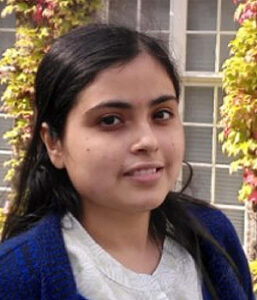
Sandra Gomez is a Ph.D. candidate at Purdue University working on effector proteins in Zymoseptoria triticiHer research integrates computational biology with molecular plant pathology techniques. In addition to her primary work, she has collaborated on projects involving comparative genomics of extremophilic fungi within Dothideomycetes, isothermal amplification methods for pathogen detection, and transcriptomics analysis of Phyllachora maydis. Alongside her Ph.D. degree, Sandra is earning a concentration in computational life sciences. Her passion for bioinformatics led her to a co-op internship in computational biology at Corteva AgriscienceTM, where she worked for six months under the supervision of Dr. Achal Rastogi on the Biologicals and Natural Product Discovery team. This experience played a key role in shaping her career path. She interviewed Dr. Rastogi to gain insights into his perspective on the career transition from academia to industry and the advice he has to offer to the new generation of scientists.​

02InterConnect Rastogi

Dr. Achal Rastogi is a senior data scientist at Corteva AgriscienceTM. He holds a Ph.D. degree in bioinformatics from Ecole Normale Supérieure, France, and an M.S. degree in bioinformatics from Jamia Millia Islamia, India. His professional journey includes significant roles at Corteva, ENS, Genoscope (CEA), Personal Genomics Institute, ICGEB, and NIPGR. He has authored numerous high-impact publications in the field of microbial ecology and bioinformatics and has received several prestigious awards, including the Early Career Achievement Award from Corteva AgriscienceTM. Dr. Rastogi is dedicated to advancing microbial genomics and bioinformatics for crop health and is currently focusing on biologicals and natural product discovery.

1. Can you describe your path to becoming a senior data scientist at Corteva AgriscienceTM?

I have been fortunate to be able to work with some of the best people and research groups, and I owe my progress to their support. I began with an M.S. degree in bioinformatics from Jamia Millia Islamia in India, followed by a Ph.D. degree in bioinformatics from Ecole Normale Supérieure in France. My professional career started with research roles at the National Institute of Plant Genome and Research (NIPGR) and the International Center for Genetic Engineering and Biotechnology (ICGEB) in India, where I developed my skills in genomics data analytics and machine learning while working with plant and viral genomes. I then worked as a researcher at the Personal Genomics Institute in South Korea, focusing on human genomics. My Ph.D. and postdoctoral research at ENS and Genoscope (CEA) in France introduced me to microbial ecology and diatom biology and allowed me to delve into big data analytics. In 2018, I transitioned from academia to industry and joined Corteva as a bioinformatics scientist, where I advanced my learning toward sustainability and applied genomics and got the opportunity to explore insect biology. Currently, my research focuses on microbial genomics for biological and natural product discovery.

2. Can you tell us about your past and present research?

During my Ph.D. research with Prof. Leila Tirichine in Chris Bowler‘s lab at Ecole Normale Supérieure, Paris, I studied the interplay between genomics and epigenomics to understand how microbial populations adapt to changing environment. By analyzing the genetic diversity and population structure of Phaeodactylum tricornutum, a marine model diatom species, we demonstrated how genetic variations support adaptability. Concurrently, my work on histone modifications, specifically H3K27me3, supported the idea that epigenetic regulation enables rapid responses to environmental changes in this species. This integrative approach established a crucial crosstalk between stable genetic variations and flexible epigenetic changes, which together enhance the resilience and ecological success of diatoms. During my postdoctoral studies with Prof. Olivier Jaillon at Genoscope, I extended my research to study these complex interactions, leading to insights into the molecular functional preferences of microbial communities in the open ocean. After transitioning to industry, I have leveraged my bioinformatics and data science expertise in leading complex research projects aligned with sustainable crop protection and active discovery and product development.

3. What skills are most important in your role as senior data scientist?

In my role as a senior data scientist, several skills are crucial for success. First, a strong foundation in data science and computational biology is essential—this is what I bring to the table. Proficiency in programming languages like Python, R, and Bash, as well as experience with high-performance computing and cloud platforms is vital for handling large-scale genomics data. Leading projects requires effective management and leadership abilities for guiding teams and ensuring timely delivery of high-quality results. I work with large, dynamic, and interdisciplinary teams, so communication skills are necessary to collaborate and bring a clear understanding of complex scientific problems. Continuous learning and adaptability are also critical given the fast-paced nature of the field.

4. How do you define success in your role?

Success in my role at Corteva is defined by the expertise and impact that I bring to projects and the organization. This includes delivering high-quality, reproducible data and analysis workflows, advancing our understanding of microbial genomics, and accelerating the discovery of new biologicals and natural products. Success also means fostering collaboration across diverse teams, mentoring colleagues, and continuously improving our data science capabilities. Ultimately, it’s about driving innovation, achieving our research goals, and contributing to the broader scientific community while ensuring that our work translates into tangible benefits for our stakeholders and customers.

5. How do you stay current with developments in your field?

Big thanks to social media platforms and active academic social networks! It is easier than ever to follow what’s new—I read, attend seminars, and talk to people around me to stay current. I prioritize continuous education to update my skills time-to-time through formal and, many times, through self-guided training. Also, I mentor students and interns, which allows me to stay connected with fresh perspectives and emerging technologies in the field. Most importantly, active contributions and collaborations on scientific projects keep me curious, which I believe is the key driver that pushes me to learn more.

6. What are some common misconceptions about your field of expertise?

There are several common misconceptions about the field of bioinformatics. One major misconception is that it’s solely about coding and data analysis. While these are important aspects, bioinformatics requires a deep understanding of biological concepts and the ability to interpret complex biological data. Another misconception is that bioinformatics is only relevant to academic research. In reality, it has significant applications in various industries, including agriculture, healthcare, and pharmaceuticals, where it drives innovation and is key to product development. Also, some people think that bioinformatics is a solitary field, but collaboration is a key component, involving teamwork with scientists, researchers, and engineers. Bioinformatics is constantly evolving with new technologies and methodologies, requiring continuous learning and adaptation.

7. What advice would you give to people starting in the job market or looking for a career like yours?

The current job market is very dynamic, but the foundation of it hasn’t changed and will never change. Organizations need to attract talent to grow and stay competitive. Based on your career aspirations and training, seek out suitable open positions and apply with dedication. Pay close attention to job descriptions for the roles you aspire to, identify any skill gaps, and work on advancing your expertise. While focusing on your technical skills, invest time in improving your communication and soft skills. Last, be patient and persistent; the job search can be challenging, but staying focused and positive will help you find the right opportunity.

8. Can you share a memorable experience or achievement in your career?

I have had many! One that is close to my heart is the day I defended my Ph.D.—becoming a scientist had always been my dream. There was not a single crazy moment on that day, everything was blissful. I still clearly recall each moment of the day, from picking the right outfit to setting up the defense room to welcoming my thesis advisor and committee members. The presentation went smoothly, the audience was engaged, and I had a wonderful, thought-provoking discussion with the committee members—it all felt so right. Then, the president of the committee congratulated me on successfully obtaining a Ph.D. degree—that was the moment! We celebrated with a fantastic after-party, and I ended the day with a pleasant walk along the Seine with my wife.

9. Oh, by the way. How could people find you on social media?

I am active on LinkedIn and am always happy to connect.

10. Is there anything else you would like to share in your Spotlight? If so, what is it?

Drive yourself with a purpose for an enriching career journey. When deciding between career options weigh three things and maneuver accordingly. Do you love what you do? Does the world need what you do? Are you good at what you do?

Scroll to Top