Category: ​​​Interactions Archives​

Register for the 2025 Early Career Showcase Happening in February

07Event EC Showcase

On Thursday, February 20, and Thursday, February 26, half-day virtual events will highlight research on molecular plant-microbe interactions by early career scientists around the globe. In addition, this showcase aims to welcome new researchers to our community and create a platform for networking and sharing ideas. Registration for the showcase is free for members and $39 for nonmembers! Learn m​ore.​

MPMI Journal Highlights

06EdPick AugGraphic

 MPMI Volume 37, Number 8, Editor’s Pick

Reshaping the Primary Cell Wall: Dual Effects on Plant Resistance to Ralstonia solanacearum and Heat Stress Response

Henri Desaint et al. show that mutating the cellulose synthase subunit CESA3 enhances resistance to Ralstonia solanacearum in Arabidopsis thaliana, even under heat stress, offering insights into breeding heat-resilient resistance against this pathogen amid climate change.

Read the Commentary by Assistant Feature Editors Jawahar Singh and Manish Tiwari.

06EdPick SepGraphic 1

 MPMI Volume 37, Number 9, Editor’s Pick

Rhizobial Secretion of Truncated Exopolysaccharides Severely Impairs the​ Mesorhizobium-Lotus Symbiosis

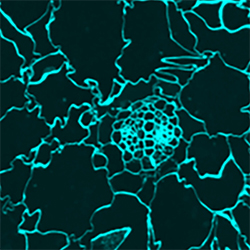
Todd Wightman et al. used a suppressor screen to show that the severe symbiotic phenotype of the exoU mutant was due to the secretion of an acetylated pentasaccharide, as both monomers and oligomers, by the same Wzx/Wzy system that transports wild-type exopolysaccharide.

Read the Commentary by Assistant Feature Editors Ruby Tiwari and Jawahar Singh.


06EdPick OctGraphic

 MPMI Volume 37, Number 10, Editor’s Pick

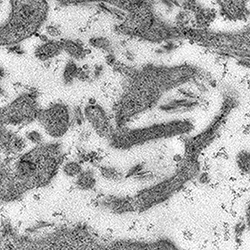
Immunolocalization and Ultrastructure Show Ingestion of Cry Protein Expressed in Glycine max by Heterodera glycines and Its Mode of Action

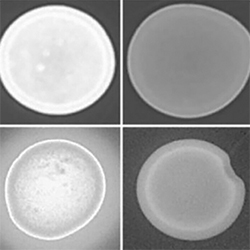
Soybean plants expressing Bacillus thuringiensis Cry14Ab show promise for controlling the soybean cyst nematode, an adaptive pest. R. Howard Berg et al. highlight Cry14Ab’s unique midgut-disrupting action, revealed through electron microscopy, offering a novel transgenic approach distinct from native resistance sources.

Read the Commentary by Assistant Feature Editor Ved Prakash.

Explore New Entries in the “What’s New in MPMI!” Virtual Seminar Series

MPMI VirtualSeminar banner700

Thank you to everyone who joined us from all around the world for the latest “What’s New in MPMI!” virtual seminar with host Jeanne Harris and guest Yingpeng Xie, who discussed the MPMI H. H. Flor Distinguished Review “Unlocking Nature’s Defense: Plant Pattern Recognition Receptors as Guardians Against Pathogenic Threats.”

Miss the live virtual seminar? The full recording is now available online!

Watch Now

Welcome New IS-MPMI Members

​Jeff Anderson
Dick Yaw Acheampong Andoh
Katherine Blocklove
Joydeep Chakraborty
Jeffrey Chen
Laurent Deluc
Elsie Ayamoh Enow
Alexandra D. Gates
Almuth Hammerbacher
Matthias Heuberger
Erin Huiting
Yoshiyuki Imura
Muhammad Shahzad Iqbal
Hira Kamal
Anil Kumar
Thorsten Langner
Cecile Lorrain
Ignacio Eduardo Maldonado-Mendoza
Nikolaos Mastrodimos
Chandan Maurya
Janhavi Maurya
Adam Mott
Ketra Oketcho
Sona Pandey
Carmen Sanchez Canizares
Cecile Segonzac
Susmita Sett
Shilpi Sharma
Najeeb Ullah​​

Join the IS-MPMI Community

ISMPMI Logo NoName

There are multiple ways to get involved with IS-MPMI, from presenting and attending the IS-MPMI Conference to submitting a manuscript to MPMI to sharing content through social media platforms. Learn more about how you can volunteer and engage with the IS-MPMI community.

IS-MPMI Is Now on Bluesky!

ISMPMI Logo NoName

 Follow us on this new social media platform that continues to increase its presence in the scientific community. Connect with leading researchers in the field of molecular, cellular, and developmental biology, genetics, genomics, proteomics, and molecular ecology through IS-MPMI (@ismpmi.bsky.social).

Donate to the Michael Mishkind Travel Fund

ISMPMI Logo NoName

The Michael Mishkind Travel Fund provides travel awards to IS-MPMI Members who are early career researchers seeking to attend the 2025 IS-MPMI Congress. Your contribution will provide support and inspiration to the next generation of scientists and researchers in the field of plant-microbe interactions. Give now.​

Honorable Mentions for Best Student Paper in MPMI: Jess Choi

03ResSpot Choi

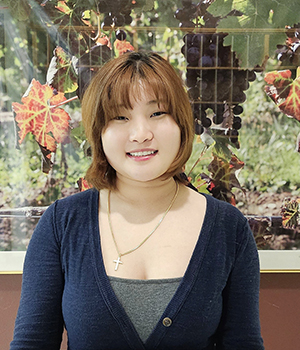
Jiyeong (Jess) Choi is a recent Ph.D. degree graduate from Dr. Marc Fuchs‘ lab at Cornell University, USA. Jess defended her Ph.D. dissertation in August and is currently working as a research assistant in the Fuchs lab.

1. What do you think is the most important or exciting finding from your paper?

This study identified three viral suppressors of RNA silencing (VSRs) encoded by grapevine fanleaf virus (GFLV): proteins 1A and 1B and the fusion protein 1AB, which is an intermediary product of polyprotein proteolytic cleavage processing. One of the most thrilling findings of this study is that the two independent GFLV VSRs (1A and 1B) can function either individually (1A and 1B) or as the fused form (1AB) to reverse systemic RNA silencing and differentially alter host genes associated with antiviral RNA silencing, suggesting that GFLV employs multiple strategies to evade host antiviral defense. This finding assigns a function to protein 1A for the first time and provides the first experimentally validated function for protein 1B. Overall, this study deepened our knowledge of how GFLV counters host antiviral immunity and contributes valuable insights into the molecular biology of this virus.

2. Was there a piece of data that was particularly challenging to obtain or a part of the project that was particularly difficult?

The most challenging aspect of the project was assessing and validating RNA silencing suppression functions of GFLV proteins 1A, 1B, and 1AB. I executed three distinct RNA silencing suppression assays to evaluate their suppression abilities from multiple perspectives and approaches. Designing, developing, optimizing, and conducting these assays were difficult due to the unique RNA silencing suppression characteristics and host gene modulation abilities specific to each protein. By analyzing results both individually and collectively, I validated RNA silencing suppression functions of GFLV proteins 1A, 1B, and 1AB, identifying them as GFLV VSRs.

3. What research project are you most excited about right now?

I’m currently working on elucidating subcellular localization of GFLV VSRs in planta using live-cell imaging techniques via confocal microscopy. Building on the identification of GFLV VSRs (Choi et al., 2023), I have recently identified specific amino acid residues that are critical for systemic RNA silencing suppression functions of GFLV VSRs (Choi et al., 2024). Drawing on these findings, I will explore whether the specific subcellular localization of GFLV VSRs is required for their suppression functions. This study will facilitate identifying potential host interactants of GFLV VSRs at the level of specific organelles, providing further insights into the RNA silencing suppression mechanisms utilized by GFLV VSRs.

4. What drew you to your current lab?

During my undergraduate studies, I completed a 9-week research internship in Dr. Marc Fuchs’ research lab through the Summer Research Scholar Program at Cornell AgriTech. I specifically applied to his plant virology program because I was fascinated by how viruses, primarily composed of proteins and nucleic acids (and sometimes lipids), can overcome the defense mechanisms of complex eukaryotic organisms to cause devastating diseases. I developed a specific interest in studying plant viruses because the impact of plant viral diseases extends beyond the host, affecting both the economy and food security. My summer research focused on elucidating the vein-clearing symptom determinants of GFLV under the mentorship of Dr. Larissa Osterbaan (published in MPMI; Osterbaan et al., 2018). This experience sparked my interest in studying molecular biology of GFLV and deepened my passion for plant molecular virology.

5. What advice would you give to starting graduate students?

When you encounter unexpected data, don’t focus on what you might have done “wrong.” Instead, shift your mindset to what you can do “next” and how you can leverage that unexpected data to build on your research.

6. Who has inspired you scientifically? Why?

I am inspired by Dr. Barbara McClintock for her transformative contributions to genetics, particularly her discovery of transposable elements in maize, which reshaped our understanding of gene regulation. Her innovative thinking inspires me to think outside the box in my research. I admire her resilience and determination in overcoming adversity in a historically male-dominated field, which continues to inspire women in science today. Dr. McClintock’s legacy encourages me to pursue my scientific and career goals with courage and creativity.

7. Have you been involved in other scientific/professional development activities? And how have these contributed to your training?

I served as a secretary for the Bioengineering Applications Committee of The American Phytopathological Society (APS). I co-organized the APS “Exploring Career Paths in Biotechnology” webinar in 2023, which focused on introducing diverse career opportunities in the field of biotechnology to students and postdocs by featuring biotechnologists from academia, government, Extension, and industry. This role allowed me to develop valuable organizational and communication skills, network with diverse experts in the biotechnology and bioengineering fields, and gain insightful perspectives in diverse biotechnology career opportunities.

Additionally, I co-organized a plant pathology workshop, “Somebody Call the Plant Doctor,” for Expanding Your Horizons at Cornell in 2022. This workshop focused on providing hands-on learning experiences for seventh- to nineth-grade students in plant pathology, teaching them how to identify symptoms of plant diseases, use identification sheets and microscopes, and understand how to prevent the spread of pathogens. Through this experience, I was able to practice and improve my public speaking and science communication skills.

8. What is the greatest challenge you have encountered in your career? What did you do to overcome this challenge?

The greatest challenge I faced during my graduate career was a lack of confidence in writing. Initially, I often felt lost, unsure of where to begin, pause, or conclude. Drafting manuscripts made me anxious, but the repetitive process of drafting, editing, and redrafting gradually helped me become more comfortable with my writing. Committing to publish my research and reading a wide range of articles enhanced my understanding of scientific communication and contributed to my growing confidence.

9. How can people find you on social media?

People can find me on X (@jesspatho36), LinkedIn (jess-choi-71b4b5225) ,or ResearchGate (Jiyeong-Choi-3).

10. Is there anything else you would like to share? If so, what is it?

I am very grateful for the opportunity to publish my work in MPMI. I would like to thank Drs. Ved Prakash and Anjali Iyer-Pascuzzi for their invitation to complete this interview and their contributions to MPMI.

11. Bonus question: What’s your favorite pathogen or disease?

Tulip breaking virus! It is the first plant virus I learned about, and it is also my mom’s favorite plant pathogen!​

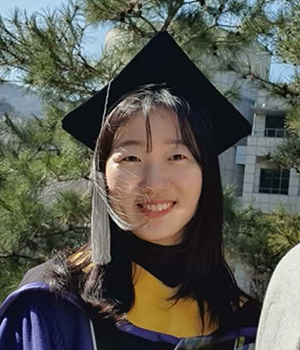
Best Student Paper in MPMI: Ye-Eun Seo

03ResSpot Seo

Meet Ye-Eun Seo, a current Ph.D. student from the laboratory of Prof. Doil Choi in the Department of Horticultural Science and Biotechnology at Seoul National University, South Korea. Ye-Eun received the MPMI Best Student Paper Award for her first-author paper on “Phytophthora infestans RxLR Effector PITG06478 Hijacks 14-3-3 to Suppress PMA Activity Leading to Necrotrophic Cell Death.” Her research focuses on molecular plant-microbe interactions, particularly examining the mechanisms by which pathogen effectors manipulate host cellular processes and how plants defend against these pathogens. Her recent work focused on elucidating the cell death mechanisms related to the plasma membrane proton pump in plants and on plant immune receptors and effectors from P. capsici and P. infestans. Currently, she is exploring the interactions between Solanaceae plants and P. capsici, with an emphasis on nonhost resistance mechanisms and the role of secreted proteins in pathogenicity. Through this research, she aims to contribute to expand our understanding of plant immunity and the development of sustainable crop protection strategies. To gain more insights into her research interests and scientific journey, and congratulate and celebrate her success, read this first-author interview.

1. What do you think is the most important or exciting finding from your paper?

In our paper, we investigated how the P. infestans RxLR effector PITG06478 induces cell death in Nicotiana benthamiana by targeting the plasma membrane H+-ATPase (PMA) activity and its interaction with 14-3-3 proteins. In my opinion, the most interesting finding from our paper is that fusicoccin treatment affected the association between 14-3-3 and the effector. Fusicoccin is an irreversible activator of PMA, so its application alters conditions within the plant cell—particularly the pH. This suggests that pH changes could influence the effector’s mode of action, implying that pH is a critical factor in regulating effector-host interactions and cell death mechanisms.

2. Was there a piece of data that was particularly challenging to obtain or a part of the project that was particularly difficult?

Initially, we performed a screen to test whether fusicoccin treatment affected effector-induced cell death and found that cell death was affected in the presence of several effectors, but none of them interacted with PMA. This was contrary to our initial expectations, so we had to test an alternate approach. We then conducted another screen to test whether fusicoccin treatment changed subcellular localization of the effector. That’s how we identified PITG06478 for further investigation. I think we were fortunate to be able to specify the effector’s mode of action through these two screening methods and subsequent research. This experience taught me the importance of flexibility in research and the value of pursuing unexpected results. I came to understand that sometimes interesting findings can come from results that don’t match our initial hypotheses and that being open to changing our approach can lead to new insights.

3. What research project are you most excited about right now?

Currently, I’m very excited about my work with P. capsici secreted proteins. These proteins have the potential to act as PAMPs (pathogen-associated molecular patterns) or apoplastic effectors in plant cells. I’ve identified candidates that can induce cell death in plants, and now I’m focusing on uncovering their receptors and downstream signaling pathways. I believe this research could lead to interesting findings and potentially uncover novel mechanisms in plant-pathogen interactions.

4. What drew you to your current lab?

I first met my current advisor during my first major course after declaring my major as an undergraduate. What really impressed me was that in every class, the professor introduced fascinating new cutting-edge research papers. This approach not only made the classes more engaging but also gave us insight into the latest developments in the field. I found the professor’s research area incredibly interesting, and it aligned well with my own scientific interests. The professor’s enthusiasm for the subject and dedication to keeping students updated with the most recent advancements in the field really drew me to this lab. As an undergraduate research assistant in this lab, I had an eye-opening experience. I enjoyed applying the experimental techniques I learned in class to real research situations. The process of conducting experiments was genuinely interesting, even when faced with challenges. I found the troubleshooting process, where we discussed failed experiments with other researchers, particularly enriching. These discussions not only helped solve immediate problems but also deepened my understanding of the scientific process. Through this hands-on experience, I discovered that I was truly fascinated by the process of conducting experiments and doing research.

5. How did you choose to join your current graduate program?

I chose to join my current graduate program in Horticultural Biotechnology because of my experience as an undergraduate research assistant in the lab of Prof. Doil Choi. Our lab focuses on molecular plant-microbe interactions in horticultural crops. During my time as an undergraduate researcher, I became fascinated with the molecular plant-microbe interactions field. This interest, combined with the positive experiences I had in the lab, led me to pursue graduate studies in the same department and lab. I wanted to continue working on molecular plant-microbe interactions in horticultural crops, so joining the Horticultural Biotechnology graduate program was a natural choice for me.

6. What advice would you give to starting graduate students?

As a fellow graduate student still learning and growing, I’d like to share some advice from my experiences so far. I’ve found that asking questions and seeking clarification from advisors, professors, and peers has been incredibly helpful. Staying curious and exploring various resources, as well as keeping up with recent research, has also been beneficial. I’ve noticed that keeping organized notes and documenting experiments and ideas helps me track my progress and thoughts. When possible, I try to attend conferences and seminars, which I’ve found to be great learning opportunities, though I’m still working on my networking skills. I’m also trying to view constructive criticism as a chance to improve my work and be open to feedback. These are just my personal experiences, and I’m sure every graduate student’s journey is unique.

7. Who has inspired you scientifically? Why?

The most scientifically inspiring people to me are my PI and lab members. Our weekly group lab meetings are particularly valuable. During these discussions, my professor often provides guidance from a broader perspective, offering insights that help shape our research directions. My lab mates also contribute ideas, sharing their thoughts on experiments and project approaches. These interactions have shown me the importance of collaborative thinking in science. Sometimes, discussions with lab mates have led me to consider new methods or help refine the direction of my project. I learn a lot from their experiences and approaches. Additionally, I find seminars and research papers from other scientists in our field to be informative and motivating. Seeing the work being done by researchers worldwide encourages me to continue developing my skills and knowledge in my own studies.

8. How can people find you on social media?

I have an X account, @YEEUNSEOYEEUN (although I’m not very active in posting…).

9. Is there anything else you would like to share? If so, what is it?

I’d like to take this opportunity to express my sincere gratitude to my professor, Dr. Doil Choi, and my lab members. I’m truly thankful for their guidance, support, and collaboration throughout my research journey.​

Scroll to Top