Category: ​​​Interactions Archives​

Science Communication with Priya Sengupta, Part III

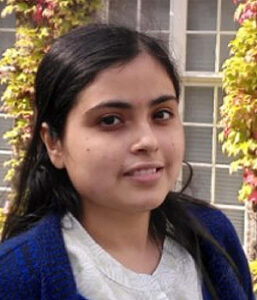
Priyamedha Sengupta, Postdoctoral Researcher, Centre of Research on Agricultural Genomics (CRAG), Spain, and Junior Member IS-MPMI Board of Directors​

Happy Birthday, Liebe Maus!

03InterOutreach Sengupta

After Falling Walls, the opportunity for outreach arrived again in 2021, when we slowly and cautiously moved back to normalcy after the COVID pandemic. Around the first week of February, doctoral researcher Pia Saake and I received an email from Cordula Joergens from the CEPLAS office. CEPLAS, or Cluster of Excellence in Plant Sciences, binds together four different institutions (UoC, HHU, MPIPZ, and FZJ) and is a symbol of harmony between Cologne and Düsseldorf, Germany, amid all the beer, football, and carnival rivalry.

Cordula mentioned that a celebratory event was taking place all over Germany to congratulate the WDR Maus on its 50th anniversary and asked whether we wanted to participate as CEPLAS representatives. Later, I spoke with Petra Bracht (also from CEPLAS), who explained to me about “Die sending mit der Maus,” an educational animated program in which an orange mouse, purple elephant, and yellow duck teach young children about science, culture, and more. I jumped at the offer, because how often do you get to congratulate a cartoon mouse?

In the video, Pia spoke of how watching the show as a child inspired her to become a scientist, while I explained how at CEPLAS we generate plants for sustainable agriculture under changing environmental conditions. Although we had to maintain strict protocols for social distancing and wearing masks, I enjoyed the whole video-shooting process, particularly saying “genüngend Nahrungsmittel” (i.e., “enough food”) as part of the pitch drafted by Petra. Please follow the link to catch glimpses of the day. A shoutout to both Cordula and Petra, not only for the opportunity, but for believing that I could successfully deliver a pitch in German! Post WDR Maus, my outreach associations with CEPLAS grew stronger.

Thinking Outside the (Soap)box

On the last Friday of every month, all CEPLAS members gather for an afternoon of scientific seminars in either Cologne or Düsseldorf (occasionally Jülich, Germany). During one such CEPLAS Friday meeting (moved to an online format due to the COVID pandemic), we were informed about the upcoming Soapbox Science event. Scientists are accustomed to giving seminars via slide shows to a seated audience in a lecture hall. Soapbox Science does away with everything I mentioned in the previous sentence. Donning white lab coats, speakers stand over wooden Soapboxes in a crowded marketplace ushering in regular passersby with the phrase, “Would you like to hear some science?” More importantly, the purpose of Soapbox Science is to increase the visibility of women and nonbinary scientists.

Eventually, I applied to the Soapbox Science Rhineland 2021 event and was selected few months later for the pitch “Frontline Workers: How Microbes Protect Plants.” Before the event, there was an online meet up between the Soapbox speakers and the organizers. The organizing committee explained about the structure of the program, which has some semblance to poster presentations at academic conferences. Although, each speaker would have 1 hour on the soapbox, the pitches should be a short and crisp 10–15 minutes to allow for more audience interaction. To ensure a constant influx of people, each speaker has a volunteer assigned to them. It was fun to become familiar with other Soapbox participants, which included two other CEPLAS members—Alisandra Denton and Adélaïde Raguin. Another familiar face in the speaker’s list was that of Harshita Kaul from CECAD, Cologne, who made an amazing performance at Science Slam 2020 (just before the COVID lockdown) about the importance of brown fat in mice and ending with a social message about body shaming. During the online meeting, we gave each other feedback on our pitches and brainstormed ideas to engage visitors. Finally, the session ended on a high note, when the organizers said that a dinner would be organized after the event at L’osteria (Cologne). Having been double vaccinated against COVID, I looked forward to Soapbox Science.

My pitch on August 21, 2021, in Rudolfplatz, one of the busy market areas in Cologne, started off with my showing pictures of moldy strawberries and building up the concept that “plants can get sick too.” To keep audiences engaged, I organized a tic-tac-toe match between two groups of people—the plants versus the pathogens. The pathogens had an advantage to start the game, because in nature they greatly outnumber the plants. If the plants won, no disease would take place (Hurrah!). The resistance (R) genes of the plant recognized the pathogen effectors or sensed a possible invasion and triggered a cell death response to restrict the pathogen. If the pathogens won, then they evolved their effector repertoire to evade being identified by the host and could cause disease. Finally, if a draw took place, it meant that the plant had evolved to modify its receptors to catch the pathogen in the act and was ready for battle. The inspiration behind the plant-pathogen tic tac toe was an article from the group of Prof. Sophien Kamoun, describing plants and microbes as engaged in an evolutionary game of tic-tac-toe. Thank you Prof. Kamoun for helping me to get Saturday shoppers with ice-cream cones interested about plant immunity and pathogenic virulence. I ended the pitch with a handmade placard (using my crude arts and crafts skills) to depict how beneficial microbes can play a role in “farm to fork” transition by helping the plant to combat diseases.

From holding up placards to drawing in audiences at my Soapbox corner, CEPLAS doctoral researcher Mary Ngigi very enthusiastically assisted in my pitch as a volunteer. Petra Bracht and Claudia Balan from CEPLAS were an amazing support team from the get-go. They arranged to record introductory videos of Alisandra, Adélaïde, and myself at the botanical garden of Heinrich Heine University in Düsseldorf. In the video, we explained our respective motivations for participating in Soapbox Science. CEPLAS also arranged for the three of us to provide a joint statement on the importance of the visibility of women in STEM. Please read on to find out more about it, as well as a summary of Soapbox Science 2021.

Standing on the Soapbox was quite an experience, and I ended up spending over an hour speaking to a multitude of people—from colleagues and friends to absolute strangers carrying grocery bags. After the event, I returned to my regular life focusing on lab work, conferences, and meetings with my academic advisors. Moreover, as I was in the end of the third year of my Ph.D. program, I planned to concentrate completely on the academic aspect and not so much on the outreach. Nevertheless, my Sci-Comm journey was far from over.

A Pint to Remember

Our lab manager (now group leader) Johana Misas-Villamil recommended Pint of Science in one of our weekly lab meetings. Essentially, the Pint of Science festival takes place over three days in May across different countries and gives a stage to scientists to deliver talks in bars and pubs. Special thanks to Anna Euteneur (also one of the organizers of Soapbox Science) and Jonas Goergens for helping to modify my lecture for a relaxed evening of science. My talk on May 10, 2022, at Stapel Bar (Cologne) consisted of how plants and microbes have been associated for millions of years, and it is only recently that we have begun to tap into the potential of microbial communities in plant health and protection. I will never forget the jubilant clapping from the crowd when I said, “Having lived in Germany for 4 years, mein Deutsch ist gar nicht so schlecht” (i.e., “is not too bad”). Finally, I was amazed at the questions that continued after my talk at 10 p.m. in the evening, which only goes to show that plant-microbe interactions ist gar nich so schlecht.

One of the other highlights of that evening was Enric Bertran‘s talk, which introduced the concept of plant blindness—that is, how oblivious we can get about the mere existence of plants. Enric’s telenovela inspired presentation about flower development generated a lot of laughs, and I believe the pitch was a masterclass in how to convey a complicated topic with ease. My colleagues Philipp Katzy and Laura Merx also were part of the Pint of Sci​ence 2022 event; please follow the link to find out more about their contributions, thanks to none other than CEPLAS.

The IS-MPMI Connect

Shortly after Pint of Science, I participated in the IS-MPMI Early Career Showcase (ECR) in June 2022. Although it was an online academic conference, what set it apart was that the speakers were largely graduate students and postdocs. We had a training session before the main event that included guidelines for how to make our talks accessible to everyone (e.g., making color-blind–friendly figures). I also remember the moderators asking us to send an audio clip of our names to introduce us with the correct pronunciation at the conference (a small yet important gesture!). Finally, the two-day virtual event took place with participants from all over the world. I was happy to present my Ph.D. research to such a wide audience (nearly 100) in the IS-MPMI community and to engage in the Q and A session. A cherry on top for the showcase was the discussion session on fellowship opportunities in academia conducted by Patricia Baldrich after the speaker presentations. One month after the ECR showcase, I joined the IS-MPMI Board of Directors as a junior member, which happens to be a significant point in my career. I believe being involved in outreach encouraged me to explore opportunities beyond research and become a voice for early career scientists.

CEPLAS Planter’s Punch

My final outreach activity as a Ph.D. student at the University of Cologne was through the CEPLAS Planter’s Punch. Every month, one CEPLAS member explains their research in the form of articles, videos, or podcasts for dissemination to the public. There have been some amazing contributions over the years from several graduate students and postdocs.

Valuable input from Petra Bracht and Céline Hönl helped me assemble my own CEPLAS Planter’s Punch, “The Social Network: How Microbes Protect Plants.” A few months after the publication, I went over to the CEPLAS office to collect a customized coffee mug as a present for the Planter’s Punch. As I talked with Petra and Cordula, I mentioned that I was offered a postdoctoral position in Barcelona and would be joining in March 2023. To which Petra remarked, “So, you would be leaving CEPLAS then?” I had been preparing myself for the upcoming thesis defense and not yet for my departure from Cologne—a city which has given me so much academically and beyond. Therefore, with a slight tug in my heart, I replied “Yes” to Petra and bid adieu to CEPLAS, but not to outreach.​​

Spotlight on Early Career Researchers

01InterConnect Margets

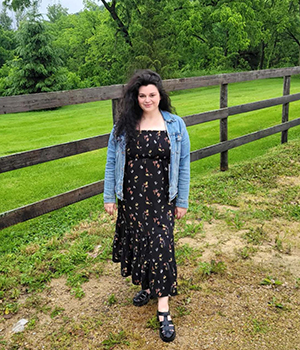
Meet recently graduated student Dr. Alexandra Margets, aka “Allie,” from Prof. Roger Innes‘ lab at Indiana University Bloomington. Her research focuses on Identifying and understanding the intricate components of the plant-pathogen interface, which motivates her research questions. Allie was awarded the prestigious Agriculture and Food Research Initiative Predoctoral Fellowship by the USDA National Institute of Food and Agriculture to investigate the molecular mechanisms of soybean cyst nematode effector proteins. Her research work led to the identification of a key protease effector of soybean cyst nematode (SCN), and this work translated into her first-author paper recently published in the November issue of MPMI, which was selected as an Editor’s Pick. With her current and future research, she hopes to gain information that expands our knowledge of plant immunity and use that information to address problems that impact agriculture. We congratulate Allie on her recent achievements and wish her a stroke of good luck in her future endeavors.

1.What do you think is the most important or exciting finding from your paper?

The most exciting finding from my paper was identifying a soybean target of the SCN effector protease, CPR1. It was an important finding to not only to provide a snapshot as to where/how CPR1 functions in plant cells, but now we can use this target to identify CPR1’s preferred cleavage sequence to generate PBS1 decoys that elicit immune responses upon cleavage.

2.Was there a piece of data that was particularly challenging to obtain or a part of the project that was particularly difficult?

Identifying the soybean target of CPR1 was the most challenging piece of data to obtain. Before pursuing biotin-based proximity labeling (miniTurbo) in composite soybean roots, I tried several different approaches to identify soybean targets of CPR1 and other SCN proteases. I tried to optimize several different approaches to perform these experiments in soybean. The techniques I pursued before using the composite plant system included soybean protoplasts, transient expression in soybean, and hairy root cultures. At first, I was using GFP fluorescence to identify transgenic roots, which was challenging, but incorporating the screenable marker, RUBY, into these experiments was a game changer that saved me a lot of time! However, miniTurbo yielded a list of interesting targets to test, which meant there was a lot of cloning and negative results along the way. Once I confirmed GmBCAT1 as a target of CPR1, the challenge made the result that much more exciting.

3. What research project are you most excited about right now?

I have now defended my thesis work but am happy to see that my projects are continuing in the lab. I am most excited to see the Innes-Baum labs work together to generate and test PBS1 decoys for SCN resistance. Stay tuned, as we hope to publish our findings on this system in roots in the near future. I also left the lab with an idea for using the composite plant system to identify the R gene in soybean that recognizes PBS1 cleavage.

4. What drew you to your current lab?

Despite rotating through two other great labs where I learned a lot, I was fascinated by the complexity between plant-pathogen interactions. I had very little exposure to this field at the time but loved molecular plant biology and the idea of learning about not only plants, but the pathogens that infect them in agriculture. I also was drawn to the idea of doing research, with the goal of developing resistance strategies as I was interested in a future career in industry/biotechnology. During my rotation in the Innes lab, I had a great mentor who routinely took the time to discuss his projects and the field of molecular plant-pathogen interactions, while challenging me to think about potential future directions of the lab’s research. I felt like there was a great support system among the Innes lab members and thoroughly enjoyed showing up each day. Dr. Innes and I established good communication early on, and I felt that it was a place where I would be able to grow into an independent scientist.

5. How did you choose to join your current graduate program?

I was looking for a broad graduate program that would allow me to explore different areas of biology research before choosing a thesis lab. The Genome, Cell, Developmental Biology Ph.D. program at IU was exactly that. This program also allowed me to explore labs under microbiology, biochemistry, and evolution/ecology through rotations. Since I was coming from undergraduate studies, I didn’t want to “think” I knew what I wanted/needed but rather wanted to explore different labs and mentors through hands-on experiences. Before joining, there were several labs I was interested in, so I knew that I would be able to make an educated decision on where I would thrive. Upon visiting IU, I immediately got a sense of diversity at the university and within the community that reminded me of where I grew up in New York. The graduate students during my visit were extremely friendly and honest, which allowed me to truly envision what it would be like to be a student there. Additionally, Bloomington, IN, is a beautiful small town that had everything I needed to focus on my thesis work but enjoy where I was living.

6. What advice would you give to starting graduate students?

  1. Find a thesis lab that is going to give you the support that you need to reach your scientific goals and communicate those goals with your PI as early as possible. If you are doing rotations, have this conversation during the rotation and before joining. It is reasonable for graduate students to have high expectations for their research mentor. However, it is easy to forget we are just one of their responsibilities among many others. Establishing healthy, clear, and direct communication early on will help you both get what you need out of the professional relationship.
  2. Build your scientific community early on in your career. It is always intimidating to put yourself out there in those early years, as many of us of get self-conscious about the amount of data we have in year one or two (especially if we are working on a newer project)—but do it! Whether that is attending a meeting with a “future directions” poster or attending a mixer where you may not know anyone. Once you make connections, remember to maintain them. The relationships in your network should be a give and take. Don’t only reach out when you need something.
  3. Try and leave the “self-doubt” at the door. Grad school is a marathon, not a race. There are going to be rough times and that’s okay. Find constructive ways to handle the lows and don’t resort to thinking you aren’t good enough. It’s normal to feel these things from time to time, but don’t let them consume you. Having a healthy perspective and trying to find the positive in these instances will keep you motivated and happier in the long run.

7. Who has inspired you scientifically? Why?

I have always been inspired by my undergraduate PI, Dr. Michelle Barthet, at Coastal Carolina University. She was the first to show me the great world of research during my first year as an undergrad. Being at a primarily undergraduate institution, there were the obvious restraints when it came to funding, resources, and time in the lab. However, this never stopped Dr. Barthet. She was so passionate about her research and the productivity of her lab, she always came up with a way to accomplish her research questions while mentoring several undergrads. Not only was she creative, but the passion she had for her students in her lab and in her classrooms was unmatched. She genuinely cared about our long-term goals and tailored our experiences around them. I am truly inspired by the scientist she is and the dedication she has to her role in academia. My time working with Dr. Barthet shaped how I approach my science today and interact with mentees and colleagues.

8. Are you or have you been involved in other scientific/professional development activities? And how have they contributed to your training?

At IU, I served as the vice president of my graduate student organization that we started during COVID. It allowed me to build upon my leadership skills and adapt to new ways to communicate with our graduate student community during a challenging time. The organization is thriving today, and I love seeing how the new leaders have used the organization to promote a supportive community. I also worked closely with Dr. Innes on outreach initiatives in the Bloomington community. Each fall, we would visit third-grade classrooms and teach students what plants needed to grow through a hands-on experiment. This experience helped me immensely with my communication skills, and it was rewarding to watch the students get excited about plant science. Since I loved outreach, I wanted to branch out beyond IU, which led me to getting involved in The American Phytopathological Society Office of Public Relations and Outreach (APS OPRO). For two years, I served as the graduate student representative, where I had the pleasure of communicating plant science with different target audiences. Since my program at IU was not plant-specific, APS gave me a great community that I had the pleasure of meeting with regularly.​

9. What is the greatest challenge you have encountered in your career? What did you do to overcome this challenge?

My greatest challenge during my academic career occurred during my undergrad studies. To pay for college, I was working full-time as a waitress at the Hard Rock Café. Luckily, I had a great support system there, and my managers fully supported my education. However, balancing work, school, and research was a real challenge both physically and mentally. Registering for the upcoming semesters was always a stressful time as I was working hard to pay off the current semester on time to be sure I could register for the classes I needed. To overcome this challenge, I had to become really (really) good with time management and sticking to a routine. Sometimes that meant having flash cards for an upcoming test in my apron at work or waking up before an 8 a.m. class to go to the library. I used my future goals as my source of motivation. At Coastal Carolina University, I got my first taste of research and really fell in love with it. Luckily, I was able to stay work in the same lab for the three years I was at Coastal, which helped me develop a routine. While I wouldn’t necessarily want go through this period again, it really shaped how I approached grad school, and I had such appreciation for being able to immerse 100% of myself in my research and education during my Ph.D. studies.

10. How can people find you on social media?

X: @_acmargets

LinkedIn: https://www.linkedin.com/in/alexandra-margets

11. Is there anything else you would like to share? If so, what is it?

To students interested in pursuing a Ph.D. degree or those navigating grad school, always feel free to reach out to me if you need someone to talk to or have questions. I was lucky enough to have several more senior scientists to go to with my questions and concerns throughout my graduate experience, and I genuinely love helping others.

12. What’s your favorite pathogen or disease?

Soybean cyst nematode (but any sedentary plant parasitic nematode sparks my interest).​​

InterConnections: Plant-Microbe Interaction Careers in Government

01InterConnect Chakravarthy

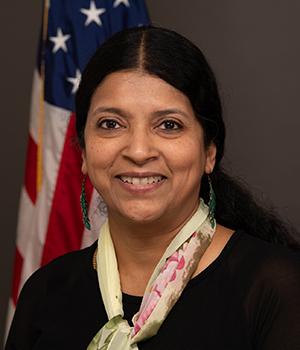
Careers in plant-microbe interactions span more than research. Suma Chakravarthy is a senior science advisor at the USDA-APHIS-Biotechnology Regulatory Service. She earned her Ph.D. degree in genetics at Delhi University, working in plant biology, and was a postdoctoral researcher in Dr. Greg Martin‘s lab at the Boyce Thompson Institute. Read how she made her way to her current position and her role at APHIS.

1. What drew you to your current job?

The availability of new techniques for genome engineering allows developers to introduce desirable traits into plants and other organisms, with the promise of enhancing sustainability and food security. This is an exciting period for countries trying to enable innovation and revise or adapt their regulatory processes for the oversight of products of agricultural biotechnology. In my current job, I work with federal partners and coordinate international communication to support science- and risk-based regulatory decision-making, while also providing support for APHIS BRS regulatory processes.

The chance to learn constantly, provide technical advice and influence policy, and work on international cooperation with many countries and organizations is exciting and motivating for me and drew me to my current job.

2. How did you choose molecular plant-microbe interactions as your focus of research?

My Ph.D. degree was in the field of plant biotechnology and focused on modification of the CaMV 35S promoter for transgene expression. The “clever” 35S promoter is a perfect example of plant-pathogen coevolution, as this viral promoter has cis-elements found in plant promoters and is responsive to the defense hormone salicylic acid, among other stimuli. My interest in plant transcription serendipitously led me to the lab of Prof. Greg Martin, where I started my postdoc studying the role of transcription factors in plant defense responses. During my years in academia, I was fortunate to be able to study plant defense responses, as well as bacterial virulence strategies.

3. What advice would you give to starting graduate students?

Remember that graduate school is only the start of your career, which could take different turns in your life. During grad school, it is important to focus on your project, work hard, and not get disappointed by failures. Have a backup project (or two) in case your main project is not successful. This is a good time to develop writing skills. Most important, do not box yourself in a niche field: read broadly, network, be interested in what other graduate students do, and enjoy the journey. A side hobby is a great way to decompress and take a mental break.

4. What advice would you give to people starting out in the job market?

Take time to prepare a good resume tailored to the advertised job and seek feedback from someone senior in your organization to polish the resume. It may take a few iterations till the application looks sharp. Prepare a list of potential interview questions and practice your answers, preferably with a colleague or senior, paying attention to content and timing. Be focused on the requirements of the job during your preparation phase.

Do not be afraid to contact potential employers and express your interest to learn about their work. Networking is critical because it will improve your understanding of opportunities and the scope of jobs in your field. Although it is important to find the right job for your background, sometimes the dream job will not come your way and it may be more realistic to accept the next-best position and do your best in it. Over time, other opportunities for growth will present themselves. A very important piece of advice, in my opinion, for young professionals is not to switch jobs too quickly—take time to learn the subject area and contribute to the mission of your employer. Important skills that will make you successful in the job market are good teamwork, collaboration, clear communication, and integrity.

5. Who has inspired you scientifically? Why?

Gregor Johann Mendel, who laid the foundation of the science of genetics, has inspired me scientifically. Despite facing tremendous personal struggles, he had many aspirational qualities that contributed to his success in laying down the foundational rules of inheritance. He had astute powers of observation and was rigorous, methodical, analytical, and persistent. He displayed courage to stand up for what he believed was right.

6. How did you make the transition from science to policy?

The Science and Technology Policy Fellowship (STPF) program of the American Association for the Advancement of Science (AAAS) helped me segue from science to policy. I listened to some lectures by invited scientists at Cornell University and became aware of the prospects the AAAS STPF gives to scientists to contribute their knowledge in the policy realm. The stories of former fellows were inspiring and offered a glimpse into an exciting and relevant career path. As a STPF Fellow in USDA APHIS BRS, the transition process was difficult, and I missed being on the bench and doing active research. I had to learn about biotechnology regulations, how they are implemented, how to apply science to perform risk assessments, and decision-making in the face of uncertainty. Every bit of my education, research experience, and soft skills were utilized during this transition. In my current position I am a regulatory scientist doing science and policy work, applying scientific skills to support complex evaluation of products to make regulatory determinations, and keeping up with advancements that will inform future policy.

7. What is the greatest challenge you have encountered in your career? What did you do to overcome this challenge?

I worked as regulatory manager at CropLife International (CLI), an international trade association that promotes agricultural technologies. The job at CLI pushed me out of my comfort zone because it was a new work environment and I had to interact with industry colleagues and a dynamic team of legal, trade policy, and communication professionals whose purpose was to promote trade and globally harmonized regulatory policies. This meant I had to zoom out and look at the big picture instead of focusing on details. I used the lessons from my academia workbook to overcome the challenge. I observed the workstyle of different member companies; learned about business pipelines and the importance of deadlines; was goal oriented; collected and organized information; used data for problem solving and presenting solutions; and was open to critical suggestions. My experience working in different sectors now helps me in my current job.

8. How can people find you on social media?

I have a LinkedIn profile, which is the easiest way to find me on social media.

9. What’s your favorite story from an IS-MPMI Society meeting?

The first IS-MPMI meeting I attended was in Madison, WI, in 2001, when I was a postdoc in Greg Martin’s lab working on the ethylene response factor Pti4. During the meeting, our lab met Charles Després who is now professor, biological sciences, at Brock University in Canada. Charles had an interest in studying plant signaling pathways, and after the meeting, we went on to become collaborators and coauthors on a 2003 paper on Pti4-mediated gene expression and its role in plant defense. This is a favorite story because it showcases the power of networking prior to the explosion of social media!

10. Have you ever conducted research in a country other than the United States? What were the challenges and good parts?

I completed my Ph.D. degree in India under the guidance of Dr. P.K. Burma and Dr. D. Pental. I was part of the first cohort of Ph.D. students from the lab and worked with researchers who focused on transformation and improvement of Brassica, cotton and pigeon pea using Agrobacterium and biolistic based methods. It was a stimulating environment, and I learned a lot though the discoveries and experiences of fellow scientists. At that time, it was challenging to access scientific literature, and I had to commute to a different institution to prepare photocopies of articles to read. Visits to the library often turned into a full-day event, which allowed me to detach from the bench and spend time browsing journals and books.

11. Is there anything else you would like to share? If so, what is it?

In my opinion, it is important to find ways to pay forward the support we obtain during our career to other colleagues and younger professionals. This could be by mentoring, offering career advice, or volunteering in schools and the local community.

12. Bonus question: What’s your favorite molecular plant pathology-related article?

This paper I am a co-author on is by far my favorite—it was published when I was a research associate in Dr. Alan Collmer‘s lab: “Genetic Disassembly and Combinatorial Reassembly Identify a Minimal Functional Repertoire of Type III Effectors in Pseudomonas syringae. (Cunnac, S., Chakravarthy, S., Kvitko, B. H., Russell, A. B., Martin, G. B., and Collmer, A. 2011. Proc. Natl. Acad. Sci. 108:2975-2980).​

2024 – ISSUE 4

InterConnections
Spotlight on Early Career Researchers

Recent graduate Dr. Alexandra Margets is focused on identifying and understanding the components of the plant-pathogen interface, and her research work has led to the identification of a key protease effector of soybean cyst nematode. With her current and future research, she hopes to gain information that expands our knowledge of plant immunity.
 
InterOutreach
Science Communication with Priya Sengupta, Part II

In the second part of our series on science outreach and communication, Dr. Priyamedha Sengupta describes her outreach activities, including working on an educational animated program; giving Soapbox Science presentations on the street; and participating in the Pint of Science festival, delivering talks in bars and pubs, as well as participating in the 2022 IS-MPMI Early Career Showcase.
 

Research Spotlights

Meet Ph.D. student Ye-Eun Seo, Department of Horticultural Science and Biotechnology, Seoul National University, South Korea, who received the MPMI Best Student Paper Award for her first-author paper on “Phytophthora infestans RxLR Effector PITG06478 Hijacks 14-3-3 to Suppress PMA Activity Leading to Necrotrophic Cell Death.”
 
​Meet Jiyeong (Jess) Choi, a recent Ph.D. degree graduate from Cornell University, USA, who garnered an Honorable Mention for Best Student Paper in MPMI for her first-author paper, “Grapevine Fanleaf Virus RNA1-Encoded Proteins 1A and 1BHel Suppress RNA Silencing.”
Congratulations to Xing Wang for garnering an Honorable Mention Best Student Paper in MPMI for her first-author paper, “A Coculture of Enterobacter and Comamonas Species Reduces Cadmium Accumulation in Rice.”
 
Opportunities
Donate to the Michael Mishkind Travel Fund and support travel awards for IS-MPMI members who are early career researchers seeking to attend the 2025 IS-MPMI Congress.
 
IS-MPMI Is Now on Bluesky!

Follow us on this new social media platform that continues to increase its presence in the scientific community.
Join the IS-MPMI Community

Get involved with IS-MPMI by presenting and attending the IS-MPMI Conference, submitting a manuscript to MPMI, or sharing content through social media platforms. Learn how you can volunteer and engage with the IS-MPMI community.
 
Join us in welcoming new members to the IS-MPMI community.
 
Explore New Entries in the “What’s New in MPMI!” Virtual Seminar Series

Thank you to everyone who joined us for the latest “What’s New in MPMI!” virtual seminar, with host Jeanne Harris and guest Yingpeng Xie, who discussed the MPMI H. H. Flor Distinguished Review, “Unlocking Nature’s Defense: Plant Pattern Recognition Receptors as Guardians Against Pathogenic Threats.”
 
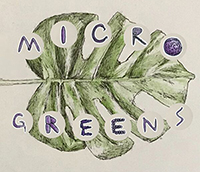
To gain new insights into the field of plant immunity, listen to “Microgreens” season 2, episode 5, during which Raka MitraDominique Holtappels, and Tiff Mak discuss plant immunity with guest Jane Parker.
 
Catch up with recent MPMI Editor’s Picks published in the August, September, and October issues and additional commentaries authored by MPMI Assistant Feature Editors.
 
Events
Register for the 2025 Early Career Showcase Happening in February

On Thursday, February 20, and Thursday, February 26, half-day virtual events will highlight research on molecular plant-microbe interactions by early career scientists around the globe.
 

Join Us at the 2025 IS-MPMI Congress

Make plans now to attend the 2025 IS-MPMI Congress in Cologne, Germany, July 13–17.
 

Looking for a Job?

Check out the Job Center on the IS-MPMI website.

2024 – ISSUE 4

InterConnections

Spotlight on Early Career Researchers

Recent graduate Dr. Alexandra Margets is focused on identifying and understanding the components of the plant-pathogen interface, and her research work has led to the identification of a key protease effector of soybean cyst nematode. With her current and future research, she hopes to gain information that expands our knowledge of plant immunity.
 
InterOutreach

Science Communication with Priya Sengupta, Part II

In the second part of our series on science outreach and communication, Dr. Priyamedha Sengupta describes her outreach activities, including working on an educational animated program; giving Soapbox Science presentations on the street; and participating in the Pint of Science festival, delivering talks in bars and pubs, as well as participating in the 2022 IS-MPMI Early Career Showcase.
 

Research Spotlights

Meet Ph.D. student Ye-Eun Seo, Department of Horticultural Science and Biotechnology, Seoul National University, South Korea, who received the MPMI Best Student Paper Award for her first-author paper on “Phytophthora infestans RxLR Effector PITG06478 Hijacks 14-3-3 to Suppress PMA Activity Leading to Necrotrophic Cell Death.”
 
​Meet Jiyeong (Jess) Choi, a recent Ph.D. degree graduate from Cornell University, USA, who garnered an Honorable Mention for Best Student Paper in MPMI for her first-author paper, “Grapevine Fanleaf Virus RNA1-Encoded Proteins 1A and 1BHel Suppress RNA Silencing.”
Congratulations to Xing Wang for garnering an Honorable Mention Best Student Paper in MPMI for her first-author paper, “A Coculture of Enterobacter and Comamonas Species Reduces Cadmium Accumulation in Rice.”
 
Opportunities
Donate to the Michael Mishkind Travel Fund and support travel awards for IS-MPMI members who are early career researchers seeking to attend the 2025 IS-MPMI Congress.
 

IS-MPMI Is Now on Bluesky!

Follow us on this new social media platform that continues to increase its presence in the scientific community.

Join the IS-MPMI Community

Get involved with IS-MPMI by presenting and attending the IS-MPMI Conference, submitting a manuscript to MPMI, or sharing content through social media platforms. Learn how you can volunteer and engage with the IS-MPMI community.
 
Join us in welcoming new members to the IS-MPMI community.
 

Explore New Entries in the “What’s New in MPMI!” Virtual Seminar Series

Thank you to everyone who joined us for the latest “What’s New in MPMI!” virtual seminar, with host Jeanne Harris and guest Yingpeng Xie, who discussed the MPMI H. H. Flor Distinguished Review, “Unlocking Nature’s Defense: Plant Pattern Recognition Receptors as Guardians Against Pathogenic Threats.”
 
To gain new insights into the field of plant immunity, listen to “Microgreens” season 2, episode 5, during which Raka MitraDominique Holtappels, and Tiff Mak discuss plant immunity with guest Jane Parker.
 
Catch up with recent MPMI Editor’s Picks published in the August, September, and October issues and additional commentaries authored by MPMI Assistant Feature Editors.
 
Events

Register for the 2025 Early Career Showcase Happening in February

On Thursday, February 20, and Thursday, February 26, half-day virtual events will highlight research on molecular plant-microbe interactions by early career scientists around the globe.
 

Join Us at the 2025 IS-MPMI Congress

Make plans now to attend the 2025 IS-MPMI Congress in Cologne, Germany, July 13–17.
 

Looking for a Job?

Check out the Job Center on the IS-MPMI website.

Register for the 2025 Early Career Showcase Happening in February

07Event EC Showcase

On Thursday, February 20, and Thursday, February 26, half-day virtual events will highlight research on molecular plant-microbe interactions by early career scientists around the globe. In addition, this showcase aims to welcome new researchers to our community and create a platform for networking and sharing ideas. Registration for the showcase is free for members and $39 for nonmembers! Learn m​ore.​

MPMI Journal Highlights

06EdPick AugGraphic

 MPMI Volume 37, Number 8, Editor’s Pick

Reshaping the Primary Cell Wall: Dual Effects on Plant Resistance to Ralstonia solanacearum and Heat Stress Response

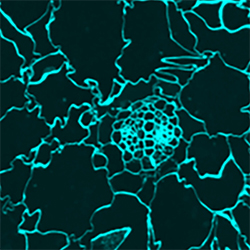
Henri Desaint et al. show that mutating the cellulose synthase subunit CESA3 enhances resistance to Ralstonia solanacearum in Arabidopsis thaliana, even under heat stress, offering insights into breeding heat-resilient resistance against this pathogen amid climate change.

Read the Commentary by Assistant Feature Editors Jawahar Singh and Manish Tiwari.

06EdPick SepGraphic 1

 MPMI Volume 37, Number 9, Editor’s Pick

Rhizobial Secretion of Truncated Exopolysaccharides Severely Impairs the​ Mesorhizobium-Lotus Symbiosis

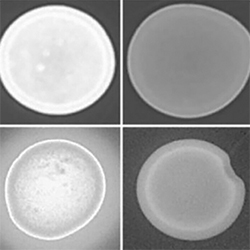
Todd Wightman et al. used a suppressor screen to show that the severe symbiotic phenotype of the exoU mutant was due to the secretion of an acetylated pentasaccharide, as both monomers and oligomers, by the same Wzx/Wzy system that transports wild-type exopolysaccharide.

Read the Commentary by Assistant Feature Editors Ruby Tiwari and Jawahar Singh.


06EdPick OctGraphic

 MPMI Volume 37, Number 10, Editor’s Pick

Immunolocalization and Ultrastructure Show Ingestion of Cry Protein Expressed in Glycine max by Heterodera glycines and Its Mode of Action

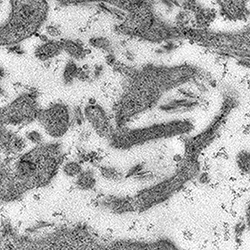
Soybean plants expressing Bacillus thuringiensis Cry14Ab show promise for controlling the soybean cyst nematode, an adaptive pest. R. Howard Berg et al. highlight Cry14Ab’s unique midgut-disrupting action, revealed through electron microscopy, offering a novel transgenic approach distinct from native resistance sources.

Read the Commentary by Assistant Feature Editor Ved Prakash.

Explore New Entries in the “What’s New in MPMI!” Virtual Seminar Series

MPMI VirtualSeminar banner700

Thank you to everyone who joined us from all around the world for the latest “What’s New in MPMI!” virtual seminar with host Jeanne Harris and guest Yingpeng Xie, who discussed the MPMI H. H. Flor Distinguished Review “Unlocking Nature’s Defense: Plant Pattern Recognition Receptors as Guardians Against Pathogenic Threats.”

Miss the live virtual seminar? The full recording is now available online!
Watch Now

Welcome New IS-MPMI Members

Jeff Anderson
Dick Yaw Acheampong Andoh
Katherine Blocklove
Joydeep Chakraborty
Jeffrey Chen
Laurent Deluc
Elsie Ayamoh Enow
Alexandra D. Gates
Almuth Hammerbacher
Matthias Heuberger
Erin Huiting
Yoshiyuki Imura
Muhammad Shahzad Iqbal
Hira Kamal
Anil Kumar
Thorsten Langner
Cecile Lorrain
Ignacio Eduardo Maldonado-Mendoza
Nikolaos Mastrodimos
Chandan Maurya
Janhavi Maurya
Adam Mott
Ketra Oketcho
Sona Pandey
Carmen Sanchez Canizares
Cecile Segonzac
Susmita Sett
Shilpi Sharma
Najeeb Ullah​​

Scroll to Top