Category: ​​​Interactions Archives​

InterConnections: Get to Know Kamesh Regmi

MPMI banner700

Three-Dimensional Ultrastructure of Arabidopsis Cotyledons Infected with Colletotrichum higginsianum

Name: Kamesh Regmi
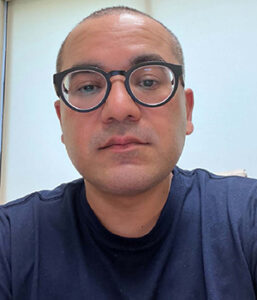
InterConnections Regmi

Current Position: Assistant Professor, Kenyon College (Gambier, Ohio)

Education: B.A. degree, Reed College; Ph.D. degree, Arizona State University

Non-scientific interests: Visual media

Brief Bio: I grew up in Nepal and arrived at Reed College to pursue my college education, graduating with a degree in biology. Then I met Dr. Roberto Gaxiola on a visit to Arizona State University (ASU) and was immediately fascinated by the mechanisms of photosynthate transport in phylogenetically diverse lineages of plants. During my pursuit of a Ph.D. degree at Dr. Gaxiola’s lab, I studied sugar transport and partitioning in a vascular monocot rice and a nonvascular moss, Physcomitrium, and showed that the molecular toolkit required for sugar transport evolved before phloem itself. Overall, trying to understand how structure recapitulates function in the biological universe has been the primary driving force of my research. I ultimately landed as a postdoctoral researcher in Dr. Roger Innes‘ lab at Indiana University, where I optimized and utilized state-of-the-art imaging methods like serial block-face and focused ion beam scanning electron microscopy to elucidate and reconstruct the three-dimensional ultrastructure of various Colletotrichum fungi in the process of infecting host plants like Arabidopsis, sorghum, and Medicago. Last summer, I moved to Kenyon College, a small, primarily undergraduate, liberal arts institution, to establish my own plant biology lab. At Kenyon, I have really enjoyed teaching a wide array of classes—ranging from introductory labs and lectures to upper-division courses in plant physiology and pathology. Specifically, integrating hypothesis-driven, research-oriented, publication-quality science in the classes that I teach to highly motivated undergraduate students has been a rewarding experience.

InterConnections: Get to Know Freddie King

MPMI banner700


Border Control: Manipulation of the Host–Pathogen Interface by Perihaustorial Oomycete Effectors

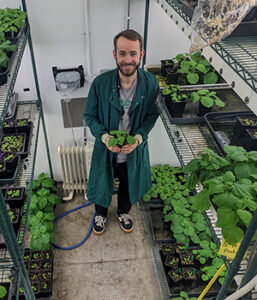
Name: Freddie King

InterConnections King (1)

Current Position: Ph.D. Student in the Bozkurt Lab at Imperial College London

Education: M.Res. degree in synthetic and systems biology from Imperial College London; M.Biol. degree in biological sciences from Balliol College, University of Oxford

Non-scientific Interests: Climbing, running, and reading

Brief Bio: My first experience of molecular plant pathology was at Rothamsted Research Station, where I undertook a summer internship in Professor Kim Hammond-Kosack‘s group. At Rothamsted, I worked on developing genetic resistance against Fusarium head blight, a fungal disease that still poses a significant threat to global cereal production.

At the University of Oxford, I joined Professor Renier van der Hoorn‘s group for my master’s project to improve plant molecular farming. Plant molecular farming uses plants as biofactories to produce valuable pharmaceutical proteins, such as antibodies and enzymes. I investigated using pathogen effectors to suppress the plant immune system and boost plant molecular farming yields.

My current Ph.D. project in Dr. Tolga Bozkurt‘s lab at Imperial College London combines my interests in synthetic biology and molecular plant pathology. I am working toward engineering plant immune receptors, using synthetic biology approaches and structural modeling, to recognize new pathogen effectors.

In our review published in MPMI, we discuss effectors from oomycete plant pathogens that accumulate near the haustorium, a specialized digit-like pathogen feeding structure.

By summarizing the current literature on perihaustorial effectors, we found that many perihaustorial effectors convergently target host endomembrane trafficking to suppress the plant immune response at this crucial interface.


InterDisciplines: 2023 Future Science Prize in Life Sciences Awarded to Dr. Jijie Chai and Dr. Jian-Min Zhou

Congratulations to Dr. Jijie Chai and Dr. Jian-Min Zhou, winners of the 2023 Future Science Prize in Life Sciences in China! Dr. Chai and Dr. Zhou won this prestigious award for their

InterDisciplines prize

discovery of resistosomes and were recently honored at a ceremony in China.​

The Future Science Prize recognizes scientific breakthroughs in life science, physical science, and mathematics/computer science. The prize was initiated in 2016 by the Future Forum, a nonprofit organization based in mainland China. Learn more.

Jijie Chai was born in Liaoning, China, in 1966. He received his Ph.D. degree from the Institute of Materia Medica, Chinese Academy of Medical Sciences and Peking Union Medical College in 1997.

Jian-Min Zhou was born in Sichuan, China, in 1964. He received his Ph.D. degree from Purdue University in 1994.​


Mark Your Calendar for the 2025 IS-MPMI Congress!

2025Congress banner (2)

Join us at the IS-MPMI Congress, July 13–17, 2025, at the Confex Conference and Exhibition Centre in Cologne, Germany, for groundbreaking research, sessions, and dialogues on molecular plant-microbe interactions. Stay tuned for updates!

Learn more.

Bylaw Amendment Vote

The IS-MPMI Board of Directors recently reviewed and amended the IS-MPMI Bylaws, and members were sent a ballot to ratify the amendments. Voting is open through March 25, 2024.

SocNews BallotBox 2768443 (1)

Contact Linda Schmitt at IS-MPMI headquarters if you need your ballot resent to you.

2024​ – ISSUE 1

Join us at the IS-MPMI Congress, July 13–17, 2025, at the Confex Conference and Exhibition Centre in Cologne, Germany, for groundbreaking research, sessions, and dialogues on molecular plant-microbe interactions.
 
The 2025 MPMI Focus Issue on Fine Grain will draw together reviews and original research papers on contemporary developments in understanding staple cereal crops and their pathogens. Submit your manuscript by September 30, 2024.
Recordings of presentations given at the 2023 IS-MPMI Congress are available to all members and those who registered to attend the congress. Explore what you missed!

Root & Shoot Is Leading Cultural Change in Plant Science through Professional Societies

IS-MPMI is part of Root & Shoot, a Research Coordination Network (RCN) leading cultural change in plant science, with the aim of creating a culture of support. Learn more about Root & Shoot and available opportunities.

InterDisciplines: 2023 Future Science Prize in Life Sciences Awarded to Dr. Jijie Chai and Dr. Jian-Min Zhou

Congratulations to Dr. Jijie Chai and Dr. Jian-Min Zhou, winners of the 2023 Future Science Prize in Life Sciences in China! Drs. Chai and Zhou won this prestigious award for their discovery of resistosomes.
 

InterConnections: Get to Know Freddie King

Freddie King, Ph.D. student at Imperial College London, is the first author on a recent review published in MPMI summarizing mechanisms of perihaustorial effectors from oomycetes. Learn more about Freddie and how these proteins manipulate host immunity at the haustorial-plant interface.
 

InterConnections: Get to Know Kamesh Regmi

Kamesh Regmi and co-authors in the Innes lab at Indiana University Bloomington combined high-pressure freezing and freeze-substitution with serial block-face scanning electron microscopy to generate 3D models of the cytological events that occur during the susceptible interaction between Colletotrichum and Arabidopsis. Learn more about Kamesh and the study findings.
 

InterConnections: Get to Know Tom Waksman

Meet Dr. Tom Waksman, postdoctoral associate in the Bos lab at the University of Dundee, and first author of the recent MPMI paper “Computational Prediction of Structure, Function and Interaction of Myzus persicae (Green Peach Aphid) Salivary Effector Proteins.” Waksman and co-authors used computational methods to predict functional properties of M. persicae effectors. Learn more.
 
In the latest MPMI Editor’s Pick, Zitong Yang et al. show how the Phytophthora sojae effector PsCRN108 suppresses plant immunity by inhibiting the expression of Heat Shock Protein (HSP) family genes, shedding light on a new mechanism by which CRN effectors manipulate transcription factors to impact immunity.
 
Listen to the What’s New in MPMI Virtual Seminar presented by Hasna Boubakri on “A Nonspecific Lipid Transfer Protein with Potential Functions in Infection and Nodulation.”
Check out the Job Center on the IS-MPMI website.

2023​ – ISSUE 4

Pritha Kundu, postdoctoral fellow, University of Nebraska-Lincoln, interviewed IS-MPMI President Adam Bogdanove, professor, Department of Plant Pathology and Plant-Microbe Biology, Cornell University, about his research and career.
 
Siva Sankari, assistant investigator, Stowers Institute, and MPMI assistant feature editor, interviewed Cara Haney, associate professor, University of Pittsburgh, and 2023 IS-MPMI Early Career Achievement Award winner, about her research.
Eilyn Mena, scientist, Clemente Estable Biological Research Institute of Montevideo, interviewed Xiufang Xin, research group leader, Center for Excellence in Molecular Plant Sciences/Institute of Plant Physiology and Ecology, and IS-MPMI Early Career Achievement Award winner, about her work and experience in plant–pathogen interactions.
Micro… Greens? What Is Microgreens?

Dr. Tiff Mak, postdoctoral researcher, NNF Center for Biosustainability at DTU, and Dr. Dominique Holtappels, postdoctoral researcher, University of California, Berkeley, are the new hosts of the Microgreens podcast! Learn about Microgreens and what Mak and Holtappels have planned for upcoming episodes.
Conception of a Quiz-Based Gameshow, “Who Wants to Be an (MPMI)llionaire?,” at the 2023 IS-MPMI Congress

The quiz-based gameshow “Who wants to be an (MPMI)llionaire” held at the 2023 IS-MPMI Congress was a huge success. Learn about how it originated and was organized by Meenu Singla, postdoctoral associate, Innes lab, University of Indiana.
 
InterConnections: Get to Know Mohamed Hafez

Learn about Mohamed Hafez, coauthor of the research paper “Evolution of the ToxB Gene in Pyrenophora tritici-repentis and Related Species” recently published in MPMI, and the work that has provided novel insights into ToxB, its homologs, and its evolution.
 
Research Highlight: Evolution of the ToxB Gene in Pyrenophora tritici-repentis and Related Species

Reem Aboukhaddour, Cereal Pathology Lab, Agriculture and Agri-Food Canada, Lethbridge, AB, discusses the pivotal question of how Pyrenophora tritici-repentis, the cause of tan spot of wheat, became pathogenic and how the inquiry aligns with the ongoing exploration of the emergence of necrotrophic diseases.
 
What Does It Mean to Practice Inclusion in Science?

In a new episode of MicrogreensDr. Tiff Mak and Dr. Dominique Holtappels interview Dr. Amie Fornah Sankoh, who shares her journey to becoming the first deaf, black woman to receive a doctorate in a STEM discipline in the United States.
 
Explore three new MPMI Virtual Seminars presented by Hasna BoubakriHyelim Jeon and Cécile Segonzac, and Sajjan Grover.
 
Discover the latest MPMI Editor’s Picks by Zhide Tang and colleagues on the role of O-antigen in rhizobium–legume symbiosis and by Eeva Marttinen and colleagues, who screened part of the Physcomitrium patens mutant collection to elucidate the pathway of peroxidase activity in response to chitosan treatment.

2023​ – ISSUE 4

Pritha Kundu, postdoctoral fellow, University of Nebraska-Lincoln, interviewed IS-MPMI President Adam Bogdanove, professor, Department of Plant Pathology and Plant-Microbe Biology, Cornell University, about his research and career.
 
Siva Sankari, assistant investigator, Stowers Institute, and MPMI assistant feature editor, interviewed Cara Haney, associate professor, University of Pittsburgh, and 2023 IS-MPMI Early Career Achievement Award winner, about her research.
Eilyn Mena, scientist, Clemente Estable Biological Research Institute of Montevideo, interviewed Xiufang Xin, research group leader, Center for Excellence in Molecular Plant Sciences/Institute of Plant Physiology and Ecology, and IS-MPMI Early Career Achievement Award winner, about her work and experience in plant–pathogen interactions.

Micro… Greens? What Is Microgreens?

Dr. Tiff Mak, postdoctoral researcher, NNF Center for Biosustainability at DTU, and Dr. Dominique Holtappels, postdoctoral researcher, University of California, Berkeley, are the new hosts of the Microgreens podcast! Learn about Microgreens and what Mak and Holtappels have planned for upcoming episodes.

Conception of a Quiz-Based Gameshow, “Who Wants to Be an (MPMI)llionaire?,” at the 2023 IS-MPMI Congress

The quiz-based gameshow “Who wants to be an (MPMI)llionaire” held at the 2023 IS-MPMI Congress was a huge success. Learn about how it originated and was organized by Meenu Singla, postdoctoral associate, Innes lab, University of Indiana.
 

InterConnections: Get to Know Mohamed Hafez

Learn about Mohamed Hafez, coauthor of the research paper “Evolution of the ToxB Gene in Pyrenophora tritici-repentis and Related Species” recently published in MPMI, and the work that has provided novel insights into ToxB, its homologs, and its evolution.
 

Research Highlight: Evolution of the ToxB Gene in Pyrenophora tritici-repentis and Related Species

Reem Aboukhaddour, Cereal Pathology Lab, Agriculture and Agri-Food Canada, Lethbridge, AB, discusses the pivotal question of how Pyrenophora tritici-repentis, the cause of tan spot of wheat, became pathogenic and how the inquiry aligns with the ongoing exploration of the emergence of necrotrophic diseases.
 

What Does It Mean to Practice Inclusion in Science?

In a new episode of MicrogreensDr. Tiff Mak and Dr. Dominique Holtappels interview Dr. Amie Fornah Sankoh, who shares her journey to becoming the first deaf, black woman to receive a doctorate in a STEM discipline in the United States.
 
Explore three new MPMI Virtual Seminars presented by Hasna BoubakriHyelim Jeon and Cécile Segonzac, and Sajjan Grover.
 
Discover the latest MPMI Editor’s Picks by Zhide Tang and colleagues on the role of O-antigen in rhizobium–legume symbiosis and by Eeva Marttinen and colleagues, who screened part of the Physcomitrium patens mutant collection to elucidate the pathway of peroxidase activity in response to chitosan treatment.
Scroll to Top