Endophytes colonize plants, sometimes to the benefit of the host. Beverly Agtuca and colleagues examine the effect of colonization by a bacterial Herbaspirillum endophyte on the metabolome of host cells, indicating increases in purine, zeatin, and riboflavin pathways.



| Also in this issue… |
|
MPMI and plant science-related news items from mainstream press.
In celebration of the 2020 International Year of Plant Health, IS-MPMI is hosting a satellite meeting to coincide with the APS annual meeting, Plant Health 2020, August 8–12, 2020. The goal of the satellite meeting is to capitalize on the expertise of the already-gathered IS-MPMI and APS communities to exchange ideas and strategies to bridge the foundational research–translation gap to promote plant health around the world.
The meeting was held in Guangzhou, China on Oct 8–12, 2019 and was attended by more than 380 scientists from China, USA, Canada, Singapore, and Germany. The closing summary speaker was the chair of this meeting, Yi Li, Peking University, China. He encouraged more academic exchanges between China and the worldwide community,
which would greatly promote plant virology and MPMI research. News
The health, safety and well-being of our community is our highest priority. We are closely monitoring the evolving, international advisories and will provide regular updates on all upcoming meeting and events. While there are no federal restrictions in place to prevent meetings or travel within the United States or Canada as of March 12, we recommend that you abstain from booking non-refundable travel to any scheduled IS-MPMI events at this time. Please refer to the CDC and World Health Organization websites for the most up-to-date information on COVID-19.
|
 |
| We are always looking for content for Interactions. Please contact Interactions Editor-in-Chief Dennis Halterman with questions or article ideas. |
|
IS-MPMI Interactions is a benefit of your IS-MPMI membership. Thank you for your continued support!
|
Urooj Fatima
Urooj is the lead author on a recent Editor’s Pick paper in the MPMI journal. You can read the original article in the MPMI Journal here.
Current Position: PhD student at National Institute of Plant Genome Research (NIPGR), New Delhi, India

Education: BS and MS in biotechnology from C.S.J.M University, Kanpur, India
Non-scientific Interest: Cooking, interior designing, writing and mentoring personality development programs for women’s empowerment
Brief-bio: I am a doctoral student at NIPGR, working under the supervision of Dr. Muthappa Senthil-Kumar. The research work published in MPMI includes the side project undertaken during my PhD. The aim of this project was to identify the nonhost resistance (NHR) contributing genes and the mechanisms operating in a nonhost, chickpea (Cicer arietinum) plant against Alternaria brassicae, which is a devastating fungal pathogen that causes considerable yield loss in Brassica crops. For my PhD thesis I am working to understand the defense strategies used by Arabidopsis thaliana for limiting the nutrient availability to invading bacterial pathogens. Specifically, I am studying the role of SWEET class of transporters. I enjoyed working on these two projects that entails entirely different pathosystem that helped me in comprehending the broad scientific concepts and learning new techniques.
************************
Urooj Fatima and Muthappa Senthil-Kumar; from the summary of the research Morpho-Pathological and Global Transcriptomic Analysis Reveals the Robust Nonhost Resistance Responses in Chickpea Interaction with Alternaria brassicae:
We have a few key points to share with the young researchers that we followed during manuscript preparation for submission in MPMI. A researcher must have a thorough understanding of their topic to carry out good research work. We have extensively studied the literature including recent and old research papers, review article and books related to my topic. Parallel to this manuscript, we wrote a review article about the perspective on the host and nonhost resistance mechanism against Alternaria blight. This allowed us to comprehend the topic of research better and to address the scientific problem systematically. Besides, it is important to note that the presentation of data in a well organized and comprehensive way is one of the primary factors to get a manuscript published in reputed journals. Apart from thorough experimentations, we critically worked on manuscript writing and data presentation in the form of quality figures. Further, data transparency is another important aspect in the research field. To provide more transparency, we have submitted the figure-wise raw data for the manuscript. It is advisable to submit the raw data files and make it available to reach the scientific audience to increase the credibility of your research work. By considering above mentioned points, we were able to publish our work in a highly reputed journal, MPMI.
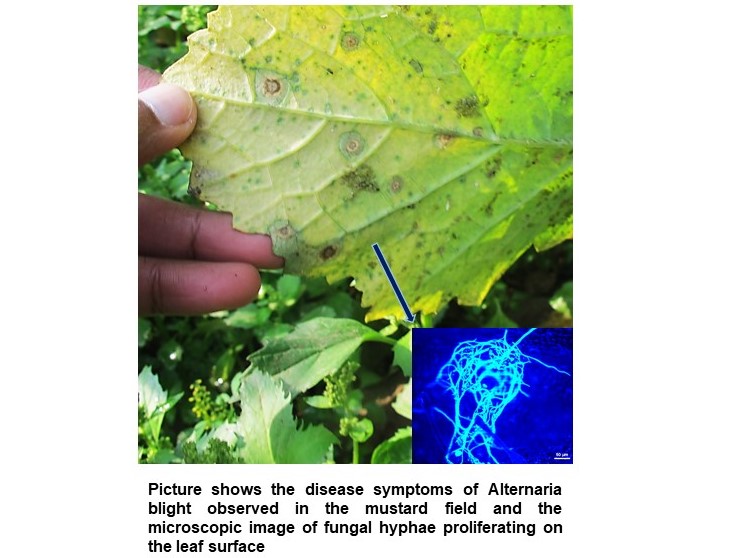
Read more about how the project got started and Urooj Fatima and Muthappa Senthil-Kumar’s (National Institute of Plant Genome Research, New Delhi) thoughts on the research here.
Yi Li, Peking University
The 2019 annual meeting of Plant Virology and Plant-Pathogen Interaction Committee, Chinese Society for Plant Pathology (CSPP) was held in Guangzhou on Oct 8-12, 2020. This meeting was co-organized by the Plant Virology and Plant-Pathogen Interaction Committee and South China Agriculture University. The theme of the 2019 annual meeting was Plant Viruses In Natural Environment. At this meeting, we aimed to foster multiple layers of interactions in plant pathology. The conference brought together students, postdocs, and PIs working at different levels of inquiry both from basic research of MPMI and also from applied aspects of plant pathology. More than 380 scientists from China, USA, Canada, Singapore, and Germany attended the symposium.
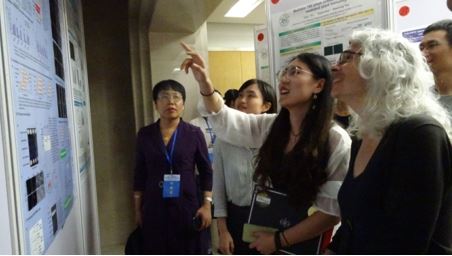
The meeting began with an opening plenary speaker S. P. Dinesh-Kumar, UC Davis. His talk entitled Emerging Perspectives On Innate Immune Signaling started with the first identified plant resistance gene N gene which could confer immunity against Tobacco mosaic virus. Second opening plenary talk given by Jianmin Zhou, Chinese Academy of Sciences, who led Chinese scientist groups to make breakthrough discoveries in solving pentangular plant inflammasome. He followed with a discussion of global MPMI research trends in plant immunity, with a future outstanding question of whether we can engineer new resistance with the assistance of structure.
The plenary session was led by Jeanne Harris (seen at right), Professor at University of Vermont, and Editor-in-Chief of MPMI. Her talk entitled The Top 10 Unanswered Questions In Molecular Plant-microbe Interactions featured the most important outstanding scientific questions within the MPMI international research community. The chief editor of MPMI also chaired the poster prize awarding ceremony. Poster prize winners and young scientists discussed the topic of Frontiers of Biotic Interactions and Career Development of Young Scientists with Harris.
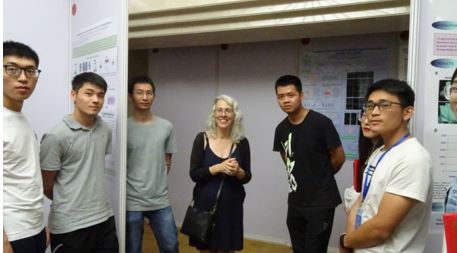 The closing summary speaker was the chair of this meeting. Yi Li, Peking University, China. He summarized our meeting experience and identified actionable items that we can use to impact our own research. He also encouraged more academic exchanges between China and the worldwide community, which would greatly promote plant virology and MPMI research.
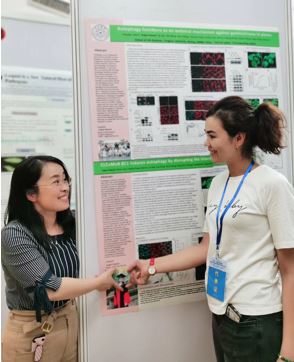
(click to view poster)
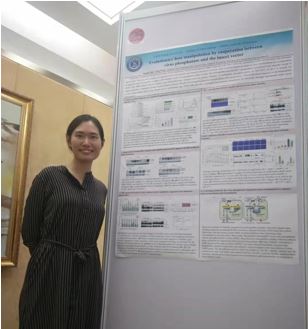
(click to view poster)
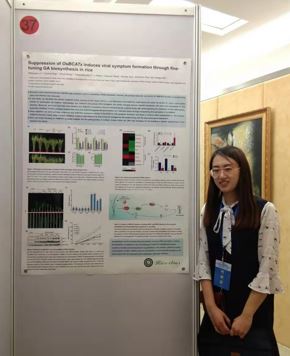
(click to view poster)
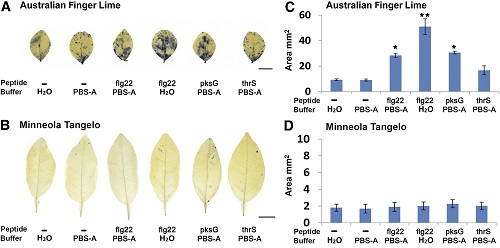
Citrus huanglongbing (HLB), caused by phloem-limited ‘Candidatus Liberibacter’ bacteria, is a destructive disease threatening the worldwide citrus industry. The mechanisms of pathogenesis are poorly understood and no efficient strategy is available to control HLB. Chen et al. used a comparative genomics screen to identify candidate microbe-associated molecular patterns (MAMPs) from ‘Ca. Liberibacter’ spp. Their findings identify MAMPs that boost immunity in citrus and could help prevent or reduce HLB infection.
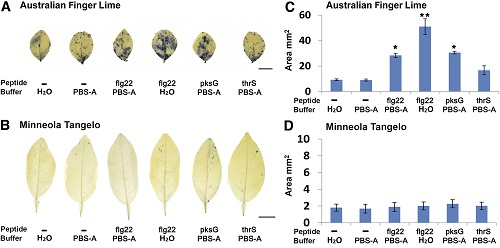
Citrus huanglongbing (HLB), caused by phloem-limited ‘Candidatus Liberibacter’ bacteria, is a destructive disease threatening the worldwide citrus industry. The mechanisms of pathogenesis are poorly understood and no efficient strategy is available to control HLB. Chen et al. used a comparative genomics screen to identify candidate microbe-associated molecular patterns (MAMPs) from ‘Ca. Liberibacter’ spp. Their findings identify MAMPs that boost immunity in citrus and could help prevent or reduce HLB infection.