Priyamedha Sengupta, Postdoctoral Researcher, Centre of Research on Agricultural Genomics (CRAG), Spain, and Junior Member IS-MPMI Board of Directors
Priya tells us about the next stage of her outreach journey.
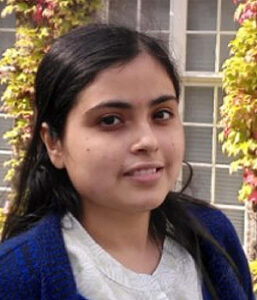
I am Priyamedha Sengupta, postdoctoral researcher at CRAG, Spain, and junior member of the IS-MPMI Board of Directors. Coincidentally, I have been affiliated with institutions having the letter C in their names (University of Calcutta, India, M.S. degree in botany [2017]; University of Cologne, Germany, Ph.D. degree in natural sciences [2023]). My research primarily involves good and bad (but never ugly) microbes of Arabidopsis thaliana.
Science Is Wonderful!
I graduated with a Ph.D. degree from the University of Cologne in January 2023, and after a series of celebrations and farewell dinners, it was time to leave the city at the end of February. However, the beginning of my next step as a postdoctoral researcher at the Centre of Research on Agricultural Genomics (CRAG), Spain, encountered some bureaucratic hiccups. Eventually, after a long struggle with the Spanish embassy in Düsseldorf (Germany) and Delhi (India), I received a visa toward the end of April 2023 to begin my postdoc position at CRAG. Additionally, I was excited to find that CRAG is quite active in outreach and regularly organizes workshops to acquaint young school children with plant sciences. However, most of those activities are conducted either in Catalan or Spanish, the two official languages of the region. Even though Duolingo taught me enough Spanish to obtain tortilla de patatas (Spanish omelettes) from the supermarket or to purchase a monthly train ticket in the suburbs of Barcelona, I wasn’t equipped to handle the inquisitiveness of 8–10 year olds about yellow sticky traps in greenhouses. Nevertheless, a scope for outreach arrived again in the name of the Science is Wonderful fair.
The European Commission organizes Science is Wonderful, an annual fair held in Brussels, Belgium, showcasing research projects of Marie Curie Actions (MSCA) and MSCA-COFUND fellows to primary and secondary school students in an interactive format. As my current position is part of the MSCA COFUND AGenT (Agricultural Genomics Transversal) training program, I applied for this event together with Raquel Alvarez (former postdoctoral researcher at CRAG). From guiding primary school students as part of CRAG ‘s outreach program to motorbiking in the February cold to mentor students in Girona on Women in Science Day, Raquel has been quite engaged with science communication herself.
Muriel Arimon and Adrià Redondo, from the CRAG outreach department, supported our application, “SUMO Wrestling with Pathogens,” giving insights on how to make the activity more suitable for school-age children. We had planned to demonstrate SUMOylation (a post-translational modification system in eukaryotes) as a game of passing the parcel, where the tiny SUMO protein (represented by a cushion) would be passed between groups of children to explain the cyclical event happening inside plants. Alongside this game, we had envisioned a science show to present at the festival based on the popular children’s story The three little pigs, which goes something like this: each pig builds a house; one with straw, another with sticks, and the last one with bricks. The wolf easily destroys the houses made of straw and sticks but is unable to knock down the brick house.
But we are talking about plants! How do they build their brick houses when they can’t even move? Plants cannot really escape, so they must face challenges head on and protect themselves against environmental threats (wolves). This would segue into “SUMO Wrestlers Are Here, Not to Fear,” which would explain how tiny SUMO proteins can assist in plant defense and are the brick walls that plants build for themselves to keep out the wolves. Finally, the show would end with the moral of the story—that it is important to study plants in the context of climate change and food security. Sadly, our application for Science is Wonderful did not make the cut; although, it was a lot of fun brainstorming on the proposal with Raquel over vending machine café con leche. Later, I got to discussing with Muriel other possibilities in outreach, when she suggested something familiar—Pint of Science.
One More Pint to Go
I was happy to participate again in Pint of Science, in a different city (or rather country). The 2024 event in Barcelona took place from May 13 to 15 across eight different locations in the city, with nearly 50 participants. Although, most talks were either in Catalan or Spanish, it was great to be given the chance to present in English about the importance of SUMO proteins in plant health. I appreciate the feedback from CRAG’s Adrià Redondo and Javier Domingo on my talk.
On May 13, I presented at the BlackLab pub in the lively Eixample neighborhood of Barcelona, where I enjoyed speaking about my life and science, such as my little rebellion of choosing biology as a major despite having geologist parents, why organic farming cannot be the only sustainable solution, and how pathogenic microbes manipulate the SUMOylation system in plants to cause disease. Lovely interactions postpresentation, coupled with the ambience of BlackLab, made for a great evening.
Some of the talks at the Pint of Science festival took place at community centers as well, where people usually gather for an evening of beer and scrabble. It was inspiring to see how Raquel Alvarez engaged the Noubarris community of Barcelona on “what a scientist does in a lab” and mutant phenotypes of Arabidopsis thaliana. Now that Raquel has chosen science communication as a profession, she is sure to disseminate the essence of plant science to people from all walks of life.
The Night Is Still Scientific
European Researchers’ Night is a time to present scientists in all their glitz and glamor or as their normal selves to the public every year on the last Friday of September. I made my debut on Researchers’ Night on September 27, 2024, as part of the activity Conversation with Researchers at the CosmoCaixa Museum of Science in Barcelona. I had previously visited CosmoCaixa during the Dinosaurs of Patagonia exposition and spent the whole afternoon gawking at the giant Sauropod skeletal frame, reading descriptions of Gondwanaland emerging from the breaking up of Pangea, and glancing at fossil impressions of Archaeopteris (feeling relieved that I no longer need to sketch them in laboratory notebooks, as I did during the Palaeobotany course of my master’s degree). Coming back to Researchers’ Night, I had spoken with one of the coordinators, Rosa, before the event on the type of activity involved and how to prepare for it. Rosa had explained that it would be an informal discussion with the audience on our research and, ideally, conveying the information that scientists are regular people.
Participating in Conservation with Researchers was truly an enriching experience. I explained how a plethora of microbes exist in the environment, influencing the lives of plants and humans, either directly or indirectly, by causing diseases of important crops and halting the farm to fork transition (drawing inspiration from the Soapbox Science event of 2021). The best part of the activity was engaging with the audience on topics like the impact of climate change on pathogen survival, microbial biopesticides, and artificial intelligence in plant biology research. I was particularly amazed by the question from fellow presenter Gurjot Singh Bhatia, associated with the MSCA-ITN project 5GSMARTFACT. During my pitch, I had mentioned that as part of my master’s thesis I worked on biological control of green mold disease in oranges caused by the fungus Penicillium digitatum. Gurjot’s question was how Penicillium, on one hand, can produce a beneficial compound like penicillin, one of the most widely used antibiotics and, on the other hand, be detrimental to plants. Analyzing the lifestyle of microorganisms is an important research topic in the plant-microbe interactions field. However, receiving this question from a nonbiologist did leave me stumped (in a good way)!
Breaking the Walls Within
Although my venture into outreach was rather accidental, being involved in the whole process has made me realize its importance in present times. Given the misinformation about sustainable crop improvement strategies, it is essential that scientists step forward and communicate with the general population directly. In this regard, I laud the efforts of CRAG in launching “The Potential of Gene Editing in Plants,” a website with compact and easily accessible information on advances in plant biotechnology over the years.
Outreach can help bridge the gap between science and society. However, before bridging the gap, there are walls inside of the academic environment that need to be broken down. Often, citizen science communications are not well accepted by the scientific community. In addition, scientists performing outreach can be seen as reluctant to pursue serious research and even trivialized as not being competent enough to carry out complicated hypotheses in the laboratory.
During outreach, the complexities of research topics need to be simplified, so everyone can understand the main motivation and significance of a study. However, simplification is not an easy task and requires a much broader understanding of one’s own field of work. For example, during my Ph.D. program, when I presented at the Deutsche Phytomedizinische Gesselschaft meeting (2021) I was asked how a basidiomycete yeast could antagonize an oomycete through a hydrolase enzyme? During the international conference of miCROPe Vienna (2022), I interacted with scientists from both academia and industry, and one of the commonly asked questions was if the hydrolase enzyme could be developed as a biological control agent against agriculturally important crops. In contrast, at outreach events I have come across simple yet insightful questions like, “How many microbes are present in one leaf?”
Fortunately, the importance of science communication is gradually being recognized in academia. Marie-Curie Actions, a major funding body in Europe, positively evaluates outreach activities conducted by the applicants and even requires MSCA awardees to perform citizen science communication during their fellowship. Another instance would be eLife Digests, which provides a simple and crisp explanation of published articles. In case you wish to know more about the yeast, oomycete, and hydrolase enzyme I mentioned in earlier, take a look at this eLife Digests link.
Growing up with scientist parents I have seen them teach with a passion similar to that for their research efforts. I believe outreach serves the same purpose as teaching, which is dissemination of knowledge. While having teaching duties is common for researchers, doing outreach is not yet as prevalent. Science communication does exist as an independent profession, but scientists should be able to perform outreach without giving up research, because outreach is not a mere task of dumbing down science for the common folks, but a wonderful way to include everyone in your academic pursuits.
For decades, scientists have been portrayed as villains in movies or seen as the epitome of boring, like the character of Ross Geller in Friends. Outreach provides an excellent opportunity to change the perception of science and to promote the reality that a society cannot progress without science and innovation.
Acknowledgments
I thank all my family, friends, and colleagues who have taken the time to attend events and cheer me on—whether it was the Falling Walls YouTube livestream, the marketplace of Rudolfplatz, or pubs of Cologne and Barcelona. My supervisors past (Prof. Gunther Doehlemann) and present (Dr. Maria Lois) for being supportive of my outreach activities. My mentor, Dr. Núria Sánchez Coll, for the important suggestion of how outreach can make you a well-balanced scientist and being super appreciative of this miniseries. Finally, I would like to express my heartfelt gratitude to IS-MPMI, especially Interactions Editor-in-Chief Prof. Anjali Iyer-Pascuzzi, for the opportunity and encouragement to write about my 5-year journey in science communication.


 All 2025 IS-MPMI Congress attendees qualify for a $500 discount off their article processing charge when they submit a manuscript to