Category: Volume 4 • 2020

​IS-MPMI VXIII Congress: Plenary Speakers Announced

ISMPMI 285 2 1955560 removebg preview

Issue 4

2018

interactions

Did You Know

IS-MPMI is bringing together scientists with diverse backgrounds in disease resistance, molecule manipulation, fungal effectors, and other technologies for the premier event in plant-microbe interactions: the 2019 IS-MPMI VXIII Congress, taking place July 14-18, 2019, in Glasgow, Scotland. Topics in this year’s program include molecular recognition in plant immunity, microbial manipulation of the host, emerging and re-emerging systems, and more!

Twenty-four plenary speakers have been announced:

  • Petra Boevink
  • John Carr
  • Jijie Chai
  • Pierre-Marc Delaux
  • Gunther Döhlemann
  • Xinnian Dong
  • Marc Ghislain
  • Hui-Shan Guo
  • Caroline Gutjahr
  • Maria Harrison
  • Jonathan Jones
  • Xin Li
  • Rosa Lozano-Durán
  • Jane Parker
  • Phillippe Reymond
  • Libo Shan
  • Ken Shirasu
  • Nick Talbot
  • Ryohei Terauchi
  • Bart Thomma
  • Leena Tripathi
  • Julia Vorholt
  • Maria Zanetti
  • Jian-Min Zhou

Read these speakers’ biographies and bookmark the congress website for updates in coming months!

Stay Tuned! Shimamoto Travel Awards for 2019 IS-MPMI Congress

ISMPMI 285 2 1955560 removebg preview

Issue 4

2018

interactions

Did You Know

IS-MPMI will be distributing travel awards for eligible students, post-docs, and early career professionals to attend the IS-MPMI XVIII Congress, July 14-18, 2019 in Glasgow, Scotland. Awards up to $1,500 (depending on travel distance) will be given to pay for registration, travel, and/or lodging expenses. Award selection will be based on the quality of the applicant’s science reflected in the research abstract, impact statement and curriculum vita. 

Interactions 2018 – Issue 4

ISMPMI 285 2 1955560 removebg preview

Issue 4

2018

interactions
weigel circle
Featured InterView: Detlef Weigel
Detlef Weigel is a director at the Max Planck Institute for Developmental Biology. Interactions recently spoke with Weigel about his membership in IS-MPMI, his research, and more.

Did You Know

Also in this issue…

InterFaces is a new section of Interactions that recognizes scientists who have contributed to IS-MPMI. Read about Michael J. Trinick’s contributions to the field.
InterStellar is a new section of Interactions that highlights members’ accomplishments and accolades. Eva Kondorosi recently received the prestigious Balzan Award. Read her acceptance speech.
IS-MPMI member Bart Thomma has received the first RKS Wood prize from the British Society for Plant Pathology (BSPP). Read more about his accomplishments.
Jonathan Walton, acting director of the Molecular Plant Sciences Program, Department of Plant Biology, at Michigan State University and a past IS-MPMI president passed away October 18, 2018. Friends and colleagues share memories and tributes. Read their reflections and share your own.
News
Job Center

We are always looking for content for Interactions. This issue contains examples of the types of pieces you will continue to see going forward. Members with questions or ideas should contact Interactions Editor-in-Chief Dennis Halterman.

IS-MPMI Interactions is a benefit of your IS-MPMI membership. Thank you for your continued support!
IS-MPMI respects member privacy and does not share, trade, or sell member email addresses for use by other parties. You are receiving this email as a benefit of your membership. If you have suggestions for items you would like included or other comments about this publication, please send them to IS-MPMI Headquarters .
IS-MPMI Interactions © 2018 International Society for Molecular Plant-Microbe Interactions
If you no longer wish to receive IS-MPMI membership emails, please unsubscribe. If you would like to opt out from all IS-MPMI communications, please contact IS-MPMI Headquarters.

Interview with Jeanne Harris, Editor-in-Chief of MPMI

ISMPMI 285 2 1955560 removebg preview

Issue 1

2019

interactions

Did You Know

Harris

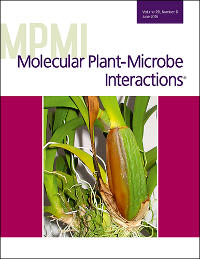
 Jeanne Harris, new editor-in-chief (EIC) of Molecular Plant-Microbe Interactions (MPMI), looks forward to building on MPMI’s reputation as a leading journal by continuing to focus on key research questions while attracting new readership by expanding the scope to include more population genomics/comparative genomics. She envisions a series of review articles that examine the effects of climate change on plant-microbe interactions and wants MPMI to engage more with junior scientists, who can raise awareness of the journal and increase its position within the community. In addition to her duties as EIC, Harris serves as an associate professor in the Department of Plant Biology at the University of Vermont, where her research interests include plant-microbe interactions, signaling networks, and developmental genetics. She holds a PhD in cell biology from the University of California, San Francisco.

What is your vision for the journal and your board over the next 3 years?

Jeanne Harris: I’d like to build on MPMI’s reputation as the leading journal for high-quality research in the MPMI field, helping us to identify and focus on the major research questions, expanding our scope to include more population/comparative genomics, and continuing the very successful Distinguished Review article series that John McDowell started.

The new MPMI board brings a geographic breadth and depth of expertise that will help us to attract, evaluate, and publish foundational research from colleagues around the world on key questions regarding the molecular interactions of plants and the many microbes, insects, and parasitic plants in their environment. Over the next 3 years, I’d like to have MPMI engage more with junior scientists, helping to increase awareness of the journal to maintain and strengthen its position in the research community, and to be a leader in the discussion of the big questions in our fie
mpmi

 What is the “Top 10 Questions in MPMI” campaign?

JH: The MPMI Editorial Board has planned a new interactive campaign to work with the scientific community on the “Top 10 Questions in MPMI.” The idea is to engage the community in a process of identifying the top 10 unanswered questions in MPMI. The result will be an editorial by the board reporting the results of this community discussion, followed by a series of Perspectives or Reviews on the questions over the course of a year. My goals are to engage the community in more of a dialogue with the journal and to draw the focus of the journal to the big research goals in the field. I also have plans to create a series of podcasts accompanying these perspectives to help showcase these unanswered questions: What is the background or context? Why are the questions so compelling? What do we know so far?

Why focus on these questions? 

JH: As scientists, we focus on trying to answer the big unanswered questions in our field. Journals naturally publish what has been figured out. As we chip away at these big questions, we publish pieces of it. How do we make people aware of the big unanswered questions that motivate this work? The goal is to make the journal MPMI a central place for the community to discuss and focus our attention on the big unanswered questions that motivate us and drive our research.

I think a focus on the unanswered questions is especially important for students and younger scientists, who may find it hard to identify the big questions amid a proliferation of journal articles. The editorial, Perspectives, and Reviews that will result from this community discussion should provide an important resource for students, post-docs, and junior faculty while helping to strengthen their familiarity with the journal MPMI and increase their connection to it.

What about John’s stewardship has made your transition to EIC more approachable?

JH: John’s leadership at MPMI has put the journal in an excellent position, attracting attention with a series of timely and fascinating focus issues while fostering a culture of research excellence and high ethical standards, as well as improving the experience for our submitting authors.  The Distinguished Review Article Series that John initiated, focusing on “Conceptual and Methodological Breakthroughs in Molecular Plant-Microbe Interactions,” started with a bang with an outstanding review by Dan Klessig and is a series I’m excited to continue. On a personal level, John’s mentorship has been hugely helpful as I take on the EIC role at MPMI, and I know I will continue to draw on his expertise and intuition.

MPMI VXIII Congress Concurrent Sessions Announced

ISMPMI 285 2 1955560 removebg preview

Issue 1

2019

interactions

Did You Know

Concurrent Sessions and Co-Chairs

  1. Molecular Reco​gnition in Plant Immunity: I
    1. Bostjan Kobe – University of Queensland, Australia2019 ISMPMI Logo
    2. Frank Takken – University of Amsterdam, Netherlands
  2. Molecular Recognition in Plant Immunity: II
    1. Thomas Kroj – UMR, BGP, Montpellier, France
    2. Cyril Zipfel – University of Zurich, Switzerland
  3. Microbial Manipulation of the Host: I
    1. Gitta Coaker – University of California, Davis, U.S.A.
    2. Suomeng Dong – Nanjing Agricultural University, China
  4. Microbial Manipulation of the Host: II
    1. Peter Dodds – CSIRO, Canberra, Australia
    2. Renier van der Hoorn – University of Oxford, U.K.
  5. Emerging and Re-Emerging Systems
    1. Diane Saunders – John Innes Centre, Norwich, U.K.
    2. Nik Grunwald – Oregon State University, Corvallis, U.S.A.
  6. Population Biology (Ecology, Genomics)
    1. Eva Stukenbrock – University of Kiel, Germany
    2. Daniel Croll – University of Neuchâtel, Switzerland
  7. Apoplastic Interactions 
    1. Satoko Yoshida – NAIST, Ikomo, Japan
    2. Guido van den Ackerveken – University of Utrecht, Netherlands
  8. The Roles of Extracellular Vesicles in Intercellular and Interkingdom Communication
    1. Hailing Jin – University of California, Riverside, U.S.A.
    2. Roger Innes – Indiana University, Bloomington, U.S.A.
  9. Cell Biology of Host–Microbe Interactions
    1. Silke Robatzek – Ludwig-Maximilians-Universität, München, Germany
    2. Christine Faulkner – John Innes Centre, Norwich, U.K.
  10. Symbiosis and Mutualism 
    1. Myriam Charpentier – John Innes Centre, Norwich, U.K.
    2. Katharina Markmann – University of Tübingen, Germany
  11. Comparative Mutualist and Pathogen Studies
    1. Sebastian Schornack –Sainsbury Laboratory, University of Cambridge, U.K.
    2. Simona Radutoiu – Aarhus University, Denmark
  12. How the Environment Impacts Microbial Infection
    1. Sheng Yang He – Michigan State University, East Lansing, U.S.A.
    2. Zuhua He – Chinese Academy of Sciences (CAS), Shanghai, China
  13. Microbiome and Phytobiome: I
    1. Alga Zuccaro – Max Planck Institute for Plant Breeding, Cologne, Germany
    2. Joy Bergelson – University of Chicago, U.S.A.
  14. Microbiome and Phytobiome: II
    1. Jan Leach – Colorado State University, Fort Collins, U.S.A.
    2. Soledad Sacristán – INIA, Madrid, Spain
  15. Post-Translational Modifications and Their Control of Immunity
    1. Steven Spoel – University of Edinburgh, U.K.
    2. Piers Hemsley – University of Dundee, U.K.
  16. Invertebrate (Nematode/Insect)–Plant Interactions
    1. Jorunn Bos – University of Dundee, U.K.
    2. Sebastian Eves-van den Akker – University of Cambridge, U.K.
  17. Systems Biology and Modelling 
    1. Kenichi Tsuda – Max Planck Institute for Plant Breeding Research, Cologne, Germany
    2. Youssef Belkhadir – Gregor Mendel Institute, Vienna, Austria
  18. The Role of Organelles and Interorganellular Communication in Plant Immunity
    1. Murray Grant – University of Warwick, U.K.
    2. S. Dinesh-Kumar – University of California, Davis, U.S.A.
  19. Host–Microbe Co-Evolution
    1. Beat Keller – University of Zurich, Switzerland
    2. Detlef Weigel – International Max Planck Research School, Tübingen, Germany
  20. Long-Distance/Systemic Signalling
    1. Corina Vlot – German Research Center for Environmental Health, München, Germany
    2. Jean Greenberg – University of Chicago, U.S.A.
  21. Emerging Topics in Plant–Microbe Interactions
    1. Jeanne Harris (Editor in Chief of MPMI) – University of Vermont, Burlington, U.S.A.
    2. Tolga Bozkurt – Imperial College London, U.K.

Register for the Congress!

Check out the Updated Journals Site

ISMPMI 285 2 1955560 removebg preview

Issue 1

2019

interactions

Did You Know

Upgraded and Modernized APS Journals Site Enhances Research Visibility

MPMI received a digital makeover when the new APS Publications site went live on March 11. The updated site’s user-friendly design makes it easier than ever to access and read content. Articles are clearly presented and have in-line figures and tables, and adjacent sidebars include metrics data, literature-cited links, and more. The site’s scalable design means content will look great across all types of screens. The site is designed to increase visibility by adhering to Google Scholar best practices and Google indexability requirements, as well as those of other important indexing services, such as Web of Science, PubMed Central, and SCOPUS. Improved search functionality, including keyword mapping, also enhances discoverability.

APS will continue to fine-tune the site in the coming months, and we invite authors and readers to explore it as we continue our work. We look forward to promoting MPMI’s excellent research advances more effectively on this updated platform.

Check out the new site!

Call for Papers! MPMI and Phytopathology Focus Issues

ISMPMI 285 2 1955560 removebg preview

Issue 1

2019

interactions

Did You Know

Both Focus Issues Emphasize Plant Virology

Advances in plant virology have helped reduce the estimated $60 billion in annual crop losses caused by viruses. Given the importance of this research, both MPMI and Phytopathology will emphasize virological advances in their January 2020 focus issues. For the focus issue on “Cell Biology of Virus-Plant and Virus-Vector Interactions,” MPMI invites research and perspective articles that explore the cell biology of virus interactions, both with their plant hosts and their insect vectors. Articles highlighting translational research and fundamental understanding are welcome. Phytopathology invites research and review articles as well as resource announcements relating to “Fundamental Aspects of Plant Viruses.”

Submit your research and be a part of these landmark focus issues! Please select the “Focus Issue” manuscript type when submitting. The article submission deadline is June 15, 2019. Learn more about the MPMI focus issue here.

In Memory: Martin B. (Marty) Dickman

ISMPMI 285 2 1955560 removebg preview

Issue 1

2019

interactions

Did You Know

13 10 PEOPLE Marty Dickman

Martin B. (Marty) Dickman died December 2, 2018, in Carpinteria, California, following an illness. Marty was born in Flushing, New York. He received his BS degree at the University of Hawaii in Hilo in 1979 and his MS and PhD degrees at the University of Hawaii at Manoa in 1982 and 1986. He was a post-doctoral fellow at Washington State University in 1987 before joining the University of Nebraska as an assistant professor in 1987. In 2003, Marty was named the Charles Bessey Professor in Plant Pathology. He joined Texas A&M University (TAMU) in 2006 as a professor of plant pathology and microbiology. At TAMU, he held the title of Christine Richardson Professor of Agriculture and was director of the Institute for Plant Genomics and Biotechnology.

Marty was a preeminent scientist specializing in the area of genetics and molecular biology of fungi and fungal–plant interactions. He made numerous advances in the understanding of how necrotrophic fungi, through the activity of their metabolites, colonize plants and how plants, upon recognition of the pathogen, trigger a response known as “apoptosis,” a form of programmed cell death (PCD). Marty garnered national and international recognition for his research contributions and authored numerous refereed articles, which were published in the most highly respected scientific journals. In addition, Marty was an effective mentor who nurtured the careers of the next generation of scientific leaders. He also built the Norman Borlaug Center at Texas A&M University into one of the nation’s leading institutions for modern plant biology.

Marty had a larger-than-life personality; he was gregarious and outgoing yet caring and nurturing. He was a wonderful colleague and had many friends in the scientific community. He was widely respected and was never shy to voice an opinion. The man had passion! He will be greatly missed by all that knew him. Moreover, he left a large and lasting footprint in our scientific community.

Interactions 2019 – Issue 1

ISMPMI 285 2 1955560 removebg preview

Issue 1

2019

interactions
harris circle
Interview with Jeanne Harris, Editor-in-Chief of MPMI
Jeanne Harris, new editor-in-chief (EIC) of Molecular Plant-Microbe Interactions (MPMI), looks forward to building on MPMI’s reputation as a leading journal by continuing to focus on key research questions while attracting new readership by expanding the scope to include more population genomics/comparative genomics.

Did You Know

Check out the Concurrent Sessions you’ll find at the VXIII Congress in Scotland! Plus registration for the congress is now open! Join us in Glasgow July 14-18, 2019
Martin B. (Marty) Dickman died December 2, 2018. IS-MPMI is keeping Marty’s family in our thoughts during this difficult time.
News
We are always looking for content for Interactions. This issue contains examples of the types of pieces you will continue to see going forward. Members with questions or ideas should contact Interactions Editor-in-Chief Dennis Halterman.
IS-MPMI Interactions is a benefit of your IS-MPMI membership. Thank you for your continued support!
IS-MPMI Interactions © 2019 International Society for Molecular Plant-Microbe Interactions

IS-MPMI Interactions – Issue 2, 2019

ISMPMI 285 2 1955560 removebg preview

Issue 2

2019

interactions
congress interactions
Congratulations to the 2019 IS-MPMI Travel Awardees!
Ko Shimamoto Congress Travel Awardees have been selected. Congratulations to the 70 awardees from the United States and around the world who received funding to attend the IS-MPMI XVIII Congress in Glasgow!

Did You Know

The Agropolis Foundation Louis Malassis International Scientific Prize is awarded every 2 years and recognizes individuals for their “exemplary and promising contribution in promoting innovation through research, development and/or capacity building, in order to improve food and agricultural systems sustainability, as well as to address food security and poverty reduction.” 
Maria Harrison, William H. Crocker Professor at Boyce Thompson Institute, Adjunct Professor in the School of Integrative Plant Science (SIPS) at Cornell University, and IS-MPMI member, has been elected to the National Academy of Sciences.
The National Academy of Sciences recently honored Sharon Long, Stanford University, with the 2019 Selman A. Waksman Award, which recognizes a major advance in the field of microbiology. This award honors Sharon Long’s tremendous contributions to our understanding of the symbiotic interactions that lead to nitrogen-fixing legume root nodules.
May was Mental Health Awareness Month, so it’s fitting that this issue of Interactions includes an article by UNC-Chapel Hill PhD candidate Susanna Harris that captures the struggles some student trainees have in the lab. The article is aimed primarily at principal investigators and provides valuable suggestions to help support a mentally healthy work environment.
The MPMI journal editorial board has planned a new way to engage our community with the “Top 10 Questions in MPMI.” The idea is to brainstorm as a community to identify the top 10 unanswered questions in MPMI. As we come together in Glasgow next month at the IC-MPMI to share ideas and findings, it makes sense to take advantage of the diversity of people and research subjects to identify and focus these questions. Join the conversation!
News
We are always looking for content for Interactions. This issue contains examples of the types of pieces you will continue to see going forward. Members with questions or ideas should contact Interactions Editor-in-Chief Dennis Halterman.
IS-MPMI Interactions is a benefit of your IS-MPMI membership. Thank you for your continued support!
IS-MPMI respects member privacy and does not share, trade, or sell member email addresses for use by other parties. You are receiving this email as a benefit of your membership. If you have suggestions for items you would like included or other comments about this publication, please send them to IS-MPMI Headquarters .
IS-MPMI Interactions © 2019 International Society for Molecular Plant-Microbe Interactions
If you no longer wish to receive IS-MPMI membership emails, please unsubscribe. If you would like to opt out from all IS-MPMI communications, please contact IS-MPMI Headquarters.
Scroll to Top