Category: Volume 4 • 2020

Introducing What’s New in MPMI!—a Virtual Seminar Series Highlighting Recent Publications in MPMI

ISMPMI 285 2 1955560 removebg preview

Issue 2

2020

interactions

Did You Know

06 6366 MPMI VitrualSeminar 650x97

MPMI is pleased to introduce What’s New in MPMI!—a new series of live online seminars highlighting recent papers, presented by our authors. With the uncertainties of the ongoing pandemic and the need for connections during times of isolation, division, and conflict, we hope that our virtual seminar series will be a way to draw our research community together, providing an opportunity for us to connect with colleagues across the world. We especially hope that this series will provide an important venue for young scientists to share new work as opportunities to present have dwindled.

Finally, this series is freely available to increase and encourage global participation in this MPMI community series to anyone with an interest in molecular plant-microbe interactions. By bringing our talks to you, we hope to increase accessibility. All talks will be recorded and available on the MPMI website at a later date.

Details:

The series will be every other week, alternating between a time that permits immediate participation in India, Europe, and the United States (11:00 a.m. EDT), and a time that permits participation in the United States and Asia (9:00 p.m. EDT). The format of this series will be a single, 25-minute talk, followed by time for questions.

Our first speaker was Matthew Neubauer, who gave a talk on “Regulation of Cell Death in Plants by EDR1EDS1 and PAD4,” which was selected as the April 2020 MPMI Editor’s Pick. If you missed the talk, watch it now and check out this excellent paper, now open access through the end of the year!

To attend the seminars, you will need to register​ in advance. We will post the registration information at least one week prior to the seminar. After registering, you will receive a confirmation email containing information about joining the meeting.

Please share the information about What’s New in MPMI! with friends, colleagues, and students!

InterConnections: Get to Know Member Beverly J. Agtuca

ISMPMI 285 2 1955560 removebg preview

Issue 2

2020

interactions

Did You Know

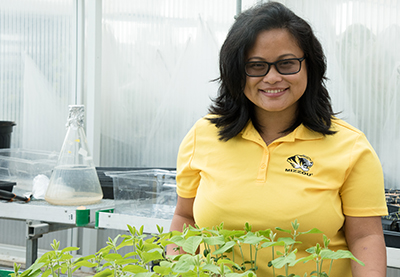
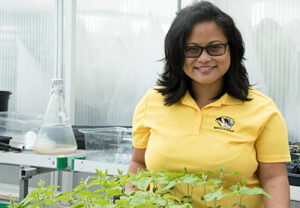
The February 2020 Editor’s pick for MPMI is “In-Situ Metabolomic Analysis of Setaria viridis Roots Colonized by Beneficial Endophytic Bacteria” with first author Beverly Agtuca, a graduate student in the lab of Gary Stacey at the University of Missouri. To read more about Beverly you can find her bio here​. Beverly also shared a great story about how collaborations can not only lead to great research, but can also lead to lasting friendships.
07 Beverly Agtuca 082017

Collaboration and Friendship: A Fast-Pace Towards Science

Have you ever had the experience of having a collaborator become your best friend during your PhD? Certainly, I have. It all started with a grant from the Department of Energy involving a collaboration between the University of Missouri (MU), Columbia, MO; George Washington University (GWU), Washington, DC; and the Environmental Molecular Sciences Laboratory (EMSL), Richland, WA. The goal of our project was to explore the symbiosis and interactions of beneficial bacteria with legume and non-legume plants using a unique tool called laser ablation electrospray ionization mass spectrometry (LAESI-MS). This method allows mass spectrometry imaging of root tissues without prior fixation. This also allowed us to sample only those sites infected by the bacteria, which we could localized due to expression of green fluorescent protein.

After receiving this grant in 2015, where did we begin? We had our first phone call meeting with the collaborators. The PIs from each institution joined the meeting, as well as two PhD graduate students: one person from GWU, and myself from MU. During the meeting, I kept on imagining the faces of who I was talking to during the meeting. According to our PIs, our first priority was to observe the capabilities of LAESI-MS when sampling soybean root nodules, which arise due to a symbiosis with the nitrogen-fixing bacterium Bradyrhizobium japonicum.  We planned our first project visit at GWU that involved collaborators Sylwia Stopka, a 3rd year graduate student at the time who represented GWU; Christopher Anderton, a research scientist from EMSL; and me, a 2nd year graduate student who represented MU. Without meeting each other face-to-face yet, all three of us planned our sample preparation separately and scheduled our future experiments by email.

At our first in-person meeting, it was exciting to finally put a face with a name. We got along so well, we generated enough data to layout our first paper in just a few days—which even surprised our PIs. This is where the friendship began between Sylwia and I. We had this connection because we realized we were both from New York and during our undergraduate studies, our institutions (SUNY Oswego and SUNY ESF) were an hour away from each other. In between times of experimentation, we ate lunch together as a group at various restaurants, took coffee breaks, and explored some adventure areas in DC. ​
07 Beverly A 2

Sylwia and I shared the same PhD experience—we were both graduate students who struggled when experiments didn’t work. When working together, we shared the struggles and were able plan on how to overcome the obstacles we encountered. We supported and helped each other out through phone and Skype calls. We even practice our oral presentations together since we were both selected to give talks at national/international conferences, such as, the 2017 American Society of Plant Biologists—Plant Biology meeting in Hawaii. We shared our respective knowledge: Sylwia as an accomplished chemist and I am a plant biologist. Our friendship developed organically and greatly aided our science, which no doubt contributed to our success, as evidenced by the numerous publications we were able to share our science in—including the most recent one in MPMI. We have co-authored a total of eight publications/manuscripts so far—along with numerous presentations at various national and international meetings. Having Sylwia as a friend enriched my PhD experience.

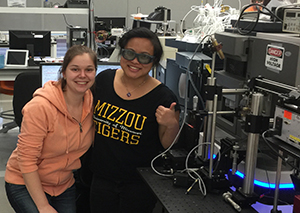
(Photo at right: Sylwia Stopka and Beverly Agtuca)

InterStellar: Regine Kahmann Elected as Foreign Member of the Royal Society

ISMPMI 285 2 1955560 removebg preview

Issue 1

2020

interactions

Did You Know

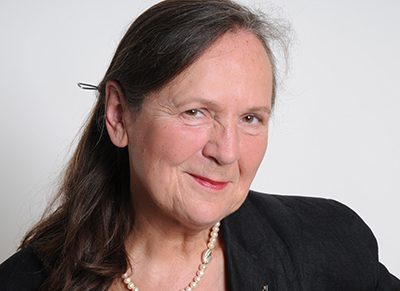
Regine Kahmann’s election as Foreign Member of the Royal Society constitutes recognition of her outstanding scientific achievements. She served as director of the Max Planck Institute for Terrestrial Microbiology until 2019, and also served as the IS-MPMI president from July 2016 to July 2019.

02 Regine Kahmann OriginalWhat area(s) of molecular plant–microbe interactions do you feel your research has impacted most? 

I believe the demonstration that the connection between mating and virulence in smut fungi is achieved by combinatorial control of two homeodomain proteins which dimerize only when they originate from different alleles was a major breakthrough, because it meant that this complex acts as central regulator also of virulence. The second area concerns novel secreted effector proteins which we ended up working with after I spotted that many of the respective genes are arranged in clusters in the genome and for which we subsequently showed by generating deletions that many of these clusters impacted on virulence. And the third area is effector translocation to the host, where we think we have identified the machinery for this that is used by smut fungi (and still struggle to publish this).

What advice do you have for young scientists aspiring to achieve the level of science that has major impact? 

Do not only thrive for low hanging fruits and do not give up too quickly if something does not work.

When you were a post-doc, what had the largest influence on your decision to enter your specific research area in your permanent position? Was this a “hot topic” at the time, or did you choose to go in a different direction? 

I switched fields after my postdoc when I had my first independent position and moved from phage work and Escherichia coli to plant microbe interactions. I picked the Ustilago maydis–maize system in the early eighties definitely not because it was a hot topic. The system had been studied by several excellent geneticists but had not advanced to the molecular area. At the time I felt that the phage work would not sustain my scientific career and I found U. maydis and its ability to induce plant tumors simply fascinating.

InterStellar: Giles Oldroyd has been Elected as Fellow of the Royal Society

ISMPMI 285 2 1955560 removebg preview

Issue 1

2020

interactions

Did You Know

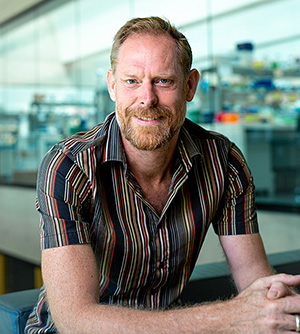
Giles Oldroyd, the Russell R Geiger professor of crop science and director of the Crop Science Centre and group leader at the Sainsbury Laboratory, University of Cambridge, has been recognized for his outstanding contributions to science in plant-microbe interactions with his election as a fellow of the Royal Society.

03 Giles SLCU2What area(s) of molecular plant–microbe interactions do you feel your research has impacted most?

My research over the last 20 years has focused on beneficial interactions that plants form with microorganisms, in particular those associations leading to intracellular colonization. I started work on the nitrogen-fixing association between legumes and bacteria, but have since diversified, especially the arbuscular mycorrhizal symbiosis. Recent work has revealed that the signaling processes we have dissected in legumes, most likely are used in all intracellular symbioses in plants.

What advice do you have for young scientists aspiring to achieve the level of science that has major impact?

Follow your heart and your passion. You have to love what you are doing. A science career is not always the easy path. One has to deal frequently with rejection, papers or grant applications, and often one needs to work long hours. It is the passion and enthusiasm for one’s subject that sees you through the tough times.

When you were a post-doc, what had the largest influence on your decision to enter your specific research area in your permanent position? Was this a “hot topic” at the time, or did you choose to go in a different direction?

I started working in nodulation because I thought it a fascinating area: a bacterial signal that can promote plant development. But I also recognized that the skills I had learnt as a PhD student in molecular genetics were invaluable for understanding nodulation. At the time I started my postdoc at Stanford University, the model legumes had just been developed, mutant populations existed, and genetic maps were available. It was a field that my skills could be readily applied. I was lucky to join this field at an exciting time as the process of nodulation, symbiosis signaling in particular, was genetically dissected. It was incredibly exciting to be part of the discovery of this signaling pathway.

InterStellar: Barbara Valent Inducted into National Academy of Sciences

ISMPMI 285 2 1955560 removebg preview

Issue 1

2020

interactions

Did You Know

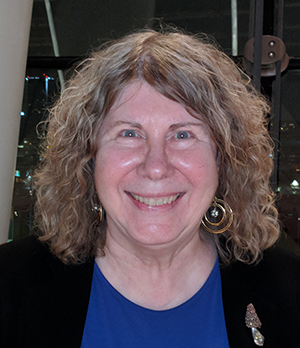
Barbara Valent, distinguished professor in the Department of Plant Pathology at Kansas State University, has earned membership in the prestigious U.S. National Academy of Sciences. The National Academy of Sciences is considered the country’s leading authority on matters related to science and technology. As a member, Valent joins a group of scholars that is often sought out to provide independent, objective advice to national leaders on problems where scientific insights are critical.

04 BarbValent IMG 20180414 210015 2018What area(s) of molecular plant–microbe interactions do you feel your research has impacted most?

New understandings of hemibiotrophy: I’m most proud of our work to elucidate the repeated live-cell invasion strategy executed by the blast fungus to cause disease. Except for pioneering Japanese scientists who established rice blast fungal genetics, there were few people working with rice blast when I began. I’m also proud of how many laboratories worldwide are studying the system and how much the rice blast research community has learned about fungal pathogenesis and host specificity over the past 40 years. I can’t claim to have triggered all that, but I’m proud to have played a part.

What advice do you have for young scientists aspiring to achieve the level of science that has major impact?

It’s important to choose a research problem that matters to the world and also excites your passion. It’s critical to stay in touch with the field biology of your organism (pathosystem) in order for your research to be relevant in the real world. Fungi are microbes that have the ability to rapidly adapt to life in laboratories, and it is critical to maintain and study the fungus in its original form out there in nature.

When you were a post-doc, what had the largest influence on your decision to enter your specific research area in your permanent position? Was this a “hot topic” at the time, or did you choose to go in a different direction? 

As a graduate student studying biochemical Oomycete-plant interactions, I was inspired by a small book entitled “Genetics of host-parasite interactions” written by Peter Day. I applied to post-doc in Gerry Fink’s lab, which had just transformed yeast, adding new power to fungal molecular genetics. In Gerry’s lab, I chose to devote my career to the rice blast fungus based on many features that suggested it could become a good model system: the sexual stage for the fungus had just been described and it was an Ascomycete like yeast and Neurospora; the fungus could be cultured away from its host; field pathologists reported extreme genetic instability in race structure; and the disease has real-world importance on rice, wheat and other cereal crops.

Looking for Assistant Feature Editors at MPMI and Phytobiomes Journal

ISMPMI 285 2 1955560 removebg preview

Issue 1

2020

interactions

Did You Know

Molecular Plant-Microbe Interactions and the Phytobiomes Journal​ are initiating two-year assistant feature editor positions for postdoctoral scientists. We are looking for creative individuals with innovative communication skills and who are eager to volunteer their time to engage with both the scientific and non-scientific community. Assistant feature editors will have the opportunity to be part of a journal team, see the inner workings of journals, and interact with the scientific community for Molecular Plant-Microbe Interactions and the Phytobiomes Journal.

05 editingThese positions will be suitable for highly engaged postdoctoral fellows who would like to gain experience and behind the scenes knowledge of publishing in Molecular-Plant Microbe Interactions and the Phytobiomes Journal, develop their writing and communication skills and have the opportunity to be mentored outside their current lab environment. We anticipate a commitment of approximately 5-7 hours per month, realizing that there will be some variability each month, depending on the projects the assistant features editor has taken on.

A key role of the assistant feature editor will be to amplify the impact of our research publications by writing at multiple levels and targeting different audiences. We envision that assistant feature editors will create their own niche based on their interests and ideas. Some possible areas for engagement are: writing a blog or online research summary, interviews with authors, participation in the Microgreens ​podcast, working with our staff amplification specialist to write news stories for a non-scientific audience, writing Twitter threads or posting on other social media, writing a mini-review or highlight to accompany a paper in an issue, and occasional manuscript review. We imagine that assistant feature editors may expand on our ideas, initiating other activities beyond what we have envisioned.

Assistant feature editors will work closely with the editors-in-chief as well as with other senior editors and members of the journal staff. These interactions as well as interactions with authors and the greater community will provide additional opportunities for networking with scientists beyond the connections formed based on their research.

Applications for assistant feature editor positions will be handled jointly by the editor-in-chiefs for Molecular Plant-Microbe Interactions and the Phytobiomes Journal. Indicate in your cover letter your journal preference or whether you would be interested in working with both journals.  To apply, provide the following to Jeanne Harris and Carolyn Young.


  • One-page cover letter outlining your research focus area, expertise and interest in the position. Highlight your experience with social media, writing, and your engagement with aspects of science beyond your own research.
  • Current CV
  • A first-author paper that you were responsible for writing
  • Contact details for two professional referees


We are looking for people who will be creative about ways to engage the scientific and non-scientific communities. Provide us with an example of your writing about a scientific topic of your choice (on MPMI or Phytobiomes topics) for either a lay audience or your scientific peers (i.e. blog post, feature article, etc.) (500 word limit).

Applications will continue to be reviewed until all positions are filled.

Introducing What’s New in MPMI!—a Virtual Seminar Series Highlighting Recent Publications in MPMI

ISMPMI 285 2 1955560 removebg preview

Issue 1

2020

interactions

Did You Know

03MPMI VitrualSeminar 650x97

MPMI is pleased to introduce What’s New in MPMI!—a new series of live online seminars highlighting recent papers, presented by our authors. With the uncertainties of the ongoing pandemic and the need for connections during times of isolation, division, and conflict, we hope that our virtual seminar series will be a way to draw our research community together, providing an opportunity for us to connect with colleagues across the world. We especially hope that this series will provide an important venue for young scientists to share new work as opportunities to present have dwindled.

Finally, this series is freely available to increase and encourage global participation in this MPMI community series to anyone with an interest in molecular plant-microbe interactions. By bringing our talks to you, we hope to increase accessibility. All talks will be recorded and available on the MPMI website at a later date.

Details:

The series will be every other week, alternating between a time that permits immediate participation in India, Europe, and the United States (11:00 a.m. EDT), and a time that permits participation in the United States and Asia (9:00 p.m. EDT). The format of this series will be a single, 25-minute talk, followed by time for questions.

Our first speaker was Matthew Neubauer, who gave a talk on “Regulation of Cell Death in Plants by EDR1EDS1 and PAD4,” which was selected as the April 2020 MPMI Editor’s Pick. If you missed the talk, watch it now and check out this excellent paper, now open access through the end of the year!

To attend the seminars, you will need to register​ in advance. We will post the registration information at least one week prior to the seminar. After registering, you will receive a confirmation email containing information about joining the meeting.

Please share the information about What’s New in MPMI! with friends, colleagues, and students!

InterConnections: Get to Know Member Beverly J. Agtuca

ISMPMI 285 2 1955560 removebg preview

Issue 1

2020

interactions

Did You Know

The February 2020 Editor’s pick for MPMI is “In-Situ Metabolomic Analysis of Setaria viridis Roots Colonized by Beneficial Endophytic Bacteria” with first author Beverly Agtuca, a graduate student in the lab of Gary Stacey at the University of Missouri. To read more about Beverly you can find her bio here​. Beverly also shared a great story about how collaborations can not only lead to great research, but can also lead to lasting friendships.

07 Beverly Agtuca 082017

Collaboration and Friendship: A Fast-Pace Towards Science

Have you ever had the experience of having a collaborator become your best friend during your PhD? Certainly, I have. It all started with a grant from the Department of Energy involving a collaboration between the University of Missouri (MU), Columbia, MO; George Washington University (GWU), Washington, DC; and the Environmental Molecular Sciences Laboratory (EMSL), Richland, WA. The goal of our project was to explore the symbiosis and interactions of beneficial bacteria with legume and non-legume plants using a unique tool called laser ablation electrospray ionization mass spectrometry (LAESI-MS). This method allows mass spectrometry imaging of root tissues without prior fixation. This also allowed us to sample only those sites infected by the bacteria, which we could localized due to expression of green fluorescent protein.

After receiving this grant in 2015, where did we begin? We had our first phone call meeting with the collaborators. The PIs from each institution joined the meeting, as well as two PhD graduate students: one person from GWU, and myself from MU. During the meeting, I kept on imagining the faces of who I was talking to during the meeting. According to our PIs, our first priority was to observe the capabilities of LAESI-MS when sampling soybean root nodules, which arise due to a symbiosis with the nitrogen-fixing bacterium Bradyrhizobium japonicum.  We planned our first project visit at GWU that involved collaborators Sylwia Stopka, a 3rd year graduate student at the time who represented GWU; Christopher Anderton, a research scientist from EMSL; and me, a 2nd year graduate student who represented MU. Without meeting each other face-to-face yet, all three of us planned our sample preparation separately and scheduled our future experiments by email.

At our first in-person meeting, it was exciting to finally put a face with a name. We got along so well, we generated enough data to layout our first paper in just a few days—which even surprised our PIs. This is where the friendship began between Sylwia and I. We had this connection because we realized we were both from New York and during our undergraduate studies, our institutions (SUNY Oswego and SUNY ESF) were an hour away from each other. In between times of experimentation, we ate lunch together as a group at various restaurants, took coffee breaks, and explored some adventure areas in DC. ​

07 Beverly A 2

Sylwia and I shared the same PhD experience—we were both graduate students who struggled when experiments didn’t work. When working together, we shared the struggles and were able plan on how to overcome the obstacles we encountered. We supported and helped each other out through phone and Skype calls. We even practice our oral presentations together since we were both selected to give talks at national/international conferences, such as, the 2017 American Society of Plant Biologists—Plant Biology meeting in Hawaii. We shared our respective knowledge: Sylwia as an accomplished chemist and I am a plant biologist. Our friendship developed organically and greatly aided our science, which no doubt contributed to our success, as evidenced by the numerous publications we were able to share our science in—including the most recent one in MPMI. We have co-authored a total of eight publications/manuscripts so far—along with numerous presentations at various national and international meetings. Having Sylwia as a friend enriched my PhD experience.

(Photo at right: Sylwia Stopka and Beverly Agtuca)
XIX IS-MPMI Congress postponed

ISMPMI 285 2 1955560 removebg preview

Issue 1

2020

interactions

Did You Know

Dear colleagues and friends:

I hope you are staying healthy and well and are able to restart your research and scholarship.

On behalf of Doil Choi, Chairperson of the Local Organizing Committee, I am writing to let you know that the XIX IS-MPMI Congress in Jeju, South Korea, scheduled for June 2021, will be postponed until June 2022. The uncertainties of public health safety throughout the world, the resulting travel restrictions, and the financial impacts caused by the COVID-19 pandemic have made it very difficult to ensure that everyone who wanted to attend the congress in June 2021 would be able to do so.

A key feature of the IS-MPMI Congress is open discussion and networking among scientists from all over the world. We have decided to postpone the meeting, rather than offer it this year via a virtual platform, to ensure that we will be able to gather in person when it’s safe to do so.

Moving forward, the society plans to host virtual workshops periodically throughout the year to stay connected, promote the exchange of our science and ideas, and support each other. If you have an idea for a workshop or would like to help organize an event, please contact us.

In the meantime, I encourage you check out What’s New in MPMI, a biweekly, live, virtual seminar series highlighting recent papers in the journal MPMI. Authors will present short overviews of their findings and then engage in Q&A with participants from around the world. This series will be freely available to increase and encourage global participation to anyone interested in molecular plant-microbe interactions. Each 1-hour talk will be hosted by MPMI Editor-in-Chief Jeanne Harris and a guest co-host from the community. All the talks will be recorded and available on the MPMI website for future viewing. Check out the list of upcoming seminars, watch recordings of previous talks, or register to attend one.

I will communicate updates about the postponed congress and share opportunities to connect during the upcoming year.

Best regards,

Mary Beth Mudgett
President, IS-MPMI

The Phytophthora infestans AVR2 Effector Escapes R2 Recognition Through Effector Disordering

ISMPMI 285 2 1955560 removebg preview

Issue 1

2020

interactions

Did You Know

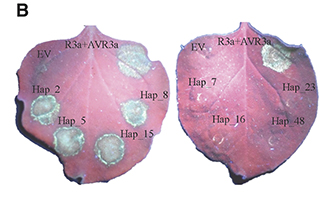
Yang et al. explored the role of intrinsic disorder in the development of the pathogenicity in the RXLR AVR2 effector of Phytophthora infestans. Their results support the notion that intrinsic disorder is important for the effector function of pathogens and demonstrate that SLiM-mediated protein-protein interaction in the C-terminal effector domain might contribute greatly to the evasion of resistance-protein detection in P. infestans.

images large mpmi 07 19 0179 r f3 1622726

Scroll to Top