
Category: Volume 4 • 2020

Hello 2015! Hello IS-MPMI!

ISMPMI 285 2 1955560 removebg preview

Issue 1

2020

interactions

Did You Know

On behalf of the IS-MPMI Board of Directors, we would like to welcome you to the all-new IS-MPMI online news portal, Interactions. Just as the old saying goes, “Out with the old, in with the new.” Over the past year, we’ve been working hard to create a fresh, new home for our society. On the list was a reinvention of our printed society newsletter. In line with the underlying research theme of our society, we have changed our name from The IS-MPMI Reporter to…Interactions and transformed the publication into a online platform. The Reporter served us well, and for more than 20 years, we relied on the “printed word” to bring our members the latest news updates from our society, as well as updates from members, upcoming meetings, and reflections of our research and society.


shengyang
Sheng Yang
bday
He          Brad Day

Items submitted to Interactions will be published as we receive them and updated on the IS-MPMI website in real-time which means no more waiting for your IS-MPMI news. We will update members regularly with Society and Community news pieces and MPMI Editor’s Picks from Editor-in-Chief Jane Glazebrook. We will also have unique special interest articles on topics like education and science policy, IS-MPMI “Top-10 Lists,” and feature articles from you, IS-MPMI members.
To deliver news from Interactions to you, we are utilizing the full functionality of the new IS-MPMI website. Articles posted will feed to the ISMPMI.org homepage and to Twitter. Feel free to comment via Twitter, or if you have more than 140 characters worth of things to say, you can leave a comment on the article in Interactions. We hope that Interactions will be more than a news source, but a place that we do in fact interact.
So with a new year comes a new platform for news along with a new website look, and through this, we hope a renewed opportunity to engage. Please look around, leave a comment, and most importantly, come back often.
Sheng Yang He, President, and Brad DayInteractions Editor-in-Chief

A New Component of the Type III Secretion System

ISMPMI 285 2 1955560 removebg preview

Issue 1

2020

interactions

Did You Know

MPMIfeb15

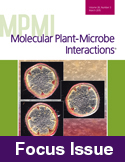
Transport of effector proteins from bacterial pathogens into host cells is crucial for pathogen virulence. In gram-negative bacteria, transport occurs through the specialized type III secretion system. In the February issue, Xiaofeng Zhou and colleagues demonstrate that the protein VrpA—an essential virulence factor for Xanthomonas spp.—is required for efficient protein secretion via the type III secretion system and that it localizes to the bacterial periplasmic space. These findings expand the mechanical understanding of this important secretory process in Xanthomonas spp.

NLR Biology in Plants and Animals

ISMPMI 285 2 1955560 removebg preview

Issue 1

2020

interactions

Did You Know

NLRConf

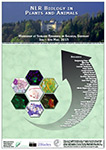
This workshop aims to draw together researchers in plant and animal NLR biology to discuss recent conceptual advances and future directions for the field. The workshop will take place at Schloss Ringberg in Bavaria, Germany from May 3–6, 2015. View the workshop poster for more information on how to register and submit an abstract.

New Title Reviews Latest Genomics Research on Soil- and Plant-Associated Fungi

ISMPMI 285 2 1955560 removebg preview

Issue 1

2020

interactions

Did You Know

93389

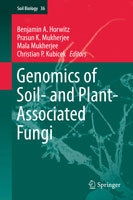
Genome sequencing has helped us understand how fungi recycle organic material in the soil, engage in positive and negative interactions with plant roots, and attack plants as pathogens. Contributing to this field, Genomics of Soil- and Plant-Associated Fungi highlights the relevance of fungal genetic research and biotechnological applications in plant pathogenesis, biomass degradation, litter decomposition, nitrogen assimilation, antibiotic production, mycoparasitism, energy, ecology, and also soil fungi turning into human pathogens.

This comprehensive book addresses the similarities and differences in the genomes of soil saprophytes, symbionts, and plant pathogens by using examples of model fungal species—Neurospora and Aspergillus—to provide an important view of pathogens and mutualists such as Trichoderma spp., Fusarium oxysporumCochliobolus heterostrophusPenicillium chrysogenumRhizopus oryzaePodospora anserina, and other species belonging to Agaricomycetes, Archaeorhizomycetes, and Magnaporthaceae. The title also offers an analysis of how specific interactions with hosts and the influence of the environment may have shaped genome evolution.
Learn more about Genomics of Soil- and Plant-Associated Fungi and other molecular titles available in the IS-MPMI Media Center.

Similar Effector Repertoires Between Pathogenic and Saprophytic Verticillium Species

ISMPMI 285 2 1955560 removebg preview

Issue 1

2020

interactions

Did You Know

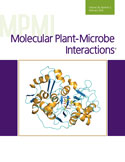
march2015MPMIGiven the rapidly increasing capacity for sequencing, as well as the decreasing cost, comparing the genomes of multiple strains and species has become an effective approach for uncovering genomic features that potentially underpin specific traits or ecological niches. In the March Focus Issue on genomics, Seidl et al. compare the gene repertoire and genome organization of Verticillium tricorpus with those of two pathogenic relatives: V. dahliae and V. alfalfae. These species encode similar putative effectors; thus, a key question is what functions these proteins confer.

Phytobiomes Initiative Launches New Website

ISMPMI 285 2 1955560 removebg preview

Issue 1

2020

interactions

Did You Know

phytobiomes

The Phytobiomes Initiative has launched a new website, located at phytobiomes.org. Learn more about the science behind this initiative of which IS-MPMI is a partner. Also be sure to save the date for their upcoming meetings and activities, including Phytobiomes 2015: Designing a New Paradigm for Crop Improvement, to be held June 29-July 2 in Washington, DC.

New Crop Genomics Research Leader Joins The Sainsbury Laboratory

ISMPMI 285 2 1955560 removebg preview

Issue 1

2020

interactions

Did You Know

Krasileva.jpg

In a joint appointment with The Sainsbury Laboratory (TSL), Ksenia Krasileva joins The Genome Analysis Centre’s science faculty to lead the Institute’s new Triticeae Genomics Group. As Triticeae Genomics Group Leader, Dr Krasileva will be responsible for the generation, integration, investigation, and release of improved genomic data for wheat and other Triticeae species.

Read more about the appointment on The Sainsbury Laboratory website.

New Scientific Collaboration to Combat Devastating Crop Rusts

ISMPMI 285 2 1955560 removebg preview

Issue 1

2020

interactions

Did You Know

Seven scientific teams from the co-located John Innes Centre, The Sainsbury Laboratory, and The Genome Analysis Centre have joined forces in the fight against rust fungi.

The newly formed Norwich Rust Group aims to develop durable resistance in crops. Exploiting advances in genomics, scientists will investigate how parasitic rust fungi invade and feed off plants. They will also use these new techniques to locate genes in some varieties of crops which are able to resist invasion.

Read more about this initiative on The Sainsbury Laboratory website.​

Summer School in Plant Microbe Interactions

ISMPMI 285 2 1955560 removebg preview

Issue 1

2020

interactions

Did You Know

In August 2015, The Sainsbury Laboratory will be hosting it’s second Summer School in Plant Microbe Interactions. Running over two weeks from the 17th to the 28th we will cover key topics and techniques.

The summer school will feature extensive practical training in cutting edge techniques and stimulating discussions on the latest thinking and discoveries in the field, all led by our Group Leaders and their groups and exciting invited guest speakers. The course will be ideal for students new to the field and those looking to get an understanding of the breadth and quality of work across the whole of the plant-microbe interaction community.

More information about the summer school program can be found on The Sainsbury Laboratory website.​

Significant Improvements to MPMI

ISMPMI 285 2 1955560 removebg preview

Issue 1

2020

interactions

Did You Know

April15MPMI

Starting with the April issue of MPMI, papers will be published in full-text html online using an XML-first workflow. XML, or extensible markup language, is a web-specific language for presenting information effectively on the Internet. This move to XML will bring significant improvements.

altmetricLogo

  • Full indexing and easy discovery: Going forward, the whole article will be more easily indexed by search engines, including text, figures, and tables, which will beavailable for browsing and indexing on interactive webpages. Thus, search engines like Google will be able to retrieve contents from all portions of a paper.
  • Social media sharing: Full-text html makes it easy to share any portions of an article on social media like Twitter or Scoop.It.
  • Faster turnaround times with “Ahead of Print:”  In the past, MPMI’s editorial workflow involved creating articles for print and posting PDF articles online when eachmonthly issue was ready. Now full-text html and fully-formatted PDFs will be published ahead of print shortly after authors approve their article proofs. Formatting is partially automated, and copyediting and figure preparations occur in parallel. Furthermore, MPMI’s XML service provider, Dartmouth Journal Services, also provides MPMI with the ability to automate billing and galley proofing in an integrated step. These two changes will decrease the time from acceptance to print by several weeks. Implementation will continue over the next several months, and speed to publication will improve. Once we are at full speed, articles may be published online as quickly as 24 hours after author galleys are approved.
  • Better presentation on mobile devices: More of us are reading our journals on mobile devices. The new full-text html formatting will enhance this practice. Of course you will still be able to print or view a PDF of any article.

As part of our effort to establish similar formats across all three of the APS print journals, including MPMI, some of our guidelines​ have changed. For example, authors may have already noticed that we now use the “Harvard style” for references.

Upgrading to this new platform will also allow us to incorporate more features for the journal and more abilities for the user.  In the future, you will be able to bypass the abstract and jump from a search result in Web of Science or PubMed directly to the full-text article, if your institution has access to MPMI. The platform will take users quickly to the fullest content available.

Authors will also benefit. In addition to seeing who cites MPMI articles, MPMI has added “Altmetrics” for article level metrics that show how often articles are shared on social media. So please tweet and share interesting MPMI articles with your colleagues.

We are excited to see these changes implemented and hope you will like them. Please view the April issues and submit your next paper to MPMI. Contact myself, our editorial board, or MPMI staff if you have other suggestions regarding the MPMI journal.

By Jane Glazebrook, Editor-in-Chief, MPMI​​

​​​​​​

Scroll to Top