Category: Volume 4 • 2020

Salicylic Acid and the Replication of Tomato bushy stunt virus

ISMPMI 285 2 1955560 removebg preview

Issue 1

2020

interactions

Did You Know

April15MPMI

Salicylic acid (SA) is well known as a plant hormone involved in plant defense signaling, but the mechanisms by which it protects plants are less well understood. In the April issue, Tian et al. show that SA contributes to resistance against Tomato bushy stunt virus by binding directly to Arabidopsis glyceraldehyde 3-phosphate dehydrogenase, a host protein needed for viral replication.

Opportunity to Participate in the 11th U.S.-Japan Seminar on Plant-Pathogen Interactions, October 25–29 in Kagawa, Japan

ISMPMI 285 2 1955560 removebg preview

Issue 1

2020

interactions

Did You Know

pic20150414

In a joint communique issued in 1961 by President John F. Kennedy and Japanese Prime Minister Hayato Ikeda, a cooperative scientific program was established between the United States and Japan to foster scientific collaboration between the two countries. The theme for the 11th U.S.-Japan Scientific Seminar—held October 25–29, 2015 at the Kagawa International Conference Hall in Takamatsu City, Kagawa, Japan—is “Molecular Contact Points in Host-Pathogen Co-evolution.”

img hall03
Higurashi-tei Teahouse/Ritsurin Garden, and the Kagawa International Conference Hall

The seminar will provide a forum with a diverse group of research leaders from both countries for the purpose of fostering scientific collaborations, exchanging ideas and materials, and critically discussing co-evolution research on molecular aspects of plant/pathogen interactions. Symposium speakers will include research scientists from the United States and Japan, and the small meeting size and the complementary expertise of the participants will provide an excellent opportunity for young scientists to discuss their research and foster potential collaborations.

Meeting details, including instructions for abstract submission and registration materials, can be viewed on the seminar website. For additional information, contact United States organizers Jane Glazebrook or Adam Bogdanove, or Japan organizer Kazuya Akimitsu.​​

News provided by Brad Day. 

Update on the XVII Congress

ISMPMI 285 2 1955560 removebg preview

Issue 1

2020

interactions

Did You Know

By Brett Tyler, Oregon State University

On July 17-21, 2016, Portland, Oregon, the “City of Roses” at the confluence of the Columbia and Willamette rivers, will host the XVII International Congress on Molecular Plant-Microbe Interactions. The meeting will be held at the Oregon Convention Center, across the river from downtown Portland and connected by light rail to downtown and the airport.

portland sky

The Local Scientific Committee has been hard at work developing the program and incorporating lots of suggestions from the IS-MPMI Board and from attendees at past meetings. The 2016 meeting will offer a streamlined program with lots of time for networking, posters, and recreation. There will be seven plenary sessions, nine sets of three concurrent sessions, and three poster sessions. There is also time on Sunday, July 17, for special sessions. Contact Brett Tyler if you wish to host a special session.

portland river

The plenary and concurrent sessions will highlight the latest advances in fundamental research. Some examples are RNA-mediated interactions; epigenetic variation in microbes and hosts; epigenomics; tritrophic interactions and the microbiome; population genomics; mechanisms of plant immunity; cell wall and apoplastic interactions; mechanisms of symbiosis and mutualism; and interkingdom signaling. Also covered are translational studies critical for advancements in agricultural science, such as


novel approaches for disease control; breakthrough technologies for engineering staple food crops; and successes and needs in the developing world.

Travel awards​ will be available to assist the participation of students and post-doctoral scholars. Awardees will work together in teams with established scientists throughout the meeting to critically discuss the research presented. In addition, the awardees will contribute to the dissemination of key findings from the meeting by releasing daily meeting highlights via social networking and publishing a final congress report.

Watch for updates on the conference website and by following @ICMPMI2016 on Twitter.

The members of the Local Scientific Committee are:


  • Brett Tyler (chair), Oregon State University
  • Barbara Baker, USDA-ARS Albany
  • Andrew Bent, University of Wisconsin-Madison
  • Jeff Chang, Oregon State University
  • Lynda Ciuffetti, Oregon State University
  • Shouwei Ding, University of California, Riverside
  • Valerian Dolja, Oregon State University
  • Nik Grunwald, USDA-ARS Corvallis
  • Maria Harrison, Cornell University
  • Ann Hirsch, University of California, Los Angeles
  • Jan Leach, Colorado State University
  • Joyce Loper, USDA-ARS Corvallis
  • Sharon Long, Stanford University
  • Wenbo Ma, University of California, Riverside
  • Richard Michelmore, University of California, Davis
  • Shauna Somerville, Stanford University
  • Brian Staskawicz, University of California, Berkeley
  • Guoliang Wang, The Ohio State University
  • Valerie Williamson, University of California, Davis
  • Mary Wildermuth, University of California, Berkeley
  • Tom Wolpert, Oregon State University

Photo credits: topbottom​

Two IS-MPMI Members Elected to the National Academy of Sciences

ISMPMI 285 2 1955560 removebg preview

Issue 1

2020

interactions

Did You Know

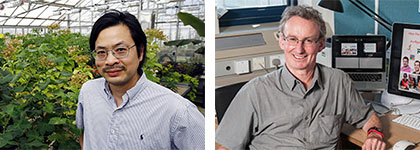
IS-MPMI President Sheng Yang He and IS-MPMI member Jonathan Jones have been elected​ to the National Academy of Sciences (NAS) in recognition of their distinguished and continuing achievements in original research.

He, a distinguished professor at Michigan State University (MSU), was elected as a member of NAS for his research focusing on the infectious disease susceptibility in plants, and Jones, a group leader at The Sainsbury Laboratory (TSL), was elected as a foreign associate of NAS for his outstanding career researching plant-pathogen interactions.

Joining the 2,250 active members and 452 foreign associates of the NAS, He and Jones spoke glowingly of their appointments and of the molecular plant-microbe interactions (MPMI) field in a recent e-mail exchange with IS-MPMI staff.

Staff: What does being elected to the NAS membership mean to you?

he jones
  Sheng Yang He, left, and Jonathan Jones, right.

He: I am very honored and happy that my research on the molecular basis of disease susceptibility/bacterial pathogenesis in plants was recognized by the NAS this year. I am indebted to my lab members and collaborators—some of whom are well-known IS-MPMI members—for a scientific journey that coincided with a paradigm-shifting period of molecular plant-microbe interactions research. This is a tremendous honor that I could not have possibly imagined when I was growing up in a small village in China. Elected in the same year as Professor Jonathan Jones, a pioneer in the field, makes this recognition extra special. Indeed, there are so many colleagues in our community who deserve this recognition. I can only hope that some of them will receive it soon.

Jones: Personally, I’m totally thrilled and honored by this recognition by the NAS of my lab’s work. My cheek muscles are still a little tired from all that smiling! It’s an accolade for all the wonderful accomplishments of the many outstanding post-docs and students whom I’ve been privileged to host in my lab. And it’s a tribute to the generous and sustained support to TSL from David Sainsbury’s Gatsby Foundation, for which I’m extremely grateful.

Staff: What has motivated you to study molecular plant-microbe interactions? 

He: Growing up in a small village in China, I witnessed the daily impact of crop diseases and insect pests on farmers’ lives. But I was not specifically interested in molecular plant-microbe interactions research until my graduate school years. I was one of the Chinese students who were fortunate enough to be able to come to the United States and pursue a Ph.D. degree in plant science. Alan Collmer’s lectures on the cloning of avr, hrp, and pectic enzyme genes in the late 1980s fascinated me tremendously. The Arabidopsis-Pseudomonas syringae pathosystem—established by the laboratories of Brian Staskawicz, Fred Ausubel, and Jeff Dangl—provided a golden opportunity for our research on dissecting the molecular basis of disease susceptibility in plants. Since then, there has been no turning back.

Jones: This field has everything. My training was in plant biology and genetics, and each plant-microbe interaction provides new examples of coevolution. I got into the field as a post-doc with Fred Ausubel in 1981–1982, and went to the first IS-MPMI meeting in Bielefeld in 1982. At that meeting I realized I had found my community. There was so much to learn. I had to learn about bacterial, fungal, and oomycete mechanisms and diversity. I had to learn to think about the MPMI problem at a range of levels—including the diversifying and frequency-dependent selection that drives genetic diversity in host and pathogen populations, the repertoires of resistance genes and recognized effector genes on which selection operates, and the molecular mechanisms that underpin recognition or its evasion. There are so many important diseases that constrain crop yields, each of which provide a great opportunity for new insights into biology.

Staff: What do you see for the future of the MPMI field? 

He: Looking forward, I hope that some of the fascinating basic knowledge generated by the IS-MPMI community will be translated to effective methods to solving one of the biggest challenges in agriculture: biotic stresses. I am very jealous of the junior members of our society; the students, post-docs, and faculty just starting their careers. I wish that I were 20 years younger and could start all over again. I would choose to study an interesting question that is not a hot topic, but could potentially become one, with proper use of emerging techniques/model systems.

Jones: As new tools and insights emerge, it is becoming more realistic to aim to design, or to evolve in the lab, resistance genes with defined recognition specificities. I love working in that sweet spot where the topic is really interesting, and the outcome of your experiments might be really useful. MPMI is wonderful.​​

Harrison Receives Hoagland Award for Plant Nutrition Research

ISMPMI 285 2 1955560 removebg preview

Issue 1

2020

interactions

Did You Know

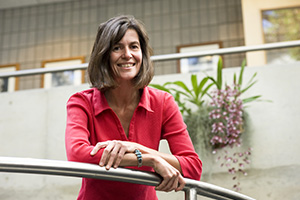
IS-MPMI member Maria Harrison is the recipient of the Dennis R. Hoagland Award in recognition of her outstanding contributions to plant mineral nutrition.

Harrison, a professor at the Boyce Thompson Institute for Plant Science (BTI) in Ithaca, New York, has pioneered studies of phosphate acquisition in arbuscular mycorrhizal (AM) symbioses using the model legume Medicago truncatula. In particular, her findings that phosphate transport is linked to maintenance of symbiosis and that plants use classic hormone signaling pathways for regulation of the AM symbiosis have ushered the field of fungal–plant interactions in new directions, and they provide opportunities for the future manipulation of phosphate acquisition in crop species.harrison web300

Established by the American Society of Plant Biologists (ASPB) in honor of the late Dennis R. Hoagland, the award has been given every three years since 1985 in recognition of outstanding plant research in support of agriculture. Hoagland was the first recipient of the Stephen Hales Prize in 1929 for his outstanding contributions and leadership in plant mineral nutrition.
On receiving this award from ASPB, Harrison recently told IS-MPMI staff, “It’s a great honor to be selected to receive this award from ASPB. Dennis R. Hoagland pioneered research on plant mineral nutrition and his discoveries have had a strong influence on research in my lab, so receiving this particular award has special meaning for me. In addition to my nominator and the selection committee, I would like to thank all the members of my lab whose hard work and discoveries contributed to my receipt of this award.”
Harrison’s research has identified key gene products required for phosphate transport and uptake and shown that redirected plant protein secretion mechanisms target transporters to symbiotic membranes. She has also worked to develop cell biology resources for in vivo cellular imaging in Medicago that expand research capabilities to further unravel the nutritional function of the AM symbiosis.
“I am fascinated by endosymbiosis and how one organism can live within the cell of another organism,” Harrison explained. “In the case of AM symbiosis, this occurs to mutual benefit, which adds a further dimension and relates to my interests in mineral nutrient transport as the fungal symbiont delivers significant quantities of phosphate to the plant.”
“An additional motivating factor,” she continued, “is the need for phosphate in agriculture and in particular our need to increase the efficiency with which we use it. Phosphate (phosphorus rock) reserves are being depleted at an alarming rate.”
For early career researchers interested in this area of research, Harrison’s advice is to “Get involved—there is so much to discover. Meetings like ASPB’s Plant Biology, the IS-MPMI Congress, and the International Conference on Mycorrhizas (ICOM) are all excellent places to meet other researchers with interests in these topics.”

You can learn more about Harrison’s research and the focus of her lab by visiting the BTI website and by connecting with her and her lab members at conferences or through e-mail.

The Development of Symbiosomes in Infected Cells of Medicago truncatula Root Nodules

ISMPMI 285 2 1955560 removebg preview

Issue 1

2020

interactions

Did You Know

Actin networks are critical for maintaining integrity and subcellular organization of ukaryotic cells. In this issue, Gavrin and colleagues show that rhizobial symbiosomes in nitrogen-fixing legume root nodules are surrounded by nets of actin microfilaments. The ARP3 protein, known to be required for formation of microfilament branches, is also required for proper symbiosome development, demonstrating the importance of actin microfilaments in symbiosome development.

MPMI Welcomes New Editor-in-Chief

ISMPMI 285 2 1955560 removebg preview

Issue 1

2020

interactions

Did You Know

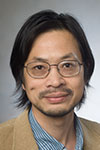
John McDowell was recently appointed as the new editor-in-chief of Molecular Plant-Microbe Interactions (MPMI). He will begin his three-year term in January 2016. McDowell is a professor in the Department of Plant Pathology, Physiology, and Weed Science at Virginia Tech and has been a member of the MPMI Editorial Board for 10 years. Most recently, he was a senior editor of MPMI.

mcdowell

McDowell’s current work includes functional and comparative genomics of oomycete plant pathogens, functional analysis of oomycete effector proteins, mechanisms through which pathogens extract nutrients from plant hosts, and translating pathogen genomics into new solutions for disease control.

Letter from the President

ISMPMI 285 2 1955560 removebg preview

Issue 1

2020

interactions

Did You Know

Sheng Yang He

shengyang

The first time I attended an IS-MPMI Congress was in 1990 (Interlaken, Switzerland), the year when IS-MPMI was formally inaugurated. It was such an exciting Congress, where major advances on rhizobia, agrobacteria, and various pathogens were reported. Research describing plant responses to microbial interactions was also accelerating. As a graduate student working on bacterial pathogenesis and looking for potential new projects for my future career, I was so inspired by talks by Fred Ausubel, Brian Staskawicz, and Jeff Dangl, who introduced the Arabidopsis-Pseudomonas syringae model for their study of defense responses. So, why am I reflecting on my experiences at this early IS-MPMI Congress? This is for two reasons. First, those who attended the IS-MPMI Congress in 2014 (Rhodes, Greece), you will recall that Fred Ausubel announced in his lecture that he would retire soon. In the months that followed his announcement, I realized that quite a large number of additional pioneering members of the MPMI community will be approaching retirement in the near future. This is going to have a huge impact on our society in terms of science, training, and personality. Starting soon on Interactions, Editor-in-Chief Brad Day will initiate a section in which interviews with retired members of our community will be featured. I encourage all members to read these interviews, as they should be very memorable, and moreover, will provide insight into what the leaders in our field see as the greatest accomplishments of their careers, what influenced their career choices and research foci, and where they see opportunities for future research

Second, when comparing the IS-MPMI Congress I first attended in 1990 to last year’s Congress in Rhodes, I felt that the 1990 Congress offered many more big ideas and research possibilities. This difference, of course, reflects the maturation of an exciting research field after three decades of intense research and is not indicative of the productivity of our community. In fact, in terms of productivity, we now publish many more papers as a community than at any given time in the past. Yet, I feel unsatisfied to witness young faculty members/group leaders struggle to find a new niche and establish a successful and competitive program. One might attribute the current struggles to many factors, including the difficult funding environment in most countries where our society members concentrate. What are the solutions? I would like to offer three here that, in my view, may be worthy of further discussion. First, we (especially the junior members of IS-MPMI) should develop a habit of challenging existing dogmas and model systems. In Rhodes and other places, I heard too many talks from our junior members who try to fit their results into current models. I think that even the authors of influential models would agree that many models are simplistic and should be challenged to make major conceptual advances in the field. Second, as we begin to understand basic principles of plant-microbe interactions under specific laboratory conditions, greater efforts are now needed to investigate plant-microbe interactions in the context of abiotic and biotic complexes as reflected in nature. For those who work on plant-pathogen interactions, the “disease triangle” dogma should be a familiar concept, as environmental conditions have huge effects on disease and resistance. What are the underlying molecular bases? Third, as a community, we must contribute substantially to the global efforts in translating fundamental knowledge to solving serious practical problems in agriculture. With many cutting-edge toolkits that were unthinkable even a few years ago, this is truly an exciting time for the IS-MPMI community to make a much greater impact in this area.
I am very proud of the collective talent of our society and look forward to hearing more paradigm-changing, holistic and/or great translational stories from you in our next Congress in Portland, Oregon, in 2016!

Remembering Professor Biao Ding

ISMPMI 285 2 1955560 removebg preview

Issue 1

2020

interactions

Did You Know

It is with profound sadness that we mourn the loss of Dr. Biao Ding. Dr. Ding, a Professor in the Department of Molecular Genetics, The Ohio State University, and a Senior Editor of MPMI was a world-renowned plant vascular biologist and leading authority in viroid research. He passed away suddenly on June 25, 2015 in Prague, Czech Republic, while attending the International Conference on Viroids and Viroid-Like RNAs as a Keynote Speaker.Biao Ding
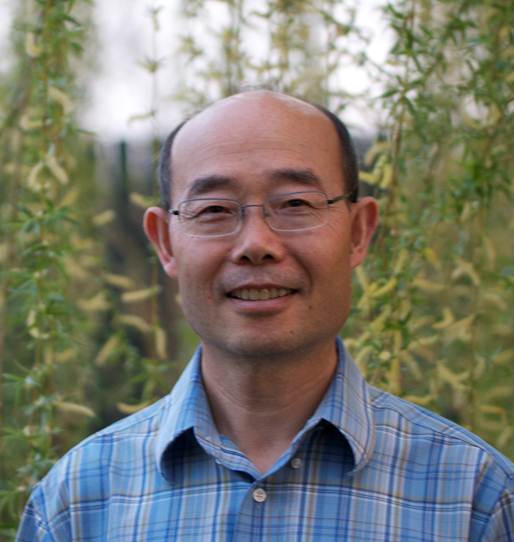
Dr. Ding was born in 1960, in Kunming, Yunnan Province, China. The third child of five, he grew up in a small village in a rural mountainous area without electricity. His family could not afford to send him to first grade, so he stood outside a classroom window trying to learn Chinese characters, while caring for his younger brother. Surmounting this hardship, he received his Bachelor of Science degree from Beijing Forestry University in 1982. He was then selected as one of the first group of scholars to study abroad upon the implementation of China’s Reform and Open Policy. He earned both M.S. (1986) and Ph.D. (1991) degrees with Dr. Parthasarathy from Cornell University. He then spent three years pursuing postdoctoral studies in the laboratory of Dr. William Lucas at University of California-Davis, where he worked on the role of plasmodesmata in viral infections. In 1994 he moved to Oklahoma State University as an Assistant Professor in the Department of Botany. He later joined the faculty of the Plant Cellular and Molecular Biology program at The Ohio State University in 2000, and was a Full Professor in the Department of Molecular Genetics since 2005.
Throughout his remarkable research career, Dr. Ding had a lasting interest in the mechanisms of intercellular communications through plasmodesmata. His unique contribution to this research field was to establish the small and non-encapsidated RNA pathogen called viroid as a model system for tracking the intercellular transport of macromolecules. His research group was first to reveal the specific RNA structures needed for the potato spindle tuber viroid (PSTVd) to overcome cell boundaries for intercellular and systemic trafficking. Significantly, his work revealed the critical role of RNA tertiary structures, involving non-Watson-Crick interactions, in the movement as well as replication of the small non-coding viroid RNA. His discovery was featured in the “Editors’ Choice” section of Science, and reported by over 30 public media outlets around the world. His interests also included RNA silencing, microRNAs and evolution of RNA structures.  Dr. Ding’s seminal research has been published in a number of prominent journals including Science, PNAS, Plant Cell, EMBO J, and was highly regarded by plant molecular biologists and plant pathologists worldwide.
Dr. Ding’s greatest strength as a researcher was his ever-expanding curiosity, passion, creativity and most importantly his courage in entering into new fields of science. We all learned from him to never fear trying new things, which is an essential step for further advancement in science and also in our personal lives.
Dr. Ding was a passionate teacher and mentor who inspired countless people even outside his academic community. He supervised numerous graduate students and postdoctoral researchers, many of whom now have successful research careers of their own. Dr. Ding was also a generous colleague, being always available to answer questions, offer insights and encouragement, and assisting junior colleagues with their grant-writing, and transition to a new environment. Being a teamwork enthusiast, he spearheaded numerous fruitful collaborations with both OSU and external scientists.
Dr. Ding was also an exemplary contributor to the academic communities. He was a long-time Senior Editor of MPMI, and recently also assumed the role of scientific editor for PLOS Pathogens, in addition to serving on the editorial boards of many other journals and reviewing articles for more than forty journals. He was actively involved in organizing International Plasmodesmata Conferences, International Conferences on Plant Vascular Biology, and the International Congress of Virology. He was elected to Fellowship in the American Association for the Advancement of Science in 2012.
On a more personal level, Dr. Ding was an exceptionally kind and sincere person. He and his wife looked after lab personnel as if they were part of their family. He could also be goofy and make people laugh, sometimes even without trying. He loved playing the piano, writing poems, and drinking an occasional glass of good wine. Through our research and personal lives, we shared with Dr. Ding and his family laughter, excitement, and tears at times, and an ever more intimate closeness. He was a beloved son, father, husband, colleague, mentor, and friend, and will be dearly missed.
Dr. Ding is survived by his wife, Yan Xun, and their two college-age children, Arthur and Adeline.
Asuka Itaya (Agriculture and Agri-Food Canada, Ottawa, Canada)
William J. Lucas (Section of Plant Biology, University of California-Davis, USA)
Yijun Qi (Center for Plant Biology, School of Life Sciences, Tsinghua University, China)
Feng Qu (Department of Plant Pathology, The Ohio State University, USA)
Ying Wang (Department of Molecular Genetics, The Ohio State University, USA)
Xuehua Zhong (Wisconsin Institute for Discovery & Laboratory of Genetics, University of Wisconsin-Madison, USA)


Thomas J. Baum Receives Noel T. Keen Award for Research Excellence in Molecular Plant Pathology

ISMPMI 285 2 1955560 removebg preview

Issue 1

2020

interactions

Did You Know

The Noel T. Keen award recognizes members of The American Phytopathological Society (APS) for research excellence in molecular plant pathology. Awardees have made outstanding contributions and demonstrated sustained excellence and leadership in research that significantly advances the understanding of molecular aspects of host–pathogen interactions, plant pathogens or plant-associated microbes, or molecular biology of disease development or defense mechanisms.

Baum (2)

Baum’s interests led him to pursue a degree in agricultural sciences at the University of Bonn, Germany, which he continued and completed at the Technical University of Munich in 1989 under the supervision of G. M. Hoffman and J.-A. Verreet. Baum then switched to nematology and entered into a Ph.D. program at Clemson University under the guidance of Stephen Lewis, Bruce Fortnum, and Ralph Dean. He graduated in 1993 and continued his education as a post-doctoral scientist in the laboratory of Richard Hussey at the University of Georgia. In 1995, Baum joined the faculty at Iowa State University, where he has been serving as chair of the Department of Plant Pathology and Microbiology for the last 10 years. Baum has been an internationally recognized leader in research on the molecular basis of plant–nematode interaction for almost two decades.
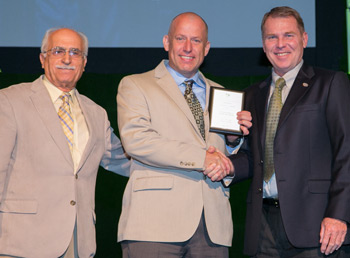
(Pictured left to right: APS Immediate Past President George Abawi, Thomas Baum, APS President Rick Bennett)

Scroll to Top