Category: Volume 4 • 2020

InterConnections: Get to Know Valentyna Klymiuk

ISMPMI 285 2 1955560 removebg preview

Issue 1

2020

interactions

Did You Know

MPMI banner 650

Tandem Protein Kinases Emerge as New Regulators of Plant Immunity

03InterConnections Klymiuk photo

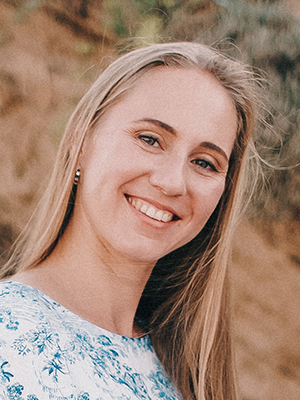
Name: Valentyna Klymiuk

Current Position: Postdoctoral researcher, Crop Development Centre and Department of Plant Sciences, University of Saskatchewan, Saskatoon, Canada.

Education: M.S. and Ph.D. degrees in hydrobiology at Donetsk National University, Donetsk, Ukraine; Ph.D. degree in plant genomics and host-parasite interactions at the University of Haifa, Haifa, Israel.

Non-scientific Interest: Hiking, playing piano, cross-stitching.

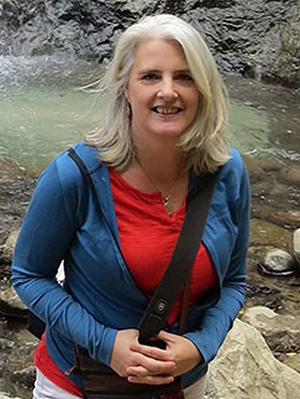
Brief Bio: I obtained my B.S., M.S., and one of two Ph.D. degrees from Donetsk National University, Ukraine. These degrees were in the area of hydrobiology, in which I focused on biodiversity and ecology of microalgae communities of continental salt lakes. Because of my growing interest in genetics and genomics, I decided to continue my studies, and I completed a second Ph.D. degree from the University of Haifa, Israel, where my studies focused on plant genomics and host-parasite interactions. Currently, I am a postdoctoral research fellow studying the genetic basis of disease resistance in wheat and its wild relatives. More specifically, I have studied innate resistance to wheat diseases, with an emphasis on identification, gene cloning, and functional characterization of tandem kinase proteins (TKP). Decades of research on canonical immune receptors, exhibiting nucleotide-binding leucine-rich repeat (NBS-LRR) or receptor-like protein (RLP)/receptor-like kinase (RLK) architectures, have firmed their established role in plant immune response. However, there is a general lack of focus on other receptor types, such as TKPs, and my interest lies in shedding light on the role of this important protein family in plant immune response. Currently, one barley and four wheat TKP genes have been functionally validated, but many more have yet to be discovered because TKPs are widespread and diverse across the plant kingdom. To bring more attention to TKPs and highlight their role in plant immunity, together with other co-authors from this research field, I published a review article in MPMI that provides the first comprehensive summary of information for all functionally validated TKPs. A detailed literature review also allowed us to propose a model of TKP evolution through duplication or fusion event and model of molecular function, in which the pseudokinase domain is suggested to serve as a decoy for pathogen effector, while the kinase domain is essential for downstream signaling. I believe that this work provides a deeper investigation of TKPs and will pave the way for future gene manipulation and synthetic engineering of novel plant resistance genes.

New Episode of Microgreens! Meet Podcast Cohost Elizabeth (Tess) Deyett

ISMPMI 285 2 1955560 removebg preview

Issue 1

2020

interactions

Did You Know

Microgreens Ep4 650x200

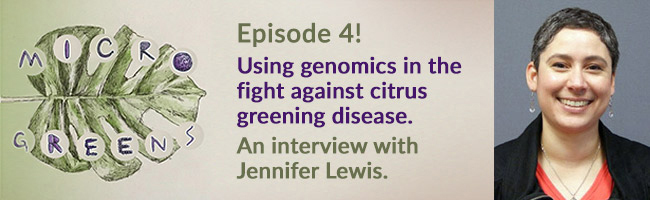
Microgreens Episode 4 is the first of a three-part series featuring Jennifer Lewis, an adjunct professor at the University of California Berkeley. Lewis leverages the field’s current knowledge in genetics and bioinformatics to discover potential methods to fight the devastating citrus greening disease, also known as huanglongbing (HLB).

04Microgreens Deyett

Listen to the podcast here or find Microgreens on your preferred podcast platform, where you can subscribe to be notified when the next episode comes out in September. Keep reading to meet podcast cohost Elizabeth (Tess) Deyett.

1. Tell us about yourself and how you got involved in Microgreens?

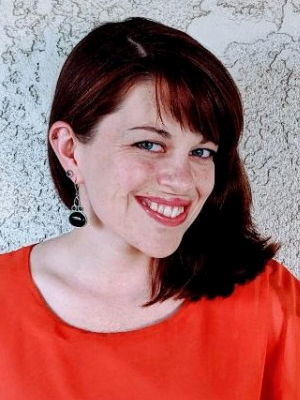
Hi, I’m Elizabeth (Tess) Deyett, Ph.D. I’m a current postdoc at the University of California Riverside. I work as a bioinformatician and data scientist exploring plant-microbe interactions. During the start of the pandemic, I grew increasingly aware of the scientific literacy crises in the world, so I started my own science communication business microbigals.com and later started my own podcast The Microbe Moment. Around this time, I was also given the opportunity to become an assistant feature editor for the Phytobiomes Journal and MPMI journal. It has been a wonderful experience so far.

In these roles, I have been able to develop not only my writing, editing, and reviewing skills but had the chance to cohost the Microgreens podcast. I love learning about the ways microbes affect our world, whether it be through crops or the environment. More importantly, I love learning about the researchers behind these discoveries. Being a cohost of Microgreens gives me the opportunity to engage with researchers throughout the MPMI community and share their stories with all of you! My life goal is to research the limitless potential of the microbial world and share the unique microbe moments everyone has.

2. You’re involved with two podcasts—what draws you to this medium?

I’ve been listening to podcasts for about six years now, and it is a wonderful platform to learn something new while you are commuting to work, working out, or cleaning around the house. It allows me to escape from some of these mundane tasks and make these moments feel more meaningful. For me, podcasts have made me feel less isolated throughout the pandemic, broadened my horizons, and taught me a lot about the world in which we live.

Being a podcaster is like being a storyteller—you’re an entertainer with the goal of educating. I hope as a podcaster, I am helping others the same way my favorite podcasts have helped me, even if it’s just helping others get through the dishes. I really do hope that if you are listening to the Microgreens podcast it helps you feel a little more connected and part of the MPMI community.

3. Who should listen to your three-part series on Jennifer Lewis?

The three-part series on Jennifer Lewis, while short, is extensive in its reach and really has something for everybody. The first part is on her research using comparative genomics to find novel ways to combat the devastating citrus pathogen HLB. I found Jennifer Lewis to not only be a great researcher, but an amazing person with some wonderful initiatives. This is more than a story about how science can save the citrus industry. It’s a story about how Jennifer Lewis manages her lab, not for the sake of surviving the “publish or perish” system, but for the sake of inspiring and mentoring the next generation of scientists. It’s a story about how she promotes diversity, equity, and inclusion in her lab as the foundation of scientific excellence. Even though this is a three-part series on a single researcher, each episode is unique, with a different tone and message. I think everyone in academia, especially plant scientists from undergraduate students to tenured professors, will enjoy listening to this series.

4. What’s next for Microgreens?

Raka Mitra and I are very excited for what’s next for Microgreens! One of our biggest projects is creating podcasts for each of The Top 10 Unanswered Questions in MPMI. The first episode of this series is already out, and you can listen to it here. We will have one podcast exploring each of the Top 10 Unanswered Questions in MPMI. These podcasts will be released throughout the remainder of 2021 and 2022—if you don’t want to miss them, make sure you subscribe to Microgreens on your favorite podcast app or follow us on Twitter: @MPMIMicrogreens.​

Explore the Most Viewed ePosters from Our July eSymposium

ISMPMI 285 2 1955560 removebg preview

Issue 1

2020

interactions

Did You Know

Congress eSeries

Take a look at the most viewed ePosters from our July eSymposium. You can expect to see more great research from the September 15–16 eSymposium. The final symposium in the series will be held December 1–2: Plant-Microbe Interactions in the Environment—Navigating a Complex WorldRegister today!

Interactions Issue 3, 2021

ISMPMI 285 2 1955560 removebg preview

Issue 1

2020

interactions
01MPMIGuide circle 2015728
The MPMI Guide to Writing a Successful Research Paper
In a work environment ruled by the "publish or perish" principle, researchers are constantly looking to publish more research in prestigious journals. However, throughout our scientific careers, we are all chased by the ghost of journal rejection. The MPMI senior editors discuss some of the points they consider fundamental for writing an outstanding scientific paper and getting it accepted.

Did You Know

Also in this issue…

The American Society of Plant Biologists, along with partners that include IS-MPMI, has been awarded a grant through the National Science Foundation LEAPS program. The ROOT & SHOOT (Rooting Out Oppression Together and SHaring Our Outcomes Transparently) project will provide resources, training, opportunities, and structures aimed at cultivating cultural change toward an inclusive, equitable future for our discipline.
Saskia Hogenhout, John Innes Centre, UK, has been named a 2021 Fellow of The American Phytopathological Society. In this interview, Saskia answers questions about the impact of her research, how she chose her specific area of research, and her advice for young scientists looking to make an impact in their field.
 
To bring more attention to tandem kinase proteins (TKPs) and highlight their role in plant immunity, Valentyna Klymiuk and co-authors have published a review article in MPMI that provides the first comprehensive summary of information for all functionally validated TKPs.
 
Microgreens Episode 4 is the first in a three-part series featuring Jennifer Lewis, adjunct professor at the University of California Berkeley. Lewis leverages knowledge in genetics and bioinformatics to discover potential methods to fight citrus greening disease, also known as huanglongbing (HLB). Podcast cohost Elizabeth (Tess) Deyett discusses her involvement with Microgreens and the series.
Take a look at the most viewed ePosters from our July eSymposium. You can expect to see more great research from the September 15–16 eSymposium as well.
We are always looking for content for Interactions. Please contact Interactions Editor-in-Chief Dennis Halterman with questions or article ideas.

The MPMI Guide to Writing a Successful Research Paper

ISMPMI 285 2 1955560 removebg preview

Issue 1

2020

interactions

Did You Know

Juan S. Ramirez P.

01MPMIGuide Ramirez photo

Juan is an assistant feature editor for the MPMI journal and is currently a postdoc at the Centre of Microbial and Plant Genetics–Plant Fungi Interactions at KU Leuven in Belgium.

In a work environment ruled by the “publish or perish” principle, researchers are constantly looking to publish more research and in more prestigious journals. However, throughout our scientific careers, we are all chased by the ghost of journal rejection, which sometimes behaves unpredictably. Even though some scientists may argue there is a “luck” component inherent in the publication process, it is undeniable that preparing a good manuscript, both in style and content, for submission is a scientist’s best ally to escape being haunted by this ghost.

Prompted by Jeanne M. Harris, editor-in-chief of MPMI, the senior editors of the journal reflected on their tips for successfully writing a good scientific paper and getting it accepted in a desirable journal. Here, we discuss some of the points we consider fundamental for writing an outstanding submission.​

You Need to Know What You Want to Tell and Find the Best Way to Do It
01MPMIGuide graphic

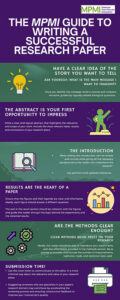
A research paper, like any other article, needs to have a main message. Thus, it might be helpful to ask yourself, “What is the message I want to convey?” Sometimes this question may be challenging to answer; nonetheless, it is important to know the answer before you start writing your manuscript since it will become the lighthouse that guides you—and the reader—through the sea of data and information that will make up your paper.

Once you identify the main idea, you need to create a narrative that guides the reader through a coherent and concise story. One useful way to construct this path is to ask an initial biological question, which in many cases is the driving question that motivated the study. You will then answer this initial question by describing a set of experiments, with results represented in figures. From these results, you can draw some conclusions, but new questions will consequently arise. Thus, these questions may serve as the connectors between the different figures, which at the same time represent their answers. Following this order, you will end up with an organized set of questions and figures. This will serve as the backbone of your paper, which you can write in a straightforward manner following the order you previously established.

In addition to presenting a great story and interesting results, each component of your research article should excel by itself. From the abstract to the references to the cover letter, no detail should be neglected.

The Abstract

The abstract is your first opportunity to capture the attention of the editor and reviewers, so do not miss it. A clear, logical abstract that highlights the relevance and scope of your research paper is vital—it will keep the reader interested in your work and get the reader to engage with its motivation. One useful approach is to write the abstract at the end of the manuscript. This way, the most relevant ideas, results, and conclusions can be included in the abstract. Even though it is important to highlight the main findings of your work, avoid overselling your results because it will compromise your credibility (this applies to the whole manuscript).

More and more scientific journals are requesting a graphical abstract be included as part of their research papers. Graphical abstracts need to be simple and informative enough for the reader to quickly understand the article’s main message. They are especially useful when authors propose a model for a specific biological process and are less useful for more complicated articles. Since some journals do not include graphical abstracts, it may be helpful to include a model summarizing the main findings of the article as the last figure and include it in the discussion. This will help the reader follow your reasoning and understand how all the results fit together in a biological context. When preparing a graphical abstract or model, it is important that the graphic is clear and aesthetically attractive.

The Introduction

A good introduction is informative enough to provide nonexpert readers with all the information they need to understand a paper. However, you should avoid giving too many unnecessary details and keep the introduction concise and simple. Consider organizing the information from most general to most specific and be sure that the references you provide are relevant and updated. Finally, do not give in to the temptation to provide too many details concerning the results and conclusions from your work. You will have enough space for those details in the following sections.

The Results Carry the “Essence” of Your Paper

Like the rest of the paper, the results section should be built around the figures. Thus, both the figures and their corresponding captions must be clear, informative, and aesthetically attractive. Ideally, each figure should address a different question. To test this, draft a one-sentence title to summarize the main conclusion that can be drawn from each figure. If this process is easy, this indicates that every figure is necessary and addresses a different point. In contrast, if you have trouble concisely summarizing a figure, this may suggest it is necessary to split it into several figures and simplify the message for each resulting figure.

The data shown in figures should be consistent with the text. Bear in mind that a reviewer who has trouble understanding and interpreting your data is an unhappy reviewer who is less likely to agree with your conclusions and more prone to advise a rejection or give negative feedback. To increase the accessibility of your manuscript, briefly explain the reasoning behind the chosen techniques and experiments throughout the results section. This will allow the reader to follow the logic of the study. Furthermore, to avoid problems with the clarity of your message, ask some of your lab members or colleagues and, ideally, someone working in a related yet different field to read your manuscript and give their input. Readers outside the topic area who can provide fresh eyes may be able to spot inconsistencies that have become invisible to you. Additionally, if you doubt your language skills, ask a native English speaker or someone with high proficiency in the language to check the grammar and style of your text.

Clear Methods Make a Clear Paper

In the methods section be as precise as possible in describing the methodology, the number of measurements and replicates you performed, and the statistical tests you used. The methodology should be described in enough detail to allow the reader to reproduce your experiments without doubts about the procedure. This will also increase the reviewers’ confidence in the presented results. It may be helpful to briefly explain why you chose a particular method or carried out an analysis in a specific way. This can significantly contribute to making the paper more accessible to reviewers and readers.

Your Submission Is More Than a Manuscript

Your manuscript is finished, your figures are neat, and you are ready to submit. However, when you log in to your favorite journal, you may realize that there are many empty spaces to fill and information to be provided. Oh, and you also need a cover letter (which most likely you have not written yet)!

Many of us have experienced the latter discouraging scenario, and some proceed with the most intuitive and time-saving option: copying the abstract or some phrases of the paper into the cover letter. While it is true that a good abstract should contain much of the information supporting why your paper is valuable and should be published, a misused cover letter is a missed opportunity. The cover letter is the space where authors can highlight the relevance and pertinence of their study more informally and subtly. Since the content of the letter will not be published, it allows some extra freedom for convincing the editor of the novelty of the research, how it fits into the state-of-the-art of the field of study, and how it contributes to its advance. Use it wisely!

Last, but not least, it may be wise to provide the editor with the names of suggested reviewers. This will save the editor time and, in general, speed up the whole review process. Bear in mind that these suggested reviewers should not be scientists with whom you have coauthored papers or grants or have existing collaborations to allow the review process to be as objective as possible. Additionally, it is wise to pick reviewers who are specialists in your paper’s research topic, so they can potentially increase its quality with their input.

IS-MPMI Joins ASPB and Partners in $2 Million NSF Grant to Advance Diversity, Equity, and Inclusion in the Plant Sciences

ISMPMI 285 2 1955560 removebg preview

Issue 1

2020

interactions

Did You Know

Mary Williams and Crispin Taylor
Graphics designed by Siobhan Braybrook
Edited by Dennis Halterman

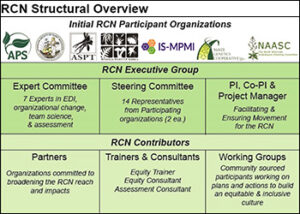
We are excited to announce that the American Society of Plant Biologists (ASPB), along with partners that include IS-MPMI, has been awarded a five-year grant through the National Science Foundation LEAPS (LEAding cultural change through Professional Societies of biology) program. As the lead organization, ASPB has the privilege of coordinating the development of a Research Coordination Network (RCN) in partnership with other plant science organizations and organizations that serve marginalized scientists. Interactions EIC Dennis Halterman and IS-MPMI President-Elect Roger Innes will represent IS-MPMI on the steering committee for the project.

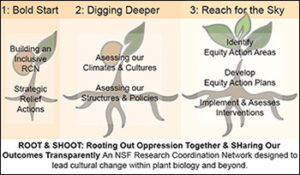
The project, named ROOT & SHOOT (Rooting Out Oppression Together and SHaring Our Outcomes Transparently), will provide resources, training, opportunities, and structures aimed at seeding and cultivating cultural change toward an inclusive, equitable, scientific future for our discipline. The goal of an NSF LEAPS RCN is to catalyze cultural change, and as such, we aim to include more partners as the project progresses and openly share our ongoing work and all resources we develop.

The LEAPS grant offers an opportunity to create an even more inclusive, welcoming, and supportive community of plant biologists, and it is crucial that IS-MPMI be a part of this. Within this partnership, IS-MPMIConnect will continue its mission to contribute toward the promotion of an inclusive society, celebration of diversity, and recognition of excellent science. I am very much excited to see where IS-MPMIConnect will take us this next year!

– Allyson MacLean, ISMPMIConnect Founder

01LEAPS graphic1

This change work will begin within ASPB and our initial plant science organization partners: the International Society for Molecular Plant Microbe Interactions (IS-MPMI), The American Phytopathological Society (APS), the American Society of Plant Taxonomists (ASPT), the Botanical Society of America (BSA), the Maize Genetics Cooperation (MGC), and the North American Arabidopsis Steering Committee (NAASC). In addition, we have partnerships with Corteva Agriscience and Bayer Crop Science to ensure that the plant science industry benefits as well.

We will also be working with STEM inclusion organizations, including the Society for the Advancement of Chicano/Hispanics and Native Americans in Science (SACNAS); Minorities in Agriculture, Natural Resources, and Related Sciences (MANRRS); Out in STEM (oSTEM); and the Howard Hughes Medical Institute (HHMI). We will grow our network of partners in this area as well, ensuring that we are listening to all marginalized communities and working to remove structural and systemic barriers to true inclusion.

Equity and diversity in plant sciences benefits not only minorities, but all members of our community. The success in the LEAPS application provides a fantastic opportunity to make good on bold intentions of driving cultural change to support equity and diversity in plant sciences.

– Giles Oldroyd, Chair of IS-MPMI Equity, Diversity, and Inclusion Committee

01LEAPS graphic2

Collectively, these organizations will develop and propagate tools for cultivating a sustainable sense of shared belonging and removing oppression from individuals with identities that are historically and currently marginalized (based on gender, gender identity, disability status, sexual orientation, ethnicity, or race). Although each RCN participant organization has begun this work, the award will allow the coordination and resources needed to enact meaningful change and to achieve lasting impacts in reshaping the entire plant science community.

As president-elect of IS-MPMI, I am very much looking forward to working with other plant-centric societies on building a more diverse, inclusive, and welcoming scientific enterprise. As MPMI scientists know extremely well, monocultures are not sustainable systems. Recruiting individuals into IS-MPMI with diverse viewpoints and world experiences is critical to the success of our society and, more importantly, to meeting the many challenges facing the world in the coming decades. This RCN will provide an outstanding platform for IS-MPMI to learn from experts, and from other societies, as we all strive to build a more just world.

– Roger Innes, IS-MPMI President-Elect

01LEAPS graphic3

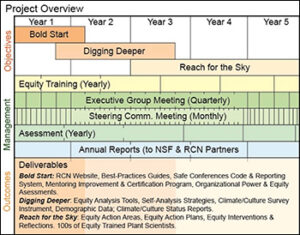
The ROOT & SHOOT program was collaboratively designed to accomplish three major aims: first, to immediately address known key systemic barriers to full participation within each organization; second, to require the partner organizations to dig deeply into themselves and build more equitable and inclusive structures; and third, to allow the plant science community to identify bold new directions that will continue expanding participation and provide a system of coordination of the required labor and sharing of ideas, practices, and outcomes (community-based working groups). The award also will provide broad training of the plant science communities in equitable practices and operations, including inclusive teamwork, climate and culture assessment, and culturally responsive mentoring.

This is fantastic news! This is an important step forward for IS-MPMI and our partnering societies. Over the past two years, IS-MPMI has been developing new interactive platforms to build a stronger, more inclusive community. We will be able to build upon these activities and establish an inclusive environment by directly addressing the climate and cultural deficiencies in our society and practices. I look forward to collaborating with colleagues on the ROOT & SHOOT project to help develop and implement effective tools to transform the future of IS-MPMI, as well as scientific societies worldwide. I’d also like to extend enormous gratitude to my ASPB colleagues and their partners for developing this vision and to the National Science Foundation for providing the framework and funds to support this transformative work.

– Mary Beth Mudgett, IS-MPMI President

In the fourth quarter, as the award begins, we will begin to ramp up the RCN programs by creating a website for real-time information dissemination and community feedback, identifying experts and trainers to guide our practices and work, forming working groups and training members, and preparing webinars and workshops. More information about opportunities and how you can participate will be provided in the coming months—so stay tuned!​

InterStellar: Interview with 2021 APS Fellow Honoree Dr. Saskia Hogenhout

ISMPMI 285 2 1955560 removebg preview

Issue 1

2020

interactions

Did You Know

02InterStellar Hogenhout photo

Saskia Hogenhout, John Innes Centre, UK, has been named a 2021 Fellow of The American Phytopathological Society (APS). This honor recognizes distinguished contributions to plant pathology in one or more of the following areas: original research, teaching, administration, professional and public service, and extension and outreach.​

1. What area(s) of molecular plant-microbe interactions do you feel your research has impacted most?

I believe my research has most impacted the fields of bacteriology, vector-borne disease, and molecular plant-microbe-insect interactions. At the time I started research on phytoplasmas, the majority of bacteriologists studied culturable bacterial plant pathogens, such as PseudomonasXanthomonas, and Erwinia species, and their type III secretion systems and effectors. In contrast, phytoplasmas are obligate colonizers of plants and insects, reside in the cytoplasm of their host cells, and secrete their effectors via sec-dependent pathways. My research has shown that research on nontractable organisms is highly rewarding, as it has led to the characterization of reactive small effector proteins that can induce dramatic changes in plant development and attract phytoplasma insect vectors to plants. These phytoplasma effectors act like molecular glues that short-circuit key plant pathways. Phytoplasma effectors have been useful tools to study connections between plant development and defense processes.

2. What advice do you have for young scientists aspiring to achieve the level of science that has a major impact?

I think it is important to remain interested and inspired by the scientific topic being studied. When times get tough, the science itself will give you the resilience, excitement, and positivity to move forward. In addition, it builds the self-confidence that what you are doing is high impact, no matter what others may think about it.

3. When you were a postdoc, what had the largest influence on your decision to enter your specific research area in your permanent position? Was this a “hot topic” at the time, or did you choose to go in a different direction?

I started my tenure-track position just after I received my Ph.D. degree. I was inspired by the work of Skip Nault, who published many research papers and reviews on phytoplasmas. I was intrigued by the findings that infections by these bacteria induce changes in plant architecture and plant-insect interactions. Given my expertise in insect-vectored plant pathogens gained from my Ph.D. work, I was in an excellent position to dissect the molecular mechanisms that underpin phytoplasma-induced symptoms. The work of Skip was widely known in the vector-borne plant disease field, but I had the impression that few people in the bacteriology field knew about phytoplasmas. The dogma at that time was that hormone imbalance triggered disease symptoms, and when I started my lab, people frequently asked me about hormone imbalances induced by phytoplasmas. However, my team found that the developmental symptoms are induced by small protein effectors that degrade key transcription factors. Given that most scientists worked on culturable plant pathogens, my team’s work on the nonculturable phytoplasmas was seen as novel, and I think this helped me to get funding for the research.​

New Episode of Microgreens! Meet Podcast Cohost Elizabeth (Tess) Deyett

ISMPMI 285 2 1955560 removebg preview

Issue 1

2020

interactions

Did You Know

Microgreens Ep4 650x200

Microgreens Episode 4 is the first of a three-part series featuring Jennifer Lewis, an adjunct professor at the University of California Berkeley. Lewis leverages the field’s current knowledge in genetics and bioinformatics to discover potential methods to fight the devastating citrus greening disease, also known as huanglongbing (HLB).

04Microgreens Deyett

Listen to the podcast here or find Microgreens on your preferred podcast platform, where you can subscribe to be notified when the next episode comes out in September. Keep reading to meet podcast cohost Elizabeth (Tess) Deyett.

1. Tell us about yourself and how you got involved in Microgreens?

Hi, I’m Elizabeth (Tess) Deyett, Ph.D. I’m a current postdoc at the University of California Riverside. I work as a bioinformatician and data scientist exploring plant-microbe interactions. During the start of the pandemic, I grew increasingly aware of the scientific literacy crises in the world, so I started my own science communication business microbigals.com and later started my own podcast The Microbe Moment. Around this time, I was also given the opportunity to become an assistant feature editor for the Phytobiomes Journal and MPMI journal. It has been a wonderful experience so far.

In these roles, I have been able to develop not only my writing, editing, and reviewing skills but had the chance to cohost the Microgreens podcast. I love learning about the ways microbes affect our world, whether it be through crops or the environment. More importantly, I love learning about the researchers behind these discoveries. Being a cohost of Microgreens gives me the opportunity to engage with researchers throughout the MPMI community and share their stories with all of you! My life goal is to research the limitless potential of the microbial world and share the unique microbe moments everyone has.

2. You’re involved with two podcasts—what draws you to this medium?

I’ve been listening to podcasts for about six years now, and it is a wonderful platform to learn something new while you are commuting to work, working out, or cleaning around the house. It allows me to escape from some of these mundane tasks and make these moments feel more meaningful. For me, podcasts have made me feel less isolated throughout the pandemic, broadened my horizons, and taught me a lot about the world in which we live.

Being a podcaster is like being a storyteller—you’re an entertainer with the goal of educating. I hope as a podcaster, I am helping others the same way my favorite podcasts have helped me, even if it’s just helping others get through the dishes. I really do hope that if you are listening to the Microgreens podcast it helps you feel a little more connected and part of the MPMI community.

3. Who should listen to your three-part series on Jennifer Lewis?

The three-part series on Jennifer Lewis, while short, is extensive in its reach and really has something for everybody. The first part is on her research using comparative genomics to find novel ways to combat the devastating citrus pathogen HLB. I found Jennifer Lewis to not only be a great researcher, but an amazing person with some wonderful initiatives. This is more than a story about how science can save the citrus industry. It’s a story about how Jennifer Lewis manages her lab, not for the sake of surviving the “publish or perish” system, but for the sake of inspiring and mentoring the next generation of scientists. It’s a story about how she promotes diversity, equity, and inclusion in her lab as the foundation of scientific excellence. Even though this is a three-part series on a single researcher, each episode is unique, with a different tone and message. I think everyone in academia, especially plant scientists from undergraduate students to tenured professors, will enjoy listening to this series.

4. What’s next for Microgreens?

Raka Mitra and I are very excited for what’s next for Microgreens! One of our biggest projects is creating podcasts for each of The Top 10 Unanswered Questions in MPMI. The first episode of this series is already out, and you can listen to it here. We will have one podcast exploring each of the Top 10 Unanswered Questions in MPMI. These podcasts will be released throughout the remainder of 2021 and 2022—if you don’t want to miss them, make sure you subscribe to Microgreens on your favorite podcast app or follow us on Twitter: @MPMIMicrogreens.​

Explore the Most Viewed ePosters from Our July eSymposium

ISMPMI 285 2 1955560 removebg preview

Issue 1

2020

interactions

Did You Know

Congress eSeries


Take a look at the most viewed ePosters from our July eSymposium. You can expect to see more great research from the September 15–16 eSymposium. The final symposium in the series will be held December 1–2: Plant-Microbe Interactions in the Environment—Navigating a Complex WorldRegister today!

Interactions Issue 3, 2021

ISMPMI 285 2 1955560 removebg preview

Issue 3

2021

interactions
01MPMIGuide circle 2015728
The MPMI Guide to Writing a Successful Research Paper
In a work environment ruled by the "publish or perish" principle, researchers are constantly looking to publish more research in prestigious journals. However, throughout our scientific careers, we are all chased by the ghost of journal rejection. The MPMI senior editors discuss some of the points they consider fundamental for writing an outstanding scientific paper and getting it accepted. Photo: Nick Morrison on Unsplash

Did You Know

The American Society of Plant Biologists, along with partners that include IS-MPMI, has been awarded a grant through the National Science Foundation LEAPS program. The ROOT & SHOOT (Rooting Out Oppression Together and SHaring Our Outcomes Transparently) project will provide resources, training, opportunities, and structures aimed at cultivating cultural change toward an inclusive, equitable future for our discipline.
Saskia Hogenhout, John Innes Centre, UK, has been named a 2021 Fellow of The American Phytopathological Society. In this interview, Saskia answers questions about the impact of her research, how she chose her specific area of research, and her advice for young scientists looking to make an impact in their field.
 
To bring more attention to tandem kinase proteins (TKPs) and highlight their role in plant immunity, Valentyna Klymiuk and co-authors have published a review article in MPMI that provides the first comprehensive summary of information for all functionally validated TKPs.
 
Microgreens Episode 4 is the first in a three-part series featuring Jennifer Lewis, adjunct professor at the University of California Berkeley. Lewis leverages knowledge in genetics and bioinformatics to discover potential methods to fight citrus greening disease, also known as huanglongbing (HLB). Podcast cohost Elizabeth (Tess) Deyett discusses her involvement with Microgreens and the series.

Take a look at the most viewed ePosters from our July eSymposium. You can expect to see more great research from the September 15–16 eSymposium as well.

We are always looking for content for Interactions. Please contact Interactions Editor-in-Chief Dennis Halterman with questions or article ideas.

Scroll to Top