

Category: Volume 4 • 2020

InterConnections: Get to Know Munir Nur and Kelsey Wood

ISMPMI 285 2 1955560 removebg preview

Issue 2

2023

interactions

Did You Know

MPMI banner700

EffectorO: Motif-Independent Prediction of Effectors in Oomycete Genomes Using Machine Learning and Lineage-Specificity​

04InterConnections Nur

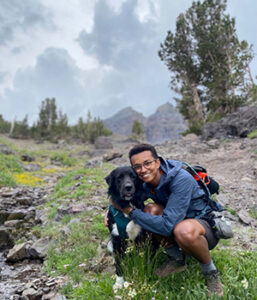
 Name: Munir Nur

Current Position: Software engineer, Big Data

Education: B.S. degree in computer science, concentration in computational biology, University of California, Davis

Nonscientific Interests: Cooking, hiking, reading, animals, plants, music​

Brief Bio: I grew up developing a keen interest in how we can build technology to better understand the world around us. Applications in ecology and agriculture specifically intrigue me, and as I learned more about computer science in my university studies, I became increasingly eager to apply it to the natural sciences. I soon dove into computational biology and bioinformatics courses, and I was fortunate to start working with Kelsey Wood in Dr. Richard Michelmore‘s lab at UC Davis, assisting with plant–microbe interaction research. I learned how to parse research papers, relevant background information about oomycetes, and how to apply academic knowledge to approach research problems. This opportunity allowed me to perform analyses and build tools for published research papers, and I’m grateful for the experience. I’m continuing a career in the data science field as an engineer and also helping to maintain the published tools we’ve built.

LinkedIn: www.linkedin.com/in/munir-nur

04InterConnections Wood

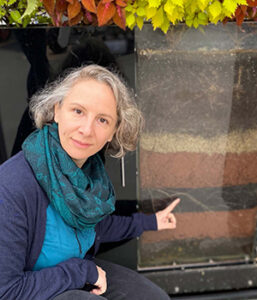
 Name: Kelsey Wood

Current Position: Postdoctoral scholar, Michelmore Lab, University of California, Davis

Education: B.A. degree in biology, Reed College; Ph.D. degree in integrative genetics and genomics, University of California, Davis

Nonscientific Interests: Music, poetry, art, fashion, travel, food, cats

Brief Bio: I grew up in Boise, ID, where I became fascinated with plants, animals, and mushrooms from a young age during camping trips and in the ecological habitat of my own backyard. I attended Reed College in Portland, OR, where I had my first taste of genomics research during my senior thesis on the behavioral genomics of cichlid fish with Dr. Suzy Renn. After graduation, I returned to Boise, where I began working with potatoes at a biotechnology company called Simplot Plant Sciences. This was my first introduction to the microscopic battle between plants and pathogens, which I found irresistibly exciting and led me to pursue a Ph.D. degree at UC Davis with Dr. Richard Michelmore, studying the interaction between lettuce and the lettuce downy mildew pathogen. I am continuing these studies as a postdoctoral scholar and look forward to a career in plant–microbe interaction research.

Twitter: https://twitter.com/klsywd

LinkedIn: www.linkedin.com/in/dr-kelsey-wood

Learn more about Munir and Kelsey’s fruitful collaboration in their InterView​.

InterConnections: Get to Know Stefan Sanow

ISMPMI 285 2 1955560 removebg preview

Issue 2

2023

interactions

Did You Know

MPMI banner700

Molecular Mechanisms of Pseudomonas Assisted Plant Nitrogen Uptake—Opportunities for Modern Agriculture

04InterConnections Sanow

 Name: Stefan Sanow

Current Position: JUMPA Ph.D. student, Root Dynamics Group, IBG-2, Forschungszentrum Jülich, Germany (Jülich–University of Melbourne Postgraduate Academy)

Education: M.S. degree in biotechnology at the University of Applied Sciences–FH Aachen (Campus Jülich), Germany; B.S. degree in biology at Heinrich-Heine University Düsseldorf, Germany

Nonscientific Interests: Videogames, music, traveling, nature, penguins

Brief Bio: I started my scientific journey in the group of Prof. Andreas Weber at Heinrich-Heine University, Düsseldorf, where (at that time) Privatdozentin Dr. Nicole Linka (now Prof. Linka) and Ph.D. student Björn Hielscher (now Dr. Hielscher) introduced me to plant biochemistry. During my B.S. thesis, I studied the colocalization of putative peroxisomal transporters, which further increased my interest in biology, especially molecular biology and plant science. As a result, I pursued my M.S. degree in biotechnology at FH Aachen (Campus Jülich). For my M.S. thesis, I worked with Dr. Borjana Arsova and Prof. Michelle Watt in the Root Dynamics Group at IBG-2, Forschungszentrum Jülich, and Prof. Ingar Janzik (FH Aachen). This is when I delved into studying the molecular mechanisms of plant–microbe interactions. While exploring the potential benefits of such interactions on plant performance, we encountered an unexpected development. The bacterium stock, sent to us by a colleague, was identified as a different strain than expected. Nonetheless, since the experiments showed promising results, I continued studying the new bacterium, which turned out to be a Pseudomonas strain. Another positive development occurred when I was offered a Ph.D. student position in the Jülich-Melbourne Postgraduate Academy (JUMPA) in 2019. This opportunity also included a one-year stay at the partner institution, the University of Melbourne in Victoria, Australia. Awesome! Additionally, I got an interdisciplinary supervisor team consisting of Dr. Borjana Arsova (IBG-2, FZJ), Prof. Pitter Huesgen (ZEA-3, FZJ), Prof. Michelle Watt (University of Melbourne), Prof. Ute Roessner (Australian National University), and Prof. Gabriel Schaaf (University of Bonn).

I accepted the offer without much hesitation, as I was already determined to understand the underlying mechanisms of plant–microbe interactions and wanted to utilize this time to optimize my studies. However, like everyone else, the outbreak of the COVID-19 pandemic in early 2020 brought about significant changes. Dealing with numerous restrictions, we decided to utilize the lockdown period to prepare a review on Pseudomonas–plant interactions, with a focus on the molecular mechanisms that increase nitrogen content in plants and the influence of the abiotic environment on this interaction.

Almost three years later, I finally had the opportunity to spend two months at the University of Melbourne. During this stay, I had the opportunity to interact with several great people, to learn about the challenges of untargeted lipid analyses (lipidomics), and to experience working on another continent. At the same time, I had the privilege of observing penguins (Eudyptula minor) in their natural habitat for the first time on Phillip Island, Victoria, Australia. I did not expect one of my childhood dreams to come true so quickly; thus, I had to adapt my plans: I now want to observe all penguin species in their natural habitats during my lifetime. Science makes this possible, as we are able to work on various continents. From my personal point of view, I highly recommend exchange programs for Ph.D. students, as it expands your perspective on the world, which also changes your perspective on science. Keep in mind that adapting to a new environment will take some time, so do not pack your schedule too tight (or you might miss your “penguins”)!

I have now reached a point where I can summarize the findings of the past few years and prepare to embark on my first postdoc position after completing my Ph.D. degree. Plant–microbe interactions offer interdisciplinary research opportunities that incorporate a variety of methods to unravel the molecular mechanisms involved. This makes the field particularly fascinating, as I can grow alongside the project and gain insights into various factors influencing this complex system.

Learn more about the research project in “Review Highlight: Molecular Mechanisms of Pseudomonas Assisted Plant Nitrogen Uptake—Opportunities for Modern Agriculture” by Borjana Arsova.

Review Highlight: Molecular Mechanisms of Pseudomonas Assisted Plant Nitrogen Uptake—Opportunities for Modern Agriculture

ISMPMI 285 2 1955560 removebg preview

Issue 2

2023

interactions

Did You Know

Borjana Arsova, Root Dynamics group, IBG 2- Plant sciences, Research center Julich, Julich, Germany

05ResSpot Arsova

Full disclosure: when as plant scientists our group started using microbes as a means to improve plan​​​t performance, I thought of them as a “means to an end.” Now I know this is naïve.

The Root Dynamics group in the Plant Sciences Institute in the Research Center in Jülich (IBG-2), Germany, mostly focuses on the plant response to beneficial microbes, and how plants adjust their metabolic pathways under suboptimal (nutrient) conditions, with and without these beneficial organisms. We observe that the nature of the interaction changes depending on the complex environment in which plants and microbes interact. We showed this, for example, in Kuang et al. (2022, Journal of Experimental Botany) and brought it into focus during the work presented here.


05ResSpot fig
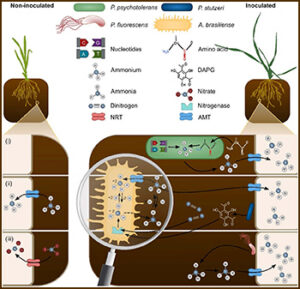
Conceptual figure of shared nitrogen biochemistry and transport across root and bacterial cells in the rhizosphere (Sanow e​t al., 2023; Fig. 3). ​Bacterial processes that impact plant N content. The left side represents plants growing with limited N, resulting in a decreased aerial biomass and increased root growth, whereas the right side represents potential plant growth-promoting mechanisms by Pseudomonas species that increase the aerial biomass under the same limited N conditions. Ammonium (NH4+) and nitrate (NO3) are taken up by the plant via dedicated transporters of the AMT and NRT families, respectively (left side, Bock and Wagner, 2001; Daims et al., 2015). PGPB increase availability of inorganic N to plants through the following mechanisms: (i) ammonification of organic N by P. psychrotolerans (Kang et al., 2020); (ii) P. stutzeri upregul​ating nif genes in A. brasilense via DAPG, resulting in the conversion of N2 into NH4+ (BNF) (Day et al., 2001; Combes-Meynet et al., 2011); and (iii) production and release of NH4+ by P. fluorescens (Zhang et al., 2012). Dashed lines indicate reactions from or to the bacterium that occur based on the concentration of each reaction product in the respective space and the pH of the environment.

The use of a particular Pseudomonas strain in our lab happened by chance. A colleague sent us a sample, which was supposed to be a Sinorhizobium sp. Their lab had indications of growth promotion, but the project had stopped for various reasons. We also found plant growth-promotion ability, but the phenotype of our plants differed from the preliminary results of our colleagues. The sequencing results showed this to be a Pseudomonas strain. However, the phenotype was interesting, and our Ph.D. student Stefan Sanow was getting promising results in plants grown under low-nitrogen conditions, so he kept working with the new bacterium. This led to the initial question: Are the known molecular mechanisms in plant–bacteria interactions general for all bacteria, or can they be subdivided for specific phylogenetic groups?

Thus, Sanow started compiling evidence about known processes relevant to the Pseudomonadaceae. We found that there are many indications of horizontal gene transfer, which can clearly be linked between different bacterial groups. At the same time there are some differences that seem to be genera specific. The review by Sanow et al. (2023) published in MPMI is the result of this work. We think that this is a novel perspective on this complex genus that could set an example for understanding other genera as well.

The team behind this review comes from three continents—Europe, Australia, and Asia—and, in addition to the research center in Jülich, includes the University of Bonn (Germany), the University of Melbourne (Australia), Australian National University (Australia), and Hunan University of Arts and Science (China).

Learn more about Stefan Sanow in his InterConnections article. 

MPMI Journal Publishes Special Focus Issue on a Critical, Emerging Area of Study

ISMPMI 285 2 1955560 removebg preview

Issue 2

2023

interactions

Did You Know

06WhatsNewMPMI FI2023

The recently published MPMI Focus Issue on The Plant Endomembrane System in Molecular Plant–​Microbe Interactions explores how microbes affect the plant endomembrane system and its role in plant disease, defense, and beneficial interactions.

Focus Issue Editors Tessa M. Burch-SmithAiming WangEunsook ParkHailing Jin, and Dong Wang are pleased to share a focus issue that discusses a critical aspect of plant–microbe interactions that will surely be an area of more intense research in coming years. Read all articles for free today!

Focus Issue Articles

Editor’s Pick: Arabidopsis Dynamin-Related Protein AtDRP2A Contributes to Late Flg22-Signaling and Effective Immunity Against Pseudomonas syringae Bacteria
Gayani Ekanayake, Michelle E. Leslie, John M. Smith, and Antje Heese

Manipulation of the Host Endomembrane System by Bacterial Effectors
Hyelim Jeon and Cécile Segonzac

Pathogen-Derived Extracellular Vesicles: Emerging Mediators of Plant–Microbe Interactions
Zhangying Wang, Jiayue Zeng, Jiliang Deng, Xiangjie Hou, Jiefu Zhang, Wei Yan, and Qiang Cai

A Close Look into the Composition and Functions of Fungal Extracellular Vesicles Produced by Phytopathogens
Marina F. Maximo, Taícia P. Fill, and Marcio L. Rodrigues

Extracellular Vesicles in the Arbuscular Mycorrhizal Symbiosis: Current Understanding and Future Perspectives
Samuel Holland and Ronelle Roth

Realizing the Full Potential of Advanced Microscopy Approaches for Interrogating Plant–Microbe Interactions
Kirk J. Czymmek, Keith E. Duncan, and Howard Berg

Medicago truncatula Cell Biology Resource: Transgenic Lines Expressing Fluorescent Protein–Based Markers of Membranes, Organelles, and Subcellular Compartments
Sergey Ivanov, Dierdra A. Daniels, and Maria J. Harrison

06WhatsNewMPMI FI2024

The MPMI editorial board also looks forward to the 2024 MPMI Focus Issue “Effectors at the Interface of Plant-Microbe Interactions.”

Learn more about publishing in this special issue.

Opportunity for Scientists in Under-Resourced Countries to Publish in MPMI

ISMPMI 285 2 1955560 removebg preview

Issue 2

2023

interactions

Did You Know

MPMI 2021Cover

Microbes Biosciences has generously sponsored MPMI to cover the publication fees for a limited number of authors from countries with low-income or lower-middle income economies (as defined by The World Bank) who elect to publish in MPMI. To apply for a fee waiver, scientists from under-resourced countries must contact MPMI Editor-in-Chief Tim Friesen in advance of their submission and include a detailed cover letter about their submission.

Waivers are available on a first-come, first-served basis, and each manuscript must undergo the standard peer-review process and be accepted for publication. Learn more about how to submit your manuscript.

06WhatsNewMPMI BioSciences Logo

Thank you to Microbes Biosciences for its gracious support of our science!


Catch Up on MPMI Editor’s Picks and Virtual Seminars

ISMPMI 285 2 1955560 removebg preview

Issue 2

2023

interactions

Did You Know

MPMI EdPick banner700

07EdPick Hao120

 NX Trichothecenes Are Required for Fusarium graminearum Infection of Wheat

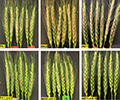
While the mycotoxin deoxynivalenol was previously shown to be a major virulence factor for Fusarium graminearum on wheat, the more recently discovered NX trichothecenes have not been characterized for their role in virulence. Guixia Hao and colleagues evaluated the role of NX trichothecenes in virulence using TRI5 gene disruptions that eliminated trichothecene biosynthesis during F. graminearum infection of wheat heads to show that the reduction in NX trichothecenes decreased both the initial infection of the wheat head and the subsequent spread compared to the wild-type strains. This work provides novel information on the mode of action of a new class of trichothecenes and exposes the TRI5 gene as a promising target for controlling Fusarium head blight of both wheat and barley.

07EdPick Ekanayake120

 Arabidopsis Dynamin-Related Protein AtDRP2A Contributes to Late Flg22-Signaling and Effective Immunity Against Pseudomonas syringae Bacteria

Arabidopsis thaliana encodes two paralogs of the endocytic accessory protein DRP2. Gayani Enkanayake and colleagues further defined the functions of these two paralogs using the FLS2-flg22 system. Loss of AtDRP2A led to increased susceptibility to Pseudomonas syringae, and the effects resulting from the loss of AtDRP2A were distinct from the effects caused by the loss of AtDRP2B—with DRP2A being important for late flg22-mediated responses but not early responses, unlike DRP2B. This finding provides a new tool for investigating ligand-induced endocytosis of receptors in immunity.

07EdPick Prakash120

 The Potyviral Protein 6K2 from Turnip Mosaic Virus Increases Plant Resilience to Drought

Ved Prakash and colleagues demonstrated that Turnip mosaic virus (TuMV) can positively impact host plants by increasing plant survival under drought conditions. Their results show that at least three viral proteins contribute to enhanced drought tolerance in TuMV-infected Arabidopsis thaliana, with one of these proteins also conveying drought tolerance when expressed in Nicotiana benthamiana. This protein enhanced salicylic acid accumulation in both Athaliana and N. benthamiana, demonstrating an ecological function in the plant during drought conditions.

MPMI VirtualSeminar120

On May 9, 2023, Janak JoshiAmy Charkowski, and Adam Heuberger presented their MPMI Editor’s  Pick, “Protease Inhibitors from Solanum chacoense Inhibit Pectobacterium Virulence by Reducing Bacterial Protease Activity and Motility.”
Watch the recorded presentation to learn more about proteomics, wild potato disease resistance, and the potential for protecting cultivated potatoes in the field. Watch now.
View all virtual seminars.​

2023 IS-MPMI Board of Directors Election

ISMPMI 285 2 1955560 removebg preview

Issue 1

2020

interactions

Did You Know

01SocNews BODElect graphic

All eligible voting members of IS-MPMI have been sent an electronic ballot to vote in this year’s Board of Directors election. Three of the six candidates (Yang BaiPatricia BaldrichXin LiWenbo MaRyohei Terauchi, and Xiufang Xin) will be elected to the Board of Directors to serve a 4-year term. Those elected will be installed during the Board meeting at the 2023 IS-MPMI CongressMeet your candidates and cast your vote by July 6, 2023 (midnight CDT).​​

It’s Almost Time for the IS-MPMI Congress

ISMPMI 285 2 1955560 removebg preview

Issue 1

2020

interactions

Did You Know

2023Congress logo

The 2023 IS-MPMI Congress is less than a month away, and we’re excited to see everyone in Providence, Rhode Island! There is still time to register and plan to join us in July for groundbreaking special sessions, a dive​rse plenary program, and all-new engaging concurrent sessions.

Congratulations to our 2023 IS-MPMI Awardees

ISMPMI 285 2 1955560 removebg preview

Issue 1

2020

interactions

Did You Know

Congratulations to Jonathan D. G. Jones, the 2023 Outstanding Achievement Award recipient and to Cara Haney and Xiufang Xin, the 2023 Early Career Achievement Award recipients.​ The awardees will be recognized and celebrated at the 2023 IS-MPMI Congress.

Learn more about the awardees.​

Outstanding Achievement Award

This award recognizes an investigator who has a high international reputation as a research leader for groundbreaking and original research in the area of molecular plant–microbe interactions. The award also recognizes their strong commitment to one or more activities that advance the IS-MPMI field, including teaching, mentoring, educational outreach, international collaborations, service to the community, and/or advancing diversity, equity, inclusion and belonging.

Early Career Achievement Award

This award recognizes outstanding investigators who are known internationally as emerging research leaders in the area of molecular plant–microbe interactions.

01SocNews Award Jones01SocNews Award Haney 01SocNews Award Xin

​Jonathan D. G. Jones                     Cara Haney                                          Xiufang Xin​​

IS-MPMI Is Looking for a New Interactions EIC

ISMPMI 285 2 1955560 removebg preview

Issue 1

2020

interactions

Did You Know

Dennis Halterman, Editor-in-Chief Interactions

01SocNews EIC

It is hard to believe that it has been almost seven years since I started as Editor-in-Chief of IS-MPMI Interactions. I entered the position with the idea of giving back to the society that has meant so much to me during my career. I have enjoyed seeing the society change and grow during this period, and I am constantly in awe of everyone’s accomplishments and sense of community. But, the time has come for me to step aside and allow someone else to incorporate fresh ideas and express their own personality in this society publication. If you would like to learn more about the responsibilities, resources, and opportunities associated with this position, please contact me or current President Roger Innes. The term for the position will officially begin after this year’s IS-MPMI Congress, but I will be available to provide guidance, consultations, and reviews to ensure a smooth transition period.

Scroll to Top