Category: Issue 1 •​ 2021​

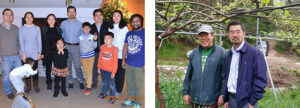
Featured InterView: Seogchan Kang

ISMPMI 285 2 1955560 removebg preview

Issue 1

2018

interactions

Did You Know

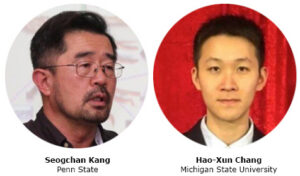
This InterView with Seogchan Kang, Professor of Plant Pathology at Penn State, was conducted by Hao-Xun Chang, a 2016 IS-MPMI student travel awardee, who is currently a post-doc at Michigan State University.

Log in to join the conversation!

interviews

Hao-Xun Chang (HXC): Thank you very much for accepting my invitation, and let me congratulate you on being a Fellow of The American Phytopathological Society.
seogchan hao xun 3

My first question is, Why did you choose to pursue an academic position in the U.S.?

Seogchan Kang (SK): Most of my college classmates in the chemistry department at Seoul National University came to the U.S. for their PhDs. It was like an unwritten requirement for us to follow. Since many of those several years senior to us became professors in Korea or in the U.S., I naively thought that I would also get a faculty position somewhere after earning my PhD. So, you can guess how badly I planned for my professional development! For example, I never tried to get teaching experience during my PhD. That experience was one of the reasons I developed a course in my department entitled Professional Development and Ethics. I want to help graduate students avoid career pitfalls and poor planning.

HXC: What resources did you rely on to establish your own research program?

SK: The most important resources were my mentors. Having their help played a big role in getting my current position, and they also served as role models. My PhD advisor, Bob Metzenberg at UW–Madison, helped me think very broadly by frequently bringing up his “crazy ideas” for lab discussion. They were about how to experimentally approach many unsolved problems in science. Barbara Valent at DuPont, my first post-doc supervisor, introduced me to plant pathology and showed me that good science cannot be rushed. John Hamer at Purdue, another post-doc advisor, had a knack for pitching even mundane data and ideas as if they were major breakthroughs. My colleagues and collaborators were also resources. I never took formal courses in plant pathology. Although I read many plant pathology-related papers in my work on rice blast disease at DuPont and Purdue, I don’t think I could have passed the departmental candidacy exam during the first few years in my job. Several “real” plant pathologists in the department generously shared their experiences and materials, which enabled me to study interesting problems without making too many silly mistakes. I also owe thanks to several long-time collaborators for allowing me to pursue major ventures. I have worked closely with one of them, Yong-Hwan Lee at Seoul National University, for 20 years.

HXC: What was your first research grant, and what can you share about getting it?

SK: It was a grant from USDA-NRI, a program that became USDA-AFRI. The proposal was about studying the genetic mechanism underpinning race variation in Magnaporthe oryzae, and it was based, in part, on a proposal I submitted to the same program when I was a post-doc. Although the first proposal was not chosen for support, the experience and the feedback from reviewers greatly helped me improve the next proposal. A call I received from the panel manager made me very happy!

HXC: What advice do you have for post-docs and graduate students who want to write competitive research and fellowship proposals?

SK: Given my recent batting record, I’m not sure if I can offer good advice! However, based on what I have learned from reviewing proposals from highly successful scientists, I can offer a few tips. Given the extremely competitive funding environment, your proposal should excite reviewers and must stand out among many good proposals. A good proposal can take several different forms. Examples include making an inquiry that will likely disrupt a major paradigm, building an essential community resource that is urgently needed, and controlling an emerging disease of global concern. Try to help reviewers help you. The 10% success rate does not mean that you have some chance of getting support if you submit 10 proposals. Poorly prepared proposals, no matter how many of them you submit, will not likely bring good outcomes. If you do not feel ready to submit a solid proposal by yourself, explore the possibility of participating in a collaborative project as a co-PI. (Of course, you should have something valuable to add to the project!) Collaborative projects also offer some valuable lessons that will help your professional growth. If you can solve important problems for local commodity groups, they may give you some funding. In some states, such commodity support can be as big as a federal grant. Although funding is critical, I should note that your curiosity, not the funding availability, should determine what you want to work on.

HXC: What is your ideal composition of laboratory personnel (post-docs, grad students, undergrads, technicians, etc.), and is this balance important?

SK: I do not think that there is a magic formula for composition. However, taking excellent people is essential for many reasons. Even though I have made a number of bad hiring decisions, I have survived and managed to explore several interesting projects, thanks to a few excellent students and post-docs. Collaborators that provided human resources and expertise that I did not have certainly helped, too. Recruiting the right people is especially critical for a new faculty, as you cannot spend as much time as you did as a post-doc in the lab and have to depend increasingly on others for research outputs. Considering how overinflated recommendation letters can be, you may consider recruiting people through someone you can trust. Anyone can walk on water during the coldest month of the year in Michigan. What you need to figure out is whether a person can do it in July!

HXC: Thank you very much, Dr. Kang. Do you have any other suggestions for post-docs who want to get faculty positions?

SK: Critically analyze your weaknesses and strengths early, so you can judiciously use the strengths to advance your career while eliminating the weaknesses or learning to minimize the damage they cause. Build and grow a network of supporters and collaborators. As I emphasized earlier, they can help you in many ways. Stay curious, so that you can frequently venture into exciting frontiers of science. An academic position is one of the very few jobs that pays you for doing what you enjoy.

HXC: Thank you very much.
Seogchan Kang Images

Imposter Syndrome: Dr. Dan Klessig Continues the Discussion

ISMPMI 285 2 1955560 removebg preview

Issue 1

2018

interactions

Did You Know

Editor’s note: Below is a response to the article in the last issue on imposter syndrome, which was written by Michelle Marks and Katelyn Butler. This response was written by IS-MPMI Interactions Advisory Board member Dr. Dan Klessig. As you will learn from his response, imposter syndrome can affect anyone, regardless of his or her career achievements. I encourage you to continue the discussion of this topic by sharing comments after the original article or after this one. (You must log in to see and submit comments.) Or perhaps talk among yourselves in the lab, at a department seminar, or over a drink after hours. Thanks again to Michelle and Katelyn for initiating the conversation.

Log in to join the conversation!

discussions impostersyndrome

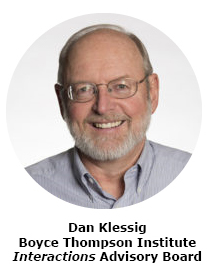
By Dr. Dan Klessig, Boyce Thompson Institute and Member of the Interactions Advisory Board

Katelyn and Michelle:

klessig edit

You are correct, and you are not alone! Your article really hit home. I have dyslexia, which the British Dyslexia Association defines as “a difficulty that primarily affects the skills involved in accurate and fluent word reading and spelling” and is characterized by “difficulties in phonological awareness, verbal memory and verbal processing speed.”

From a very early age, I felt that something was not quite right. Despite being able to learn things rapidly in many areas, I was a terrible reader. Reading aloud was both embarrassing and horrifying, since I could not hide how poor a reader I really was.

Three events are particularly memorable. The first occurred while I was preparing my valedictory address for my high school graduation with the student guidance counselor. In his opening comments, he indicated how amazed he was that I had achieved a highly unusual perfect 4.0 average (this was before the days of grade inflation), despite my “modest” IQ score.

The second memorable event was my attempt to increase my reading speed during my senior year at the University of Wisconsin–Madison by enrolling in a speed-reading course. To obtain a baseline against which my progress/improvement could be measured, I had to take a reading exam. It consisted of reading a several-page article and then answering various questions to measure both my reading speed and comprehension. After the teacher analyzed my results, she asked what my GPA was. I replied that it was about 3.85, since I had received a few B’s. In astonishment she uttered, “Really? You read at only a fifth-grade level,” to which I replied, “That’s why I’m here.”

The third event was the discovery that I had a disability and it had a name: dyslexia. This happened purely by accident during a return trip to Boston from a Plant Molecular Biology Gordon Conference in New Hampshire with three other professors. The driver, who was a highly accomplished scientist and chair of his department, was discussing his dyslexia symptoms with the front-seat passenger. EUREKA! They were a near-identical match to mine. WOW! What a discovery. I finally knew what had been plaguing me for more than three decades.

Unfortunately, knowing what I had did not make it go away. I compensated for my dyslexia and kept it hidden by working tirelessly: three to four hours of homework each night during high school, relentless studying during college, 18-hour days during graduate school, and 80-hour work weeks as a professor, with both class lectures and seminars written and then more or less memorized. Yes, I succeeded, but I always wondered when I would be found out. When would they—my friends, my colleagues, the world—discover that I really was not that good, not that smart, just average at best—i.e., an IMPOSTER! I felt that while I had earned my successes in part by working harder than others, I had also been LUCKY. When would my luck run out? When would I be discovered?

Two periods during my career were particularly trying because of my dyslexia and the associated imposter syndrome—my “constant companion.” The first was during my tenure as a Marshall Scholar from 1971 to 1973, when I travelled to the United Kingdom to study in the newly formed Department of Molecular Biology at the University of Edinburgh. I was one of 24 students from the United States selected to study at the university of their choice in the U.K. as part of the nation’s symbolic repayment to the United States and its Marshall Plan to rebuild Europe after World War II. I was surrounded by some of America’s “best and brightest.” (Justices Breyer and Gorsuch of the U.S. Supreme Court were Marshall Scholars.) How soon would they discover that this farm boy with dyslexia was an IMPOSTER, who did not belong among these intellectual elites?

The second period was while I served as president and CEO of the Boyce Thompson Institute. Re-invigorating the institute’s research portfolio—including developing a new program in molecular and chemical ecology with Tom Eisner and Jerry Meinwald and making room for and obtaining nongovernment funds for a cohort of new faculty, plus dealing with a diverse board of directors (in addition to directing my own research program)—stretched my work capacity to its very limits. After having open heart surgery and three bouts of pneumonia, I was actually relieved to have an excuse to step down and return just to doing science—before I potentially failed and/or was identified as an IMPOSTER!

The irony of my story, and perhaps the stories of others, is that success does not necessarily suppress the impostor syndrome. In fact, it can exacerbate it. Success often leads to new opportunities, which are associated with new challenges. These, in turn, can evoke fresh fears of being discovered. Even at age 69 and nearing the “dusk” of my career, my “constant companion” is still with me. Its presence is much diminished, however, and this is part of the reason that I am truly ENJOYING doing science more than at any other time during my 45-year career.

Upon sharing my story with a few trusted senior colleagues, several important points emerged. First, self-doubts and insecurities are not uncommon in our profession. Second, those doubts and insecurities may have diverse origins, with a disability such as dyslexia being just one. Other sources may include hypercritical childhood influences; negative societal expectations based on gender, ethnicity, and so on; and natural variations in the remarkable mix of intellectual talents that each person has. Third, despite our self-doubts, which may diminish but perhaps never fully disappear, we can thrive and contribute to science. Perhaps now more than ever, both science and society need us to do so with as much clarity, vigor, and rigor as possible.

Host a Satellite Meeting at the IS-MPMI XVIII Congress

ISMPMI 285 2 1955560 removebg preview

Issue 1

2020

interactions

Did You Know

Facilities are available at the conference center in Glasgow, Scotland, for groups that want to hold satellite meetings in association with the congress. Contact John Jones, co‑organizer, for more details.

Interactions 2018 – Issue 2

ISMPMI 285 2 1955560 removebg preview

Issue 2

2018

interactions

Did You Know

newissueheader (1)

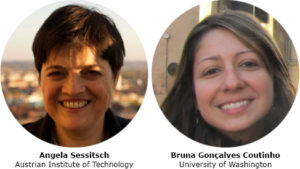
2018’s second issue of IS-MPMI Interactions features an InterView with Angela Sessitsch, Austrian Instituteof Technology, by Bruna Gonçalves Coutinho, University of Washington. Also featured: learn about initiatives to combat late blight disease in potatoes and how a journal by kids for kids is inspiring young scientists!

Featured InterView: Angela Sessitsch

Bruna Gonçalves Coutinho, University of Washington, interviews Angela Sessitsch, Austrian Institute of Technology, about her choice to study plant-bacteria interactions, her thoughts on the explosion of research on bioinoculants, and the future of metagenomics

Improving Potato Crops Through Stacked R-Gene Technology

Threatening the world’s tuber crops is potato’s number-one enemy: late blight disease. Late blight, caused by the water mold Phytophthora infestans, destroys leaves, stems, and tubers. The disease spreads very quickly and can result in total crop loss. Read about how the Feed the Future Biotechnology Potato Partnership is finding effective alternatives for fighting late blight through biotechnology.

Connect with the Next Generation of Scientists: Get Involved with Frontiers for Young Minds!

Authors of journal articles generally aim to educate an audience made up of people already in their field. But what can researchers do to inspire new scientists—particularly kids? That’s where Frontiers for Young Minds comes in. Frontiers for Young Minds publishes journals with articles written by experts and then edited by kids, for kids.

News

IS-MPMI Interactions

Editor-in-Chief: Dennis Halterman
Staff Editor: Michelle Bjerkness
The deadline for submitting items to the next issue of Interactions is February 23, 2018.
IS-MPMI Interactions is a quarterly publication by the International Society of Molecular Plant-Microbe Interactions
3340 Pilot Knob Rd. • St. Paul, MN 55121
Phone: +1.651.454.7250 • Fax: +1.651.454.0766
E-mail: IS-MPMI HQ Web: www.ismpmi.org
Share views on “hot topics,” anecdotal stories about research findings published in the MPMI journal, or science-related events within the community. E-mail Dennis Halterman or submit items online.

Featured InterView: Angela Sessitsch

ISMPMI 285 2 1955560 removebg preview

Issue 2

2018

interactions

Did You Know

This InterView with Angela Sessitsch, head of the Competence Unit at the Austrian Institute of Technology, was conducted by Bruna Gonçalves Coutinho, a post-doc at the University of Washington. If you are interested in completing your own InterView, please contact Interactions Editor-in-Chief Dennis Halterman.

interviews

Bruna Gonçalves Coutinho (BGC): You have been studying plant–bacteria interactions for a long time now. Why did you choose this as your research topic? Of your many contributions to the field, which is the one you are most proud of?

interview

Angela Sessitsch (AS): I did my PhD on Rhizobium–legume interactions and was fascinated with how microorganisms can contribute tremendously to plant nutrition. At that time, I also got to know Johanna Döbereiner from Brazil, and she indeed had a vision on microbial contributions to agriculture. For example, she found that nitrogen fixation by endophytes in sugarcane was a great economic contribution to bioethanol production in Brazil. Thereby, endophytes contributed to a great bioethanol program in that country. At that time, I got more and more interested in plant–microbe interactions beyond Rhizobium.

I am not sure what has been the greatest contribution of my career, but already about 15 years ago, we showed that endophytes are active inside the plant and that microbial (endophytic) communities respond to plant physiology and plant stress. This was at a time when even plant microbiologists did not believe in the existence or importance of bacterial endophytes. We also did the first metagenomic analysis of root endophytes, which was not only an advance to our understanding of endophyte functioning but also a tremendous technical challenge, as it was before the use of next-generation sequencing and we had to remove plant-derived DNA as efficiently as possible. More recently, my team discovered a way to integrate bacterial inoculant strains into seeds, which has opened a completely novel way to modulate microbiomes and has great value for commercial applications.

BGC: We have been seeing an explosion of research on bioinoculants. Several companies and academic labs are working on the discovery and formulation of microorganisms that can replace or act together with chemical fertilizers to boost crop production. However, this is not a new field of research. What do you think has changed in the field that has allowed for this renewed interest in the subject?

AS: Well, it is not new, but it was a niche market, except for Rhizobium inoculants. A few years ago, plant scientists became aware that plants—like humans and other animals—host a diverse microbiota, which is crucial for health, nutrition, and stress resilience. This made a huge difference, as before, plant scientists and plant breeders completely ignored the existence of plant microbiota. This increasing awareness of the existence and the potential of microorganisms, as well as the fact that many chemicals are being taken away from the market, has led to big expectations from the plant microbiome. Further drivers are climate change and massive yield losses due to drought, which may be alleviated by microorganisms but not by chemicals, as well as demographic development, which requires yield increases.

BGC: Your lab and several others have used metagenomics to contribute to a broadened culture-independent view of plant microbiome and their activities. How can the scientific community leverage the power of metagenomics to develop targeted microbial-based products?

AS: This is an interesting and challenging question. I believe that metagenomics allows us to obtain structural information on the communities associated with the plant and that learning the ecology of microbiomes may lead to a better understanding of which strains can better establish in a certain habitat or in association with a specific plant. Metagenomics may lead us in isolation campaigns in order to obtain better inoculant strains or reveal markers indicating beneficial interactions.

BGC: What are the biggest challenges we face in order to move this technology forward?

AS: There are a couple of challenges. For instance, we all agree that field success has to improve. There are a couple of issues to consider in that aspect, such as the development of suitable formulations or application approaches. But the ecology and competitive ability of strains have to be considered, as well. Generally, we have to move from trial and error to discovery- and application-based understanding.

BGC: Microbial-based products are yet to be widely adopted in agriculture, but preliminary research suggests a clear potential for application globally. One challenge facing the industry is avoiding negative public perceptions, such as those previously experienced by biotech crop industries. How do you think scientists can help in this aspect?

AS: Communication is an important aspect. The question is, who is responsible for it and who is best suited to do it? Companies, in their own interest, should be active in communication with the public sector to avoid negative public perception. It will also be important to involve the academic sector and to provide resources to allow scientists to be involved in stakeholder engagement. Ideally, specialized staff should be hired for communication tasks, and they should involve scientists, as well as other stakeholders, in a dialogue.

Improving Potato Crops Through Stacked R-Gene Technology

ISMPMI 285 2 1955560 removebg preview

Issue 2

2018

interactions

Did You Know

Most of us spend the majority of our time in the lab or office, but I know that some members are passionate about moving our newly found technologies into the field to improve crop production and provide food security throughout the world. To this end, I would like to highlight projects associated with IS-MPMI members that demonstrate translations of basic biology into applied products. IS-MPMI member Nicolas Champouret and I are currently serving on the technical advisory board for a USAID project to introduce late blight-resistant potato to Indonesia and Bangladesh using GM technology. Following is a summary of the work that’s being done on this project. I think it’s a great representation of how our science can impact society. If you have projects related to the translation of basic biology to the field and would like to highlight them in Interactions, please let me know.

—Dennis Halterman, Editor-in-Chief, IS-MPMI Interactions

FTF Indonesia Team 2016

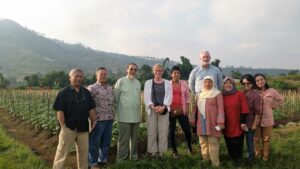
Feed the Future Indonesia Team, 2016

Improving Potato Crops Through Stacked R-Gene Technology

Maybe you like them mashed or baked or perhaps as chips. Whatever your preference, odds are that you are a consumer of potatoes. In fact, more than 1 billion people worldwide eat potatoes. The potato is a fundamental element in food security for millions of people across the globe. Since the early 1960s, the growth in potato production has rapidly overtaken production of all other food crops in developing countries, and potato is now the third most important food crop in the world behind wheat and rice. The potato produces more nutritious food, more quickly, on less land, and in harsher climates than any other major crop. It contains no fat, sodium, or cholesterol. One potato provides nearly half an individual’s daily need of vitamin C and more potassium than a banana.

Threatening the world’s tuber crops is potato’s number-one enemy: late blight disease. Late blight, caused by the water mold Phytophthora infestans, destroys leaves, stems, and tubers. The disease spreads very quickly and can result in total crop loss. The fight against late blight is as old as the potato. Late blight was responsible for the great Irish potato famine of the mid-1800s. In today’s landscape, farmers spray heavy concentrations of fungicides to protect crops against the disease, which increases input and labor costs and poses greater potential risks for the population and environment.

The Feed the Future Biotechnology Potato Partnership is finding effective alternatives for fighting late blight through biotechnology. A 5-year, $5.9-million, multi-institution cooperative agreement involves USAID, Michigan State University (MSU), the University of Minnesota, the University of Idaho, the Bangladesh Agricultural Research Institute, the Indonesian Center for Agricultural Biotechnology Genetic Resources Research and Development, and the J. R. Simplot Company. The mission of this collaboration is to introduce bioengineered potato products in farmer- and consumer-preferred varieties to small-holder farmers in Indonesia and Bangladesh. These biotech potato products will offer broad-spectrum resistance to late blight by using a combination of late blight resistance genes (R genes) found in species of wild potato.

During the first 2 years of the partnership, a proof of concept was completed at MSU through a collaborative research effort with Dr. Marc Ghislain (CIP) in Kenya and his USAID-funded CIP Project. Using the technology developed by Ghislain’s group, MSU developed transgenic potato events containing a stack of three R genes. A confined field trial was conducted at MSU in 2017 with genetically engineered potato events containing three R genes, a single R-gene transgenic event, and nontransgenic control potato plants. The trial was inoculated with Phytophthora infestans using a United States isolate called “US23.” The results showed the superiority of resistance with the stack ed three R-gene transgenic events over the single-gene event and nontransgenic potatoes (Fig. 1).

At the same time, another partner in the project, J. R. Simplot, began testing and evaluating its R-gene technology to select the best combination of R genes. The Simplot stacked three R-gene technology is currently being transferred into the targeted varieties for Bangladesh and Indonesia. The team is purifying the P. infestans isolates found in the project’s target countries and will soon use them for testing. Field trials at MSU and in-country greenhouse testing are expected to begin within 1 year.

In addition, the Feed the Future Biotechnology Potato Partnership provides strategic human and institutional capacity-building support (research, development, and outreach) to in-country partners to improve research capacity and the sustainable use of biotech potato products. Another focus of the project is implementation of a communications strategy aimed at informing the public and stakeholders of the benefits associated with the late blight-resistant potato.
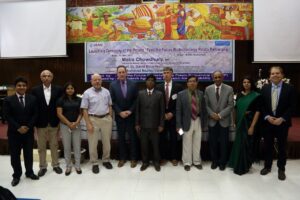
FTF Bangladesh team Launch 2017
Phil Wharton in Bangladesh Field 2018


The environmental impact, gender-balance contribution, and socioeconomic impact of GM products produced through this project will be carefully monitored and assessed. Overall, the project will contribute to these five goals: (1) to reduce malnutrition and improve health; (2) to reduce the use of harmful pesticides; (3) to reduce pre- and postharvest losses; (4) to improve the social and economic standing of women; and (5) to catalyze economic growth.

Feed the Future, the U.S. initiative to combat global hunger and poverty, is founded on the belief that global hunger is solvable. By partnering for innovation and creating greater global food security through innovative research in agriculture, Feed the Future is fighting hunger with science and technology. To learn more, visit www.canr.msu.edu/biotechpp or www.feedthefuture.gov.

Figure: Late Blight US23 Confined Field Trial: Michigan State University 2017

Nontransgenic potato (1)
A. Nontransgenic potato
single r late
​B. Single R-gene
late blight-resistant potato
three r late
C. Three R-gene
late blight-resistant potato


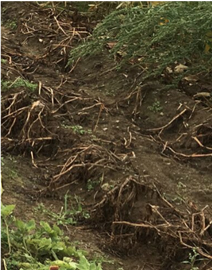
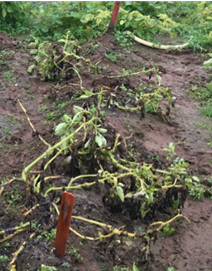
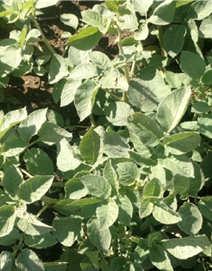
Fig. 1. Results of the confined field trial concluded that the three R-gene late blight-resistant potato (C) showed strong resistance to strain US23, whereas the single R-gene events (B) suffered heavy damage and the nontransgenic plants (A) completely succumbed to the disease.

Connect with the Next Generation of Scientists: Get Involved with Frontiers for Young Minds!

ISMPMI 285 2 1955560 removebg preview

Issue 2

2018

interactions

Did You Know

​Authors of journal articles generally aim to educate an audience made up of people already in their field. But what can researchers do to inspire new scientists—particularly kids? That’s where Frontiers for Young Minds comes in. Frontiers for Young Minds publishes journals with articles written by experts and then edited by kids, for kids.

Under the guidance of science mentors, young people between the ages of 8 and 15 review articles and advise the authors on how to make the materials more accessible to members of young age groups. Frontiers for Young Minds not only involves young people directly in the scientific process, but it also produces resources that can be used for instruction, enrichment, and informal learning.

Authors can submit one of two types of articles. Core Concept articles explain fundamental ideas from a given field and synthesize them for younger audiences. New Discovery articles take existing journal articles and translate them into language that younger audiences can comprehend.

Expose young people to the work you do in molecular plant-microbe interactions by getting involved with Frontiers for Young Minds! Visit Frontiers for Young Minds online, and check out the author guidelines. If you have any questions, contact Frontiers for Young Minds or Dennis Halterman.

FYM Flyer

Interactions 2018 – Issue 3

ISMPMI 285 2 1955560 removebg preview

Issue 3

2018

interactions

Did You Know

2018 03 Issue Header

2018’s third issue of IS-MPMI Interactions includes a letter from IS-MPMI President Regine Kahmann and IS-MPMI members who received awards at ICPP2018.

Letter from the President

IS-MPMI President Regine Kahmann previews the IS-MPMI XVIII Congress in Glasgow and recaps this year at IS-MPMI.

Pierre de Wit Receives Prestigious Jakob Eriksson Prize

IS-MPMI member Pierre de Wit is the 2018 recipient of the Jakob Eriksson Prize, awarded by the International Society of Plant Pathology at the International Congress of Plant Pathology (ICPP2018). The Eriksson Prize is the highest international honor for achievement in plant pathology. Read an interview with de Wit and find out how to watch his lecture online!

Four IS-MPMI Members Receive APS Awards at ICPP2018

Melania Figueroa, Howard S. Judelson, Barbara S. Valent, and Xueping Zhou received awards at ICPP2018. Read about their distinguished careers!

News

 Job Openings

IS-MPMI Interactions

Editor-in-Chief: Dennis Halterman
Staff Editor: Michelle Bjerkness
The deadline for submitting items to the next issue of Interactions is February 23, 2018.
IS-MPMI Interactions is a quarterly publication by the International Society of Molecular Plant-Microbe Interactions
3340 Pilot Knob Rd. • St. Paul, MN 55121
Phone: +1.651.454.7250 • Fax: +1.651.454.0766
E-mail: IS-MPMI HQ Web: www.ismpmi.org

Letter from IS-MPMI President Regine Kahmann

ISMPMI 285 2 1955560 removebg preview

Issue 3

2018

interactions

Did You Know

Two years have passed since the highly successful and scientifically stimulating XVII International Congress on Molecular Plant-Microbe Interactions in Portland in 2016, and it is almost 1 more year to go until IS-MPMI XVIII convenes in Glasgow, Scotland, on July 14–18, 2019. This long period makes you wonder what IS-MPMI and the board of directors have been doing since 2016.

This year’s efforts of the board of directors have been largely devoted to organizing the 2019 congress in Glasgow together with the local organizers, Paul Birch and John Jones, and the local

Regine Kahmann

organizing committee, representing all areas of IS-MPMI in the UK. We have decided in several sessions on the plenary speakers and the chairs of concurrent sessions. The goal has been to generate a mix of established and junior speakers with broad international representation and a good gender balance. Looking at the program, I think we have largely achieved this. It has also been very rewarding to hear that almost without exception, all the invited scientists have agreed to speak. I am also very happy to let you know that the financial situation of our society is such that we will be able to grant travel support to more junior scientists to attend the 2019 congress in Glasgow. The website to apply for this funding will open in early 2019.​

When I took over the presidency from Sheng Yang He in Portland, it was time to restructure the IS-MPMI Interactions platform—our forum to communicate with you. I felt that we should not miss out on the immense expertise of outstanding members of our society who have recently retired. It’s my great pleasure to report that Fred Ausubel, Paola Bonfante, Alan Colmer, Allan Downie, and Dan Klessig readily agreed to my inquiry and will from now on form a team of senior advisors for Interactions that the editor-in-chief can turn to for advice. Brad Day stepped down as editor-in-chief of Interactions, and Dennis Halterman enthusiastically took over the position and is breaking new ground by soliciting participation in particular of our younger members, who among other things have chosen eminent scientists for interviews. I still see room for improvement, i.e., more participation of our members. It would be great if you would tell us the topics you would like to see printed and discussed so that we can focus our efforts on content that matters to our members, in particular the junior members, to keep them excited about science and engaged in our society.

IS-MPMI is a truly international society, and we currently have about 1,000 members from 43 countries. I would be very happy to see more participation by members from all countries with respect to engagement in our society. IS-MPMI is an open society, and views and suggestions from all members are welcome. We would like to communicate with our members, and we appreciate your suggestions on how best to accomplish this goal, especially career advancement for our young members. We desire to foster a strong sense of community.

MPMI, the dedicated journal of our society, has been running smoothly under the expert guidance of John McDowell as editor-in-chief. John has made substantial efforts, together with his editorial team, to increase the visibility of MPMI during difficult times, in which more and more journals are launched and compete for papers. His 3-year term will end in December 2018, and we are happy to announce that Jeanne Harris will take over then. Let me take the opportunity to thank John for all of his time and effort devoted to MPMI. Let me also take the opportunity to thank members of the board of directors for their extremely valuable input during the many calls and for their willingness to take on responsibility for IS-MPMI affairs and advancing the functioning of our society. And a big thank-you to the staff for keeping our input into the daily affairs of the society to a minimum.

With respect to our science, I sense that times are changing: Model systems will certainly continue to be of enormous value by elucidating the basic mechanisms of how microbes interact with plants. When I attended my first IS-MPMI meeting in Interlaken in 1990, I was incredibly proud to be allowed to talk about a system that seemed odd at the time but since has become a model for biotrophic fungal–plant interactions. I find it truly rewarding that it has survived and flourished for three decades and continues to deliver unprecedented and exciting insights. Such models are important and will continue to be so. However, with the advent of new technologies, even difficult-to-handle systems of considerable importance in agriculture are becoming tractable. We should return to these: obligate and emerging pathogens, obligate symbionts, and the transplantation of entire systems, such as nitrogen fixation, into crop plants.

As I write this letter, I am on vacation in my summerhouse at the Baltic Sea. It is one of the driest summers on record, and it is horrifying to see plants getting weak first due to the drought and then succumbing to pathogens. Watching this happen not just in your own garden but also in the neighboring fields tells you that the importance of our work will grow if we want to solve worldwide problems of crop production under changing climate conditions. We need to improve plant productivity and contribute to a sustainable agriculture. The engineering of broad-spectrum and durable resistance continues to be one of the big future challenges. The availability of genome information of the most important crop species, together with modern genome engineering techniques, is expected to spur new initiatives in this direction. Another hurdle I see is that most of our results are obtained and validated in controlled laboratory settings. In most cases, we do not know to what extent traits we have introduced will work out under field conditions, where plants may be exposed not to one but to several threats simultaneously or in succession and/or to slowly changing environments, involving several factors. In this regard, it is shocking that in July 2018, the Court of Justice of the European Union has ruled that gene-edited crops should be subject to the same regulations that are applied to conventional genetically modified organisms—even if they do not contain transgenes. This is a severe blow to the more translational research in our field in all of Europe. I can only hope that those of you who are affected by this ruling will not give up your fight against it.

I will end with a personal note: In one of his letters to you, Sheng Yang He, previous president of our society, voiced that he feels unsatisfied to witness young group leaders struggle to find a new niche and he suggested several solutions. I agree with him that this continues to be a problem. But I see an even deeper problem developing in science in general: Doing science may lose some of its attraction. For me throughout my scientific career, doing science, i.e., solving a scientific problem that you have picked yourself, has been immense fun and highly rewarding. I see this at stake not while you work on solving the problem but when you try to publish it. Our publishing culture, in my view, has eroded to a point that it becomes increasingly impossible to publish exciting new findings quickly, because you are asked to add more and more detail during several rounds of revision, which delays publication to an unacceptable length. Let me make clear that I am not talking about missing controls and/or flaws in the data but about an almost deliberate delay by the reviewers—who are our colleagues. I am afraid that such experiences will seriously damage the interest in basic research and may turn away our most promising young PhDs and post-docs from pursuing a scientific career. We will pick up this discussion with the board of directors and the IS-MPMI community to meet this challenge and develop an effective strategy, because the future also of our scientific field critically depends on the young scientists and their excitement, engagement, and fun in doing science and tackling the unknown.

I am very much looking forward to seeing many of you in Glasgow next year.

Best wishes,

Regine Kahmann, President

Pierre de Wit Receives 2018 Jakob Eriksson Prize

ISMPMI 285 2 1955560 removebg preview

Issue 3

2018

interactions

Did You Know

IS-MPMI member Pierre de Wit is the 2018 recipient of the Jakob Eriksson Prize, awarded by the International Society of Plant Pathology at the International Congress of Plant Pathology (ICPP2018). The Eriksson Prize is the highest international honor for achievement in plant pathology. Established in 1923, the prize encourages creative study of plant pathogens and the processes of disease development in plants. The prize is named for Jakob Eriksson (1848–1931), a prominent Swedish mycologist and plant pathologist who was an international leader. The prize was first awarded in 1930 and has since been awarded to 11 individuals from seven countries.

de Wit has been a pioneer in molecular plant pathology and plant–microbe interactions research. Among his many accomplishments, he was instrumental in introducing molecular biology techniques into phytopathology research. He has authored or co-authored close to 200 articles, several of which have been published in high-impact scientific journals. de Wit is also an elected member of the Royal Netherlands Academy of Arts and Sciences and received the Academy Professor Prize in 2008, the Emil Christian Hansen Gold Medal Award from the Carlsberg Foundation in 1996, and the Noel Keen Award from The American Phytopathological Society in 2007


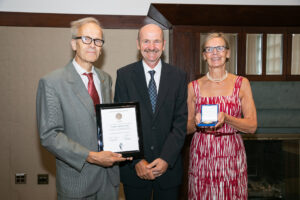
Pierre de Wit receives the Jakob Eriksson Prize. From left to right: Mauritz Ramstedt, Chair of the Jakob Eriksson Commission; Pierre de Wit; Ulla Gjörstrup, representative of the Swedish Consul in Boston.

What area(s) of molecular plant–microbe interactions do you feel your research has impacted most?

As an MSc student at Wageningen University in the 1970s, I was intrigued by lectures on the gene-for-gene hypothesis proposed in the 1940s by Professor Oort in the Netherlands for wheat and Ustilago tritici and by Harold Flor in the U.S.A. for flax and Melampsora lini. I was fortunate to be offered a PhD position and having the freedom to choose my own research subject. I ended up studying the interaction between tomato and Cladosporium fulvum. I witnessed different episodes in the research on gene-for-gene systems. At the third ICPP in Munich in 1978—the first international congress that I attended—research was focused on elicitors and their capacity to more quickly induce phytoalexins in incompatible interactions than in compatible ones. My role models at that congress were Noël Keen, Peter Albersheim, and Joseph Kuć. Their research inspired me to carry on in times when I did not make much progress in my own research. Phytoalexins have now become popular as health-enhancing phytochemicals (such as resveratrol, glyceollin, polyphenols, etc.). I was surprised to read an article recently that the tomato phytoalexin falcarindiol, which we discovered in tomato in 1981, is also a potential drug, inhibiting human cancer cell lines. In addition to phytoalexins, we studied the role of antifungal pathogenesis-related proteins, including chitinases and β-1,3-glucanases in incompatible interactions. However, the breakthrough came when we started to study apoplastic fluids from tomato leaves infected by C. fulvum, which appeared to contain many proteinaceous elicitors—the products of fungal avirulence (Avr) genes recognized by cognate Cf receptor-like proteins in tomato. Then, very soon, the specificity question was solved. In the absence of cognate Cf-proteins, race-specific elicitors (now called “effectors”) suppress defense responses induced by nonspecific (glyco) protein fungal elicitors (now called “pathogen-associated molecular patterns,” or PAMPs), and in the presence of cognate Cf proteins, they induce a Cf-mediated defense response. With a very enthusiastic group of MSc students, PhD students, and post-docs, we have cloned many C. fulvum effectors, and for some of them, the structure and function have been elucidated. Many of the PhD students and post-docs now occupy prestigious academic positions, and I see the Jakob Eriksson Prize also as a recognition of their contributions to my research.

What advice do you have for young scientists aspiring to achieve the level of science that has major impact?

There is no guidebook that leads to success in science. Everybody stands on the shoulders of other scientists who have pioneered and partly paved roads in different research directions. There are still many fundamental and applied research questions in plant–microbe interactions that need to be addressed and solved in order to get more sustainable agriculture. I grew up on a farm and was motivated to find alternatives for the use of pesticides after reading the book Silent Spring, written by Rachel Carson in 1962. I still strongly believe in the power of disease resistance breeding in sustainable agriculture together with healthy soils and biocontrol agents when no resistance genes are available. The genomics era opens new ways to address and solve difficult research questions. However, to become successful in science, talent is not enough; ambition, curiosity, inspiration, loving your work, endurance, and not being afraid of working hard and making mistakes are equally important. However, it is also important to get sufficient time to develop a new research line after your PhD, which is not easy, as tenure positions are becoming rare in many countries.

When you were a post-doc, what had the largest influence on your decision to enter your specific research area in your permanent position? Was this a “hot topic” at the time, or did you choose to go in a different direction?

I was very fortunate to obtain a permanent position already during my PhD, as I was hired to assist in teaching and work on my PhD project. This gave me more time to develop my PhD project than a regular PhD student. If I had been allowed to work on my PhD project for only 4 years, I would never have discovered the race-specific elicitors of C. fulvum and their encoding genes. After my PhD, I received a Fulbright Fellowship to work 1 year in the U.S.A. in the laboratory of Professor Joseph Kuć at the University of Kentucky in Lexington, which allowed me to continue my research project and interact with researchers working on induced systemic resistance against pathogens in different crops. At that time, research on gene-for-gene interactions was a hot topic, as well as research on local and systemic resistance, and they still are.


Scroll to Top