Category: Issue 1 •​ 2021​

IS-MPMI Board of Directors Adds Two New Junior Members

ISMPMI 285 2 1955560 removebg preview

Issue 1

2020

interactions

Did You Know

Dear Colleagues and Friends,

I hope you are doing well, wherever you are, in this strange new world we are navigating together. In this time of disruption and change, we are thinking about you, and our wishes for your health and wellbeing are stronger than ever.

I am writing to provide an update from the Board of Directors (BOD). This winter, IS-MPMI put out a call for early career scientists to join the board. We received several impressive applications from around the globe. The BOD evaluated each candidate based on several criteria looking for excellence in scholarship and training, collaboration within our society, leadership at their institution, and outreach within their community.

I am pleased to announce that we selected two junior BOD members with outstanding portfolios. The new members are:

Patricia Baldrich, a post-doctoral scholar in Blake Meyer’s laboratory at the Danforth Plant Science Center at Washington University, in St. Louis, MO, United States

Charles Roussin-Léveillée, a graduate student in Peter Moffet’s laboratory at the University of Sherbrooke, in Quebec, Canada.

The junior BODs will participate in monthly board activities including congress meeting planning, fundraising, and communications to our members. They will also partner in new initiatives to support and cultivate diversity and inclusion within our IS-MPMI community.

You can read more about our junior BOD members below.

Congratulations to both!

Sincerely,

Mary Beth Mudgett

IS-MPMI President

 **************************************************************

01 Jr BOD2

From Patricia Baldrich:


Dear IS-MPMI members,

I am a postdoctoral researcher in the lab of Blake Meyers, at the Donald Danforth Plant Science Center (Saint Louis, Missouri, United States). As a scientist who has worked in three different continents, I have witnessed the ability that diverse perspectives have in creating great interdisciplinary and international collaborations, which I believe are the driving forces that move science forward. My passion for plant-microbe interactions and learning how organisms from different kingdoms communicate has guided my career journey. The focus of my research is on small RNAs and their use as communication tools in the interaction of plants and their associated microbes.

I am excited and grateful to be selected a junior member of the Board of Directors. It is a tremendous opportunity and honor to serve IS-MPMI, a diverse and international society that has supported plant-microbe interactions for the past 30 years. You can count on me to introduce and represent the viewpoint of early career researchers and provide innovative ideas and feedback to our meetings and communications.

01 charlesFrom Charles Roussin-Léveillée:

Bonjour/Hi!

My name is Charles and I am thrilled to join the IS-MPMI BOD as a junior member. I am currently a first year PhD candidate in the research group of Peter Moffett at the Université de Sherbrooke, in Quebec, Canada. I investigate how microbes manipulate their host cells to induce an ideal living space in the apoplast. I discovered the field of plant-microbe interaction as an undergraduate and have travelled around the world to learn more about this topic through amazing internships.

Outside the lab, I am a passionate hiker who loves to participate in discussions about anthropology, diversity and inclusion, as well as science in general (anything that can help advance society and address inequalities). I look forward to participating in the advancement of the large and vibrant research society that is the IS-MPMI.


Arabidopsis Response Regulator 6 (ARR6) Modulates Plant Cell-Wall Composition and Disease Resistance

ISMPMI 285 2 1955560 removebg preview

Issue 1

2020

interactions

Did You Know

The plant cell wall provides an important line of defense, functioning both as a physical barrier, as well as a source of signals to alert the plant host to invading microbes. Laura Bacete and colleagues​ present a new link between cytokinin, cell wall composition, DAMP signaling and disease resistance.

IS-MPMI Board of Directors Adds Two New Junior Members

ISMPMI 285 2 1955560 removebg preview

Issue 1

2020

interactions

Did You Know

Dear Colleagues and Friends,

I hope you are doing well, wherever you are, in this strange new world we are navigating together. In this time of disruption and change, we are thinking about you, and our wishes for your health and wellbeing are stronger than ever.

I am writing to provide an update from the Board of Directors (BOD). This winter, IS-MPMI put out a call for early career scientists to join the board. We received several impressive applications from around the globe. The BOD evaluated each candidate based on several criteria looking for excellence in scholarship and training, collaboration within our society, leadership at their institution, and outreach within their community.

I am pleased to announce that we selected two junior BOD members with outstanding portfolios. The new members are:

Patricia Baldrich, a post-doctoral scholar in Blake Meyer’s laboratory at the Danforth Plant Science Center at Washington University, in St. Louis, MO, United States

Charles Roussin-Léveillée, a graduate student in Peter Moffet’s laboratory at the University of Sherbrooke, in Quebec, Canada.

The junior BODs will participate in monthly board activities including congress meeting planning, fundraising, and communications to our members. They will also partner in new initiatives to support and cultivate diversity and inclusion within our IS-MPMI community.

You can read more about our junior BOD members below.

Congratulations to both!

Sincerely,

Mary Beth Mudgett

IS-MPMI President

 **************************************************************

From Patricia Baldrich:

Jr BOD2

Dear IS-MPMI members,

I am a postdoctoral researcher in the lab of Blake Meyers, at the Donald Danforth Plant Science Center (Saint Louis, Missouri, United States). As a scientist who has worked in three different continents, I have witnessed the ability that diverse perspectives have in creating great interdisciplinary and international collaborations, which I believe are the driving forces that move science forward. My passion for plant-microbe interactions and learning how organisms from different kingdoms communicate has guided my career journey. The focus of my research is on small RNAs and their use as communication tools in the interaction of plants and their associated microbes.

I am excited and grateful to be selected a junior member of the Board of Directors. It is a tremendous opportunity and honor to serve IS-MPMI, a diverse and international society that has supported plant-microbe interactions for the past 30 years. You can count on me to introduce and represent the viewpoint of early career researchers and provide innovative ideas and feedback to our meetings and communications.

Jr BOD1

From Charles Roussin-Léveillée:

Bonjour/Hi!

My name is Charles and I am thrilled to join the IS-MPMI BOD as a junior member. I am currently a first year PhD candidate in the research group of Peter Moffett at the Université de Sherbrooke, in Quebec, Canada. I investigate how microbes manipulate their host cells to induce an ideal living space in the apoplast. I discovered the field of plant-microbe interaction as an undergraduate and have travelled around the world to learn more about this topic through amazing internships.

Outside the lab, I am a passionate hiker who loves to participate in discussions about anthropology, diversity and inclusion, as well as science in general (anything that can help advance society and address inequalities). I look forward to participating in the advancement of the large and vibrant research society that is the IS-MPMI.

Arabidopsis Response Regulator 6 (ARR6) Modulates Plant Cell-Wall Composition and Disease Resistance

ISMPMI 285 2 1955560 removebg preview

Issue 1

2020

interactions

Did You Know

The plant cell wall provides an important line of defense, functioning both as a physical barrier, as well as a source of signals to alert the plant host to invading microbes. Laura Bacete and colleagues​ present a new link between cytokinin, cell wall composition, DAMP signaling and disease resistance.

IS-MPMI Stands Against Injustice

ISMPMI 285 2 1955560 removebg preview

Issue 1

2020

interactions

Did You Know

A message from IS-MPMI President, Mary Beth Mudgett
Dear colleagues and friends—
We are writing to you during a time of extreme anger, pain, and hurt for the Black community. People are horrified by the recent killings of three African Americans: Breonna Taylor, Ahmaud Arbery, and George Floyd.
We stand at a moment unprecedented in history, both nationally and internationally. It is a time when we face, most sadly, social unrest from the systemic racism that has been plaguing our society for all of the years of its existence. This, compounded with a biological threat and economic crisis that is affecting every one of us, presents a time of profound stress for all—but for our Black community, the burden is unfathomable.
The International Society of Molecular Plant-Microbe Interactions (IS-MPMI) strongly rejects racism and discrimination in any form. We stand with our Black community, as well as those that are experiencing injustice at this time. Our society is an international organization which embodies a diverse and engaged community of scientists and educators to train, create, and share foundational knowledge in plant-microbe interactions towards the greater understanding and sustainable use of plants for all people. IS-MPMI knows that the strength of our society is in the tremendous diversity of our community. Our ability to learn from each other and share our common interests and goals, regardless of race, is what makes our society and its members truly exceptional.
We acknowledge that you may be struggling at this time. We send our utmost support to you.
If you have any thoughts or actions that you believe our society can address, we encourage you to reach out to us or other members of the IS-MPMI Board of Directors. We welcome your input for how we can do better for our community. IS-MPMI Interactions is also a means to share your concerns, calls-to-action, or topics for discussion.
At this moment, we encourage all of our members to pause and reflect on racial injustice. “Learn from yesterday, live for today, and hope for tomorrow. The important thing is not to stop questioning.”—Albert Einstein. As a community, it is important that we talk about race and continually strive to live by the principle of equality and better realize it in our daily exchanges. There is much needed change.
In the days ahead, we hope that you and your communities stay safe, healthy and well. You are in our thoughts.
Regards,
Mary Beth Mudgett, President, IS-MPMI
Jeanne Harris, Editor, MPMI

IS-MPMI Board of Directors

IS-MPMI Stands Against Injustice

ISMPMI 285 2 1955560 removebg preview

Issue 1

2020

interactions

Did You Know

A message from IS-MPMI President, Mary Beth Mudgett
Dear colleagues and friends—
We are writing to you during a time of extreme anger, pain, and hurt for the Black community. People are horrified by the recent killings of three African Americans: Breonna Taylor, Ahmaud Arbery, and George Floyd.
We stand at a moment unprecedented in history, both nationally and internationally. It is a time when we face, most sadly, social unrest from the systemic racism that has been plaguing our society for all of the years of its existence. This, compounded with a biological threat and economic crisis that is affecting every one of us, presents a time of profound stress for all—but for our Black community, the burden is unfathomable.
The International Society of Molecular Plant-Microbe Interactions (IS-MPMI) strongly rejects racism and discrimination in any form. We stand with our Black community, as well as those that are experiencing injustice at this time. Our society is an international organization which embodies a diverse and engaged community of scientists and educators to train, create, and share foundational knowledge in plant-microbe interactions towards the greater understanding and sustainable use of plants for all people. IS-MPMI knows that the strength of our society is in the tremendous diversity of our community. Our ability to learn from each other and share our common interests and goals, regardless of race, is what makes our society and its members truly exceptional.
We acknowledge that you may be struggling at this time. We send our utmost support to you.
If you have any thoughts or actions that you believe our society can address, we encourage you to reach out to us or other members of the IS-MPMI Board of Directors. We welcome your input for how we can do better for our community. IS-MPMI Interactions is also a means to share your concerns, calls-to-action, or topics for discussion.
At this moment, we encourage all of our members to pause and reflect on racial injustice. “Learn from yesterday, live for today, and hope for tomorrow. The important thing is not to stop questioning.”—Albert Einstein. As a community, it is important that we talk about race and continually strive to live by the principle of equality and better realize it in our daily exchanges. There is much needed change.
In the days ahead, we hope that you and your communities stay safe, healthy and well. You are in our thoughts.
Regards,
Mary Beth Mudgett, President, IS-MPMI
Jeanne Harris, Editor, MPMI

IS-MPMI Board of Directors

RNA Sequencing-Associated Study Identifies GmDRR1 as Positively Regulating the Establishment of Symbiosis in Soybean

ISMPMI 285 2 1955560 removebg preview

Issue 1

2020

interactions

Did You Know

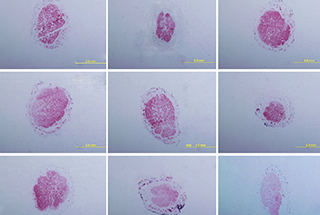
​In soybean-rhizobium interactions, the type III secretion system (T3SS) of rhizobium plays a key role in regulating host specificity. However, the lack of information on the role of T3SS in signaling networks limits our understanding of symbiosis. Zhang et al. conducted an RNA sequencing analysis of soybean chromosome segment substituted lines, one female parent and two derived lines with different chromosome-substituted segments of wild soybean and opposite nodulation patterns.

mpmi 01 20 0017 r f5 1602032

Introducing “What’s New in MPMI!”—a Virtual Seminar Series Highlighting Recent Publications in MPMI

ISMPMI 285 2 1955560 removebg preview

Issue 1

2020

interactions

Did You Know

03MPMI VitrualSeminar 650x97

MPMI is pleased to introduce What’s New in MPMI!—a new series of live online seminars highlighting recent papers, presented by our authors. With the uncertainties of the ongoing pandemic and the need for connections during times of isolation, division, and conflict, we hope that our virtual seminar series will be a way to draw our research community together, providing an opportunity for us to connect with colleagues across the world. We especially hope that this series will provide an important venue for young scientists to share new work as opportunities to present have dwindled.

Finally, this series is freely available to increase and encourage global participation in this MPMI community series to anyone with an interest in molecular plant-microbe interactions. By bringing our talks to you, we hope to increase accessibility. All talks will be recorded and available at a later date on the MPMI website.

Details:

The series will be every other week, alternating between a time that permits immediate participation in India, Europe, and the United States (11am EDT), and a time that permits participation in the United States and Asia (9pm EDT). The format of this series will be a single, 25-minute talk, followed by time for questions.

Our first speaker was Matthew Neubauer, who gave a talk on “Regulation of Cell Death in Plants by EDR1EDS1 and PAD4,” which was selected as the April 2020 MPMI Editor’s Pick. If you missed the talk, watch it now and check out this excellent paper, now Open Access through the end of the year!

To attend the seminars, you will need to register in advance. Find all upcoming seminars here. We will post the registration information at least one week prior to the seminar. After registering, you will receive a confirmation email containing information about joining the meeting.

Please share the information about What’s New in MPMI! with friends, colleagues, and students!

We look forward to having you join us!

Sincerely,

Jeanne Harris, Editor-in-Chief, MPMI  

Mary Beth Mudgett, President, IS-MPMI

InterConnections: Get to Know Member Jennifer Lewis

ISMPMI 285 2 1955560 removebg preview

Issue 2

2020

interactions

Did You Know

The MPMI Editor’s pick for March 2020 is “Comparative Genomics Screen Identifies Microbe-Associated Molecular Patterns from ‘Candidatus Liberibacter’ spp. That Elicit Immune Responses in Plants” with first author Yuan Chen, a postdoctoral researcher in the lab of Jennifer Lewis at the USDA Plant Gene Expression Center and UC-Berkeley. Lewis shared some background for their work and how collaborations and feedback from colleagues can really help to bring a project together.

Submitted by Jennifer Lewis

Citrus greening, or Huanglongbing, caused by ‘Candidatus Liberibacter asiaticus,’ has decimated citrus groves in Florida and is spreading through other citrus-growing areas of the United States. Citrus greening causes blotchy mottle (random yellowing) on leaves; bitter, misshapen, and discolored (green) fruit; and tree decline—all of which affects the quality and flavor of oranges.

Citrus greening is a difficult scientific problem to investigate, because it is caused by an unculturable phloem-restricted pathogen and because it affects a woody species (which means plants grow very slowly and take a lot of time to produce the next generation). I was familiar with the work done by Honour McCann, formerly at the University of Toronto and now at the Max Planck Institute in Tübingen, and David Guttman, at the University of Toronto, to identify microbe-/pathogen-associated molecular patterns (MAMPs/PAMPs) by bioinformatic approaches (McCann et al., 2012). Work from Cyril Zipfel, University of Zurich, and others had shown that applying purified MAMPs to Arabidopsis induces immune responses, such as the production of reactive oxygen species (ROS), and that this so-called pattern-triggered immunity (PTI) response protects plants from infection (Lacombe et al., 2010; Zipfel et al., 2004). We therefore thought that we could boost the immune response in citrus if we could identify endogenous MAMPs in ‘Ca. L. asiaticus.’

MAMPs are highly conserved peptides and therefore believed to be essential for the microbe. However, individual amino acid residues in a MAMP might be under positive selection to avoid recognition by the plant’s defenses. Positive selection leads to an increase in variants in the population, because the variants are beneficial to the pathogen. In contrast, deleterious variants are subject to negative selection, because they impair fitness.

Claire Bendix, a former USDA postdoc in my lab, carried out computational analyses to identify putative MAMPs with signatures of positive selection from ‘Ca. L. asiaticus’ genomes. We hypothesized that putative MAMPs should be specific to strains that infect citrus—not found in the nonpathogenic relative L. crescens and possibly also absent in ‘Ca. L. solanacearum,’ which infects solanaceous plants.

Yuan Chen, a University of California, Berkeley postdoc in my lab, tested the role of putative MAMPs in eliciting immune responses, starting first in Arabidopsis and Nicotiana benthamiana, as these plants are commonly used to look at ROS production, which is a feature of the immune response. These assays gave exciting results, showing that two of the ‘Ca. L. asiaticus’ peptides could elicit ROS production. However, it was well known that peptides could be contaminated with flagellin peptide (flg22), which is a very strong elicitor of PTI, and therefore give a false-positive result. To ensure that the ‘Ca. L. asiaticus’ peptides were not contaminated, Yuan tested for ROS production in the Arabidopsis flagellin receptor (fls2) mutant, as well as in the Ws ecotype of Arabidopsis, which lacks FLS2. She found that both ‘Ca. L. asiaticus’ peptides still elicited ROS responses, indicating that they were not contaminated with flg22. This control was very important in convincing us the results were real. In addition, Yuan read about some MAMPs that could induce a second ROS burst (Segonzac et al., 2011; Shang-Guan et al., 2018), which might lead to longer immune responses. She tested all of our peptides, but none was able to induce a second ROS burst.

Yuan then turned to optimizing ROS assays in citrus, first using flg22 as the elicitor. This proved to be quite challenging, as citrus has a waxy cuticle on the leaves and it was difficult to deliver the peptides. Yuan tried many different approaches (including different surfactants, inoculation methods, and nanoparticle delivery systems) before developing a reliable and reproducible protocol using vacuum infiltration of new flush (leaves) and luminescence-based detection of ROS production. She then tested our peptides on several Citrus species and found one (pksG) that elicited strong ROS production.

For the last few years, we have been collaborating with Bill Dawson, University of Florida, to test our peptides in sweet orange. Bill and his colleagues developed a viral delivery system using Citrus tristeza virus (CTV) that allows them to deliver novel molecules to the phloem of citrus trees (Dawson et al., 2015). They are testing whether CTV-mediated delivery of our peptides reduces symptoms from ‘Ca. L. asiaticus’ in the field.

Our work shows how fundamental work can be applied to an important agricultural problem. It combined bioinformatics, evolutionary biology, genomics, plant pathology, and cell biology to find ways of fighting against a devastating disease. Our work also illustrates the importance of delving into the literature and having key controls to have confidence in your data. This work also raises many interesting questions regarding the evolution of phloem-restricted pathogens. For example, perhaps ‘Ca. L. asiaticus’ adapted to colonize the phloem in part to avoid PTI.

We were fortunate to have great discussions with lab members; excellent greenhouse support from greenhouse manager Lia Poasa; nursery technicians Shawna KelleyJulie Calfas, and Christopher Tucker; and a great collaboration with Bill Dawson and members of the Dawson lab, Choaa ElMohtar and Cecile Robertson.

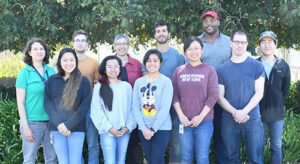
08 LewisLab2019

Front left to right: Ilea Chau, Jamie Calma, Yuritzy Rodriguez, Yuan Chen, Karl Schreiber

Back left to right: Jana Hassan, Hunter Thornton, Jennifer Lewis, Maël Baudin, Jacob Carroll-Johnson, Jack Kim.​

Refere​nces

Dawson, W. O., Bar-Joseph, M., Garnsey, S. M., and Moreno, P. 2015. Citrus tristeza virus: Making an ally from an enemy. Annu. Rev. Phytopathol. 53:137-155.

Lacombe, S., Rougon-Cardoso, A., Sherwood, E., Peeters, N., Dahlbeck, D., van Esse, H. P., Smoker, M., Rallapalli, G., Thomma, B., Staskawicz, B. J., Jones, J. D. G., and Zipfel, C. 2010. Interfamily transfer of a plant pattern-recognition receptor confers broad-spectrum bacterial resistance. Nat. Biotechnol. 28:365-369.

McCann, H. C., Nahal, H., Thakur, S., and Guttman, D. S. 2012. Identification of innate immunity elicitors using molecular signatures of natural selection. Proc. Natl. Acad. Sci. U.S.A. 109:4215-4220.

Segonzac, C., Feike, D., Gimenez-Ibanez, S., Hann, D. R., Zipfel, C., and Rathjen, J. P. 2011. Hierarchy and roles of pathogen-associated molecular pattern-induced responses in Nicotiana benthamiana. Plant Physiol. 156:687-699.

Shang-Guan, K., Wang, M., Htwe, N., Li, P., Li, Y., Qi, F., Zhang, D., Cao, M., Kim, C., and Weng, H. 2018. Lipopolysaccharides trigger two successive bursts of reactive oxygen species at distinct cellular locations. Plant Physiol. 176:2543-2556.

Zipfel, C., Robatzek, S., Navarro, L., Oakeley, E. J., Jones, J. D. G., Felix, G., and Boller, T. 2004. Bacterial disease resistance in Arabidopsis through flagellin perception. Nature 428:764-767.


InterConnections: Get to Know Member Matt Neubauer

ISMPMI 285 2 1955560 removebg preview

Issue 2

2020

interactions

Did You Know

The April 2020 Editor’s pick for MPMI is “Arabidopsis EDR1 Protein Kinase Regulates the Association of EDS1 and PAD4 to Inhibit Cell Death”. First author Matt Neubauer shared a summary of how the project came about, and a little about the trials and tribulations that eventually led to publication of his graduate work while in the lab of Roger Innes at Indiana University. Matt has now gone on to a postdoctoral position at North Carolina State University. Matt recently presented the first What’s New in MPMI! virtual seminar. You can watch his seminar here​.

Submitted by Matt Neubauer:

09 Neubauer Headshot

After many years, it is great to have our work on the role of EDR1 in the regulation of PAD4 and EDS1 published in MPMI. This project was initially intended to be a short investigation, however, it evolved greatly over time. The winding story of this project highlights how accidental discoveries and observations can enable important scientific discoveries.

I originally became interested in plant biology and biotechnology as a high school student, which motivated me to pursue a degree in biology. After finishing my BS in biology at Loyola University Chicago, I joined the Genome, Cell, and Developmental Biology PhD program at Indiana University. I became a member of Roger Innes’s lab in early 2014 and began working on a few projects focused on investigating the role of EDR1 in regulating plant defenses. In my second year, I took up the project that we ultimately published in MPMI.

The project began when a postdoc in our lab, Irene Serrano, discovered that the edr1-1 mutants she was working with actually carried a second mutation, located in the PAD4 gene (pad4-13). PAD4 is a well-known regulator of plant disease resistance, so we worried that some of our previous experiments using edr1-1 plants may have been influenced by the presence of this mutation. Irene sought to determine what effect pad4-13 has on edr1-1 plants, and whether it had been present in any of our previous seed stocks. Her results indicated that pad4-13 results in a gain-of-function, enhancing plant resistance and cell death. Interestingly, it did not affect the primary edr1 phenotype, enhanced resistance to powdery mildew.

At this point, we felt we had a duty to report these results to the scientific community, particularly those who had studied edr1-1 mutants. We determined that our original edr1-1 stocks did not contain pad4-13, however, we wanted to inform others about this mutation and alert them to the possibility that it was present in their lines. Due to the nature of this discovery, we felt this work would best be suited for a lower impact journal. However, we had a few interesting ideas that we wanted to test which we felt might enhance our work.

One of my objectives when I became involved in the project was to investigate how the pad4-13 mutation enhances PAD4 signaling. This was a long process, with many dead ends. Ultimately, we were unable to demonstrate how pad4-13 enhances PAD4 activity. It did not alter PAD4 accumulation or localization, formation of the PAD4/EDS1 complex, or block an important modification site. We concluded that pad4-13 likely affects an unknown PAD4 signaling mechanism.

Despite these setbacks, we had another idea we wanted to pursue whether EDR1 directly regulates PAD4. This hypothesis was based upon the observation that pad4-13 enhances some, but not all, edr1 phenotypes; as well as previously published data showing that loss of PAD4 suppresses edr1 phenotypes. These observations indicate that EDR1 and PAD4 may function in a common pathway. Since the interaction between PAD4 and its partner EDS1 is important for downstream defense signaling, I tested whether expression of EDR1 affects the formation of the EDS1/PAD4 complex. We were excited to find that, indeed, expression of EDR1 inhibited the formation of the complex. This discovery prompted us to further investigate the interaction between EDR1 and EDS1/PAD4, a slow process that occurred over many years.

We were initially disappointed and worried when we found the pad4-13 mutation in our edr1-1 stocks. In fact, we thought it was appropriate that pad4-13, which had proved so difficult to understand, was the thirteenth PAD4 allele to be discovered. Despite being an unlucky discovery, pad4-13 led us to important insights into the function of EDR1. Our decision to pursue the hypothesis that EDR1 directly interacts with PAD4 and EDS1 was a fortunate one which led to a new discovery about plant defense signaling.

Scroll to Top