|
Also in this issue…
|
|
In recognition of her contributions to the scientific community as an educator, mentor, and researcher, Dr. Barbara Kunkel was named a 2020 AAAS Fellow. Yeram Hong and Jennifer D. Lewis interviewed Dr. Kunkel about her career, female role models in science, and diversity and inclusion in the scientific community.
Dr. Jan Leach is the 2020 recipient of the APS Award of Distinction. This honor is presented to persons who have made exceptional contributions to plant pathology. Dr. Kamal Kumar Malukani recently interviewed Dr. Leach to learn more about the qualities needed to become a leader in plant pathology.
Dr. Pamela Ronald was recently awarded the 2020 World Agriculture Prize for her achievements in agricultural research and science education. Nick Colaianni interviewed Dr. Ronald to learn more about her accomplishments, the challenges faced in food production, and how science is being used to address these issues.
Kelley Clark and co-authors demonstrate the effect the SDE1 protein from the citrus greening (huanglongbing) pathogen can have on plants. Their results show that the effector is an important virulence factor that induces premature senescence-like responses in both Arabidopsis and citrus host plants.
IS-MPMIConnect, the society’s exciting new virtual discussion space, hosted two events in February. The symposium held on February 17 focused on Mental Health and Dealing with Failure and the event on February 24 featured conversations with Dr. Morgan Halane.
Join IS-MPMIConnect on March 29 for the complimentary LGBTQ+ Webinar, where scientists at various stages in their professions will share their experiences with inequality and bias in STEM. Register today!
Join IS-MPMIConnect on April 14 for a conversation with scientists who are successful academics with disabilities at various stages in their careers. Register today!
Focus Issue Editors Jacquie Bede, Kenichi Tsuda, and Jeanne Harris are inviting research and review articles that explore the complex interactions between plants, microbes, and the abiotic environment. Articles highlighting translational research, as well as fundamental understanding, are welcome. Learn more about this focus issue.
There are currently 11 What’s New in MPMI! virtual seminars available for viewing. Coming up next, Kenichi Tsuda will discuss Top 10 Question #5: Does ETI potentiate and restore PTI—or is there really a binary distinction between ETI and PTI? Register today!
Diversity and inclusion are core values of the International Society of Molecular Plant-Microbe Interactions. As an international society, it is our priority to increase diversity and facilitate change.
To draw our community together, IS-MPMI gathered virtually for the second of two workshops titled Taking MPMI Discoveries to the Field. These workshops highlighted efforts to translate molecular discoveries to the field and address MPMI Top 10 Question #3: How can we translate basic research into emerging crop plants?
IS-MPMI is excited to announce the 2021 Congress: eSymposia Series, which will take place online with a series of three separate events starting this summer! Abstract submissions open later in March. Stay tuned for more details about this opportunity to share your research and network with colleagues at this virtual scientific event.
|
 |
|
We are always looking for content for Interactions. Please contact Interactions Editor-in-Chief Dennis Halterman with questions or article ideas.
|


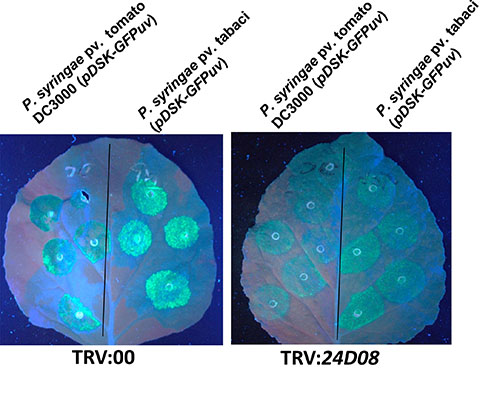
Many plant-encoded E3 ligases are known to be involved in plant defense. Ramu et al. report a novel role of E3 ligase SALT- AND DROUGHT-INDUCED RING FINGER1 (SDIR1) in plant immunity. Their research suggests that SDIR1 is a susceptibility factor and its activation or overexpression enhances disease caused by P. syringae pv. tomato DC3000 in Arabidopsis.
To recognize the work of early-career scientists, the MPMI editorial board has implemented a new award series to honor the best paper published by a student first author. For 2020, that award goes to Sarah Pottinger for her paper “Optimizing the PBS1 Decoy System to Confer Resistance to Potyvirus Infection in Arabidopsis and Soybean.”
“I found Sarah’s work on engineering PBS1 as a modifiable decoy to be innovative and creative, and the possibility of creating novel resistance traits in crops has exciting implications for agriculture,” said Jeanne Harris, the MPMI editor-in-chief. “In addition, I appreciated the logical way she leads her reader through the reasoning behind her experiments and subsequent conclusions.”

Sarah Pottinger is currently pursuing a Ph.D. at the Roger Innes lab at Indiana University, Bloomington, where her research focuses on investigating the Arabidopsis RPS5/PBS1 decoy system to optimize plant immune responses. She is exploring the use of proximity-based labeling to identify possible signaling partners for RPS5 as well as working towards elucidating a structure for PBS1 and RPS5. She hopes to graduate in 2022 and pursue postdoctoral studies in NLR signaling and specificity.
The MPMI editorial board also identified the following papers as honorable mentions:
Structural Requirements of the Phytoplasma Effector Protein SAP54 for Causing Homeotic Transformation of Floral Organ
Marc Benjamin Aurin, et al.
Prediction and Characterization of RXLR Effectors in Pythium Species
Gan Ai, et al.
Chitin Triggers Calcium-Mediated Immune Response in the Plant Model Physcomitrella patens
Giulia Galotto, et al.
Diversity and inclusion are core values of the International Society of Molecular Plant-Microbe Interactions. We are committed to cultivating and supporting a diverse membership, with inclusion, openness, and respect. Diverse groups are demonstrated to be more productive and creative and better able to answer key questions. We encourage all interested people to explore plant-microbe interactions, independent of their age, disability, ethnicity, gender identity, immigration status, national origin, race, religion, sexual orientation, and socio-economic status.
As an international society, it is our priority to increase diversity and facilitate change. IS-MPMI has created a Committee for Diversity and Inclusion (CDI) that will foster an inclusive environment within our community.
Over the course of the unusual times in which we are living, the CDI has been working closely with another IS-MPMI initiative, IS-MPMIConnect, that is focused on fostering bonds among all members of our scientific community. Future work from the committee will include increasing visibility and discussions about equity, diversity and inclusion (EDI) in IS-MPMI eSymposia, as well as in-person meetings.
IS-MPMI Diversity and Inclusion Committee Members
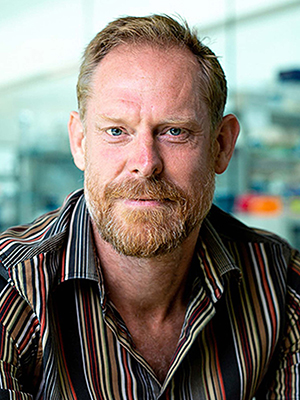
Prof. Giles E. D. Oldroyd FRS
Director, Crop Science Centre, University of Cambridge
Director, Crop Science Centre, University of Cambridge
I have worked in plant-microbe interactions for 30 years and been an openly gay man over this whole period. I moved to Berkeley, CA, as an undergraduate student to work with Brian Staskawicz and came out as a gay man within two months of arrival. My professional life and my minority status have been intertwined ever since.
I was born in the early 1970s. I benefitted from the early LGBT+ pioneers, whose efforts meant that there were some positive presentations of LGBT on television and films as I was growing up. However, throughout my schooling I experienced discrimination against my identity on a daily basis: my sexuality was something to be ridiculed. Growing up like this does not engender a deep sense of one’s worth. I focused instead on what I was good at, studying, and kept my sexual identity hidden until I felt able to come out.
When I moved to San Francisco, CA, I entered a bubble of LGBT+ liberation. It was an exciting time for me, discovering much about myself personally and professionally. It is difficult to describe the feeling of being liberated and free, after a lifetime of oppression. To this day, coming out as a gay man remains my most authentic act.
When I returned to the United Kingdom, I found myself the only out LGBT+ faculty member at my place of work. While I was out, I wasn’t very open about my sexuality, and this is something that I now regret. Speaking openly about sexual identity is a challenging thing to do in a professional context, and it took 15 years to hear the words lesbian, gay, bisexual, transgender spoken in any professional context. I now recognize that it is really important for LGBT+ staff members to be vocal about their identities: if we are not vocal, very few people will be vocal for us.
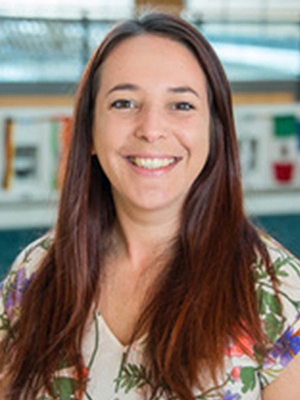
Patricia Baldrich
Postdoctoral Researcher, Meyers Lab, Donald Danforth Plant Science Center
My passion for plant-microbe interactions grew during the second year of studying for my bachelor’s degree in biology at the University of Barcelona. I understood that plants are aware of their surroundings and communicate with each other to protect themselves from pathogen attacks. These new concepts just blew my mind, and a few years later, after completing my master’s degree in molecular biotechnology at the University of Barcelona, I graduated with a Ph.D. degree in plant biotechnology, studying the role of small RNAs in plant defense against fungi, at the Autonomous University of Barcelona. Today, I live in St. Louis, MO (USA), and I study the role of small RNAs as a way of communication between plants and all sorts of pathogens, trying to unravel how these small RNAs make their way from one organism to another.
I am a woman and a mother and soon to be the mother of two boys. During my career in plant biology, I have been extremely lucky; I have always had female role models to look up to, and I have always had my family’s unconditional support, even if they had a hard time understanding what I was doing. However, since becoming a mother, I have felt that our scientific environment is not shaped to support and encourage all of us. Since becoming a mother, I cannot nor do I want to attend scientific events that happen on weekends. I prefer to spend my “free” time with my family. Since becoming a mother, traveling to conferences that do not provide affordable daycare is hard and nearly impossible. Since becoming a mother, I’ve started noticing that there are little details that do not allow all of us to enjoy science in the same way. These are some of the reasons I joined the IS-MPMI Board of Directors as a junior member and the IS-MPMI CDI to instigate change to make science a more inclusive and accommodating environment.
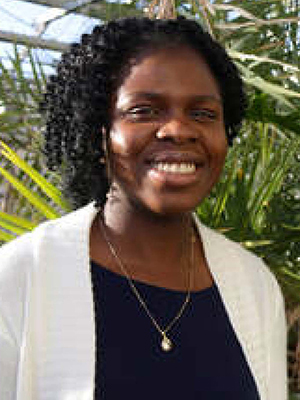
Ayooluwa Bolaji (She/Her)
Research Scientist, Canadian Food Inspection Agency (CFIA)
Currently, I work as a research scientist with the Canadian Food Inspection Agency (CFIA), Winnipeg, MB, Canada, where my projects focus on microbial genomes. Prior to joining the CFIA, I was a postdoctoral researcher at the University of Manitoba, where I utilized next-generation and long-read sequencing approaches to shed light on how certain microbes promote the growth of Canada’s crops (canola and soybean). As a young black woman in STEM who has experienced both microaggressions and discrimination within the scientific community, I feel that more needs to be done to make everyone feel welcomed, and tough conversations must be had. Being a part of the IS-MPMI CDI has opened my eyes to the many things that can be done to raise diversity awareness and proffer solutions for the inclusion of both women and BIPOC in STEM. I look forward to working with the CDI to facilitate and address some of these tough conversations within the IS-MPMI society. Outside the lab, I enjoy golfing and going on long bike rides.
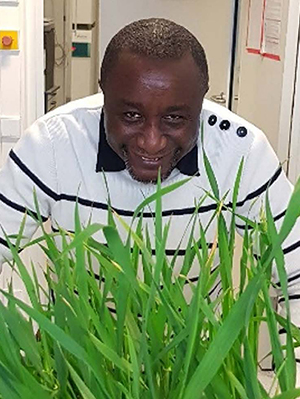
Franck Ditengou (He/Him)
Lecturer, University of Freiburg
After a first postdoc position at the Institut National de la Recherche Agronomique (INRA) in Nancy (France), I joined the team of Prof. Klaus Palme at the University of Freiburg (Germany) in 2002 to study how the root system copes with environmental (biotic and abiotic) changes. Particularly, the communication between plants and soil fungi prior to symbiosis establishment, the impact of mechanical stimuli on root system architecture, and the molecular mechanisms regulating plant response to gravity and microgravity. It is in this context that I coordinated several parabolic flights and sounding rocket campaigns, during which multiscale analyses of plant development under various gravitational environments were performed. The results of these studies serve as the basis for the development of procedures and methods for selecting plants capable of growing in alien environments.
Since 2007, I have been appointed as a lecturer at the University of Freiburg (Faculty of Biology), and in 2017, I joined the team of Prof. Thomas Ott in the scope of the ENSA project. The objective of this project is to use naturally occurring biological nitrogen fixation to conceive self-fertilizing crops within the reach of small farmers in the Sub-Saharan Africa. Our laboratory focuses on the characterization of the molecular processes modulating the initial steps of rhizobial infection. For someone with African roots, like me, this project is a great opportunity to contribute my knowledge to improving living conditions in Sub-Saharan Africa.
In addition, currently I am the assistant treasurer of the IS-MPMI CDI. Having observed the scientific community for a long time, especially in our field, I have noticed that it would benefit from being more inclusive. This is the meaning of my commitment within the CDI to encourage research institutes and labs to have a more balanced representation across the spectrum of society.
Non-scientific interests and other responsibilities: I am the president and a founding member of GABIOMED Researchers Inc. (www.gabiomed.org). GABIOMED Researchers Inc. gathers Gabonese scientists with backgrounds in life science and environment, regardless of gender, ethnicity, or religion. I am an active member of the Spvgg. Gundelfingen/Wildtal football club.
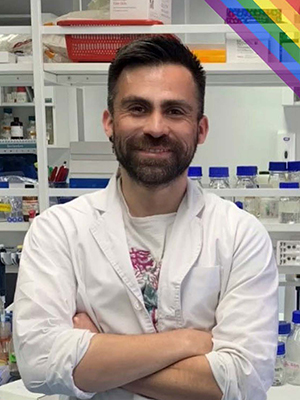
Ariel Herrera Vásquez (He/Him)
Postdoc, Millennium Institute of integrative Biology (iBio) and Andres Bello University (UNAB)
My name is Ariel Herrera Vásquez, and I’m a Chilean postdoc at the Millennium Institute of integrative Biology (iBio) and Andres Bello University (UNAB) in Santiago, Chile. I recently won a small grant to open an independent research line that could kick start a career as an independent researcher. When I’m not working, I enjoy spending time outdoors. I also like cooking and crafting.
Before the first EDI reunion during the IS-MPMI meeting in Glasgow (2019), I never thought about the enormous human diversity in science and how different experiences are depending on the cultural context where colleagues do their research. As a Latin American gay scientist, it is a great honor to participate in CDI to help to make visible and increase diversity to facilitate inclusion and changes in our community.
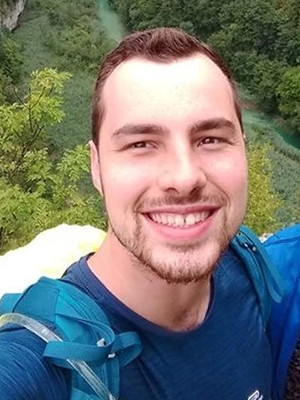
Charles Roussin-Léveillée (He/Him)
Ph.D. student, University of Sherbrooke
Hi! My name is Charles, and I am a Ph.D. student in Dr. Peter Moffett‘s lab at the University of Sherbrooke, in the fabulous province of Quebec, Canada. I am interested in plant-microbe interactions and, more specifically, in how microbial invaders manipulate their host cells beyond interference with immune processes. I am an avid hiker, sourdough bread maker, and gardener.
I grew up in a very diverse community and wasn’t necessarily very aware as a young person of all the inequalities that people face in this world. As I grew up and went to college, I began to realize that many people around me were facing obstacles in their lives and careers that I would not have to face, and I could not accept that. I was fortunate to have life-changing conversations during the first EDI night at IS-MPMI 2019 in Glasgow about approaches we could take in our society to reduce inequality in the workplace, as well as outside of it. While I am not a member of any underrepresented group in our community, I stand as a strong ally to all causes aimed at creating a vibrant, nondiscriminatory environment for all.
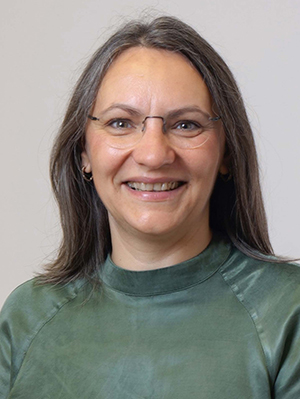
Simona Radutoiu
Associate professor, Aarhus University
Simona Radutoiu leads a research group focused on studies of interactions established between plants and the large diversity of surrounding microbes. Her team uses genetic and molecular tools to decipher the role of plant components in establishing symbiotic associations with beneficial bacteria and fungi or pathogenic associations with detrimental microorganisms.
The aim is to use contrasting associations and microbial environments of increasing complexities (single microbes–>tailored microbial consortia–>soil complex microbiota) to understand how plants use their distinct genetic tools to select and accommodate beneficial microbes in their roots and rhizosphere. Our long-term goal is to use our basic understanding to improve the ability of plant crops to select, associate, and benefit from these microbial interactions in sustainable agriculture that limits the use of chemical pollutants.
Simona’s team consists of bachelor’s, master’s, and Ph.D. degree students, postdocs, technicians, and visiting scholars and receives funding from targeted grants (Novo Nordisk and Independent Research Fund Denmark) and larger consortia (InRoot and ENSA). We are always open for discussions about our work. Please contact us (radutoiu@mbg.au.dk) if you are interested in hearing more about our research.

The 2022 MPMI special issue will focus on the next question of importance identified by the community—Top 10 question number 2: What Is the Role of the Abiotic Environment on the Interactions Between Plants and Microbes? Learn more.
Wonder is a fabulously interactive tool that gives you the virtual ability to “walk around” and network with other attendees during 2021 IS-MPMI Congress: eSymposia Series events. It’s a new way to network! Look for networking times in the schedule and be sure to add them to your agenda.
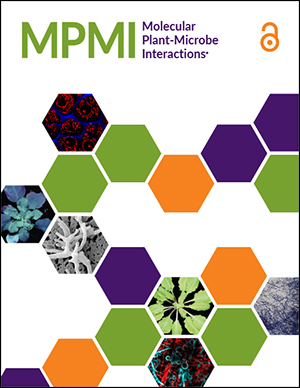
The MPMI journal is now included in the Directory of Open Access Journals (DOAJ)! The community-driven DOAJ indexes and provides access to high-quality, open access, peer-reviewed journals from around the world. The DOAJ database includes more open access journals than any other major indexing service and currently represents 80 languages, 126 countries, and 11,775 journals.
MPMI‘s admittance to the database confirms its compliance with many open access initiatives around the world, including Plan S in Europe and Capes/Qualis in Brazil, that may require authors to publish in journals that meet the requirements of the DOAJ. The journal will also be more discoverable, with increased visibility in search engines.
Learn more about DOAJ or the MPMI journal.
Sources: https://doaj.org/apply/why-index and https://doaj.org
Diversity and inclusion are core values of the International Society of Molecular Plant-Microbe Interactions. We are committed to cultivating and supporting a diverse membership, with inclusion, openness, and respect. Diverse groups are demonstrated to be more productive and creative and better able to answer key questions. We encourage all interested people to explore plant-microbe interactions, independent of their age, disability, ethnicity, gender identity, immigration status, national origin, race, religion, sexual orientation, and socio-economic status.
As an international society, it is our priority to increase diversity and facilitate change. IS-MPMI has created a Committee for Diversity and Inclusion (CDI) that will foster an inclusive environment within our community.
Over the course of the unusual times in which we are living, the CDI has been working closely with another IS-MPMI initiative, IS-MPMIConnect, that is focused on fostering bonds among all members of our scientific community. Future work from the committee will include increasing visibility and discussions about equity, diversity and inclusion (EDI) in IS-MPMI eSymposia, as well as in-person meetings.
IS-MPMI Diversity and Inclusion Committee Members
Prof. Giles E. D. Oldroyd FRS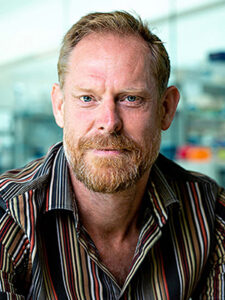
Director, Crop Science Centre, University of Cambridge
I have worked in plant-microbe interactions for 30 years and been an openly gay man over this whole period. I moved to Berkeley, CA, as an undergraduate student to work with Brian Staskawicz and came out as a gay man within two months of arrival. My professional life and my minority status have been intertwined ever since.
I was born in the early 1970s. I benefitted from the early LGBT+ pioneers, whose efforts meant that there were some positive presentations of LGBT on television and films as I was growing up. However, throughout my schooling I experienced discrimination against my identity on a daily basis: my sexuality was something to be ridiculed. Growing up like this does not engender a deep sense of one’s worth. I focused instead on what I was good at, studying, and kept my sexual identity hidden until I felt able to come out.
When I moved to San Francisco, CA, I entered a bubble of LGBT+ liberation. It was an exciting time for me, discovering much about myself personally and professionally. It is difficult to describe the feeling of being liberated and free, after a lifetime of oppression. To this day, coming out as a gay man remains my most authentic act.
When I returned to the United Kingdom, I found myself the only out LGBT+ faculty member at my place of work. While I was out, I wasn’t very open about my sexuality, and this is something that I now regret. Speaking openly about sexual identity is a challenging thing to do in a professional context, and it took 15 years to hear the words lesbian, gay, bisexual, transgender spoken in any professional context. I now recognize that it is really important for LGBT+ staff members to be vocal about their identities: if we are not vocal, very few people will be vocal for us.
Patricia Baldrich
Postdoctoral Researcher, Meyers Lab, Donald Danforth Plant Science Center
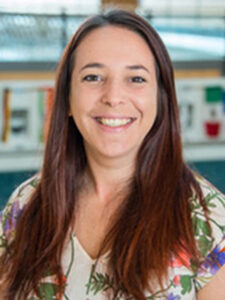
My passion for plant-microbe interactions grew during the second year of studying for my bachelor’s degree in biology at the University of Barcelona. I understood that plants are aware of their surroundings and communicate with each other to protect themselves from pathogen attacks. These new concepts just blew my mind, and a few years later, after completing my master’s degree in molecular biotechnology at the University of Barcelona, I graduated with a Ph.D. degree in plant biotechnology, studying the role of small RNAs in plant defense against fungi, at the Autonomous University of Barcelona. Today, I live in St. Louis, MO (USA), and I study the role of small RNAs as a way of communication between plants and all sorts of pathogens, trying to unravel how these small RNAs make their way from one organism to another.
I am a woman and a mother and soon to be the mother of two boys. During my career in plant biology, I have been extremely lucky; I have always had female role models to look up to, and I have always had my family’s unconditional support, even if they had a hard time understanding what I was doing. However, since becoming a mother, I have felt that our scientific environment is not shaped to support and encourage all of us. Since becoming a mother, I cannot nor do I want to attend scientific events that happen on weekends. I prefer to spend my “free” time with my family. Since becoming a mother, traveling to conferences that do not provide affordable daycare is hard and nearly impossible. Since becoming a mother, I’ve started noticing that there are little details that do not allow all of us to enjoy science in the same way. These are some of the reasons I joined the IS-MPMI Board of Directors as a junior member and the IS-MPMI CDI to instigate change to make science a more inclusive and accommodating environment.
Ayooluwa Bolaji (She/Her)
Research Scientist, Canadian Food Inspection Agency (CFIA)
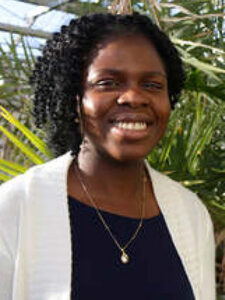
Currently, I work as a research scientist with the Canadian Food Inspection Agency (CFIA), Winnipeg, MB, Canada, where my projects focus on microbial genomes. Prior to joining the CFIA, I was a postdoctoral researcher at the University of Manitoba, where I utilized next-generation and long-read sequencing approaches to shed light on how certain microbes promote the growth of Canada’s crops (canola and soybean). As a young black woman in STEM who has experienced both microaggressions and discrimination within the scientific community, I feel that more needs to be done to make everyone feel welcomed, and tough conversations must be had. Being a part of the IS-MPMI CDI has opened my eyes to the many things that can be done to raise diversity awareness and proffer solutions for the inclusion of both women and BIPOC in STEM. I look forward to working with the CDI to facilitate and address some of these tough conversations within the IS-MPMI society. Outside the lab, I enjoy golfing and going on long bike rides.
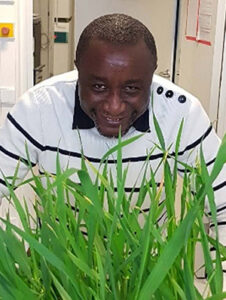
Franck Ditengou (He/Him)
Lecturer, University of Freiburg
After a first postdoc position at the Institut National de la Recherche Agronomique (INRA) in Nancy (France), I joined the team of Prof. Klaus Palme at the University of Freiburg (Germany) in 2002 to study how the root system copes with environmental (biotic and abiotic) changes. Particularly, the communication between plants and soil fungi prior to symbiosis establishment, the impact of mechanical stimuli on root system architecture, and the molecular mechanisms regulating plant response to gravity and microgravity. It is in this context that I coordinated several parabolic flights and sounding rocket campaigns, during which multiscale analyses of plant development under various gravitational environments were performed. The results of these studies serve as the basis for the development of procedures and methods for selecting plants capable of growing in alien environments.
Since 2007, I have been appointed as a lecturer at the University of Freiburg (Faculty of Biology), and in 2017, I joined the team of Prof. Thomas Ott in the scope of the ENSA project. The objective of this project is to use naturally occurring biological nitrogen fixation to conceive self-fertilizing crops within the reach of small farmers in the Sub-Saharan Africa. Our laboratory focuses on the characterization of the molecular processes modulating the initial steps of rhizobial infection. For someone with African roots, like me, this project is a great opportunity to contribute my knowledge to improving living conditions in Sub-Saharan Africa.
In addition, currently I am the assistant treasurer of the IS-MPMI CDI. Having observed the scientific community for a long time, especially in our field, I have noticed that it would benefit from being more inclusive. This is the meaning of my commitment within the CDI to encourage research institutes and labs to have a more balanced representation across the spectrum of society.
Non-scientific interests and other responsibilities: I am the president and a founding member of GABIOMED Researchers Inc. (www.gabiomed.org). GABIOMED Researchers Inc. gathers Gabonese scientists with backgrounds in life science and environment, regardless of gender, ethnicity, or religion. I am an active member of the Spvgg. Gundelfingen/Wildtal football club.
Ariel Herrera Vásquez (He/Him)
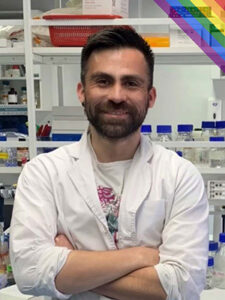
Postdoc, Millennium Institute of integrative Biology (iBio) and Andres Bello University (UNAB)
My name is Ariel Herrera Vásquez, and I’m a Chilean postdoc at the Millennium Institute of integrative Biology (iBio) and Andres Bello University (UNAB) in Santiago, Chile. I recently won a small grant to open an independent research line that could kick start a career as an independent researcher. When I’m not working, I enjoy spending time outdoors. I also like cooking and crafting.
Before the first EDI reunion during the IS-MPMI meeting in Glasgow (2019), I never thought about the enormous human diversity in science and how different experiences are depending on the cultural context where colleagues do their research. As a Latin American gay scientist, it is a great honor to participate in CDI to help to make visible and increase diversity to facilitate inclusion and changes in our community.

Charles Roussin-Léveillée (He/Him)
Ph.D. student, University of Sherbrooke
Hi! My name is Charles, and I am a Ph.D. student in Dr. Peter Moffett‘s lab at the University of Sherbrooke, in the fabulous province of Quebec, Canada. I am interested in plant-microbe interactions and, more specifically, in how microbial invaders manipulate their host cells beyond interference with immune processes. I am an avid hiker, sourdough bread maker, and gardener.
I grew up in a very diverse community and wasn’t necessarily very aware as a young person of all the inequalities that people face in this world. As I grew up and went to college, I began to realize that many people around me were facing obstacles in their lives and careers that I would not have to face, and I could not accept that. I was fortunate to have life-changing conversations during the first EDI night at IS-MPMI 2019 in Glasgow about approaches we could take in our society to reduce inequality in the workplace, as well as outside of it. While I am not a member of any underrepresented group in our community, I stand as a strong ally to all causes aimed at creating a vibrant, nondiscriminatory environment for all.
Simona Radutoiu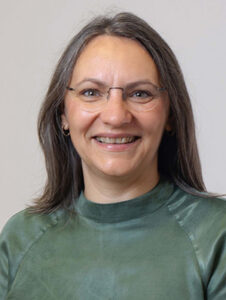
Associate professor, Aarhus University
Simona Radutoiu leads a research group focused on studies of interactions established between plants and the large diversity of surrounding microbes. Her team uses genetic and molecular tools to decipher the role of plant components in establishing symbiotic associations with beneficial bacteria and fungi or pathogenic associations with detrimental microorganisms.
The aim is to use contrasting associations and microbial environments of increasing complexities (single microbes–>tailored microbial consortia–>soil complex microbiota) to understand how plants use their distinct genetic tools to select and accommodate beneficial microbes in their roots and rhizosphere. Our long-term goal is to use our basic understanding to improve the ability of plant crops to select, associate, and benefit from these microbial interactions in sustainable agriculture that limits the use of chemical pollutants.
Simona’s team consists of bachelor’s, master’s, and Ph.D. degree students, postdocs, technicians, and visiting scholars and receives funding from targeted grants (Novo Nordisk and Independent Research Fund Denmark) and larger consortia (InRoot and ENSA). We are always open for discussions about our work. Please contact us (radutoiu@mbg.au.dk) if you are interested in hearing more about our research.

The 2022 MPMI special issue will focus on the next question of importance identified by the community—Top 10 question number 2: What Is the Role of the Abiotic Environment on the Interactions Between Plants and Microbes? Learn more.