Category: Issue 1 •​ 2021​

“The Next Big Idea” Session at 2023 IS-MPMI Congress

ISMPMI 285 2 1955560 removebg preview

Issue 1

2020

interactions

Did You Know

Ryan and Pat, Organizers of “The Next Big Idea” Session

Dear IS-MPMI community,

2023Congress logo (1)

As you might know, the 2023 IS-MPMI Congress is coming up in July, and it will include an innovative and interactive plenary session focused on the “WHY” behind our research. We have selected five IS-MPMI community members from diverse backgrounds and career stages who will try to convey why you should care about their research.

Participants will have five minutes to present the rationale and justification behind their research. Following each pitch, there will be three minutes for questions from the audience. The winner of the challenge, based on audience votes, your vote, will receive a monetary prize and eternal community recognition!

Join us on Thursday, July 20, for this unique session and be part of “The Next Big Idea” Session at IS-MPMI 2023!​

Interact with MPMI at 2023 IS-MPMI Congress: Attend a Special Session, Visit the Editors of MPMI, and Potentially Win a Poster Award!

ISMPMI 285 2 1955560 removebg preview

Issue 1

2020

interactions

Did You Know

At the 2023 IS-MPMI Congress, the five assistant feature editors for MPMI will host a standalone session, “The Making of a Story—Building Narratives and Communicating Science Effectively,” on Sunday, July 16, from 10:00 a.m. to 12:00 p.m. Learn how to utilize different media to effectively communicate science to diverse audiences in engaging, creative ways. This session will also include a live recording of the MPMI podcast Microgreens.​

MPMI Hex Sticker 220x252 (1)

In addition to attending this session, visit the editors of MPMI at the MPMI booth over the course of the meeting to learn more about publishing in the journal, signing up to be a reviewer, and engaging with the journal in other ways. Grab a few free “show your science” stickers while you are there!

MPMI is also host a Student Poster Award competition at the meeting, judged by the editors of the journal. The first-place winner will receive $300, the second-place winner will receive $200, and the third-place winner will receive $100. Any poster by a student is eligible for the award; winners will be announced at the meeting.​

InterView with Dr. Wenbo Ma

ISMPMI 285 2 1955560 removebg preview

Issue 1

2020

interactions

Did You Know

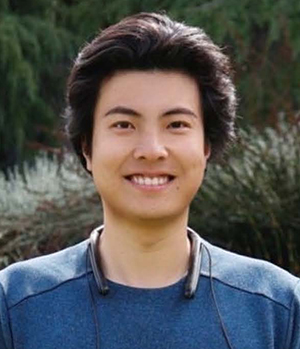
Tianrun “Jerry” Li​

03InterView Li

 Tianrun Li

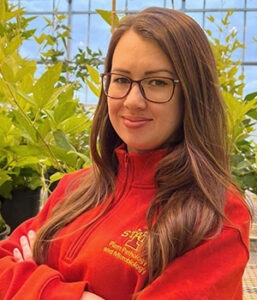
Tianrun Li is a fourth-year Ph.D. candidate in the Plant Pathology program at the University of California, Davis, working under the guidance of Dr. Gitta Coaker. He completed his bachelor’s degree from Northwest A&F University, China, in 2019. His current research focuses on exploring the utility of pattern recognition receptor (PRR) triggered immunity to control vector-borne disease. He is also investigating novel plant flagellin receptors with expanded ligand recognition specificity and their potential for receptor engineering.
03InterView Ma

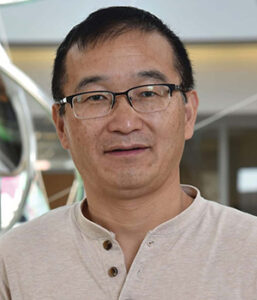
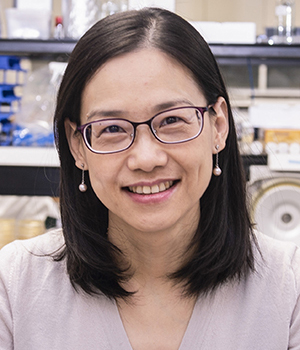
 Dr. Wenbo Ma

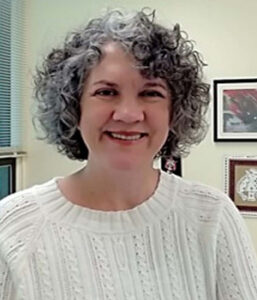
Dr. Wenbo Ma is a senior group leader at The Sainsbury Laboratory (TSL) and an honorary professor at the University of East Anglia, UK. Her group’s long-term research interest has been to understand the plant–pathogen coevolutionary arms race, with a focus on microbial pathogenesis and effector biology. She is also one of the pioneers in determining the role of small RNAs in plant immunity against nonviral pathogens.

Conversation with Dr. Ma

Not only is Wenbo a recipient of the 2021 Ruth Allen Award from The American Phytopathological Society (APS), she was recently elected as a 2022 Fellow of the American Association for the Advancement of Science (AAAS). To mark the occasion, I had the privilege of speaking with Wenbo about her scientific journey, accomplishments, and forward-thinking perspectives.

Wenbo initiated her research journey in China, where she obtained her M.S. degree at the Chinese Academy of Sciences. Subsequently, in 2003, she attained her Ph.D. degree from the University of Waterloo in Canada, after which she pursued a postdoctoral position at the University of Toronto.

In 2006, Wenbo started as an assistant professor at the University of California, Riverside (UCR) and was later promoted to associate professor with tenure, eventually attaining the rank of full professor. Several years ago, she joined TSL, where she established new research programs centered around major host–pathogen systems.

When asked how she feels about being honored as an AAAS Fellow, Wenbo states that she’s extremely fortunate and grateful for the recognition she has received as a reflection of her scientific journey. She adds that the honor is shared with her team.

I had the privilege of working with many amazing students and postdocs. Without their support and effort, my research would not be possible.

Throughout her career, Wenbo has devoted substantial time to conducting research on diverse continents, including Asia, America, and Europe. These experiences have provided her a comprehensive understanding of the unique challenges, cultural dynamics, and opportunities that each research environment offers. This journey has helped her cultivate a deep appreciation for the value of collaboration and diversity in her scientific pursuits.

She highlights two key elements of interdisciplinary collaborations: concepts and methodologies. Because scientists can sometimes become deeply immersed in their own field, limiting their perspectives, Wenbo encourages them to deliberately venture outside their comfort zone and broaden their scope by learning from other fields. This approach, she believes, helps researchers enhance their understanding of diverse concepts.

Simultaneously, Wenbo points out the role of technological advancements in fostering scientific breakthroughs. Invaluable knowledge can be obtained from structural biologists, and their insights have now become an indispensable part of her research program. As the popularity of AI-based analysis tools grows, there is great potential for them to become an integral part of the toolkit of every early-career researcher in biology-related fields.

This spirit of cooperation is crucial, especially in a field as intricate as MPMI, where bringing ideas from different perspectives and utilizing interdisciplinary methodologies often pave the way to the most exciting and fundamental discoveries in plant immunity and pathogen effector biology.​

The potential for translating discoveries from our basic biological research into practical applications, particularly in the area of disease resistance in crops, is what drives our work…. For me, effectors are one of the most intriguing components of these systems, providing critical insights into plant pathogenesis.

By understanding plant immunity, scientists learn how plants become resistant. However, without an understanding of pathogens we wouldn’t know how plants become susceptible. Wenbo envisions a future where the knowledge gathered from studying virulence mechanisms utilized by pathogens will pave a new passage to generate resistant crops.

However, challenge is everywhere. A key hurdle in crop improvement is the perpetual coevolutionary battle between pathogens and plants.​

Pathogens are always evolving, which is why our goal is to enhance the durability of resistance in plants.

She adds that “there is no silver bullet solution” and underlines the importance of a comprehensive understanding of plant–pathogen coevolution to develop integrated resistance strategies.

The effects of climate change add layers of complexity to plant pathology research. Recent studies have found plant stress and immune signaling are dampened in a warming climate. Global warming and ecological shift are altering the delicate balance between plants and their microbial “partners.”

“Environmental factors are integral to plant–pathogen interactions. With climate change, both the plant’s immune system and pathogen’s virulence mechanisms can be affected, altering disease patterns. Our research needs to incorporate more of these environmental aspects,” explains Wenbo, emphasizing the importance of actively integrating environmental factors into MPMI research programs.

Looking toward the future, Wenbo is excited about the role of small molecules in immune signaling as a promising research frontier. She shares that her research group’s goal is to use effector proteins as molecular probes to dissect the complex immune signaling process and adds that “It also provides an opportunity to incorporate metabolome analysis and structural biology, which is truly exciting for us.”

“This field is witnessing a wave of really cool technologies,” says Wenbo, specifically calling out the impact of structure prediction. “Now with structural models, we can gather a wealth of information that can help us generate testable hypotheses.” It’s a game-changer that has opened up previously unexplored avenues to investigate protein functions.

Wenbo’s contributions to the scientific community extend far beyond her exceptional research. Over the span of 17 years as a professor and mentor, her laboratory has nurtured numerous postdoctoral fellows, graduate students, and undergraduate students. Many of them have gone on to flourish in their scientific pursuits.

Wenbo feels strongly about mentoring early-career professionals and wants to help them make their mark in the field of MPMI. She emphasizes the importance of motivation, open-mindedness, and persistence.

She believes that we are at a fascinating juncture where we have already accumulated a lot of important knowledge and are poised to make the next jump. “Seeing the opportunities of making potential breakthroughs should fuel your motivation,” she urges early-career researchers. “We are in an exciting time for MPMI research. There are many exciting projects aiming to answer some of the most pressing questions.”

Being open-minded is key to advancing in this field, and researchers should embrace new technologies and explore novel approaches.

You need to be very adaptable to new technologies, willing to try new things. Try it, try different things.

When AlphaFold was first announced, Wenbo was enthused by how many in the scientific community “immediately tried to model their favorite proteins.” This eagerness to embrace and experiment with new technologies is something she views as vital.

With all these exciting prospects in mind, Wenbo is also fully aware that any scientific pursuit can be riddled with challenges and potential frustrations. Experiments may not always align with initial hypotheses and require series of adjustments and readjustments. This is where the importance of resilience and persistence comes into play—maintaining a positive attitude, viewing these roadblocks not as failures but as opportunities to refine hypotheses and seek alternative methods, is crucial.

Wenbo concluded our enlightening conversation with a final piece of wisdom, encouraging early-career researchers to “keep a positive energy and challenge yourself by stepping out of your comfort zone; be persistent but flexible; the sky is unlimited.”​

InterView with Dr. Maeli Melotto

ISMPMI 285 2 1955560 removebg preview

Issue 1

2020

interactions

Did You Know

Aline Sartor Chicowski
03InterView Chicowski
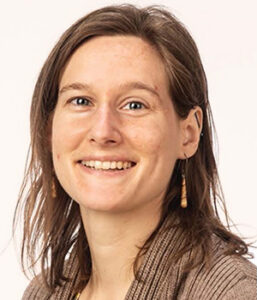
Aline Sartor Chicowski

Dr. Maeli Melotto is a professor and scientist at the University of California, Davis, where she has worked for the past nine years. Ever since she was an undergraduate in biology at São Paulo State University (UNESP), Brazil, Maeli knew she wanted to be a plant scientist. For her B.S. thesis, she surveyed biological nitrogen fixation efficiency in trees using a collection of native rhizobium isolates from local forests.

From that moment on, she has studied plant–microbe interactions. First, she worked on cowpea and soybean associations with rhizobia for her M.S. degree at

03Interview Melotto
Maeli Melotto

the University of São Paulo (USP), Brazil. For her Ph.D. thesis at Michigan State University (MSU), she worked on bean–Colletotrichum lindemuthianum interactions. Finally, during her postdoctoral training at the MSU-DOE Plant Research Laboratory, she worked on tomato and Arabidopsis interactions with the bacterium Pseudomonas syringae.

When she started her lab, first at the University of Texas in Arlington in 2008 and then at UC Davis in 2014, she expanded her research interests to study plant colonization by human bacterial pathogens. She chose to work with Escherichia coli O157:H7 and Salmonella enterica because they are the top microbial contaminants of freshly consumed foods in the United States and the world. Besides, “UC Davis is a perfect location to carry out projects focused on solving this problem that affects the national and international fresh produce market. Leafy greens production in California accounts for 70–80% of the national market, and multiple foodborne disease outbreaks have originated in the field,” she explained.

Her main research goal is to uncover the mechanisms that allow these bacteria to survive and multiply in healthy leaves using lettuce and Arabidopsis as models. Even though these bacteria are not pathogenic on plants, lettuce and Arabidopsis serve as hosts for them and react to their presence. “At the molecular level, there are many similarities between Arabidopsis and lettuce responses to phytobacteria such as Pseudomonas syringae and these human pathogens,” she explained. Her group discovered that some lettuce cultivars mount a strong immune response (pattern-triggered immunity, or PTI) against O157:H7 and S. enterica, but other cultivars allow for bacterial growth, posing a greater risk for the occurrence of foodborne illnesses.

For Dr. Melotto, one of the most important discoveries in plant immunity during the past few years was the work by Matsumura et al. (2022): “Mechanosensory Trichome Cells Evoke a Mechanical Stimulus-Induced Immune Response in Arabidopsis thaliana.” This study explains the mechanosensory role of trichomes in Arabidopsis. Disease is the exception of all possible plant–microbe interactions, and many things happen on the leaf surface before a pathogen can internalize the leaf and damage internal tissues. “The leaf surface is an exposed, complex environment that plays a crucial role in protecting the plant from invaders. This work presented a fascinating story on how mechanical stimuli at the trichome triggers a wave of calcium signaling that triggers plant immunity systemically. It sounds like a danger-detecting antenna,” she said.

Dr. Melotto’s favorite paper is her first: “Development of a SCAR Marker Linked to the I Gene in Common Bean.” This article was a product of her overcoming scientific barriers and a turning point in her career. “It marked a point in time when molecular marker-assisted selection to improve disease resistance was the state-of-the-art for crop breeding,” she mentioned. The marker she developed is still useful to breeding programs focused on virus diseases. Her paper has been cited 239 times, including 2023 citations. “To me, that paper represents a molecular technology that made it to real applications towards developing genetically resistant, commercial cultivars of beans in many countries.”

Her favorite part of her job as a professor and scientist is to study the literature to fully interpret data from her research. She loves to write discussions and review articles to create a big picture and think about the next steps in science. “The desire to be a scientist came naturally, and, to this day, I can’t think of being anything else but a scientist,” she said. Maeli points out that the hardest part of her work is that it lies in the intersection of three major disciplines: molecular plant–microbe interactions, food science, and agronomy, “which do not have a history of working together,” she noted. “Our audience is highly diverse, and we must navigate through ‘discipline-specific vocabularies’ when communicating our science.”

When talking about challenges in her career, Dr. Melotto mentioned that her first biggest obstacle was overcoming the English language barrier, as her native language is Portuguese. She mentioned that it took her a while to start thinking in English and stop translating everything in her mind before speaking, “a tiresome task that any non-native English speaker will understand.” She also pointed out that the second biggest obstacle she had to overcome, and according to her “once in a while still is,” is to cope with “impostor syndrome.” Dr. Melotto advises someone starting their career to seek opportunities to ask questions of those they consider successful individuals and learn from their experiences. Maeli said she had excellent mentors who answered all the questions she had as they became relevant to each stage of her career. “I am very grateful to Dr. James D. Kelly, my Ph.D. advisor, and Dr. Sheng ​Yang He, my postdoctoral mentor, who guided me to be the best scientist I could be and helped me reach my potential,” she proudly said.

Ten years from now, Dr. Melotto hopes to have trained great scientists and advanced the knowledge of how hormonal signaling drives plant immune responses at the cell and tissue levels. “I would like to uncover new regulatory nodes that connect plant growth and defense, which could be used for metabolic engineering toward crop resilience under biotic stresses,” she explained.

When asked what being recognized as a Fellow of the American Association for the Advancement of Science (AAAS) means to her, she said, “I have never dreamt about receiving this honor. I am so very grateful to the anonymous person who nominated me. It still doesn’t feel like I deserve it, but I am happy to share this recognition with my advisees who contributed to the discoveries and publications from our lab.”​

InterView with Dr. Bing Yang

ISMPMI 285 2 1955560 removebg preview

Issue 1

2020

interactions

Did You Know

Ashley C. Nelson​

03InterView Nelson

 Ashley C. Nelson is a second year Ph.D. student in the Plant Pathology Department at North Dakota State University. She is working in Tim Friesen‘s lab, focusing on functional characterization of necrotrophic effectors in the Parastagonospora nodorum–wheat interaction.

03InterView Yang

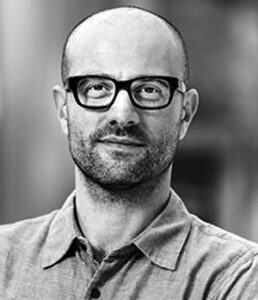
 Dr. Bing Yang currently holds a joint position as a principal investigator and member at the Donald Danforth Plant Science Center, as well as being a professor of plant science and technology at the University of Missouri–Columbia. His current research uses bacterial blight of rice as a model to understand the resistant and susceptible interactions between the host and pathogen. Dr. Yang’s group has used the bacterial blight–rice system to master genome-editing technologies for improvement in rice, as well as other crops, including wheat, sorghum, and soybean. Dr. Yang’s work led to the development of the Healthy Crops Project, which creates an opportunity to collaborate with labs worldwide to develop crop resistance in multiple host–pathogen combinations. Dr. Yang’s career work and dedication to science has been rewarded, as he was recently elected as a Fellow of the American Association for the Advancement of Science (AAAS).

Interview

Originally from China, Dr. Yang obtained his bachelor’s and master’s degrees from the Southwest Forestry University, where much of his effort was spent on trees. In 1995, he made his way to the United States as a Ph.D. student in the Department of Plant Pathology at Kansas State University, working with Dr. Frank White. In Dr. White’s lab, his project focused on bacterial blight of rice, and this interest in rice health continued even after obtaining his Ph.D. degree as Dr. Yang remained as a postdoc in the White lab for five more years. Working on rice hit home for Dr. Yang, since rice was a staple food source that is nutritious and essential for the daily diet for not only him and his family, but for much of China. This familiarity and passion continued when Dr. Yang took his first job as an assistant professor at Iowa State University. Wanting to ensure the health and productivity of rice, Dr. Yang continued his work on bacterial blight of rice and subsequently expanded into plant biology using genome editing, first with TALEN and then CRISPR. In 2018, he took a joint position with the Donald Danforth Plant Science Center and University of Missouri–Columbia, where his bacterial blight and genome-editing work continues.

Bacterial blight remains an important disease that is well studied and serves as a model for characterizing interactions to gain fundamental understanding of plant diseases. This understanding aids in the strategy of resistance engineering to make it applicable to other crops by presenting targets to engineer resistance and connect advanced biological techniques to solve real-world problems. Dr. Yang has observed these innovations unfold over his career and has had a direct impact through his Healthy Plants Project, which promotes international collaborations with groups focusing on various host–pathogen systems. Dr. Yang finds motivation in answering scientific questions that lead to new discoveries and technologies resulting in worldwide solutions. He believes that scientific discoveries are not due to individuals, but to collaborative efforts.

Dr. Yang is as excited as he was in the beginning by how science seemingly has no end and has some advice for young scientists navigating their early career. Dr. Yang outlines that identifying the root problem and formulating a scientific question is challenging, but just the beginning of a project. He stresses that answering the scientific question correctly, in a timely manner, and with integrity, while garnering public support are just as important as the question itself. Dr. Yang recommends working toward your passion and finding a way to collaboratively reach goals and find answers to the difficult questions. Dr. Yang also believes finding a mentor is critical, as the support and advocacy will be helpful throughout your career. Last, he encourages preparation, active participation, and networking at conferences to ensure a beneficial experience.

InterView with Dr. Cyril Zipfel

ISMPMI 285 2 1955560 removebg preview

Issue 1

2020

interactions

Did You Know

Amelia H. Lovelace


03InterView Lovelace

 Dr. Amelia H. Lovelace (she/her) is a postdoctoral researcher in Dr. Wenbo Ma‘s group at The Sainsbury Laboratory (TSL). Her current research focuses on characterizing effector proteins from the citrus greening pathogen ‘Candidatus Liberibacter asiaticus’. In general, she is interested in pathogenic bacterial interactions with plants. Amelia is an assistant feature editor for MPMI and enjoys sharing her passion for science communication with others.

Prof. Cyril Zipfel (he/him) is chair of Molecular and Cellular Physiology at the University of Zurich, Switzerland, and is a senior group leader at The Sainsbury Laboratory (TSL) in Norwich, UK. In general, his group studies immunity and signaling mediated by plant receptor kinases. He has been widely recognized for his contributions to the field of MPMI, including being elected to the European Molecular Biology Organization (EMBO) and being awarded the Charles Albert Shull Award from the American Society of Plant Biologists (ASPB) and the Tsuneko & Reiji Okazaki Award from Nagoya University, Japan.

I had the pleasure of interviewing Cyril. We discussed the evolution of his research interests throughout his career, as well as his approach to mentorship and his personal life. Cyril is a keynote speaker for the IS-MPMI Congress Meeting in Rhode Island, USA. The title of his talk is “Connecting the Dots of Surface Immune Signaling.”

03InterView Zipfel

Background

Prof. Zipfel’s path to studying plant immune signaling was a bit unorthodox. He started by studying biology at Strasbourg University in France and quickly switched to studying environmental science in Nancy in France, with the ultimate aim to study forestry, because his uncle and grandfather were both forest engineers. He was first introduced to plant signaling through a summer internship where he investigated the molecular biology of auxin signaling during mycorrhizal fungal interaction with trees. This experience inspired him to study molecular biology. He continued to work on auxin signaling during his M.S. degree studies at the University of Paris–Orsay. He was originally going to continue studying auxin signaling there for his Ph.D. program until he heard about an exciting international Ph.D. program at the Friedrich-Miescher Institute for Biomedical Research in Basel, Switzerland.
Prof. Zipfel received his Ph.D. degree in botany at The University of Basel working under Prof. Thomas Boller. In 2004, Cyril and colleagues discovered that the pattern recognition receptor (PRR) FLAGELLIN-SENSING 2 (FLS2)—the receptor for flg22, the highly conserved 22 amino acid epitope of bacterial flagellin—limits bacterial growth (Zipfel et al., 2004, Nature). This landmark discovery opened the flood gates to study additional pathogen-associated molecular patterns (PAMPs) and corresponding PRRs besides flagellin, such as EFR and its ligand elf18, the highly conserved 18 amino acid epitope of bacterial EF-Tu (Zipfel et al., 2006, Cell). During his Ph.D. studies, he collaborated with a student of Prof. Jonathon Jones, a senior group leader at TSL. At the time, he was excited by recent findings in animal innate immunity, such as Toll receptors, but after meeting Prof. Jones at a conference, he joined his group in 2005 for a postdoc, where he was funded by a long-term EMBO postdoctoral fellowship. In just two years, Cyril joined the ranks of his mentors and became a group leader at TSL and eventually a senior group leader (2011) and then head of TSL (2014). Prof. Zipfel expressed his gratitude for the respect and support of his mentors and colleagues during his transition from postdoc to group leader at TSL. In 2010, Prof. Zipfel’s group demonstrated just how powerful PRRs can be for breeding sustainable broad-spectrum disease resistance. More specifically, by transferring the Arabidopsis EFR into tomato, they were more resistant to a range of phytopathogenic bacteria (Lacombe et al., 2010, Nature Biotechnology).

In 2018, he moved his group to the University of Zurich, Switzerland, where he is now professor of Molecular and Cellular Plant Physiology. His lab currently supports two-dozen members across two institutes and countries (TSL and UZH). He describes his lab as more of a signaling lab than an MPMI lab, as this move has allowed him to participate in more interdisciplinary research. He currently collaborates with many colleagues, ranging from structural biologists to chemists to systems biologists, who have given him a more holistic approach to studying plant signaling.

Interview Summary

Prof. Zipfel’s success has been due, in part, to the tremendous support from his mentors. When asked how they have influenced his own mentorship style, Cyril stated that he takes aspects that work for him and his group. In academia, there, unfortunately, is generally little management training, and of the courses he has taken, he has learned to pick what fits best for him and his group based on an individual’s personality and project. Everyone has different needs, thus it is important to tailor your mentorship to each person. Now that his lab has expanded to around 25 members, he breaks down his group into 5 subgroups based on research topic. Within each group there is no team leader, but he always pairs a Ph.D. student with a postdoc to ensure that the students have someone on which they can rely. Given that his team is split between two different locations, he has subgroup meetings every other week and a long weekly lab meeting with his entire group.

It’s hard to believe that it has been almost 20 years since publishing his FLS2 Nature paper. What’s even more surprising is how much we still don’t know about plant innate immunity!

When asked to comment on this and identify research directions that he finds most exciting, Cyril stated that his lab is more interested in receptor kinases in general, which, yes, are involved in plant immunity, but are also involved in regulating other stress responses. There are still many mechanisms yet to be explored. This includes investigating the biochemical and structural biology of these receptor kinases, signaling and regulation of plant immunity cross-talk, execution function of immunity, stress-regulating signaling peptides, translational application of these receptors, and synthetic biology or bioengineering of these signaling pathways. His lab members are kept busy exploring all these diverse avenues. Cyril is impressed by the undergraduate students whom he could mentor in recent years as part of the UZH International Genetically Engineered Machine (iGEM) team. As many of these students are traditionally more attracted to biomedicine, Cyril gets joy out of showing them the power that plants can provide to the field of synthetic biology. As for what the future holds for plant signaling, he remarked that previous findings have used crude methods to answer general questions. He hopes to answer these same questions but in a more precise way. For instance, on a single-cell level how does one cell activate a stress response and signal to a neighboring cell? Developing technologies to achieve this precision will be key to advancing the field of plant immunity.

When asked if he has any advice for early-career researchers, he stated that there were three aspects in one’s work life that are important for success: 1) Having a project or research topic that excites you; 2) working with a mentor or group that you respect and that respects you; and 3) having a safe environment outside of work that can fulfill your other needs in life. Ideally, you want to have all three, but he cautions that if you have to compromise to only compromise on one. Which one you choose to compromise on depends on your own personality and needs. Prof. Zipfel is not immune to imposter syndrome either. He reflects on his feelings of early success in his career and remembers worrying whether he was just lucky. These thoughts fueled him to push further, and his work has provided a landscape for further discovery of plant immunity and plant signaling. Cyril strives for balance in his personal life. He enjoys cooking every day to decompress after work. He tries to not work on weekends (except when there is a tight deadline) and uses this time to listen to live music and explore cities around the world.

InterConnections: Get to Know Munir Nur and Kelsey Wood

ISMPMI 285 2 1955560 removebg preview

Issue 1

2020

interactions

Did You Know

MPMI banner700

EffectorO: Motif-Independent Prediction of Effectors in Oomycete Genomes Using Machine Learning and Lineage-Specificity​

04InterConnections Nur

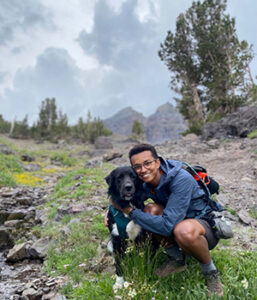
 Name: Munir Nur

Current Position: Software engineer, Big Data

Education: B.S. degree in computer science, concentration in computational biology, University of California, Davis

Nonscientific Interests: Cooking, hiking, reading, animals, plants, music​

Brief Bio: I grew up developing a keen interest in how we can build technology to better understand the world around us. Applications in ecology and agriculture specifically intrigue me, and as I learned more about computer science in my university studies, I became increasingly eager to apply it to the natural sciences. I soon dove into computational biology and bioinformatics courses, and I was fortunate to start working with Kelsey Wood in Dr. Richard Michelmore‘s lab at UC Davis, assisting with plant–microbe interaction research. I learned how to parse research papers, relevant background information about oomycetes, and how to apply academic knowledge to approach research problems. This opportunity allowed me to perform analyses and build tools for published research papers, and I’m grateful for the experience. I’m continuing a career in the data science field as an engineer and also helping to maintain the published tools we’ve built.

LinkedIn: www.linkedin.com/in/munir-nur

04InterConnections Wood

 Name: Kelsey Wood

Current Position: Postdoctoral scholar, Michelmore Lab, University of California, Davis

Education: B.A. degree in biology, Reed College; Ph.D. degree in integrative genetics and genomics, University of California, Davis

Nonscientific Interests: Music, poetry, art, fashion, travel, food, cats

Brief Bio: I grew up in Boise, ID, where I became fascinated with plants, animals, and mushrooms from a young age during camping trips and in the ecological habitat of my own backyard. I attended Reed College in Portland, OR, where I had my first taste of genomics research during my senior thesis on the behavioral genomics of cichlid fish with Dr. Suzy Renn. After graduation, I returned to Boise, where I began working with potatoes at a biotechnology company called Simplot Plant Sciences. This was my first introduction to the microscopic battle between plants and pathogens, which I found irresistibly exciting and led me to pursue a Ph.D. degree at UC Davis with Dr. Richard Michelmore, studying the interaction between lettuce and the lettuce downy mildew pathogen. I am continuing these studies as a postdoctoral scholar and look forward to a career in plant–microbe interaction research.

Twitter: https://twitter.com/klsywd

LinkedIn: www.linkedin.com/in/dr-kelsey-wood

Learn more about Munir and Kelsey’s fruitful collaboration in their InterView​.

InterConnections: Get to Know Stefan Sanow

ISMPMI 285 2 1955560 removebg preview

Issue 1

2020

interactions

Did You Know

MPMI banner700

Molecular Mechanisms of Pseudomonas Assisted Plant Nitrogen Uptake—Opportunities for Modern Agriculture

04InterConnections Sanow

 Name: Stefan Sanow

Current Position: JUMPA Ph.D. student, Root Dynamics Group, IBG-2, Forschungszentrum Jülich, Germany (Jülich–University of Melbourne Postgraduate Academy)

Education: M.S. degree in biotechnology at the University of Applied Sciences–FH Aachen (Campus Jülich), Germany; B.S. degree in biology at Heinrich-Heine University Düsseldorf, Germany

Nonscientific Interests: Videogames, music, traveling, nature, penguins

Brief Bio: I started my scientific journey in the group of Prof. Andreas Weber at Heinrich-Heine University, Düsseldorf, where (at that time) Privatdozentin Dr. Nicole Linka (now Prof. Linka) and Ph.D. student Björn Hielscher (now Dr. Hielscher) introduced me to plant biochemistry. During my B.S. thesis, I studied the colocalization of putative peroxisomal transporters, which further increased my interest in biology, especially molecular biology and plant science. As a result, I pursued my M.S. degree in biotechnology at FH Aachen (Campus Jülich). For my M.S. thesis, I worked with Dr. Borjana Arsova and Prof. Michelle Watt in the Root Dynamics Group at IBG-2, Forschungszentrum Jülich, and Prof. Ingar Janzik (FH Aachen). This is when I delved into studying the molecular mechanisms of plant–microbe interactions. While exploring the potential benefits of such interactions on plant performance, we encountered an unexpected development. The bacterium stock, sent to us by a colleague, was identified as a different strain than expected. Nonetheless, since the experiments showed promising results, I continued studying the new bacterium, which turned out to be a Pseudomonas strain. Another positive development occurred when I was offered a Ph.D. student position in the Jülich-Melbourne Postgraduate Academy (JUMPA) in 2019. This opportunity also included a one-year stay at the partner institution, the University of Melbourne in Victoria, Australia. Awesome! Additionally, I got an interdisciplinary supervisor team consisting of Dr. Borjana Arsova (IBG-2, FZJ), Prof. Pitter Huesgen (ZEA-3, FZJ), Prof. Michelle Watt (University of Melbourne), Prof. Ute Roessner (Australian National University), and Prof. Gabriel Schaaf (University of Bonn).

I accepted the offer without much hesitation, as I was already determined to understand the underlying mechanisms of plant–microbe interactions and wanted to utilize this time to optimize my studies. However, like everyone else, the outbreak of the COVID-19 pandemic in early 2020 brought about significant changes. Dealing with numerous restrictions, we decided to utilize the lockdown period to prepare a review on Pseudomonas–plant interactions, with a focus on the molecular mechanisms that increase nitrogen content in plants and the influence of the abiotic environment on this interaction.

Almost three years later, I finally had the opportunity to spend two months at the University of Melbourne. During this stay, I had the opportunity to interact with several great people, to learn about the challenges of untargeted lipid analyses (lipidomics), and to experience working on another continent. At the same time, I had the privilege of observing penguins (Eudyptula minor) in their natural habitat for the first time on Phillip Island, Victoria, Australia. I did not expect one of my childhood dreams to come true so quickly; thus, I had to adapt my plans: I now want to observe all penguin species in their natural habitats during my lifetime. Science makes this possible, as we are able to work on various continents. From my personal point of view, I highly recommend exchange programs for Ph.D. students, as it expands your perspective on the world, which also changes your perspective on science. Keep in mind that adapting to a new environment will take some time, so do not pack your schedule too tight (or you might miss your “penguins”)!

I have now reached a point where I can summarize the findings of the past few years and prepare to embark on my first postdoc position after completing my Ph.D. degree. Plant–microbe interactions offer interdisciplinary research opportunities that incorporate a variety of methods to unravel the molecular mechanisms involved. This makes the field particularly fascinating, as I can grow alongside the project and gain insights into various factors influencing this complex system.

Learn more about the research project in “Review Highlight: Molecular Mechanisms of Pseudomonas Assisted Plant Nitrogen Uptake—Opportunities for Modern Agriculture” by Borjana Arsova.

Review Highlight: Molecular Mechanisms of Pseudomonas Assisted Plant Nitrogen Uptake—Opportunities for Modern Agriculture

ISMPMI 285 2 1955560 removebg preview

Issue 1

2020

interactions

Did You Know

Borjana Arsova, Root Dynamics group, IBG 2- Plant sciences, Research center Julich, Julich, Germany

05ResSpot Arsova

Full disclosure: when as plant scientists our group started using microbes as a means to improve plan​​​t performance, I thought of them as a “means to an end.” Now I know this is naïve.

The Root Dynamics group in the Plant Sciences Institute in the Research Center in Jülich (IBG-2), Germany, mostly focuses on the plant response to beneficial microbes, and how plants adjust their metabolic pathways under suboptimal (nutrient) conditions, with and without these beneficial organisms. We observe that the nature of the interaction changes depending on the complex environment in which plants and microbes interact. We showed this, for example, in Kuang et al. (2022, Journal of Experimental Botany) and brought it into focus during the work presented here.


05ResSpot fig
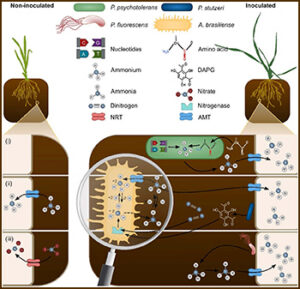
Conceptual figure of shared nitrogen biochemistry and transport across root and bacterial cells in the rhizosphere (Sanow e​t al., 2023; Fig. 3). ​Bacterial processes that impact plant N content. The left side represents plants growing with limited N, resulting in a decreased aerial biomass and increased root growth, whereas the right side represents potential plant growth-promoting mechanisms by Pseudomonas species that increase the aerial biomass under the same limited N conditions. Ammonium (NH4+) and nitrate (NO3) are taken up by the plant via dedicated transporters of the AMT and NRT families, respectively (left side, Bock and Wagner, 2001; Daims et al., 2015). PGPB increase availability of inorganic N to plants through the following mechanisms: (i) ammonification of organic N by P. psychrotolerans (Kang et al., 2020); (ii) P. stutzeri upregul​ating nif genes in A. brasilense via DAPG, resulting in the conversion of N2 into NH4+ (BNF) (Day et al., 2001; Combes-Meynet et al., 2011); and (iii) production and release of NH4+ by P. fluorescens (Zhang et al., 2012). Dashed lines indicate reactions from or to the bacterium that occur based on the concentration of each reaction product in the respective space and the pH of the environment.

The use of a particular Pseudomonas strain in our lab happened by chance. A colleague sent us a sample, which was supposed to be a Sinorhizobium sp. Their lab had indications of growth promotion, but the project had stopped for various reasons. We also found plant growth-promotion ability, but the phenotype of our plants differed from the preliminary results of our colleagues. The sequencing results showed this to be a Pseudomonas strain. However, the phenotype was interesting, and our Ph.D. student Stefan Sanow was getting promising results in plants grown under low-nitrogen conditions, so he kept working with the new bacterium. This led to the initial question: Are the known molecular mechanisms in plant–bacteria interactions general for all bacteria, or can they be subdivided for specific phylogenetic groups?

Thus, Sanow started compiling evidence about known processes relevant to the Pseudomonadaceae. We found that there are many indications of horizontal gene transfer, which can clearly be linked between different bacterial groups. At the same time there are some differences that seem to be genera specific. The review by Sanow et al. (2023) published in MPMI is the result of this work. We think that this is a novel perspective on this complex genus that could set an example for understanding other genera as well.

The team behind this review comes from three continents—Europe, Australia, and Asia—and, in addition to the research center in Jülich, includes the University of Bonn (Germany), the University of Melbourne (Australia), Australian National University (Australia), and Hunan University of Arts and Science (China).

Learn more about Stefan Sanow in his InterConnections article. 

MPMI Journal Publishes Special Focus Issue on a Critical, Emerging Area of Study

ISMPMI 285 2 1955560 removebg preview

Issue 1

2020

interactions

Did You Know

06WhatsNewMPMI FI2023

The recently published MPMI Focus Issue on The Plant Endomembrane System in Molecular Plant–​Microbe Interactions explores how microbes affect the plant endomembrane system and its role in plant disease, defense, and beneficial interactions.

Focus Issue Editors Tessa M. Burch-SmithAiming WangEunsook ParkHailing Jin, and Dong Wang are pleased to share a focus issue that discusses a critical aspect of plant–microbe interactions that will surely be an area of more intense research in coming years. Read all articles for free today!

Focus Issue Articles

Editor’s Pick: Arabidopsis Dynamin-Related Protein AtDRP2A Contributes to Late Flg22-Signaling and Effective Immunity Against Pseudomonas syringae Bacteria
Gayani Ekanayake, Michelle E. Leslie, John M. Smith, and Antje Heese

Manipulation of the Host Endomembrane System by Bacterial Effectors
Hyelim Jeon and Cécile Segonzac

Pathogen-Derived Extracellular Vesicles: Emerging Mediators of Plant–Microbe Interactions
Zhangying Wang, Jiayue Zeng, Jiliang Deng, Xiangjie Hou, Jiefu Zhang, Wei Yan, and Qiang Cai

A Close Look into the Composition and Functions of Fungal Extracellular Vesicles Produced by Phytopathogens
Marina F. Maximo, Taícia P. Fill, and Marcio L. Rodrigues

Extracellular Vesicles in the Arbuscular Mycorrhizal Symbiosis: Current Understanding and Future Perspectives
Samuel Holland and Ronelle Roth

Realizing the Full Potential of Advanced Microscopy Approaches for Interrogating Plant–Microbe Interactions
Kirk J. Czymmek, Keith E. Duncan, and Howard Berg

Medicago truncatula Cell Biology Resource: Transgenic Lines Expressing Fluorescent Protein–Based Markers of Membranes, Organelles, and Subcellular Compartments
Sergey Ivanov, Dierdra A. Daniels, and Maria J. Harrison

06WhatsNewMPMI FI2024

The MPMI editorial board also looks forward to the 2024 MPMI Focus Issue “Effectors at the Interface of Plant-Microbe Interactions.”

Learn more about publishing in this special issue.

Scroll to Top