|
Anjali Iyer-Pascuzzi has been named the new editor-in-chief of Interactions. Anjali is working with outgoing Interactions Editor-in-Chief Dennis Halterman as she transitions into her new role. Learn more about Anjali.
In May, we lost Dr. Michael Mishkind. In honor of Michael and his dedication to supporting the MPMI community, the IS-MPMI Board of Directors has established Michael Mishkind Travel Grants to support the travel of early-career researchers to IS-MPMI events.
The 20th IS-MPMI Congress was held in Providence, Rhode Island, on July 16–20, 2023. There were 762 attendees, representing 40 different countries, 33 plenary speakers and approximately 80 concurrent session speakers, awards, contests, new sessions, and more!
Guido Sessa (1964–2023)—A Pillar of Molecular Plant-Microbe Biology Research in Israel and Beyond
Professor Guido Sessa, plant-microbe biologist and former head of the School of Plant Sciences and Food Security, Tel Aviv University, died unexpectedly in July. Known for his research on the molecular basis of bacterial pathogenesis and plant immunity using multiple experimental systems, he was a respected colleague and cherished friend.
InterView with Dr. Simona Radutoiu
Alicia Camuel, Ph.D. student, Plant Health Institute of Montpellier, interviewed Simona Radutoiu, professor and group leader, University of Aarhus, Denmark, during breaks at the 2023 IS-MPMI Congress. The informal interview covered science and many other aspects of the life of a woman scientist, career choices, and building a personal life.
Introducing the H.H. Flor Distinguished Review in MPMI
Harold H. Flor’s gene-for-gene concept provided a new framework for how we think about plant–microbe interactions. Named in his honor, an H.H. Flor Distinguished Review is an invited review written by visionary scientists who have changed the way we think about an area of molecular plant–microbe interactions, providing both a historical perspective and a vision for where their respective field is moving.
Final Call for Papers! Submit Your Research on Effectors
Don’t miss the chance to have your latest findings on effectors published in the open access MPMI Focus Issue “Effectors at the Interface of Plant–Microbe Interactions.” Submissions are due by the end of September 2023.
Read the Newest MPMI Editor’s Pick and Register for Upcoming Virtual Seminars
Discover the recently published MPMI Editor’s Pick by Joshua MacCready et al., who used genomic and transcriptomic data to provide insights into how Phyllachora maydis invades corn. Plan to attend upcoming “What’s New in MPMI!” online seminars highlighting trending MPMI papers. These virtual seminars are free to attend and open to anyone.
|
|
We are always looking for content for Interactions. Please contact Interactions Editor-in-Chief Anjali Iyer-Pascuzzi with questions or article ideas.
|



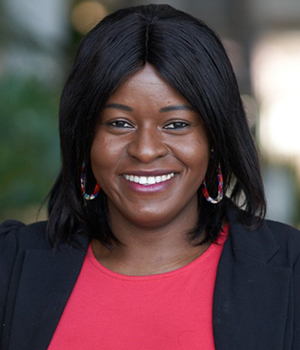
I realized the world is mine. I can do whatever I want. But I still experience intimidation and fear being in a scientific field because communication is not accessible in that context. And so, I was deciding whether I should pursue my education in biochemistry or in another field, and someone said to me, ‘Go forth with your education in whatever field you want.’
—Dr. Amie Fornah Sankoh
In a new episode of Microgreens, the MPMI journal podcast, Dr. Tiff Mak and Dr. Dominique Holtappels interview Dr. Amie Fornah Sankoh, who highlights the importance of mentorship and disability justice in science. Amie shares her journey to becoming the first deaf, black woman to receive a doctorate in a STEM (science, technology, engineering, and math) discipline in the United States.
A full transcript to the audio recording of the interview can be found here. A video version of the recording will be released later for audiences to experience and engage with Amie through sign language.


Hasna Boubakri presented “A Nonspecific Lipid Transfer Protein with Potential Functions in Infection and Nodulation”

Hyelim Jeon and Cécile Segonzac presented “Manipulation of the Host Endomembrane System by Bacterial Effectors”

Sajjan Grover presented “Dichotomous Role of Jasmonic Acid in Modulating Sorghum Defense Against Aphids”

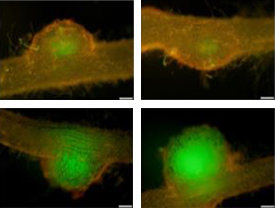
Exploring the role of O-antigen in rhizobium–legume symbiosis, Zhide Tang and colleagues constructed a deletion mutant of MCHK_1752, a lipopolysaccharide (LPS) O-antigen polymerase gene in Mesorhizobium huakuii.
The inoculation of six Astragalus sinicus accessions with MCHK_1752 resulted in highly different symbiotic phenotypes in the accessions, indicating that this O-antigen synthesis gene affects the symbiotic compatibility between M. huakuii and A. sinicus during symbiotic nitrogen fixation.
This study provides new insights into the important role of LPS in the establishment of symbiotic nitrogen fixation systems and lays the foundation for further dissection of the molecular mechanism underlying rhizobium–legume symbiotic nitrogen fixation.
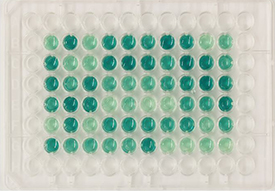
Eeva Marttinen and colleagues screened part of the Physcomitrium patens mutant collection to elucidate the pathway of peroxidase activity in response to chitosan treatment.
Screening of 385 plants for reduced extracellular peroxidase activity enabled the identification of candidate plants with altered responses to chitosan treatment and ultimately led to the discovery of a Rossmann fold protein in P. patens.
This study suggests that the NAD(P)-binding Rossmann fold protein is involved as a novel player in the pathway leading to increased peroxidase activity after chitosan treatment and normal expression of lipoxygenase (LOX)—indicating a complex regulation of the defense response against pathogens in this species of moss.
I realized the world is mine. I can do whatever I want. But I still experience intimidation and fear being in a scientific field because communication is not accessible in that context. And so, I

was deciding whether I should pursue my education in biochemistry or in another field, and someone said to me, ‘Go forth with your education in whatever field you want.’
—Dr. Amie Fornah Sankoh
In a new episode of Microgreens, the MPMI journal podcast, Dr. Tiff Mak and Dr. Dominique Holtappels interview Dr. Amie Fornah Sankoh, who highlights the importance of mentorship and disability justice in science. Amie shares her journey to becoming the first deaf, black woman to receive a doctorate in a STEM (science, technology, engineering, and math) discipline in the United States.
A full transcript to the audio recording of the interview can be found here. A video version of the recording will be released later for audiences to experience and engage with Amie through sign language.

Hasna Boubakri presented “A Nonspecific Lipid Transfer Protein with Potential Functions in Infection and Nodulation”
Hyelim Jeon and Cécile Segonzac presented “Manipulation of the Host Endomembrane System by Bacterial Effectors”
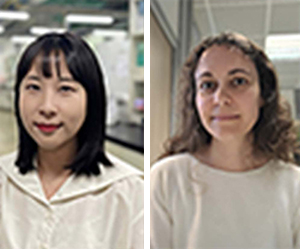
Sajjan Grover presented “Dichotomous Role of Jasmonic Acid in Modulating Sorghum Defense Against Aphids”


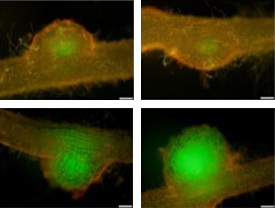
Exploring the role of O-antigen in rhizobium–legume symbiosis, Zhide Tang and colleagues constructed a deletion mutant of MCHK_1752, a lipopolysaccharide (LPS) O-antigen polymerase gene in Mesorhizobium huakuii.
The inoculation of six Astragalus sinicus accessions with MCHK_1752 resulted in highly different symbiotic phenotypes in the accessions, indicating that this O-antigen synthesis gene affects the symbiotic compatibility between M. huakuii and A. sinicus during symbiotic nitrogen fixation.
This study provides new insights into the important role of LPS in the establishment of symbiotic nitrogen fixation systems and lays the foundation for further dissection of the molecular mechanism underlying rhizobium–legume symbiotic nitrogen fixation.
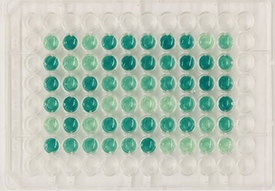
Eeva Marttinen and colleagues screened part of the Physcomitrium patens mutant collection to elucidate the pathway of peroxidase activity in response to chitosan treatment.
Screening of 385 plants for reduced extracellular peroxidase activity enabled the identification of candidate plants with altered responses to chitosan treatment and ultimately led to the discovery of a Rossmann fold protein in P. patens.
This study suggests that the NAD(P)-binding Rossmann fold protein is involved as a novel player in the pathway leading to increased peroxidase activity after chitosan treatment and normal expression of lipoxygenase (LOX)—indicating a complex regulation of the defense response against pathogens in this species of moss.
Molecular Plant-Microbe Interactions is seeking postdoctoral volunteers to fill “assistant feature editor” positions for a duration of two years. The application submission deadline is February 14, 2024.
MPMI is looking for creative, innovative communicators who are eager to volunteer their time to engage with both the scientific and nonscientific communities in accessible ways. As an assistant feature editor, you will be part of a journal editorial team, see the inner workings of the MPMI journal, develop a unique science communication project highlighting your talents, and interact with the diverse MPMI scientific community.
These positions, suitable for highly engaged postdoctoral fellows who would like to gain experience and behind-the-scenes knowledge of publishing in MPMI, involve development of multimedia (written, audio, video, etc.) communications within your areas of interest and mentorship in areas outside of your current lab environment. We anticipate a commitment of approximately 10–15 h/month, realizing that there will be some variability each month depending on the projects the assistant feature editor chooses.
MPMI values the diversity of our community and is seeking assistant feature editors who will contribute to equity and inclusion through their projects. A key role of assistant feature editors is amplifying the impact of our research publications through multimedia content creation, targeting different audiences in an inclusive way.
Assistant feature editors create their own niche based on their interests, skills, and ideas in diverse areas of nonscientific and scientific community engagement, including, but not limited to
- Writing online research summaries
- Highlighting articles on X (formerly Twitter) or other social media platforms
- Interviewing authors and working with our staff amplification specialist to write news stories and press releases for a nonscientific audience
- Writing MPMI commentaries highlighting articles published in MPMI
- Being mentored by MPMI senior editors in manuscript review
New assistant feature editors will likely contribute to current projects and tasks but are also encouraged to suggest and initiate novel ways to promote MPMI and its content.
Assistant feature editors work closely with the editor-in-chief and associate editor-in-chief, as well as with other senior editors and members of the journal marketing staff. These interactions, as well as interactions with authors and the greater community, provide additional opportunities for networking with scientists beyond the connections formed based on their research.
To apply, provide the following to MPMI Editor-in-Chief Tim Friesen:
- One-page cover letter outlining your research focus area and current position; expertise; and interest in this position, including the following areas as applicable to you:
- Experience with social media, writing, and other forms of communication
- Experience working to promote diversity, equity, and inclusion within or outside the scientific community
- Engagement with aspects of science beyond your own research
- Participation in, or leadership of, communication projects for a nonscientific audience (describe the target audience and strategy for engagement)
- Current CV
- Contact details for two professional references
- A short, nontechnical communication sample based on any recent publication from the MPMI journal
Applications are due by February 14, 2024, and will be reviewed on a rolling basis until all positions are filled. Apply today!
Molecular Plant-Microbe Interactions is seeking postdoctoral volunteers to fill “assistant feature editor” positions for a duration of two years. The application submission deadline is February 14, 2024.
MPMI is looking for creative, innovative communicators who are eager to volunteer their time to engage with both the scientific and nonscientific communities in accessible ways. As an assistant feature editor, you will be part of a journal editorial team, see the inner workings of the MPMI journal, develop a unique science communication project highlighting your talents, and interact with the diverse MPMI scientific community.
These positions, suitable for highly engaged postdoctoral fellows who would like to gain experience and behind-the-scenes knowledge of publishing in MPMI, involve development of multimedia (written, audio, video, etc.) communications within your areas of interest and mentorship in areas outside of your current lab environment. We anticipate a commitment of approximately 10–15 h/month, realizing that there will be some variability each month depending on the projects the assistant feature editor chooses.
MPMI values the diversity of our community and is seeking assistant feature editors who will contribute to equity and inclusion through their projects. A key role of assistant feature editors is amplifying the impact of our research publications through multimedia content creation, targeting different audiences in an inclusive way.
Assistant feature editors create their own niche based on their interests, skills, and ideas in diverse areas of nonscientific and scientific community engagement, including, but not limited to
- Writing online research summaries
- Highlighting articles on X (formerly Twitter) or other social media platforms
- Interviewing authors and working with our staff amplification specialist to write news stories and press releases for a nonscientific audience
- Writing MPMI commentaries highlighting articles published in MPMI
- Being mentored by MPMI senior editors in manuscript review
New assistant feature editors will likely contribute to current projects and tasks but are also encouraged to suggest and initiate novel ways to promote MPMI and its content.
Assistant feature editors work closely with the editor-in-chief and associate editor-in-chief, as well as with other senior editors and members of the journal marketing staff. These interactions, as well as interactions with authors and the greater community, provide additional opportunities for networking with scientists beyond the connections formed based on their research.
To apply, provide the following to MPMI Editor-in-Chief Tim Friesen:
- One-page cover letter outlining your research focus area and current position; expertise; and interest in this position, including the following areas as applicable to you:
- Experience with social media, writing, and other forms of communication
- Experience working to promote diversity, equity, and inclusion within or outside the scientific community
- Engagement with aspects of science beyond your own research
- Participation in, or leadership of, communication projects for a nonscientific audience (describe the target audience and strategy for engagement)
- Current CV
- Contact details for two professional references
- A short, nontechnical communication sample based on any recent publication from the MPMI journal
Applications are due by February 14, 2024, and will be reviewed on a rolling basis until all positions are filled. Apply today!
Pritha Kundu
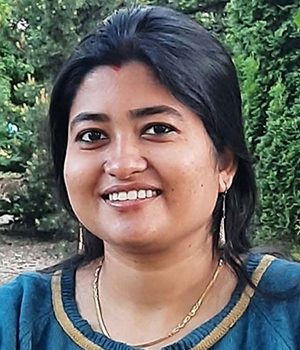
Pritha Kundu is currently a postdoctoral fellow at the University of Nebraska-Lincoln (UNL), USA, with Prof. Joe Louis, investigating the molecular intricacies mediating crop defense physiology against a wide range of pests, with particular interest in the monolignol biosynthetic pathway. She pursued her Ph.D. degree from the Indian Institute for Science, Education and Research (IISER-Kolkata) in wheat fungal pathogenesis, deciphering the phytohormonal crosstalk and the regulatory transcription factors providing resistance. Later, she moved on to study insect calcium signaling and the role of different calcium nucleotide gated channels (CNGCs) and their interaction with the eATP receptor molecule, DORN1 in Arabidopsis–Spodoptera litura herbivory with Dr. Jyothilakshmi Vadassery at the National Institute of Plant Genome Research (NIPGR), New Delhi, India. Her major interest lies in deciphering the key components of the plant defense system that modulates its growth-defense trade off against pests and pathogens.

Adam Bogdanove is presently a professor in the Department of Plant Pathology and Plant-Microbe Biology at Cornell University, with a major research focus on understanding the TAL effectors and their targets in diseases of rice and other crop plants caused by Xanthomonas spp. TAL effectors are those transcription factors that are injected by the bacterium into the host cell, which in resistant host varieties target genes that block disease progression. Bogdanove was one of the discoverers of the modular mechanism by which the TAL effectors recognize specific DNA sequences (the others being co-author Matthew Moscou and, in a simultaneous publication, a group led by Jens Boch and Sebastien Schornack in Ulla Bonas’ lab at the time). Bogdanove’s lab also established computational models to identify key TAL effector binding sites in complex plant genomes. With more than 62 publications and 21,000 citations, Bogdanove also helped pioneer the use of TAL effectors as customizable DNA-targeting tools for applications like targeted gene regulation and genome editing.
It was my pleasure to host an interview with Prof. Bogdanove, which is detailed below, and I want to thank MPMI for this exclusive opportunity.
My interest in Prof. Bogdanove’s long journey from Yale to Japan—he was an English instructor there—to Purdue, Iowa, and now Cornell prompted me to ask him whether it was a strategic move or happened one move after another. Bogdanove remembered his years in Japan as very formative, and he decided then to start his work on a long-standing interest in environmental protection and a newfound interest in agriculture and biotechnology and sort of merge the two in the late 1980s. At this inflection point in a field like plant pathology, plant breeding was interested in generating innovations that would ultimately reduce our dependence on agrochemicals. The intensive, but limited, agricultural facilities (limited land), triggered in him the interest to apply for graduate school at Cornell University. When questioned about the struggles of life as a Ph.D. student, he mentioned that his rotation across three amazing labs at Cornell helped him immensely in choosing his Ph.D. lab, which had successfully purified the first microbial elicitor for hypersensitive reaction. He also mentioned that it was quite challenging to raise his three kids during graduate school but that the process was made smooth by his wife. He was particularly driven by some exciting ideas for research that kept him moving forward.
When asked about his entry into the field of TAL effectors and being one of the pioneers, he remembered the tremendous influence rice pathologist and friend Jan Leach had, the then recently published fully sequenced rice genome, and his strong interest in studying tissue specificity in plant–pathogen interactions. He decided to study the interactions of rice with the two pathovars (vascular and nonvascular) of X. oryzae—pv. oryzae and pv. oryzicola—infecting different plant tissues. His scientific interest revolved around two questions:
- What determines tissue trophism for bacterial pathogens and plants?
- Does the plant respond differently to these two pathovars?
He further developed an inoculation method for both pathovars and examined the differences that these pathovars had on reprogramming the plant transcriptome. The challenge was to connect the bacterial effectors to their targets, which led him to study the comparative genomics on the pathogen side and specifically to the detailed study of the largest effector family found in Xanthomonas spp., the AvrBs3/PthA or TAL (transcription activator-like) family. He then moved on to study individual TAL effectors targeting individual host genes, which ultimately led to the mechanism for TAL effector binding specificity. At a later stage, Bogdanove collaborated with Dan Voytas and others to develop TAL effector-based targeted nucleases for genome editing.
Bogdanove also suggested that being mindful and intentional helps in developing a research group with a strong foundation of research interests that keeps you moving. “Science is a social enterprise”; thus, building a strong network to gain information and facilitate collaborations is definitely helpful in the long run. When questioned about the struggles he faced while running his lab, he emphasized the importance of giving the freedom to young enthusiasts to be intellectual drivers who share the same interests and getting the lab funded. “Research can be stressful at times”; thus, he mentioned the acute importance of providing a healthy lab environment. Drive, curiosity, and intellectual leadership are essential components in each member that determine the success of an enterprise. An important challenge he faced was retraction of an article from his group, and he stressed the imperative to correct the literature openly and the importance of eliminating any stigma related to it.
When questioned about the critical factors in running a lab successfully, he emphasized the importance of creating a space in which people feel free to be critical of one another. Valuing one another’s views is another important component that determines team success—the idea that everyone must critically look through the data and then give critical feedback. “There is an increased tendency to get medals for everyone,” which he suggests is a generational issue and that we should be critical of our data and maintain a balance. He also stressed that celebrating lab successes and milestones together help you develop as a group.
When asked about work–life balance, he mentioned that’s been very easy for him. He mentioned his family to be his most important hobby, besides gardening and hiking. He loves to spend quality time with his family. Presently, he is basking in the happiness of having his first 6-week-old grandchild.
When asked about the key advice he has for the scientific community, he suggested that we follow our dreams. To do something that wakes you up in the morning and does not let you sleep at night (“sometimes”). Something that interests you. Science is not a profession to pursue if you have no passion for it. Try to engage with the community and seek out help and be open with the science that you perform. Scientists all over the world are advocating for open science, which is essential for the development of the global scientific community. We are working together in this world to pull each other up, as he mentioned that our mentors and mentees should be our examples. He suggested all early-career researchers be an example for their mentees.
Altogether, it was a wonderful experience to interview Dr. Bogdanove, the new IS-MPMI president and be enlightened by his ideas for working together in a collaborative environment and being open with our science and scientific community as a whole.