
Join us at the IS-MPMI Congress, July 13–17, 2025, at the Confex Conference and Exhibition Centre in Cologne, Germany, for groundbreaking research, sessions, and dialogues on molecular plant-microbe interactions. Stay tuned for updates!


Join us at the IS-MPMI Congress, July 13–17, 2025, at the Confex Conference and Exhibition Centre in Cologne, Germany, for groundbreaking research, sessions, and dialogues on molecular plant-microbe interactions. Stay tuned for updates!

Recordings of presentations given at the 2023 IS-MPMI Congress are available to all members and those who registered to attend the congress. Explore what you missed!
IS-MPMI is part of Root & Shoot, a Research Coordination Network (RCN) that is leading cultural change in plant science through professional societies. Root & Shoot aims to create a culture of support in the plant sciences and is currently developing a cohort-based training program in culturally aware mentorship. Learn more about Root & Shoot and available opportunities.
Congratulations to Dr. Jijie Chai and Dr. Jian-Min Zhou, winners of the 2023 Future Science Prize in Life Sciences in China! Dr. Chai and Dr. Zhou won this prestigious award for their discovery of resistosomes and were recently honored at a ceremony in China.
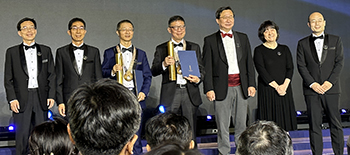
The Future Science Prize recognizes scientific breakthroughs in life science, physical science, and mathematics/computer science. The prize was initiated in 2016 by the Future Forum, a nonprofit organization based in mainland China. Learn more.
Jijie Chai was born in Liaoning, China, in 1966. He received his Ph.D. degree from the Institute of Materia Medica, Chinese Academy of Medical Sciences and Peking Union Medical College in 1997.
Jian-Min Zhou was born in Sichuan, China, in 1964. He received his Ph.D. degree from Purdue University in 1994.

Border Control: Manipulation of the Host–Pathogen Interface by Perihaustorial Oomycete Effectors
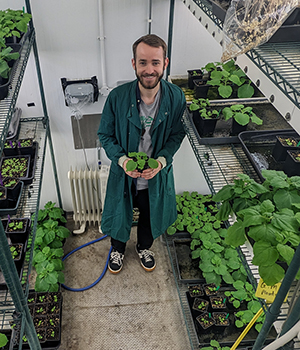
Name: Freddie King
Current Position: Ph.D. Student in the Bozkurt Lab at Imperial College London
Education: M.Res. degree in synthetic and systems biology from Imperial College London; M.Biol. degree in biological sciences from Balliol College, University of Oxford
Non-scientific Interests: Climbing, running, and reading
Brief Bio: My first experience of molecular plant pathology was at Rothamsted Research Station, where I undertook a summer internship in Professor Kim Hammond-Kosack‘s group. At Rothamsted, I worked on developing genetic resistance against Fusarium head blight, a fungal disease that still poses a significant threat to global cereal production.
At the University of Oxford, I joined Professor Renier van der Hoorn‘s group for my master’s project to improve plant molecular farming. Plant molecular farming uses plants as biofactories to produce valuable pharmaceutical proteins, such as antibodies and enzymes. I investigated using pathogen effectors to suppress the plant immune system and boost plant molecular farming yields.
My current Ph.D. project in Dr. Tolga Bozkurt‘s lab at Imperial College London combines my interests in synthetic biology and molecular plant pathology. I am working toward engineering plant immune receptors, using synthetic biology approaches and structural modeling, to recognize new pathogen effectors.
In our review published in MPMI, we discuss effectors from oomycete plant pathogens that accumulate near the haustorium, a specialized digit-like pathogen feeding structure.
By summarizing the current literature on perihaustorial effectors, we found that many perihaustorial effectors convergently target host endomembrane trafficking to suppress the plant immune response at this crucial interface.
Three-Dimensional Ultrastructure of Arabidopsis Cotyledons Infected with Colletotrichum higginsianum
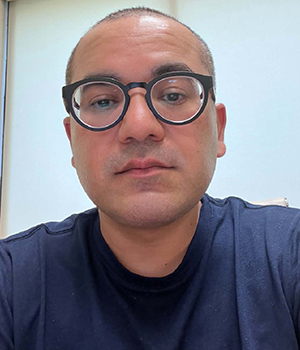
Name: Kamesh Regmi
Current Position: Assistant Professor, Kenyon College (Gambier, Ohio)
Education: B.A. degree, Reed College; Ph.D. degree, Arizona State University
Non-scientific interests: Visual media
Brief Bio: I grew up in Nepal and arrived at Reed College to pursue my college education, graduating with a degree in biology. Then I met Dr. Roberto Gaxiola on a visit to Arizona State University (ASU) and was immediately fascinated by the mechanisms of photosynthate transport in phylogenetically diverse lineages of plants. During my pursuit of a Ph.D. degree at Dr. Gaxiola’s lab, I studied sugar transport and partitioning in a vascular monocot rice and a nonvascular moss, Physcomitrium, and showed that the molecular toolkit required for sugar transport evolved before phloem itself. Overall, trying to understand how structure recapitulates function in the biological universe has been the primary driving force of my research. I ultimately landed as a postdoctoral researcher in Dr. Roger Innes‘ lab at Indiana University, where I optimized and utilized state-of-the-art imaging methods like serial block-face and focused ion beam scanning electron microscopy to elucidate and reconstruct the three-dimensional ultrastructure of various Colletotrichum fungi in the process of infecting host plants like Arabidopsis, sorghum, and Medicago. Last summer, I moved to Kenyon College, a small, primarily undergraduate, liberal arts institution, to establish my own plant biology lab. At Kenyon, I have really enjoyed teaching a wide array of classes—ranging from introductory labs and lectures to upper-division courses in plant physiology and pathology. Specifically, integrating hypothesis-driven, research-oriented, publication-quality science in the classes that I teach to highly motivated undergraduate students has been a rewarding experience.

Name: Thomas Waksman
Current Position: Postdoctoral Research Assistant, Bos Group, Department of Plant Sciences, University of Dundee, UK
Education: Master’s degree in biochemistry, University of Oxford; Ph.D. in plant science, University of Glasgow
Non-scientific Interests: Nature, hiking, music
Brief Bio: My passion for nature, science, and the environment came from my parents, education, and hiking activities. From an early age, I thought I would like to be a biologist, and I enjoyed math and chemistry, so I studied for a biochemistry degree. My research activities have focused on protein structure and interactions, plant-microbe interactions and environmental signaling.
During my master’s research project, I was involved in determining the structure of the UDP-glucose:glycoprotein glucosyltransferase (UGGT). UGGT is the glycoprotein folding quality-control checkpoint in eukaryotes—it transfers glucose to short glycans in misfolded glycoproteins, causing retention and refolding of these incorrect proteins in the endoplasmic reticulum. UGGT must be able to interact with misfolds and glucosylate glycans in any misfolded glycoprotein, covering a very wide range of protein structures—this interactive adaptability is intriguing from a protein structure perspective. Multiple crystal structures of UGGT suggested how interdomain conformational flexibility allows the enzyme to cover a great range of misfold-to-glycan distances.
Initially, I wanted to pursue a Ph.D. degree in protein structure and molecular machines. However, an inspiring summer project about nitrogen-fixing symbiosis in the group of Prof. Sharon Long at Stanford University, as well as a growing desire to work in a nature and environment context, led me to plant molecular biology research. During my Ph.D. program, I investigated blue-light signaling in Arabidopsis in Prof. John Christie‘s group at the University of Glasgow. I developed a novel in vitro phosphorylation assay method for phototropin (phot) blue-light receptor kinases, based on “gatekeeper” technology in which a kinase is engineered to use an enlarged ATP analogue. Gatekeeper-engineered Arabidopsis phot was expressed in a cell-free system and used to identify thiophosphorylate substrate candidates, which is detected by immunoblotting. I discovered that NPH3/RPT2-like proteins, known to be key signaling components since phot was discovered in the 1990s, are in fact phot substrates. Phosphorylation of a conserved phosphorylation site at the protein C-terminus contributes to blue-light response in plants.
I am now finally combining my main research interests as part of the APHIDTRAP project in the group of Jorunn Bos at the University of Dundee. My aim is to determine the structure of protein complexes comprised of aphid effectors and plant-host target proteins. For my article published in the MPMI Focus Issue on effectors, properties (including structure) of effector candidate proteins found in green peach aphid saliva were computationally predicted. We realized that many of these proteins are relatively unknown to science, unpredictable, and probably contain intrinsic disorder in their structure. Some of these unusual proteins have effector activity, so I intend to study those. I would like to use mass spectrometry methods to determine the structure of the effector-target complexes at medium to high resolution, followed by computational modeling to achieve accurate structures. X-ray crystallography or electron microscopy can be used to determine high-resolution structure if necessary, after removal of disordered regions.
As part of University of Dundee Plant Sciences, I am affiliated with the James Hutton Institute, which exposes me to diverse biological science approaches applied to agriculture and the environment. In addition, volunteering in the United Kingdom’s invasive tree disease observation program (Observatree) has reinforced my regard for environmental monitoring and nature restoration. In the future, I hope to do research in the MPMI area, linking the evolution of interspecies protein complexes to ecosystems and engineering plant resistance to insect effectors for agricultural application.

Despite recent advances in molecular tools and genome sequencing, cereal crop diseases remain a significant challenge to global food security. Yield losses each year from fungi, bacteria, oomycete, viruses, and nematodes need substantial economic investment and impact the world’s poorest populations disproportionately. Climate change exacerbates the problem, altering pathogen ranges, allowing the spread of existing plant diseases into new growing areas while facilitating the emergence of new pathogenic strains. Global trade compounds the challenge of pathogen spread. Thus, there is a pressing need for a detailed understanding of the biology of cereal crop diseases, with an expectation that this will identify plant strengths and weaknesses that can be exploited to safeguard grain sources.
In this MPMI Focus Issue, we seek to draw together, through reviews and original research papers, the contemporary developments in understanding staple cereal crops and their pathogens. We encourage papers focused on pathogen, host biology, or both. Investigations should be at the molecular, cellular, and/or genomic level and may include studies of effector function and evolution, plant receptors, and pathogen physiology, as well as signal transduction. Both the topic and pathosystem of study are intended to be broad in order to best capture this important field of study. Our goal is that this issue will highlight potential solutions and significant breakthroughs in cereal crop disease research, as well as identify important knowledge gaps, that will guide future studies and ultimately foster the implementation of meaningful management practices.
Focus Issue Editors Lida Derevnina, Ksenia Krasileva, Benjamin Schwessinger, and Richard Wilson look forward to receiving your manuscripts addressing this globally important research area.
Submission Deadline: September 30, 2024
Submit a Manuscript | Instructions to Authors
A Focus Issue offers authors several benefits. A single-topic issue gives scientists an opportunity to publish alongside the related work of their peers to highlight progress in a focal area. This MPMI Focus Issue will be widely promoted and is expected to be highly cited, giving authors maximum exposure.
Papers will be submitted to Crossref, allowing citation tracking and connectivity as this research area moves forward in MPMI and other scientific journals. MPMI is indexed by PubMed, Web of Science, AGRICOLA, and Scopus, and all content is open access for readers. MPMI is approved by the Directory of Open Access Journals (DOAJ) and meets gold open access grant funding requirements.
If you are working on research described herein, submit your manuscript to MPMI and select “Focus Issue” as the article type. Please also indicate in your cover letter that you would like your manuscript to be considered for the 2025 Focus Issue.
For more information about the scope of this issue, please contact MPMI Editor-in-Chief Tim Friesen.

Zitong Yang, Gan Ai, Xinyu Lu, Yuke Li, Jinlu Miao, Wen Song, Heng Xu, Jinding Liu, Danyu Shen, and Daolong Dou
Yang et al. show how the Phytophthora sojae effector PsCRN108 suppresses plant immunity by inhibiting the expression of Heat Shock Protein (HSP) family genes, including NbHSP40, through interaction with NbCAMTA2, a negative regulator of plant immunity, shedding light on a new mechanism by which CRN effectors manipulate transcription factors to impact immunity.
Read Amelia Lovelace’s commentary about this Editor’s Pick.

Unlocking Nature’s Defense: Plant Pattern Recognition Receptors as Guardians Against Pathogenic Threats
In the February issue of Molecular Plant–Microbe Interactions, the second of the H.H. Flor Distinguished Reviews has been published, written by Chao Zhang, Yingpeng Xie, Ping He, and Libo Shan.