Category: Issue 2 •​ 2021​

Melania Figueroa: 2018 APS Syngenta Award

ISMPMI 285 2 1955560 removebg preview

Issue 3

2018

interactions

Did You Know

Melania Figueroa, University of Minnesota, is the 2018 recipient of the APS Syngenta Award. This award is given by Syngenta Crop Protection to an APS member for an outstanding recent contribution to teaching, research, or extension in plant pathology. Priority for this award is given to APS members who are in the first decade of a career in plant pathology.

Melania Figueroa Award

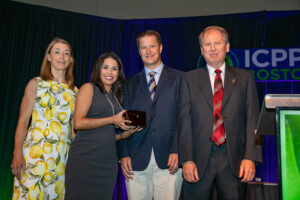
Melania Figueroa, second from left, receives the APS Syngenta Award at ICPP2018

What area(s) of molecular plant–microbe interactions do you feel your research has impacted most?

I feel that my research has influenced two areas: first in nonhost resistance, and second in understanding the genomics of complex pathogens. As a post-doc, I started developing Brachypodium distachyon as a system to understand the boundaries of plant susceptibility to Puccinia graminis f. sp. tritici (wheat stem rust). Rust fungi pose a significant constraint to the production of small grains, such as wheat, barley, and oat. The potential to utilize this fungal species to engineer disease resistance to rust and define the molecular mechanisms that dictate whether a plant will serve as a host is fascinating. Through this work, I have had the pleasure to work with a network of scientists who have made important contributions in developing genetic and genomic resources in B. distachyon to enable studies like those pursued in my laboratory. As an assistant professor, I have since worked on decoding the complex genomes of rust fungi, which are dikaryotic organisms and possess two quite diverse nuclear genomes. I have had the opportunity to direct my group to address critical challenges to generate genome references for rust fungi that allow comparisons of both nuclei. This work has been crucial to understanding the genetic diversity between both haplotypes, which has important implications for the evolution of virulence. In this research area, I have been very fortunate to work excellent scientists to discover the first effector gene in a cereal rust.

What advice do you have for young scientists aspiring to achieve the level of science that has major impact?

An important step to achieve impactful science is first to identify an area of research that addresses a real gap in understanding and can change the way we think or deliver a solution to a problem that affects many of us. I also believe it is important that we are truly passionate about our work, so choose a topic that really interests you. Curiosity, creativity, and persistence are essential qualities. We should always remember that there is always a way to test a hypothesis; it is just a matter of finding how and being open-minded about alternative possibilities.  We should always let the science be our guide. I advise young scientists to not be afraid or ashamed to ask for help when needed. Surround yourself with collaborators with whom you can have fun. The bonds you build with them will provide you with support if you ever feel discouraged.

When you were a post-doc, what had the largest influence on your decision to enter your specific research area in your permanent position? Was this a “hot topic” at the time, or did you choose to go in a different direction?

My decision to enter my current areas of research was not influenced by a “hot topic.” I simply wished to learn more about the systems I was studying as a post-doc. I recognized that there was a lot to be done and was ready to move on to the next step in my career to achieve these goals. Since I started my position as an assistant professor, my research program has grown to areas I would have never predicted. Every day I learn something new (well…almost every day).

Howard S. Judelson, 2018 APS Fellow

ISMPMI 285 2 1955560 removebg preview

Issue 3

2018

interactions

Did You Know

Howard S. Judelson, University of California at Riverside, is a 2018 Fellow of The American Phytopathological Society (APS). This honor recognizes distinguished contributions to plant pathology in one or more of the following areas: original research, teaching, administration, professional and public service, and extension and outreach.

Howard Judelson Award

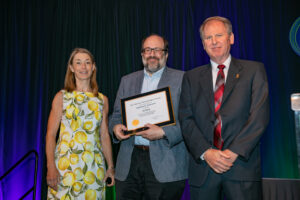
Howard S. Judelson, center, receives the APS Fellow Award at ICPP2018​

What area(s) of molecular plant–microbe interactions do you feel your research has impacted most?

When I started my post-doctoral position, molecular research on oomycetes was in a rather primitive state. No one had even cloned or sequenced a single gene! At the time, people were just starting to realize that oomycetes were not true fungi. My work on developing tools for the molecular manipulation of oomycetes helped show that progress could be made on these “difficult” species, which encouraged others to enter the field.

What advice do you have for young scientists aspiring to achieve the level of science that has major impact?

Pick something that you are passionate about, and then stick with it (within reason). While some exciting results come quickly in research, many important findings come through the aggregation of multiple incremental advances in knowledge or methods. Do not be afraid to pick a topic that no one has investigated before. Think and read widely, and attend seminars both inside and outside your discipline, since you might find something that could be applied to your own work.

When you were a post-doc, what had the largest influence on your decision to enter your specific research area in your permanent position? Was this a “hot topic” at the time, or did you choose to go in a different direction?

While my current research deals mostly with Phytophthora infestans, most of my post-doctoral work focused on another oomycete. I was fortunate that my post-doctoral advisor (Richard Michelmore) gave me the freedom to start a side project on P. infestans. This was definitely not a hot topic; barely a handful of laboratories in the entire world were studying any aspect of oomycete molecular biology at the time. As an undergraduate, I was fascinated by the elegant illustrations of oomycete life cycles in the Plant Pathology text written by George Agrios. When I became a post-doc, I saw the opportunity to apply my interest in microbial development to a field with practical impact, such as plant pathology.

Barbara S. Valent, 2018 APS Noel T. Keen Award

ISMPMI 285 2 1955560 removebg preview

Issue 3

2018

interactions

Did You Know

​Barbara S. Valent, Kansas State University (KSU), is the 2018 winner of the APS Noel T. Keen Award. The Keen Award recognizes research excellence in molecular plant pathology. Nominees have made outstanding contributions and demonstrated sustained excellence and leadership in research that significantly advances the understanding of molecular aspects of host–pathogen interactions, plant pathogens or plant-associated microbes, or molecular biology of disease development or defense mechanisms.

Barbara Valent Award

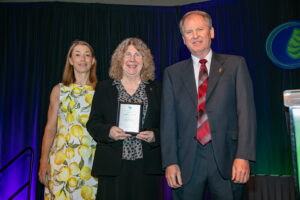
Barbara S. Valent, center, receives the Noel T. Keen Award at ICPP2018​

Dr. Valent received her BA degree in chemistry in 1972 and her PhD in biochemistry in 1978 from the University of Colorado at Boulder. Following post-doctoral work at Cornell University and the University of Colorado, she began her research career as a principal investigator in molecular plant pathology in 1985 at DuPont Central Research and Development in Delaware. She was promoted to the position of research leader in 1992, to research manager of the Plant and Fungal Genetics and Molecular Biology Program in 1994, and to research fellow and technical leader of the Genetic Disease Resistance Program of DuPont Agricultural Products in 1997. Dr. Valent was appointed as a professor in the Department of Plant Pathology at KSU in 2001. In 2002, she was designated a university distinguished professor, and in 2004, she was appointed chair of the Interdepartmental Genetics Program at KSU.

Dr. Valent has made outstanding and fundamental contributions in the field of plant pathology. More than 20 years ago, she recognized the need for a well-characterized and easily manipulated model system to understand how plants and fungi interact to ultimately lead to disease or resistance. She proposed and developed Magnaporthe grisea, the rice blast fungus, to serve as such a model. Because of her efforts, this pathogen is now one of the most extensively studied and important fungal models for molecular genetic and biochemical analyses of plant–fungal interactions. Using this research tool as her base, Dr. Valent has been at the forefront of several fundamental areas. She was the first to identify and clone both a blast fungal gene that controls the induction of resistance in plants (Avr gene) and the corresponding gene from rice (R gene) that is involved in recognition of the fungal gene. She was the first to demonstrate for this class of R gene that the AVR and R gene products physically interact and that this interaction likely occurs inside living plant cells. These are exciting findings with huge implications for transduction of the signals that result in plant resistance.

Dr. Valent’s many profound insights have also had important practical applications. While elucidating how fungal pathogens adhere to and penetrate host plants, which involved the genetic dissection of melanin biosynthesis in M. grisea, she and her colleagues discovered different possible targets for chemical control of fungal diseases and also a powerful fungal adhesive that even sticks to Teflon! This adhesive was later patented. Based on findings using molecular markers for analysis of M. grisea population structure over wide geographic areas, she and her collaborators have fundamentally changed the strategies plant breeders use to deploy resistance to this important disease. Molecular markers corresponding to the R gene cloned in her laboratory have also been valuable, because this gene confers resistance to the major pathotypes of the fungus in the United States. Thus, Dr. Valent’s basic research has had huge implications for practical disease control.

Xueping Zhou: 2018 APS Fellow

ISMPMI 285 2 1955560 removebg preview

Issue 3

2018

interactions

Did You Know

Xueping Zhou, Chinese Academy of Agricultural Sciences, is a 2018 Fellow of The American Phytopathological Society (APS). This honor recognizes distinguished contributions to plant pathology in one or more of the following areas: original research, teaching, administration, professional and public service, and extension and outreach.

Xueping Zhou Award

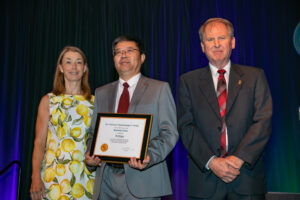
Xueping Zhou, center, receives the APS Fellow Award at ICPP2018​

What area(s) of molecular plant–microbe interactions do you feel your research has impacted most?

Our work mainly focused on plant–virus interaction using geminiviruses. We revealed that βC1, encoded by a geminivirus satellite, is a symptom determinant, a repressor of transcriptional gene silencing (TGS) and post-transcriptional gene silencing (PTGS), and also a target of many plant defense responses, including phosphorylation modifications-mediated function suppression and ubiquitin proteasome system (UPS) and autophagy-mediated protein degradation. These studies extend the interaction between viruses and their hosts and show a co-evolved balance during the long-term “arms race” between plants and viruses, which provides new insight into plant defenses against geminivirus–betasatellite complexes and viral counterdefense measures.

What advice do you have for young scientists aspiring to achieve the level of science that has major impact?

First of all, focus on scientific questions that exist in nature. Second, pursue your goal and finish your project with careful study and deep consideration. As science and technology develop very fast, you need to apply different knowledge and methods from cross-disciplinary fields into your profession.

When you were a post-doc, what had the largest influence on your decision to enter your specific research area in your permanent position? Was this a “hot topic” at the time, or did you choose to go in a different direction?

Since finishing my post-doc, I have been working on plant–virus interaction using geminiviruses. The main reason I decided to work on this specific research is the serious threat of geminiviruses in crops in China. We have been committed to understanding the pathogenic mechanisms of geminiviruses, exploring and exploiting valuable resistance strategies against geminivirus infection. It is a hot topic in the field of plant virology. We noticed that viruses led to a large loss in rice yields. Therefore, now we also work on interaction between the plant and the rice stripe virus.

​InterView: Detlef Weigel

ISMPMI 285 2 1955560 removebg preview
interactions

Did You Know

Detlef Weigel is a Director at the Max Planck Institute for Developmental Biology. Interactions recently spoke with Weigel about his membership with IS-MPMI, his research, and more.

Interactions: What guided your decision to dedicate the next stage of your research career to MPMI?

Weigel headshot

Detlef Weigel: My path to MPMI was rather circuitous. Genetics is my first love, and genetic phenomena of any kind appeal to me. Almost 15 years ago, Janne Lempe and Kirsten Bomblies in my lab discovered a syndrome of Arabidopsis hybrid weakness that we at first interpreted as a developmental abnormality. We quickly learned that this syndrome was not specific to Arabidopsis spp. and that it was already well known from many wild and cultivated plants, for which it is called “hybrid necrosis.” Anybody in the MPMI field knows that necrosis is often a hallmark of pathogen infection. Nevertheless, we were apparently the first ones to recognize that inappropriate immune reactions in the absence of pathogens were most likely the defining characteristics of this phenomenon, rather than developmental defects.

For us, one of the attractions of studying hybrid necrosis was that we thought it would teach us about speciation, but after many thousands of crosses and having cloned quite a few of the causal genes, we realized that hybrid necrosis has much more to do with how the plant balances the demands on its immune system. With too little immunity, the plant will succumb too quickly to infection, but with too much immunity, the plant will damage itself. Hybrid necrosis occurs when components of the immune system are mismatched, and these components begin to signal even if there is no pathogen trigger. Satisfyingly, the molecular observations in Arabidopsis spp. seemed to match similar observations in several other species. As a matter of fact, with hindsight we realized that the first case of hybrid necrosis that was molecularly understood predated our own work in Arabidopsis—namely, the study of the tomato Cf-2/Rcr3 system by Jonathan Jones.

In parallel with our efforts to clone the causal genes for hybrid necrosis in Arabidopsis spp., we could confirm through our whole-genome resequencing and sequencing studies that immune genes—particularly those of the NLR class but also of other smaller families—are the most diverse genes in the Arabidopsis genome. This, in turn, made us wonder what drives this diversity—hence, our current obsession with trying to understand the relationship between Arabidopsis and its natural pathogens in the real world.

I: What do you see as the next big challenge in this field of research?

DW: The MPMI field has already revealed in exquisite detail many of the molecular mechanisms that allow pathogenic and symbiotic microbes to infect plants, as well as a plethora of mechanisms that plants use to either accommodate or ward off microbes. It is also clear that many of these molecular interactions are evolutionarily very fluid—perhaps the best example being the ease with which pathogens often jettison effectors. However, what this means in an ecological context is much less obvious. I therefore see as a big challenge how we can integrate the advanced molecular knowledge with an understanding of the interaction between wild plants and their microbes in the real world and how this changes over ecological and evolutionary time scales. To begin to dissect these, we need to know much more not only about the spatial and temporal distribution of hosts and microbes but also about their fine-scale genetic variation in effectors, resistance genes, and so on. My dream is to learn how genetic diversity in wild plant species maps onto the diversity of their microbiota (and vice versa) and what genetic, molecular, and ecological mechanisms relate the two. To this end, we recently started an ambitious effort, which we call “Patho(gens in Arabi)dopsis,” or “Pathodopsis” for short, to generate such foundational data. It would be fantastic to initiate such efforts in many other species. So far, the focus has mostly been on local populations, such as the impressive long-term studies by Anna-Liisa Laine in Finland and Jeremy Burdon and colleagues in Australia. I would love to see the sorts of insights they have gathered across the entire geographic ranges of many different plant species.

I: Symbiotic relationships between plants and microbes have been occurring for hundreds of millions of years, and we are only studying a tiny “snapshot” in the history of these interactions. How can we extrapolate our observations to better understand MPMI and improve the resistance capacity of agricultural crops?

DW: I agree that we need to have a better understanding of how wild plant pathosystems are different from agricultural systems. Whether the information from the wild systems is directly useful for agricultural systems is difficult to know beforehand, although it is probably safe to assume that increased immune system diversity in individual agricultural fields would most likely be helpful—an idea that has been advocated, for example, by Bruce McDonald. I like to think that with agriculture, we have often “broken” long-term stable interactions, and we need to learn what confers long-term stability before we can fix the broken state. I realize that to this end, I need to learn a lot more ecology, and I am benefitting in this area greatly from my collaboration with Joy Bergelson.

I: Your recent paper in PLoS Genetics highlights how interactions between NLRs from different species might affect the fitness of progeny. Do you feel that NLR interactions are a driving force in speciation?

DW: It is an attractive hypothesis, and I would not be surprised if there are cases of speciation or population divergence caused by inappropriate NLR interactions, but they are unlikely to be major drivers, because NLR variants typically do not become fixed in species. Having said this, there is a minority of NLR genes that seem to have very little, if any, variability, and these highly conserved NLR genes probably deserve more attention.

I: Do you plan to continue your research on plant development and adaptation? What do you hope to gain from your IS-MPMI membership?

DW: There is very little developmental work going on in my lab these days, as we have pivoted almost completely to genomic variation and plant immunity. As plant biologists, we are sometimes annoyed when animal biologists lump us all together simply because we all study plants, but I actually see this as a great advantage of our field. Beginning with the very first Arabidopsis conference that I attended in 1990, a large fraction of the plant meetings I have gone to have included at least a bit of plant immunity. Moreover, at the Salk Institute, I worked next to the late Chris Lamb, who was an important early figure in MPMI, and I have been lucky enough to have had Jeff Dangl as a friend for many years—a friendship that eventually turned into a very productive and enjoyable long-term collaboration. In addition, I have had the good fortune of having served on the board of The Sainsbury Laboratory (TSL) for several years, where I have received a tremendous education in MPMI from colleagues such as Cyril ZipfelSophien KamounSilke RobatzekDavid Baulcombe, and John Rathjen.

Even though I’m still somewhat of an amateur when it comes to MPMI, it is what I think about most these days, so it seemed only natural to join IS-MPMI. Not a small contributor to this step was that I have come to know the work of the three most recent IS-MPMI presidents very well: Sophien Kamoun’s work because of my association with the TSL and also through several collaborative projects, Sheng Yang He’s work because of my recently emerged interest in Pseudomonas biology, and Regine Kahmann’s work because she is a Max Planck colleague with whom I meet very regularly.

I: Much of your research engages interdisciplinary and international interactions. What methods/tools do you use to initiate and foster these interactions?

Weigel students

DW: Tool number 1: an open mind. I strongly believe that almost everybody we meet can teach us something—both inside and outside science. In other words, if one respects others and their research, even if it’s not automatically one’s own “cup of tea,” then productive interactions with a wide range of colleagues, both in different disciplines and in a wide range of institutions, are essentially preprogrammed.

I: Many students and some early post-docs are undecided on their ultimate career paths academia/industry/government/other). What advice do you give students and early post-docs in your research group who might need help making this decision?

DW: Many colleagues, both old and young, equate science only with academia, which is very shortsighted. Science has many different incarnations, from blue-sky discovery to translational and applied research, but also when we use the tools of scientific thinking and reasoning to make the world around us a better place. In the end, it is about personal proclivities and what career paths best fit one’s own personality along with the demands of family and friends. Somebody who is geographically more constrained because of a partner or parents must, of course, be more open minded about different careers—which is perfectly OK!

InterFaces: Michael J. Trinick: An Appreciation and Insight into Discovery

ISMPMI 285 2 1955560 removebg preview

Issue 4

2018

interactions

Did You Know

ditor’s Note: InterFaces is a new section of Interactions that recognizes scientists who have contributed to our field.

Ann M. Hirsch,1 Euan K. James,2 and Janet I. Sprent3

Department of Molecular, Cell, and Developmental Biology and Molecular Biology Institute, UCLA, Los Angeles, CA 90095 U.S.A.

The James Hutton Institute, Invergowrie, Dundee DD2 5DA, U.K.

Royal Botanical Gardens Edinburgh, 20a Inverleith Row, Edinburgh EH3 5LR, U.K.
trinick

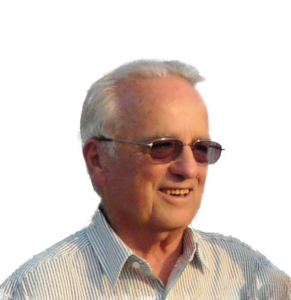
Science is based on discovery, but often, the awards and kudos go to the scientists who take the initial findings of others to the point at which they become canon. Yet without the initial discovery and the research that enabled it, our understanding of the intricacies of nature would be incomplete. Science needs pioneers who undertake the study of various phenomena not because they are fashionable or fundable but because the pioneers are curious and want to learn more about the world around them.

Until 2001, only the alpha-proteobacteria (specifically, Rhizobium sensu lato) were known to nodulate legumes. The discovery that year by Moulin et al. (2001) that beta-proteobacteria (specifically, Burkholderia) nodulated legumes generated a great deal of excitement. Numerous investigators looked for more strains, plant assays were performed, and genomes were sequenced. Why had this group of nodulating bacteria, called “beta-rhizobia,” been overlooked? Some thought it was because the two nodulating strains described in Moulin et al. were isolated from Papilionoid legumes growing in the Fynbos of South Africa or in the tropical forests of French Guiana and because so few studies had been made in either country. This is partly true. However, Burkholderia strains were isolated from Mimosoid legume nodules much earlier than the Fynbos and French Guiana representatives but not from Africa or South America. Michael J. Trinick, who graduated in Agricultural Science (BSc Agr; majoring in soil microbiology) from the University of Sydney in 1958 was the first to isolate them from legumes growing in Papua New Guinea, and he gave the strains to Ivan Kennedy of the same university. These strains, some of which were reported as effective “Rhizobium” symbionts of Mimosa in Trinick (1980), were later described in detail as Mimosa-nodulating Burkholderia and Cupriavidus strains (Elliot et al., 2007, 2009).

Trinick conducted studies using serology and various other characteristics of the bacteria, such as vitamin requirements and carbohydrate utilization, and from them, he discovered that nodules isolated from plants growing in poor soils contained bacteria other than Rhizobium sensu stricto. However, Vincent (1970) cautioned readers against isolating nonrhizobial contaminants from nodules. Could this warning have influenced an avenue of discovery that was not publishable until 2001? It seems likely. Furthermore, after Burkholderia species were first isolated from legume nodules, a number of researchers were concerned that they might be closely related to mammalian and plant pathogens, because this genus is well known for its virulence on both plants and humans. However, phylogenetic studies using 16S RNA (Gyaneshwar et al., 2011) and multilocus sequence analysis (MLSA) (Estrada de-los Santos et al., 2013) separated the symbionts from the pathogens, and based on these studies and others, many species were categorized into two new genera: namely, Paraburkholderia (Sawana et al., 2014) and Caballeronia (Dobritsa and Samadpour, 2016). Our most recent effort was to separate a distinct subgroup of nonpathogenic species into a new genus, which we named Trinickia, after Michael Trinick (Estrada-de los Santos et al., 2018).

Trinick also made other important discoveries. After graduating from the University of Sydney, he joined the Department of Agriculture, Stock, and Fisheries in Port Moresby, Papua New Guinea, in 1959 in the plant pathology department. After extensive research into the tropical legumes of this region, he received an MS in agriculture from the University of Sydney in October 1966. At this time, he discovered the promiscuous Rhizobium strain NGR234, which nodulates an exceptionally broad range of legume species. This finding led to many discoveries about variations in genetic factors, such as the type 3 secretion system, which controls host specificity in the nitrogen-fixing symbiosis (Deakin and Broughton, 2009).

Trinick wrote his PhD thesis, “The Ecology of Rhizobium-Interactions between Rhizobium Strains and Other Soil Microorganisms,” after studying the influence of the soil microflora on the survival of strains of R. trifoliiR. meliloti, and R. lupini in the sandy soils of western Australia. He received his doctoral degree in 1970 from the University of Western Australia. While in Papua New Guinea, Trinick also discovered that a nonlegume, Parasponia (Cannabaceae), was nodulated by Rhizobium species. The original description was for a related species, Trema aspera (now cannabina) (Trinick, 1973), but it was later reported that the actual nodulating nonlegume was a sister species of Trema—namely, Parasponia parviflora Miq. (Akkermanns et al., 1978). Research on Parasponia species dominated his later studies at the CSIRO, Division of Plant Industry and Land Management. Investigations with C. A. Appleby, J. B. Whittenburg, B. A. Whittenburg, A. A. Kortt, D. J. Goodchild, and others set up a baseline for studies on this unexpected symbiosis between a no-legume and a Rhizobium strain. Trinick’s discoveries opened new doors to study the evolution of symbiotic nitrogen fixation and the possibility of transferring nodulation ability to other nonlegumes (Van Vetzen et al., 2018).

The discoveries of (1) strain NGR234 and (2) the different behaviors of fast-growing versus slow-growing rhizobial strains and their beta-rhizobia counterparts, as well as (3) detailed studies on Parasponia, established a solid foundation upon which many more recent investigations have been established and future studies will be based. Three cheers and many thanks to Michael Trinick for three incredible breakthroughs in symbiotic nitrogen fixation! References

Akkermanns, A. D. L., Abdulkadir, S., and Trinick, M. J. 1978. N2-fixing root nodules in Ulmaceae: Parasponia or (and) Trema spp.? Plant Soil 49:711-715.

Deakin, W. J., and Broughton, W. J. 2009. Symbiotic use of pathogenic strategies: Rhizobial protein secretion systems. Nat. Rev. Microbiol. 6:312-320. doi:10.1038/nrmicro2091 Dobritsa, A. P., and Samadpour, M. 2016. Transfer of eleven Burkholderia species to the genus Paraburkholderia and proposal of Caballeronia gen. nov., a new genus to accommodate twelve species of Burkholderia and Paraburkholderia. Int. J. Syst. Evol. Microbiol. 66:2836-2846. doi:10:1094/ijsem.0.001065

Elliott, G. N, Chen, W. M., Chou, J. H., Wang, H. C., Sheu, S. Y., Perin, L., Reis, V. M., Moulin, L., Simon, M. F., and Bontemps, C. 2007. Burkholderia phymatum is a highly effective nitrogen‐fixing symbiont of Mimosa spp. and fixes nitrogen ex planta. New Phytol. 173:168-180. doi:10.1111/j.1469-8137.2006.01894.xElliott, G. N., Chou, J.-H., Chen, W.-M., Bloemberg, G. V., Bontemps, C., Martínez- Romero, E., Velázquez, E., Young, J .P. W., Sprent, J. I., and James, E. K. 2009. Burkholderia spp. are the most competitive symbionts of Mimosa, particularly under N-limited conditions. Environ. Microbiol. 11:762-778. Estrada-de los Santos, P., Vinuesa, P., Martínez-Aguilar, L., Hirsch, A. M., and Caballero-Mellado, J. 2013. Phylogenetic analysis of Burkholderia species by multilocus sequence analysis. Curr. Microbiol. 67:51-60.

Estrada-de los Santos, P., et al. 2018. Whole genome analyses suggest that Burkholderia sensu lato contains two further novel genera in the “rhizoxinica-symbiotica group” (Mycetohabitans gen. nov., and Trinickia gen. nov.): Implications for the evolution of diazotrophy and nodulation in the Burkholderiaceae. Genes 9:389. doi:10.3390/genes9080389

Gyaneshwar, P., Hirsch, A. M., Moulin, L., Chen, W. M., Elliott, G. N., Bontemps, C., Estrada-de los Santos, P., Gross, E., Bueno dos Reis Junior, F., Sprent, J. I., Young, J. P. W., and James, E. K. 2011. Legume nodulating β-proteobacteria: diversity, host range and future prospects. Mol. Plant-Microbe Interactions 24:1276-1288.

Moulin, L., Munive, A., Dreyfus, B., and Boivin-Masson, C. 2001. Nodulation of legumes by members of the β-subclass of Proteobacteria. Nature 411:948-950.

Sawana, A., Adeolu, M., and Gupta, R. S. 2014. Molecular signatures and phylogenomic analysis of the genus Burkholderia: Proposal for division of this genus into the emended genus Burkholderia containing pathogenic organisms and a new genus Paraburkholderia gen. nov. harboring environmental species. Front. Genet. 5:429. doi:10.3389/fgene.2014.00429

Trinick, M. J. 1973. Symbiosis between Rhizobium and the non-legume, Trema aspera. Nature 244:459-460.

Trinick, M. J. 1980. Relationships amongst the fast-growing rhizobia of Lablab purpureusLeucaena leucocephalaMimosa spp., Acacia farnesiana and Sesbania grandiflora and their affinities with other rhizobial groups. J. Appl. Bacteriol. 49:39-53.

Van Vetzen, R., Doyle J. J., and Guerts, R. 2018. A resurrected scenario: Single gain and massive loss of nitrogen-fixing nodulation. Trends Plant Sci. doi:10.1016/j.tplants.2018.10.005Vincent, J. M. 1970. A manual for the practical study of root nodule bacteria. Oxford, UK: Blackwell Scientific.


InterStellar: Eva Kondorosi Receives Balzan Award

ISMPMI 285 2 1955560 removebg preview

Issue 4

2018

interactions

Did You Know

Editor’s Note: InterStellar is a new section of IS-MPMI Interactions that highlights members’ accomplishments and accolades.

Kondorosi 2018

IS-MPMI member Eva Kondorosi recently received the prestigious Balzan Award. Read her acceptance speech to learn more about her accomplishments. Eva and her husband, Adam Kondorosi, received the IS-MPMI Award in 2012.

​InterStellar: Bart Thomma Receives Inaugural RKS Wood Prize

ISMPMI 285 2 1955560 removebg preview

Issue 4

2018

interactions

Did You Know

Editor’s Note: Inter​Stellar is a new section of IS-MPMI Interactions that highlights members’ accomplishments and accolades.

Thomma

IS-MPMI member Bart Thomma has received the first RKS Wood prize from the British Society for Plant Pathology (BSPP). BSPP reports that “the prize celebrates excel​lent science in the study of plant disease biology and its application in the protection of plants against pathogens.” Read more about Thomma and his accomplishments on the BSPP website. Also plan to attend Thomma’s plenary address at the IS-MPMI XVIII Congress in Scotland next year!

In Memory: Jonathan Walton

ISMPMI 285 2 1955560 removebg preview

Issue 4

2018

interactions

Did You Know

walton lg


Jonathan Walton, acting director of the Molecular Plant Sciences Program, Department of Plant Biology, at Michigan State University passed away October 18, 2018. Jonathan served as IS-MPMI president from 2003 to 2005. He also was the editor-in-chief of Molecular Plant-Microbe Interactions and a Fellow of The American Phytopathological Society. IS-MPMI is grateful for Jonathan’s service to the society; his passing is a great loss to the society and his field. Our thoughts are with his family and friends during this time. Find a full obituary online here.

Several friends and colleagues have contributed remembrances of Jonathan’s impact on their lives and careers. Please feel free to share additional thoughts in the “Comments” section.

Sheng Yang He (Michigan State University, U.S.A.): Jon was a close colleague of mine at Michigan State University. In early days of my faculty career, Jon was a key mentor, whom I could talk to for a wide range of topics. I always admired his love for biochemical approaches, even though he was one of the pioneers who adopted molecular genetic approaches to tackle plant pathology questions. His expertise in biochemistry, along with the work of Steve Briggs, was crucial in unraveling the molecular action of fungal HC toxin and its host resistance mechanism in maize, which in my view is a classical achievement in molecular plant pathology. Jon also devoted substantial time to serving the MPMI community. He was IS-MPMI president from 2003 to 2005. He left us too early—very sad.

Steve Briggs (University of California [UC]­, San Diego, U.S.A.): With my post-doctoral associate Guri Johal, I had the pleasure of collaborating with Jonathan and his graduate student Bob Meeley on the characterization of the maize Hm1 gene for disease resistance. Jonathan was a fantastic scientist, and he excelled in biochemistry at a time when most biologists had adopted easier skill sets suitable for studies of DNA. Jonathan launched a fearless campaign to understand the relationship between maize and a fungal pathogen, Cochliobolus carbonum race 1. His work ultimately led to deep insights and constitutes some of the best explanations for pathogenicity and immunity known in plant science. Our collaboration married my work on the Hm1 gene with Jonathan’s work on HC-toxin reductase to produce a simple and conclusive explanation for plant immunity. Jonathan went on to explain much more about this system and to embrace additional fields of study. Jonathan was a model for how to do science. He trained many scholars and influenced countless others. I met him when we were both graduate students and was struck by his sharp intellect and clear judgment. These qualities remained central to his persona along with integrity, fairness, and generosity. We had recently corresponded about some experiments in my lab, and all of his wonderful qualities were on full display. I can’t believe he is gone at the age of 65 and that I’ll never again enjoy his wry humor and skepticism. 

Shauna Somerville (UC, Berkeley, U.S.A.): Jonathan Walton was a colleague when I was a member of the MSU Plant Research Lab; we overlapped about 7 years. We moved into adjacent labs in a newly constructed wing of the plant biology building. Jonathan was generous with his ideas and broadly interested in science. He was someone I could talk over ideas for new projects with or discuss the pitfalls or merits of different experimental approaches. He had a stronger biochemical background than I did, and I, as a geneticist, always felt I came away from our discussions with better experimental strategies in mind. Jonathan was a great colleague and will be very much missed. 

Jan Leach (Colorado State University, U.S.A.): I truly admired how Jonathan approached science and research collaborations. He enjoyed science and brought to it an intense focus. From the outside looking in, he contributed rigor and critical thinking to his collaborations, but at the same time, he generously shared his joy for science. 

Felice Cervone (Sapienza University of Rome, Italy): Giulia, my wife, and I met Jonathan and Daphne 35 years ago when Jonathan was a post-doc fellow at the University of Rome. We soon became friends and enjoyed the birth of their first son, Nathaniel, and then Colin later. Sadly and unexpectedly, we cry now over the loss of Jonathan.A​​mong many interests, Jonathan was particularly curious about Italy and Italian culture; he also spoke Italian and liked mozzarella cheese and, in general, Italian food. This may be one of the reasons that led us to a collaboration on “my” enzyme, the polygalacturonase, and “his” fungus, Cochliobolus carbonum. The project brought me to Michigan and Jonathan to Italy several times and was very successful, as we were able to clone by PCR a gene encoding a fungal polygalacturonase starting from the sequence data of the purified protein. This was not an obvious achievement at that time, when only a few PCR machines were available worldwide and the tools for purifying proteins were not as advanced as today. Our younger collaborators may still remember Jonathan and me struggling on the bench to obtain enough homogeneous protein for sequencing. It was fun and we enjoyed the bench work.We not only enjoyed science but also many recreational trips together in the United States, Italy, and elsewhere. Sailing from Gaeta to Ustica on my boat is one of the most vivid memories of those trips. The sky was clear, the wind was regular, and I pleasantly spent the night discussing science with my capable co-sailors, Jonathan and Jean Pierre (Metraux). This and other memories of the time spent together are painful in these days. I will miss you very much, Jonathan!

Nyerhovwo John Tonukari (Delta State University, Nigeria): I first met Jonathan Walton in the summer of 1996 when I arrived at Michigan State University to commence my PhD studies. I did my first rotation in his lab and returned there for the rest of my doctoral research. He was the best advisor a graduate student could ask for. He taught me how to review manuscripts for publication and painstakingly corrected my writings. And when I became an editor, he was happy to review manuscripts I sent to him. We had interesting discussions when I returned to the United States in 2013 to write a book. Jonathan was always open to new ideas and welcomed suggestions. I am still amazed at the depth of work I carried out in his lab. I will surely miss my mentor.

Yi-Qiang “Eric” Cheng (University of North Texas, U.S.A.): Jonathan was an influential scholar in the fields of fungal secondary metabolism and plant–pathogen interactions. My exposure to the biochemistry and genetics of natural product biosynthesis and in particular to a histone deacetylase (HDAC) inhibitor (HC-toxin) in his lab as a graduate student heavily impacted my career. As a faculty member for the past 15 years, I am proud to say that I have made significant contributions to the understanding of how FK228 (depsipeptide, an FDA-approved anticancer drug) and related HDAC inhibitors are biosynthesized; my group also discovered several new HDAC inhibitors as drug leads. Jonathan will be dearly missed.

Kazuya Akimitsu (Kagawa University, Japan): Jonathan Walton is my ideal researcher on host-selective toxin research. He comprehensively used plant pathology, biology, chemistry, biochemistry, and molecular biology for the toxin studies. My graduate school and post-doctoral days at Michigan State University, where I was able to do toxin research under the guidance of Jonathan, were wonderful days of my life. After nearly 7 years, East Lansing has become my second hometown, and many of my great memories are related to Jonathan. Jonathan took care of my career development even after I returned to Japan. His words have constantly given encouragement at the critical stage of my academic career. Somehow, I always felt a connection with Jonathan, and email canceled the distance between us. His last words for me were on July 9, 2018, this past summer. He was concerned about the flood in Japan and asked if my family and I were OK. His words—“Please give them our regards. You have our sympathies and best wishes. Our thoughts are with you.”—pierce my heart now. Jonathan Walton was definitely a good scientist and also an excellent educator. Many colleagues from Walton’s lab are still connected well, and we are enjoying our memories of days in Walton’s lab.

Thank you very much for everything, Jonathan. May your soul rest in peace.

Welcome to MPMI’s New Editorial Board

ISMPMI 285 2 1955560 removebg preview

Issue 4

2018

interactions

Did You Know

mpmi board 19

The 2019-2021 Editorial Board for ​​MPMI ​began their term this month. Welcome to the new Board! Pictured: Back Row: Peter Balint-Kurti, Scott Gold, Kee Hoon Sohn Middle row: Erica Gross, Yi Li, Maria Alvarez Front Row: Jacqueline Bede, Laura Grenville-Briggs, Jeanne Harris, Tessa Burch-Smith, Dong Wang

Scroll to Top