Category: Issue 2 •​ 2021​

Congress Abstracts Now Searchable by Keyword

ISMPMI 285 2 1955560 removebg preview

Issue 1

2020

interactions

Did You Know

Look for content on a specific area of science and find abstracts related to your research. Use the main search box on the website to search by keyword.

Presentations are grouped by Session Title or Poster Category. Find topics of interest to you to help plan your time at the Congress.

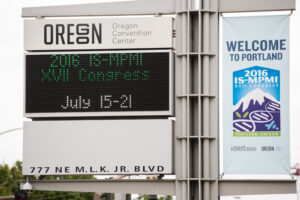
Welcome to the XVII IC-MPMI

ISMPMI 285 2 1955560 removebg preview

Issue 1

2020

interactions

Did You Know

Fifteen years after the 10th IC-MPMI (Madison, WI, USA, 2001), the IC-MPMI returns to the USA, this time to Portland, the City of Roses!
The Local Scientific Committee (LSC), in collaboration with the Board of Directors (BOD), of IS-MPMI has put together a diverse and forward-looking program that highlights some of the most exciting research areas, such as the microbiome, tritrophic interactions, RNA-mediated interactions and systems biology, as well as perennial favorites such as resistance mechanisms, mutualism, and microbial virulence functions. Nearly 950 attendees from 40 countries around the world will get together to discuss the current status and future of research on molecular plant-microbe interactions. Over 175 invited speakers will present research talks and almost 725 posters will be displayed during the entire Congress. In addition, there is also a rich selection of special sessions on Sunday to serve as an appetizer, including new training sessions on bioinformatics.
This meeting incorporated a number of new elements aimed at significantly improving attendees’ experiences.
  • Broadening and diversifying speakers through rotating plenary and concurrent session presenters in consecutive congresses.
  • Concurrent sessions are carefully coordinated to avoid duplication of talks and labs and to feature more postdocs and students.
  • Earlier and expanded times for posters to encourage attendance and fresher minds.
  • An overall less-dense program with free evenings to facilitate networking, discussion and relaxation over dinner.
Both the BOD and the LSC have made major efforts to secure governmental and industrial funding opportunities to provide support for the attendance of 70 young scientists, who will be networking with speakers and function as “field reporters”, tweeting about their favorite talks during the Congress.
The main program will open on Sunday with the IS-MPMI award lecture (to be announced). Monday will begin with the EMBO Keynote lecture by Ulla Bonas on “How Xanthomonas manipulates the plant” while Tuesday will begin with a talk by the inaugural IS-MPMI Young Scientist Awardee (to be announced). On Thursday morning, EMBO Young Investigator Awardee, Lionel Navarro, will give a talk on “Mechanisms of Bacterial Suppression of AGO1-RISC Activity and of Host Counter-counter Defense.” Also on Thursday, we’ve added a new final day lunch time poster session so you can catch those posters you missed earlier in the meeting.
Besides enjoying the scientific and networking opportunities offered by the Congress, we encourage you to take advantage of all the unique cultural, social and recreational activities Portland and surroundings have to offer. Portland is young and vibrant city on the Pacific rim that offers a vast diversity of food experiences including beer, wine and coffee, and is an indie rock mecca for music buffs. July is a beautiful time to be in Oregon with sunshine, mild temperatures and low humidity.
We would like to take this opportunity to thank the members of the BOD and LSC as well as the staff at IS-MPMI headquarters, for their dedication, thoughtfulness, and active involvement in the planning of this Congress. Though the Congress will be over in five short days, it has been nearly four years in the making and could not have happened without the many volunteers who helped pull it all together.
We look forward to seeing you in Portland!
Safe travels,
Sheng Yang He
President, IS-MPMI
Brett Tyler
Chair, Local Scientific Committee

MPMI Editor’s Pick

ISMPMI 285 2 1955560 removebg preview

Issue 1

2020

interactions

Did You Know

Peptidoglycan-Remodeling Enzyme Critical for Bacteroid Differentiation in Bradyrhizobium spp. During Legume Symbiosis

Gully and colleagues provide an elegant genetic demonstration of the important role played by the bacterial peptidoglycan layer in the symbiosis between Bradyrhizobium and Aeschynomene species of legumes.

In memoriam: Dr. Federico Sánchez (1950 – 2016)

ISMPMI 285 2 1955560 removebg preview

Issue 1

2020

interactions

Did You Know

SanchezFederico

Dr. Federico Sánchez was well-known for being a great man with boundless generosity, enthusiastic, entrepreneur, outstanding teacher, husband and father like no other, and an excellent researcher.

Federico started as a teacher at the School of Chemistry UNAM in 1973 and he has since taught in different bachelor, master and Ph.D. programs. In 2003, he was a founding lecturer of the new Undergraduate Program on Genomic Sciences with which he was associated for more than 10 years.

In 1981, Federico started his scientific career when he joined the Center for Research on Nitrogen Fixation at the National Autonomous University of Mexico (CEFINI-UNAM), currently known as Center for Genomic Sciences (CCG-UNAM). Here Federico developed the Department of Plant Molecular Biology. Since then, his scientific work and teaching activities underpinned the consolidation of Plant Molecular Biology in Mexico. This early impact on Mexican academia led him to be awarded the National Award in Plant Biotechnology in 1987.

His research was mainly focused on the interaction between legumes and symbiotic microorganisms, such as as Rhizobium and fungi belonging to Glomeromycota phylum. Federico published more than 100 research articles in high impact journals reaching close to 1900 citations. He was also part of the team that published the sequence of the common bean (Phaseolus vulgaris) genome at the beginning of this year.
Federico contributed much to his scientific community. He was a keen organizer of national and international congresses and meetings. He served as President of the Mexican Society of Biochemistry (1994-1996) and the International Society of Plant-Microbe Interactions (IS-MPMI). Additionally, he was a member of different scientific organizations, such as as the National Academy of Sciences, American Society of Plant Biologists and member of the International Board of IS-MPMI. Moreover, Federico was editor of journals, including MPMI (1998-2003), PLANTA (1992-1997), Asia Pacific Journal of Molecular Biology and Biotechnology (1996-1999).
Only a few people have been admired, respected and beloved as was Dr. Federico Sánchez. He is certainly a reference to follow for future generations. There is no doubt that everyone honored with his friendship will remember him forever.
Dr. Miguel Lara and Mr. Neftaly Cruz-Mireles, UNAM, Mexico

Congress Photos

ISMPMI 285 2 1955560 removebg preview

Issue 1

2020

interactions

Did You Know

Head over to the IS-MPMI Facebook page to view photos from Congress.​

TP2 8956

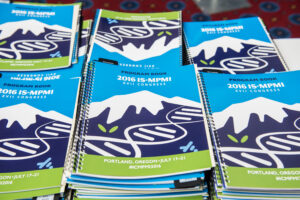
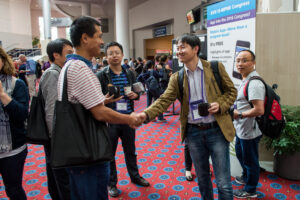
2016 IS-MPMI XVII Congress Attendees Connect, Engage, and Discover New Science

ISMPMI 285 2 1955560 removebg preview

Issue 1

2020

interactions

Did You Know

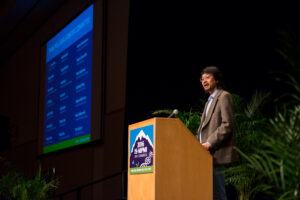
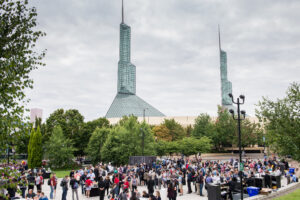
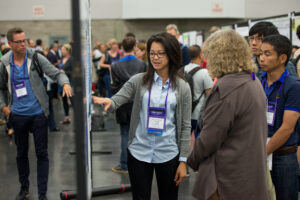
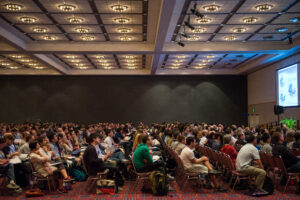
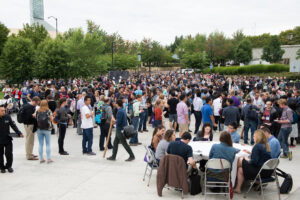
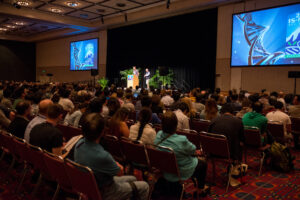
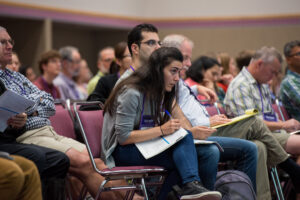
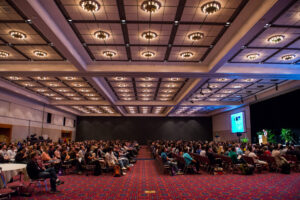
This XVII Congress held true to its overall theme, “Elevate the Science.” With over 820 abstracts, 7 plenary sessions, 7 special sessions, 48 concurrent sessions, and 3 poster sessions, the Congress was densely packed. More than 950 attendees, including almost 300 students, travelled to Portland, Oregon from 40 different countries. The #MPMI16 tweets poured in as attendees experienced the latest research and advancements in MPMI—visit the IS-MPMI Twitter page at twitter.com/ISMPMI to see what people were saying. Thank you to all attendees, presenters, and organizers who made this year’s congress an extraordinary one.

TP2 8198

TP2 8498

TP2 9550

TP2 0759

TP2 9046

2016 IS-MPMI XVII Congress Awardees Announced

ISMPMI 285 2 1955560 removebg preview

Issue 1

2020

interactions

Did You Know

Following the 2016 IS-MPMI XVII Congress, several awardees were announced. IS-MPMI would like to congratulate the 2016 IS-MPMI Awardee, Sharon Long, a Professor of Biology at Stanford University. She received her Bachelor’s degree from the California Institute of Technology, and carried out her Ph.D. studies at Yale University, studying plant development with Ian Sussex. As a postdoctoral fellow she trained with Fred Ausubel at Harvard, where she began her work on Rhizobium-legume symbiosis. She joined the Stanford faculty in 1982. Her research group employs a spectrum of approaches, including microbial and plant molecular biology, biochemistry and genetics, to study the symbiosis of Rhizobium bacteria and plant hosts. They are especially interested in the signals and signal transduction pathways used by nitrogen-fixing bacteria and plants.

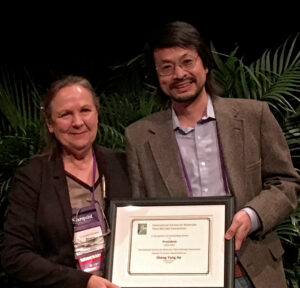
The new IS-MPMI Young Investigator Award for 2016 was given to Dong Wang, a faculty member of the University of Massachusetts, Amherst. Dr. Wang received his Ph.D. training with Dr. Xinnian Dong at Duke University, and conducted postdoctoral research with Dr. Sharon Long at Stanford University. Currently he studies the symbiotic interactions between plants and beneficial microbes.

IS-MPMI would also like to recognize all of the 2016 Ko Shimamoto Travel Awardees, who received funding to attend the XVII Congress. Congratulations to the following individuals:

Hiroaki Adachi

Kwasi Adusei Fosu

Beverly Agtuca

Akira Akamatsu

Gazala Ameen

Brenden Barco

Teura Barff

Maël Baudin

Ana Bossa-Castro

Maryn Carlson

Meltem Cavdar

Hao-Xun Chang

David Cook

Kevin Cope

Gayani Ekanayake

Laura Fleites

Jose Fonseca

Barbara Franco

Julie Gervais

Mrunmay Kumar Giri

Bruna Goncalves Coutinho

Alex Greenspan

Susanna Harris

Volker Hegenauer

Matthew Helm

Sarah Hind

John Steen Hoyer

Shuai Huang

Carol Ibe

Sergey Ivanov

Anna Joe

Ryan Kessens

Jixiang Kong

Arun Kumar

Thomas Liebrand

Xiaoyu Liu

Chenglong Liu

Fabien Lonjon

Juan Sebastian Lopez Fernández Fondazione

Tiffany Lowe-Power

Yan Ma

Ka-Wai Ma

Paolo Margaria

Alfredo Mari

Margarita Marroquin-Guzman

Kaitlin McNally

Marco Mechan Llontop

Samriti Midha

Mina Ohtsu

Onur Oztas

Yohann Petit

Priya Pimprikar

Sowmya Ramachandran

Jeannette Rapicavoli

Fernanda Raquel Rezende de Castro Moretti

Robyn Roberts

Joren Jeico Cruz Salazar

Benjamin Schwessinger

Aldo Luis Seguel

Joji Grace Sernestrand

Teja Shidore

Martin Stegmann

Tongjun Sun

Marcella Alves Teixeira

Jessie Uehling

Hester Van Schalkwyk

Chih-Hang Wu

Wenjun Xie

Li Zhang

Xiaoxiao Zhang

MPMI Editor’s Pick

ISMPMI 285 2 1955560 removebg preview

Issue 1

2020

interactions

Did You Know

Poplar–Root-Knot Nematode Interaction: A Model for Perennial Woody Species
Baldacci-Cresp and colleagues describe a new system for studying interactions between root-knot nematodes and trees. Nematodes exercised conserved strategies to reproduce and invade perennial plants, and poplar was identified as a model host for studying traits of tree–nematode interactions.

IS-MPMI Welcomes New Leadership

ISMPMI 285 2 1955560 removebg preview

Issue 1

2020

interactions

Did You Know

New IS-MPMI Board members were recently announced during the 2016 IS-MPMI Congress in Portland, Oregon, U.S.A. Please welcome the following new members of the Board, and thank you to members continuing to serve their current terms.

President: Regine R. Kahmann, Max Planck Institute for Terrestrial Microbiology
President-Elect: Mary Beth Mudgett, Stanford University
Immediate Past President: Sheng Yang He, Michigan State University
Secretary: Jean Greenberg, University of Chicago
Treasurer: Roger W. Innes, Indiana University
Immediate Past Treasurer: Peter Dodds, CSIRO
Editor-in-Chief, MPMI: John M. McDowell, Virginia Tech
Directors: Ann M. Hirsch, University of California; Saskia A. Hogenhout, John Innes Centre; Francis Michel Martin, INRA; Peter Moffett, Université de Sherbrooke; Uta Paszkowski, University of Cambridge; Jens Stougaard, Aarhus University; Jian-Min Zhou, Chinese Academy of Science
closing
President Regine Kahmann (Left) and
Immediate Past-President Sheng Yang He (Right)

2016 IS-MPMI XVII Congress Recap

ISMPMI 285 2 1955560 removebg preview

Issue 1

2020

interactions

Did You Know

Tyler Brett

Brett Tyler
Chair, Local Scientific Committee

The 2016 IS-MPMI XVII Congress was held in Portland, Oregon, from Sunday, July 17, to Thursday, July 21, 2016. We are very pleased and privileged to have hosted one of the largest international congresses encompassing numerous dimensions of molecular plant-microbe interactions and are very grateful to the top world scientists who joined us in Portland.

Scientific highlights of the meeting included new emphases on the microbiome and systems biology, including an expanded focus on mutualism, together with continuing strong contributions in the areas of host resistance and pathogenic mechanisms.

TP2 9582

TP2 0310


For the XVII Congress, the final turnout was 950+ scientists from 40 countries worldwide. 70 young travel awardees from around the world participated in mentoring and discussions with top-level scientists and speakers throughout the meeting. Over a third of meeting attendees agreed that the highlight of the meeting was networking with other attendees. Many members appreciated the “excellent science,” the “diversity balance” of topics and speakers, the “great networking opportunity,” and the overall response to the meeting concluded that “this congress is the best meeting for researchers working on plant-microbe interactions.”

TP2 9375

TP2 0069

The scientific program started on Sunday, July 17. Over the week, there were 26 plenary session speakers—attendees were excited to hear from these new scientists as almost 75% of these speakers had not presented in the past two IS-MPMI Congresses. There were also 128 concurrent session speakers, and 31 special session speakers. About half of all speakers came from overseas, including about 34% from Europe and 18% from Asia. A total of 152 different labs were represented in the plenary and concurrent session talks. There were 722 posters displayed during three different poster sessions as well.

TP2 9354

TP2 0736

We thank all scientists from who attended the congress and who participated in this year’s scientific exchange. An additional thank you to the chairs of the plenary and concurrent sessions and the members of the Local Scientific Committee who helped pull together a fantastic meeting program. Finally, a special thank you to the conference staff for flawless support and logistics.
Please note that congress photos are now online, and the abstracts of the congress are free and available for everybody on the congress website.
See you in Glasgow, Scotland in July 2019.
Brett Tyler
Chair, Local Scientific Committee
 

Scroll to Top