Category: ​​Issue 1 •​ 2023​

2016 IS-MPMI Young Investigator Award

ISMPMI 285 2 1955560 removebg preview

Issue 1

2020

interactions

Did You Know

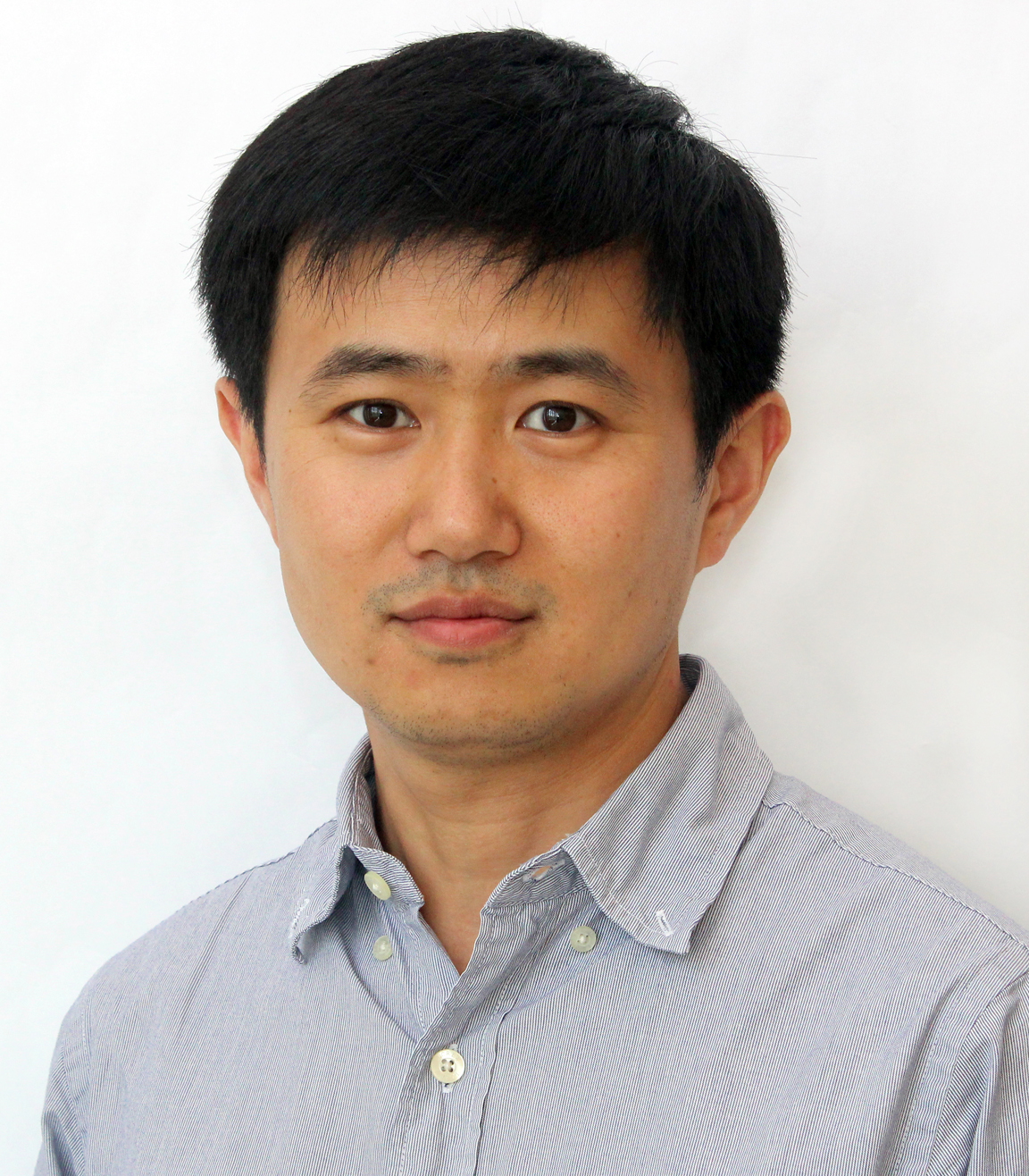
This year, a new award was established to recognize an outstanding young investigator for research in the area of molecular plant-microbe interactions, to be presented at the IS-MPMI Congress. The new IS-MPMI Young Investigator Award for 2016 was given to Dong Wang, a faculty member of the University of Massachusetts, Amherst. Dr. Wang received his Ph.D. training with Dr. Xinnian Dong at Duke University, and conducted postdoctoral research with Dr. Sharon Long at Stanford University. Currently he studies the symbiotic interactions between plants and beneficial microbes.

DongWang
Dong Wang

2016 IS-MPMI Awardee, Sharon Long

ISMPMI 285 2 1955560 removebg preview

Issue 1

2020

interactions

Did You Know

In 2006, the IS-MPMI board established the IS-MPMI Award, to be presented to a scientist in the MPMI community who has performed outstanding innovative research. IS-MPMI would like to congratulate the 2016 IS-MPMI Awardee Sharon Long, a Professor of Biology at Stanford University. She received her Bachelor’s degree from the California Institute of Technology, and carried out her Ph.D. studies at Yale University, studying plant development with Ian Sussex.


As a postdoctoral fellow she trained with Fred Ausubel at Harvard, where she began her work on Rhizobium-legume symbiosis. She joined the Stanford faculty in 1982. Her research group employs a spectrum of approaches, including microbial and plant molecular biology, biochemistry and genetics, to study the symbiosis of Rhizobium bacteria and plant hosts. They are especially interested in the signals and signal transduction pathways used by nitrogen-fixing bacteria and plants.

SharonLong portrait
Sharon Long

Arabidopsis Proline Dehydrogenase Contributes to Flagellin-Mediated PAMP-Triggered Immunity by Affecting RBOHD

ISMPMI 285 2 1955560 removebg preview

Issue 1

2020

interactions

Did You Know

​Fabro and colleagues examine how processes that alter the mitochondrial electron transport chain (mETC) influence establishment of PAMP-triggered immunity (PTI) with emphasis on the effect of the enzyme proline dehydrogenase.

Emeritus Membership Now Available

ISMPMI 285 2 1955560 removebg preview

Issue 1

2020

interactions

Did You Know

IS-MPMI appreciates the long-term dedication of its members! To be eligible for complimentary emeritus membership, an individual must have been a member of IS-MPMI for at least 25 years and be retired. Emeritus applicants must submit a request for transition to Emeritus Membership to IS-MPMI Headquarters; staff will confirm membership tenure of at least 25 years with database records and approve upon confirmation. Those not meeting the 25-year requirement will be offered a reduced Emeritus rate equivalent to student member dues rate.

IS-MPMI Members Receive Prestigious Awards

ISMPMI 285 2 1955560 removebg preview

Issue 1

2020

interactions

Did You Know

As the first-ever recipient, Simona Radutoiu received “The Adam Kondorosi Academia Europaea Award for Early Career Investigators” during a conference in Budapest, Hungary, for her outstanding scientific contributions to research in plant-microbe interactions. Presented at the biannual European Nitrogen Fixation Conference, the award “goes to a young researcher who has worked less than 10 years as a principal investigator, and who has made a special contribution in the study of plant-microbe symbiosis, nitrogen fixation or other related fields,” according to AARHUS University. View the full story here.

konorosiaward
 Photo: Tamás Thaler, Budapest.
Adam Bogdanove was awarded the Noel T. Keen Award for Research Excellence in Molecular Plant Pathology by the American Phytopathological Society. This award recognizes those who have made outstanding contributions and demonstrated sustained excellence and leadership in research that advances the understanding of molecular aspects of host-pathogen interactions, plant pathogens, or plant-associated microbes, or molecular biology of disease development or defense mechanisms.
Adam J. Bogdanove, a professor of plant pathology and plant-microbe biology at Cornell University, is an internationally recognized expert on the molecular basis of bacterial pathogenesis of plants and a leader in the use of novel technologies, derived from molecular plant pathology, for genome engineering. Bogdanove’s pioneering research on two pathogens of rice has elucidated the mechanism by which pathogen-encoded TAL effectors manipulate host gene expression to induce disease susceptibility. His work represents elegant, cutting-edge molecular plant pathology and lays the foundation for the development of novel forms of control of two important diseases of rice. Of equal significance, Bogdanove’s research is leading the way in the use of TAL effectors to make highly precise modifications to genes in plants and animals, a technology that allows investigation of the biological function of genes and has great promise as a powerful method of genome editing.
BogdanoveAdamHead
Congratulations to both of these awardees on their accomplishments in our field!

EMBO Practical Course on Plant Microbiota

ISMPMI 285 2 1955560 removebg preview

Issue 1

2020

interactions

Did You Know

​IS-MPMI Member Paul Schulze-Lefert has notified IS-MPMI that the Max Planck Institute for Plant Breeding Research will be hosting an EMBO Practical Course on Plant Microbiota from March 26–April 7, 2017. The course will cover a variety of lectures and hands-on training, including advanced bioinformatics analysis. View the speakers, the daily program, and the abstract submission guidelines on the event webpage. Registration is due January 15, 2017.

MPMI Wants Your Research

ISMPMI 285 2 1955560 removebg preview

Issue 1

2020

interactions

Did You Know

MPMI wants to highlight the latest research in our field, and for a limited time you can publish the first six pages of your next manuscript for free! Submit before January 30, 2017 to receive this limited-time offer. Optional color fees are not included. Learn more about submitting a manuscript to Molecular Plant-Microbe Interactions.

2016 Durable Wheat Resistance Meeting

ISMPMI 285 2 1955560 removebg preview

Issue 1

2020

interactions

Did You Know

This first-of-its-kind interdisciplinary meeting will be held on November 2-3, 2016 at the Minneapolis Marriott Airport Hotel in Bloomington, Minnesota (U.S.A.). The meeting will bring together wheat breeders, plant pathologists, entomologists, and plant scientists (genetics, genomics, and molecular biology) to discuss how to achieve durable and effective resistance to wheat diseases and pests. The meeting is being supported by a conference grant from the United States Department of Agriculture (USDA) National Institute of Food and Agriculture (NIFA). Attendance will be limited to 120 attendees.

  • Keynote Speaker: Brian Staskawicz (University of California Berkeley, U.S.A.)
    “Genome Editing Approaches for Constructing Durable Disease Resistance”
  • Keynote Speaker: Jonathan Jones (Sainsbury Lab UK)
    “Expanding and Accelerating Recruitment and Deployment of Resistance Gene Diversity from Crop Relatives”
  • Keynote Speaker: Stephen Baenziger (University of Nebraska, U.S.A.)
    “Reflections on 40 Years of Breeding for Disease Resistance”

View details on the event website.

Third Adam Kondorosi Symposium on Beneficial Plant-Microbe Interactions

ISMPMI 285 2 1955560 removebg preview

Issue 1

2020

interactions

Did You Know

The third Adam Kondorosi Symposium will be held in Gif-sur-Yvette (Paris region, France), on April 24-25, 2017.

The objective of this symposium is to create a scientific event that is at the forefront of fundamental research in beneficial plant-microbe interactions. The meeting will include the following sessions and confirmed speakers:

Rhizobium-legume symbiosis:
E. Giraud (IRD, Montpellier, France)
F. de Carvalho-niebel (INRA/CNRS, Toulouse, France) M.  Charpentier (John Innes Centre, Norwich, UK) Catherine Masson Boivin (LIPM, Toulouse, France) Florian Frugier (IPS2, University of Saclay, France)

Beneficial fungi:
M.A. Selosse (National Life Science Museum, Paris, France) P.M. Delaux (University of Toulouse, Toulouse, France) C. Gutjahr (Ludwig-Maximilians-University, Munich, Germany) C. Veneault-Fourrey (Université de Lorraine, Vandoeuvre-lès-Nancy, France)
S. Hacquard (Max Planck Institute Köln, Germany)

Endophytes and Plant Growth Promoting Rhizobacteria:
B. Reinhold (University of Bremen, Germany) L. Sanchez (University of Reims-Champagne-Ardenne, France.) S. Radutoiu (University of Aarhus, Denmark) H. Hirt (KAUST Institute, Saudi Arabia) A. Carlier (University of Zurich, Switzerland)

Phylosphere and Rhizosphere beneficial microorganisms:
D. B Müller (ETH, Zurich, Switzerland)
D. Bulgarelli (University of Dundee, UK) E.M. Kemen ((Max Planck Institute Köln Köln, Germany)

The symposium will convene for 1.5 days with about 150 participants in an informal atmosphere, facilitating exchanges. It also aims at proposing this program at a moderate inscription fee to give the opportunity for researchers–in particular those at the early stage of their career–to participate in an exciting top-level scientific event. Young researchers will have the opportunity to present their work with a poster. There will be, however, a limited number of poster spots available and the attributions will be on a “first-registered first-served” basis.

You can view details at the Symposium web site​.

Bacillus mojavensis RRC101 Lipopeptides Provoke Changes During Antagonism Against Fusarium verticillioides

ISMPMI 285 2 1955560 removebg preview

Issue 1

2020

interactions

Did You Know

Blacutt et al. explore molecular interactions between the maize-endophytic bacterium Bacillus mojavensis and the mycotoxigenic fungus Fusarium verticillioides. Bacterial lipopeptides are implicated in both antifungal activity and fungal toxin production.

Scroll to Top