The report of the XVI Congress is now available as a supplement to the November issue of MPMI. In honor of Ko Shimamoto, a student travel fellowship program was initiated to enrich graduate student and postdoctoral participation at this congress. The fellows contributed to the dissemination of the meeting findings by releasing daily scientific highlights via social networking. A group of fellows were selected to summarize their perspectives of the meeting highlights to share this information with our broader IS-MPMI community. Contributions to this meeting report were made by: Cris Argüeso, Bethany Huot, Panya Kim, Derek Lundberg, Morgan Halane and Irene Serrano, in collaboration with two IS-MPMI Board members, Roger Innes and Mary Beth Mudgett. Read the full report now.


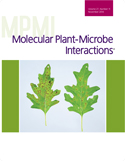
A Xanthomonas pathogen of rice produces transcription activator-like (TAL) effectors that activate expression of SWEET sucrose exporters in the host, providing a carbon source for the pathogen. In the November issue, Cohn and colleagues present a comprehensive study showing that Xanthomonas pathogens of cassava also produce TAL effectors critical for virulence that activate expression of a sucrose and glucose exporter. This work provides a strategy for engineering Xanthomonas resistance in cassava, an important food crop. View article.
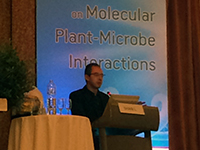
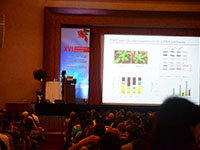
The XVI International Congress on Molecular Plant-Microbe Interactions was held in Rhodes Island, Greece, from Sunday, July 6, to Thursday, July 10, 2014. We are very pleased and privileged to have hosted one of the largest international congresses concerning plant diseases and molecular plant-microbe interactions organized in Greece and really grateful that top world scientists joined
us in Rhodes.


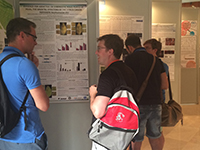
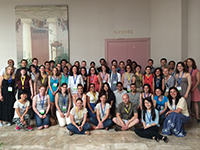
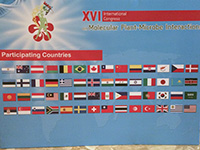
For XVI IS-MPMI Congress 2014, the final turnout was 1,133 scientists from 55 countries worldwide. Seventeen countries were represented by more than 20 participants each: United States–165, Germany–160, United Kingdom–129, Japan–81, France–64, Republic of Korea–56, The Netherlands–54, Greece–44, Spain–40, Italy–35, China–34, Australia–30, Poland–28, Denmark–23, Israel–23, Switzerland–23, and Brazil–20.
1. Sainsbury Laboratory, United Kingdom–34
2. Max Planck Institute, Germany–34
3. Agricultural University of Athens, Greece–30
4. University of California, United States: Riverside–10; Davis–9; Berkeley–6
5. Wageningen University, The Netherlands–24
6. INRA, France–23
7. Utrecht University, The Netherlands–13
8. Seoul National University, Republic of Korea–12
9. John Innes Centre, United Kingdom–10
10. RIKEN Center, Japan–9

Recognition of Microbes……………………………………………………….37




at this year’s congress.

I feel so humbled to serve as the president of the International Society for Molecular Plant-Microbe Interactions (IS-MPMI) for the next two years. IS-MPMI has been my professional home for more than 25 years, during which I have learned so much from so many of you who inspire me to be a good scientist and a sincere colleague. I would like to thank the previous IS-MPMI presidents and Board of Directors (BOD), including immediate Past President Sophien Kamoun, for all they have done to make IS-MPMI a vibrant and attractive society for colleagues from more than 30 countries who study the molecular aspects of plant-microbe interactions. Knowing my limited ability, I will work very hard and very closely with the current members of the IS-MPMI BOD to ensure an exciting congress in 2016, a strong society flagship journal (MPMI), and dynamic communication/networking venues through the society website and IS-MPMI Reporter.
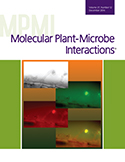
Phytophthora species produce hundreds of effector molecules, so it has been difficult to determine which ones are important for virulence and what their activities are. In the December issue, Xiong et al. demonstrate that one of these effectors, which is conserved among Phytophthora species, interferes with RNA silencing systems in the host and substantially promotes virulence. In addition to demonstrating the function of an important Phytophthora effector, this work shows that host RNA silencing systems interfere with Phytophthora virulence.
Especies de Phytophthora producen cientos de moléculas efectoras, por lo que ha sido difícil determinar cuáles de éstas son importantes para la virulencia y cuáles son las actividades de estas moléculas. En esta edición, Xiong et al. demuestran que uno de estos efectores, el cual es conservado entre especies de Phytophthora, interfiere con sistemas de silenciamiento de RNA en el huésped y promueve la virulencia. Además de mostrar la función de un importante efector de Phytophthora, este trabajo muestra que los sistemas de silenciamiento de RNA del huésped interfieren con la virulencia de Phytophthora.
疫霉属 (Phytophthora)致病菌可以产生数百种效应子分子,因此一直以来分析出哪些效应子对致病性有重要作用以及它们的活性是很困难的。在本月期刊中,Xiong及同事展示了其中一个疫霉属致病菌中共有的效应子可以干扰寄主中的RNA沉默系统,并极大地促进致病性。除了证实此疫霉属致病菌效应子的功能外,这项研究还表明了寄主的RNA沉默系统能够抑制疫霉属致病菌的毒性。

Fungal RNA Biology presents the latest insights in a wide range of RNA-mediated biological mechanisms in yeasts and filamentous fungi and has applications in medicine, agriculture, and industrial settings. This important new book, written by international experts in the field, includes a comprehensive overview of key RNA-dependent processes regulating fungal gene expression. Its 15 chapters cover the RNA-dependent processes that take place in fungal cells, ranging from the formation of coding and non-coding RNAs to mRNA translation, ribosomal RNA biogenesis, gene silencing, RNA editing, and epigenetic regulation.
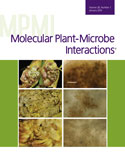
The fungus Epichloë festucae is a mutualistic symbiont of the grass Lolium perenne. In the January issue, Becker et al. report on using a forward genetic screen and finding that mutations in the cell-wall integrity MAP kinase cascade cause symbiotic defects, including increased proliferation of hyphae, early senescence of the host, and colonization of the vasculature. These results show that the cell-wall integrity MAP kinase cascade plays a key role in control of the symbiotic development of the fungus.
Spanish translation courtesy of Diana Trujillo, University of Minnesota
El hongo Epichloë festucae es un simbionte mutualista de la hierba Lolium perenne. En la edición de enero, Becker et al. usaron técnicas de genética directa y encontraron que mutaciones en la cascada de MAP quinasas para integridad de la pared celular causan defectos simbióticos, incluyendo un aumento en la proliferación de hifas, senescencia temprana del huésped y colonización de la vasculatura. Estos resultados demuestran que la cascada de MAP quinasas para la integridad de la pared celular juega un papel clave en el control del desarrollo simbiótico del hongo.
Chinese translation courtesy of You Lu, University of Minnesota
羊茅香柱菌(Epichloë festucae)是多年生黑麦草(Lolium perenne)的一种共生真菌。在1月份期刊中,Becker及同事报道了运用正向遗传学筛选发现了细胞壁结构完整性MAP激酶级联反应途径的突变导致共生作用的缺陷,包括真菌菌丝增生,寄主早衰,以及在维管组织中定植。这些实验结果表明细胞壁结构完整性MAP激酶级联反应途径在控制这种真菌的共生生长过程中起到关键作用。