
Category: ​​Issue 1 •​ 2023​

Conception of a Quiz-Based Gameshow, “Who Wants to Be an (MPMI)llionaire?,” at the 2023 IS-MPMI Congress

ISMPMI 285 2 1955560 removebg preview

Issue 4

2023

interactions

Did You Know

Meenu Singla

In the fall of 2022, the IS-MPMI Board of Directors invited proposals for open-format sessions that would promote audience engagement with the science being presented at the 2023 IS-MPMI Congress in Providence, Rhode Island. This became a topic of discussion during a lab hike in October 2022. Several innovative ways to break the mold of traditional PowerPoint presentations were floated. From this discussion, the idea of conducting a quiz-based gameshow generated the most excitement. Exactly how this could be executed in the context of the IS-MPMI Congress was refined over the subsequent weeks. As the name implies, “Who Wants to Be an (MPMI)llionaire?” is a quiz-based gameshow modeled after the popular TV show “Who Wants to Be a Millionaire?” (I grew up watching this show on TV, and it was one of my personal favorites). We decided to focus the quizzes on MPMI knowledge gleaned from attending all of the plenary sessions during this congress, with a goal of promoting attendance, especially by Ph.D. students, postdocs, and early-career researchers.

After this concept struck a chord within the group, we saw the potential to adapt it to suit the theme of the congress, Protecting Our Planet Through Plant–Microbe Research. However, one of the key challenges in introducing this session was to ensure that it remained relevant to the congress’ central theme, which meant that the quiz questions must not only be entertaining, but also intellectually stimulating, challenging participants’ knowledge of plant–microbe interactions. To achieve this, we asked the plenary speakers to provide relevant questions based on their latest findings to be presented at the congress. We really appreciate the help provided by the speakers, nearly all of whom embraced our vision and provided a fun set of multiple-choice questions covering various aspects of their work, including their latest research, historical breakthroughs, and intriguing facts. Alongside this, we kept refining the logistics of our gameshow format, which required testing multiple platforms for conducting live quizzes with the audience.

Once the concept was affirmed, the IS-MPMI organizing committee sought to garner support and sponsorship from relevant stakeholders. This session was generously funded by our industry sponsor Corteva Agriscience, which helped cover the costs of organizing the event and offered attractive prizes for the winners. By involving industry sponsors, the committee strengthened the bond between the scientific community and industry, further enriching the congress experience for all participants. The representatives from Corteva Agriscience, Dr. Rao Uppalapatti and Dr. Ryan Kessens, were invited to hand out the awards to the finalists.

The top eight finalists after the two online quiz rounds were Samuel Eastman (Princeton University), Mauricio Contreras (The Sainsbury Laboratory), Unnati Sonawala (University of Cambridge), Jake Schumacher (North Dakota State University), Caroline Stone (John Innes Centre), Miette Hennessy (University of Wisconsin-Madison), Kelsey Wood (UC Davis), and Emma Turley (John Innes Centre). This final group of candidates then participated in the in-person championship round at the conclusion of the congress, which had remarkable attendance and audience engagement.

Here are a few comments from our finalists:

It was an honor to participate in the final round of (MPMI)llionaire! This event was one of the most exciting parts of this year’s congress!
– Samuel Eastman, Postdoctoral Researcher, Conway Group, Princeton University, USA

As a second-year Ph.D. student from the UK, I was lucky enough to attend my first IS-MPMI congress in 2023. My research is currently focused on understanding fungal manipulation of plant cell-to-cell communication via plasmodesmata—the microscopic channels that directly connect adjacent cells to establish the symplast. At the congress, I was keen to hear about the latest developments in plant–microbe research, especially regarding effector protein structure/function and cell biology of infection. The plenary talks certainly did not disappoint, and the topics covered were remarkably diverse. Incorporation of the (MPMI)llionaire gameshow gave me additional motivation to take note of both the key messages and specific details of the presentations. Although I only narrowly scraped into the top eight after the second round of the quiz, I enjoyed participating in the final in-person championship and look forward to similar events at congresses in future.

– Emma Turley, John Innes Centre, UK

03Interdisciplines photo1

The 2023 winner of “Who Wants to Be an (MPMI)llionaire?”, Mauricio Contreras, is a final year Ph.D. student with Prof. Sophien Kamoun at The Sainsbury Laboratory in Norwich, UK. He is currently studying plant NLR immune receptors, how they activate, and how they are inhibited by plant pathogens. Regarding the gameshow, he said,

Contreras (in the center of the picture)
posing with his friends after winning the 2023
“Who Wants to Be an (MPMI)llionaire?” contest.

It was truly a lot of fun to participate! Never thought I would make it as far as I did! I thought it was a fantastic idea. It motivated everyone to pay close attention to all the plenaries and was a good way to get ECRs some exposure in the MPMI community, in a fun way. It would be a great idea to keep doing this contest in future editions of the congress! Hope it becomes an IS-MPMI tradition! A good dose of healthy competition is nice to spice things up!
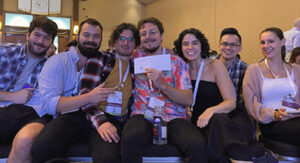
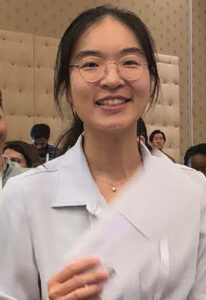
Audience participation was key to this event, and we witnessed many emotions during this session that were worth capturing. Jiameng Lan, a graduate student from the group of Prof.
03Interdisciplines photo2

Zhang at the University of British Columbia, was our audience winner and received an honorary award at the end of the session.

Last but not least, organizing this session was absolutely fun, but at the same time, it provided me with the opportunity to learn about the latest scientific endeavors of prominent researchers in the field and interact with them closely. I also understood the diligent complexities of organizing a congress involving a large number of participants and that time is a crucial factor. One of the biggest fears that I had to overcome while conducting this session was public speaking; however, with the encouragement I received from my mentor, Prof. Roger Innes, and lab friends, I was able to do it with utmost confidence. I wish to continue contributing to the MPMI community in different ways, and with this, I am happy to do knowledge transfer to interested individuals who wish to conduct this session in future meetings. “I hope that what began as a simple concept to engage participants in a lighthearted competition will bloom into a cherished tradition, enriching the congress experience for all attendees in future meetings.”

Kudos to the 2023 (MPMI)llionaire organizing teamLucia Borniego, Brian Rutter, Megha Sampangiramaiah, Suchismita Ghosh, Alexandra Margets, Benjamin Koch, Tyler Frailie, and Youhuang Xiang! Jiameng Lan, our audience winner of the 2023 “Who Wants to Be an (MPMI)llionaire?” contest!​


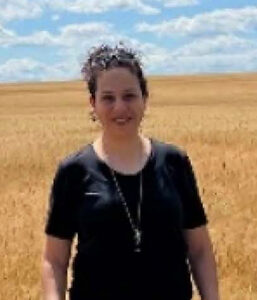
I am a postdoctoral research associate in the lab of Prof. Roger Innes at Indiana University, Bloomington, IN. My current research focus is to characterize and elucidate the role of extracellular

03Interdisciplines Singla

RNAs and proteins in the context of plant–microbe interactions. I am deeply passionate about science communication and enjoy organizing fun and engaging activities, such as “Who Wants to Be an (MPMI)llionaire?”.


 

InterConnections: Get to Know Mohamed Hafez

ISMPMI 285 2 1955560 removebg preview

Issue 4

2023

interactions

Did You Know

MPMI banner700 (1)

Evolution of the ToxB Gene in Pyrenophora tritici-repentis and Related Species

Name: Mohamed Hafez

04Interconnections Hafez

Current Position: Research Biologist, Agriculture and Agri-Food Canada

Education: B.S. and M.S. degrees in microbiology, Suez Canal University, Egypt; Ph.D. degree in microbiology, University of Manitoba, Canada

Nonscientific Interests: Photography and chess

Brief Bio: Earlier my career, I conducted research in the field of molecular biology and fungal genetics as a Ph.D. student in Dr. Georg Hausner‘s lab (Department of Microbiology, University of Manitoba, Canada), then as a postdoctoral fellow in Dr. Franz Lang‘s group (Department of Biochemistry and Molecular Medicine, University of Montreal, Canada). In Dr. Hausner’s lab, my work aimed to understand the evolutionary dynamics of mobile introns and their encoded open reading frames (such as DNA-cutting meganucleases). An important finding from my Ph.D. project was the characterization of two novel DNA-cutting enzymes (i.e., I-OmiI and I-OmiII) with applications in genome editing. In Dr. Lang’s lab, my research was part of a large-scale project titled “GenoRem,” the goal of which was to improve bioremediation of polluted soils through environmental genomics. My research in GenoRem led to one of the biggest achievements in my career, which was the discovery and characterization of a novel RNA family called mitochondrial transfer-messenger RNA (mt-tmRNA) encoded within the mitochondrial genomes of many Oomycetes. My second postdoctoral position in Dr. Fouad Daayf‘s lab (Plant Science Department, University of Manitoba, Canada) introduced me to the basics of plant pathology by being involved in a project to investigate the cross-pathogenicity of some Fusarium spp. between cereal and pulse crops in Manitoba (a prairie region of Canada producing mainly cereals and pulses). During this project, we developed the first specific molecular marker for the important Fusarium head blight pathogen F. graminearum sensu stricto and reported an emerging disease, soybean root rot caused by F. cerealis. Currently, I am working as a research biologist in Dr. Reem Aboukhaddour‘s lab (Agriculture and Agri-Food Canada, Lethbridge Research and Development Centre). In Dr. Aboukhaddour’s lab (Cereal Pathology), my research is centered on investigating plant pathogens associated with cereal crops in western Canada (and worldwide through international collaboration), as well as studying plant–microbe interactions and how disease-causing microorganisms (mainly fungi) sustain themselves within their hosts. Moreover, we investigate virulence gene diversity and its impact on pathogenicity, as well as the discovery and biochemical characterization of novel effectors encoded by necrotrophic fungal plant pathogens. In addition to research experience, I have built substantial teaching and supervision experience. I have taught a variety of biology, microbiology, and molecular biology courses during my work as a lecturer at Suez University (Egypt) and as a session instructor with the Department of Microbiology, University of Manitoba (Canada). I also have supervised many masters and Ph.D. students in Egyptian and Canadian universities.

In Dr. Aboukhaddour’s lab, I combine my long experience in microbiology, molecular biology, plant pathology, and bioinformatics to answer many important research questions regarding the diversity and evolution of effector-encoding genes. We have designed molecular tools to detect and characterize the neglected ToxB gene (encoding chlorosis-inducing effector), and its homolog (toxb) in the tan spot pathogen Pyrenophora tritici-repentis and related species. We have explored ToxB/toxb in a large number of P. tritici-repentis isolates that represent all known pathotypes from different geographic regions and have identified the presence of toxb homologs in P. teres (the barley pathogen) and many other plant fungal pathogens for the first time. This work has provided novel insights into ToxB, its homologs, and its evolution via duplication or loss of function and the variation in its upstream regulatory sequences in various isolates or species, which add significant value to the effector research community.

I hope to continue my research on understanding the molecular basis underlying the interactions between necrotrophic fungal pathogens and their host crops. This can help us to develop long-term effective management options for necrotrophs infecting economically important cereal crops.

Learn more about the research project in “Research Highlight: Evolution of the ToxB Gene in Pyrenophora tritici-repentis and Related Species​” by Reem Aboukhaddour. ​

Research Highlight: Evolution of the ToxB gene in Pyrenophora tritici-repentis and related species

ISMPMI 285 2 1955560 removebg preview

Issue 4

2023

interactions

Did You Know

Reem Aboukhaddour, Cereal Pathology Lab, Agriculture and Agri-Food Canada, Lethbridge, AB, Canada​

Overall Background

Across the expansive Canadian prairies, wheat can stretch as far as the eye can see, and during the growing season, its green leaves are a food source to several foliar-infecting pathogens.

05ResSpot Aboukhaddour

Among  these pathogens is the fungus Pyrenophora tritici-repentis, which causes tan spot of wheat, a destructive foliar disease that emerged as a specialized necrotroph about 50 years ago. Since its emergence as a wheat pathogen, it has caused significant losses in North America, Australia, and other parts of the world. Today, tan spot is still one of the most destructive foliar diseases of wheat, and it is mainly managed by fungicides applications.

Why This Work and How It Came to Be

The question of how this fungus became a pathogen has been a pivotal inquiry among the research community, including my team, and aligns well with the ongoing exploration of the emergence of necrotrophic diseases. Since 2016, my lab has concentrated on wheat diseases, resulting in this paper as part of our overall studies. I have actively engaged with inquiries from students and scientists globally, providing guidance on accurately identifying the tan spot fungus and troubleshooting various aspects of working with the system. Some interactions were driven by my interest in tracing the pathogen’s identification as a wheat pathogen in Japan in 1928, seeking old isolates, well characterized at the University of Manitoba and collected by my late Ph.D. supervisor, Dr. Lamari, who dedicated his research to establishing the tan spot-wheat interaction as a model system. These isolates, collected along the silk road, hold significant value for comparative genomic studies to trace the pathogen’s evolution. Chance encounters with collaborators at conferences and meetings have further contributed to the establishment of a collaborative network spanning North and South America, North Africa, Europe, Japan, and Australia.

What began as a simple quest to single-spore the pathogen and conduct its proper characterization, though laborious and time-consuming, resulted in a substantial collection of isolates from diverse global locations and hosts and covering an interesting time scale. The increasing affordability of full genome sequencing, coupled with COVID-19 restrictions, prompted a shift in focus. Collaborating with experts, including Dr. Megan McDonald from the University of Birmingham in the United Kingdom, we released the pathogen’s pangenome, chromosomal structural organization, and the reorganization of its effector-encoding genes and surrounding regions (Gourlie et al., 2022). Simultaneously, we explored the allelic diversity of effector-encoding genes in a broader collection of wheat leaf-spotting pathogens, with a specific emphasis on the ToxA gene, a key virulence determinant in North America and Australia (Aboukhaddour et al., 2023). Our research extended beyond the tan spot pathogen to encompass related species.

Simultaneously, our investigation of P. tritici-repentis virulence in North Africa (Kamel et al., 2019) revealed a prevalent ToxB effector in the pathogen populations. The ToxB gene, relatively understudied due to limited access in North American and Australian labs, presented an intriguing aspect for exploring virulence evolution in the fungal genome given its multicopy nature. Tan spot, increasingly concerning in North Africa and neighboring regions where ToxB is widespread, contrasts with North America, where ToxB is nearly absent; instead, a nonfunctional homolog prevails in certain pathogen races infecting durum wheat or recovered from grasses. A few years ago, we accidentally discovered that ToxB-producing isolates induce mild chlorosis in specific barley genotypes. Identifying a dominant single locus responsible for conferring sensitivity to ToxB-producing isolates in barley, a secondary host for the pathogen, added an interest to explore further the ToxB evolution (Aboukhaddour and Strelkov, 2016; Wei et al, 2020).

Considering these findings, the research highlighted here by Hafez et al. delves into the diversity and evolution of ToxB in tan spot pathogens and related species. This work complements our broader investigation into the evolutionary puzzle of tan spot virulence, shedding light on the sudden emergence of this wheat pathogen. The paper provides the research community with a more comprehensive understanding of the diversity of the ToxB gene and its homologs and access to valuable information from a large global collection that would otherwise be challenging to obtain. Ongoing research, in collaboration with Dr. McDonald, aims to decipher the mechanism of virulence gene duplications in the fungal genome. Armed with a wealth of well-studied isolates and continually expanding resources, this endeavor feels like a generational effort booming into an international collaboration to decode the emergence of this wheat pathogen.

Learn more about Mohamed Hafez in his InterConnections article​​.

2023​ – ISSUE 4

ISMPMI 285 2 1955560 removebg preview

Issue 4

2023

interactions
01SocNews MPMICover 2696478
Help Promote the Science of MPMI Journal! Molecular Plant-Microbe Interactions is seeking applicants for two-year "assistant feature editor" positions to be filled by postdoctoral scientists. Assistant feature editors have the opportunity to be part of a journal editorial team, see the inner workings of the MPMI journal, develop a unique science communication project, and interact with the diverse MPMI scientific community.

Did You Know

Pritha Kundu, postdoctoral fellow, University of Nebraska-Lincoln, interviewed IS-MPMI President Adam Bogdanove, professor, Department of Plant Pathology and Plant-Microbe Biology, Cornell University, about his research and career.
 
Siva Sankari, assistant investigator, Stowers Institute, and MPMI assistant feature editor, interviewed Cara Haney, associate professor, University of Pittsburgh, and 2023 IS-MPMI Early Career Achievement Award winner, about her research.
Eilyn Mena, scientist, Clemente Estable Biological Research Institute of Montevideo, interviewed Xiufang Xin, research group leader, Center for Excellence in Molecular Plant Sciences/Institute of Plant Physiology and Ecology, and IS-MPMI Early Career Achievement Award winner, about her work and experience in plant–pathogen interactions.

Micro… Greens? What Is Microgreens?

Dr. Tiff Mak, postdoctoral researcher, NNF Center for Biosustainability at DTU, and Dr. Dominique Holtappels, postdoctoral researcher, University of California, Berkeley, are the new hosts of the Microgreens podcast! Learn about Microgreens and what Mak and Holtappels have planned for upcoming episodes.

Conception of a Quiz-Based Gameshow, “Who Wants to Be an (MPMI)llionaire?,” at the 2023 IS-MPMI Congress

The quiz-based gameshow “Who wants to be an (MPMI)llionaire” held at the 2023 IS-MPMI Congress was a huge success. Learn about how it originated and was organized by Meenu Singla, postdoctoral associate, Innes lab, University of Indiana.
 

InterConnections: Get to Know Mohamed Hafez

Learn about Mohamed Hafez, coauthor of the research paper “Evolution of the ToxB Gene in Pyrenophora tritici-repentis and Related Species” recently published in MPMI, and the work that has provided novel insights into ToxB, its homologs, and its evolution.
 

Research Highlight: Evolution of the ToxB Gene in Pyrenophora tritici-repentis and Related Species

Reem Aboukhaddour, Cereal Pathology Lab, Agriculture and Agri-Food Canada, Lethbridge, AB, discusses the pivotal question of how Pyrenophora tritici-repentis, the cause of tan spot of wheat, became pathogenic and how the inquiry aligns with the ongoing exploration of the emergence of necrotrophic diseases.
 

What Does It Mean to Practice Inclusion in Science?

In a new episode of MicrogreensDr. Tiff Mak and Dr. Dominique Holtappels interview Dr. Amie Fornah Sankoh, who shares her journey to becoming the first deaf, black woman to receive a doctorate in a STEM discipline in the United States.
 
Explore three new MPMI Virtual Seminars presented by Hasna BoubakriHyelim Jeon and Cécile Segonzac, and Sajjan Grover.
 
Discover the latest MPMI Editor’s Picks by Zhide Tang and colleagues on the role of O-antigen in rhizobium–legume symbiosis and by Eeva Marttinen and colleagues, who screened part of the Physcomitrium patens mutant collection to elucidate the pathway of peroxidase activity in response to chitosan treatment.

2023​ – ISSUE 4

ISMPMI 285 2 1955560 removebg preview

Issue 1

2020

interactions
01SocNews MPMICover 2696478
Help Promote the Science of MPMI Journal!
Molecular Plant-Microbe Interactions is seeking applicants for two-year "assistant feature editor" positions to be filled by postdoctoral scientists. Assistant feature editors have the opportunity to be part of a journal editorial team, see the inner workings of the MPMI journal, develop a unique science communication project, and interact with the diverse MPMI scientific community.

Did You Know

Pritha Kundu, postdoctoral fellow, University of Nebraska-Lincoln, interviewed IS-MPMI President Adam Bogdanove, professor, Department of Plant Pathology and Plant-Microbe Biology, Cornell University, about his research and career.
 
Siva Sankari, assistant investigator, Stowers Institute, and MPMI assistant feature editor, interviewed Cara Haney, associate professor, University of Pittsburgh, and 2023 IS-MPMI Early Career Achievement Award winner, about her research.
Eilyn Mena, scientist, Clemente Estable Biological Research Institute of Montevideo, interviewed Xiufang Xin, research group leader, Center for Excellence in Molecular Plant Sciences/Institute of Plant Physiology and Ecology, and IS-MPMI Early Career Achievement Award winner, about her work and experience in plant–pathogen interactions.
Micro… Greens? What Is Microgreens?

Dr. Tiff Mak, postdoctoral researcher, NNF Center for Biosustainability at DTU, and Dr. Dominique Holtappels, postdoctoral researcher, University of California, Berkeley, are the new hosts of the Microgreens podcast! Learn about Microgreens and what Mak and Holtappels have planned for upcoming episodes.
Conception of a Quiz-Based Gameshow, “Who Wants to Be an (MPMI)llionaire?,” at the 2023 IS-MPMI Congress

The quiz-based gameshow “Who wants to be an (MPMI)llionaire” held at the 2023 IS-MPMI Congress was a huge success. Learn about how it originated and was organized by Meenu Singla, postdoctoral associate, Innes lab, University of Indiana.
 
InterConnections: Get to Know Mohamed Hafez

Learn about Mohamed Hafez, coauthor of the research paper “Evolution of the ToxB Gene in Pyrenophora tritici-repentis and Related Species” recently published in MPMI, and the work that has provided novel insights into ToxB, its homologs, and its evolution.
 
Research Highlight: Evolution of the ToxB Gene in Pyrenophora tritici-repentis and Related Species

Reem Aboukhaddour, Cereal Pathology Lab, Agriculture and Agri-Food Canada, Lethbridge, AB, discusses the pivotal question of how Pyrenophora tritici-repentis, the cause of tan spot of wheat, became pathogenic and how the inquiry aligns with the ongoing exploration of the emergence of necrotrophic diseases.
 
What Does It Mean to Practice Inclusion in Science?

In a new episode of MicrogreensDr. Tiff Mak and Dr. Dominique Holtappels interview Dr. Amie Fornah Sankoh, who shares her journey to becoming the first deaf, black woman to receive a doctorate in a STEM discipline in the United States.
 
Explore three new MPMI Virtual Seminars presented by Hasna BoubakriHyelim Jeon and Cécile Segonzac, and Sajjan Grover.
 
Discover the latest MPMI Editor’s Picks by Zhide Tang and colleagues on the role of O-antigen in rhizobium–legume symbiosis and by Eeva Marttinen and colleagues, who screened part of the Physcomitrium patens mutant collection to elucidate the pathway of peroxidase activity in response to chitosan treatment.

2024​ – ISSUE 1

ISMPMI 285 2 1955560 removebg preview

Issue 1

2024

interactions
SocNews BallotBox 2768443 (1)
Bylaw Amendment Vote The IS-MPMI Board of Directors recently reviewed and amended the IS-MPMI Bylaws. IS-MPMI voting members are being asked to ratify the amended bylaws. An electronic ballot was emailed in early March to members. Voting is open through March 25, 2024.

Did You Know

Join us at the IS-MPMI Congress, July 13–17, 2025, at the Confex Conference and Exhibition Centre in Cologne, Germany, for groundbreaking research, sessions, and dialogues on molecular plant-microbe interactions.
 
The 2025 MPMI Focus Issue on Fine Grain will draw together reviews and original research papers on contemporary developments in understanding staple cereal crops and their pathogens. Submit your manuscript by September 30, 2024.
Recordings of presentations given at the 2023 IS-MPMI Congress are available to all members and those who registered to attend the congress. Explore what you missed!

Root & Shoot Is Leading Cultural Change in Plant Science through Professional Societies

IS-MPMI is part of Root & Shoot, a Research Coordination Network (RCN) leading cultural change in plant science, with the aim of creating a culture of support. Learn more about Root & Shoot and available opportunities.

InterDisciplines: 2023 Future Science Prize in Life Sciences Awarded to Dr. Jijie Chai and Dr. Jian-Min Zhou

Congratulations to Dr. Jijie Chai and Dr. Jian-Min Zhou, winners of the 2023 Future Science Prize in Life Sciences in China! Drs. Chai and Zhou won this prestigious award for their discovery of resistosomes.
 

InterConnections: Get to Know Freddie King

Freddie King, Ph.D. student at Imperial College London, is the first author on a recent review published in MPMI summarizing mechanisms of perihaustorial effectors from oomycetes. Learn more about Freddie and how these proteins manipulate host immunity at the haustorial-plant interface.
 

InterConnections: Get to Know Kamesh Regmi

Kamesh Regmi and co-authors in the Innes lab at Indiana University Bloomington combined high-pressure freezing and freeze-substitution with serial block-face scanning electron microscopy to generate 3D models of the cytological events that occur during the susceptible interaction between Colletotrichum and Arabidopsis. Learn more about Kamesh and the study findings.
 

InterConnections: Get to Know Tom Waksman

Meet Dr. Tom Waksman, postdoctoral associate in the Bos lab at the University of Dundee, and first author of the recent MPMI paper “Computational Prediction of Structure, Function and Interaction of Myzus persicae (Green Peach Aphid) Salivary Effector Proteins.” Waksman and co-authors used computational methods to predict functional properties of M. persicae effectors. Learn more.
 
In the latest MPMI Editor’s Pick, Zitong Yang et al. show how the Phytophthora sojae effector PsCRN108 suppresses plant immunity by inhibiting the expression of Heat Shock Protein (HSP) family genes, shedding light on a new mechanism by which CRN effectors manipulate transcription factors to impact immunity.
 
Listen to the What’s New in MPMI Virtual Seminar presented by Hasna Boubakri on “A Nonspecific Lipid Transfer Protein with Potential Functions in Infection and Nodulation.”
Check out the Job Center on the IS-MPMI website.

Bylaw Amendment Vote

ISMPMI 285 2 1955560 removebg preview

Issue 1

2024

interactions

Did You Know

The IS-MPMI Board of Directors recently reviewed and amended the IS-MPMI Bylaws, and members were sent a ballot to ratify the amendments. Voting is open through March 25, 2024.

SocNews BallotBox 2768443 (1)

Contact Linda Schmitt at IS-MPMI headquarters if you need your ballot resent to you.

Mark Your Calendar for the 2025 IS-MPMI Congress!

ISMPMI 285 2 1955560 removebg preview

Issue 1

2024

interactions

Did You Know

2025Congress banner (2)

Join us at the IS-MPMI Congress, July 13–17, 2025, at the Confex Conference and Exhibition Centre in Cologne, Germany, for groundbreaking research, sessions, and dialogues on molecular plant-microbe interactions. Stay tuned for updates!

Learn more.

IS-MPMI Has Recordings of Previous Meeting Presentations

ISMPMI 285 2 1955560 removebg preview

Issue 1

2024

interactions

Did You Know

​Recordings of presentations given at the 2023 IS-MPMI Congress are available to all members and those who registered to attend the congress. Explore what you missed!

2023Congress logo (1)

Root & Shoot Is Leading Cultural Change in Plant Science through Professional Societies

ISMPMI 285 2 1955560 removebg preview

Issue 1

2024

interactions

Did You Know

IS-MPMI is part of Root & Shoota Research Coordination Network (RCN) that is leading cultural change in plant science through professional societies. Root & Shoot aims to create a culture

RootShoot logo

of  support in the plant sciences and is currently developing a cohort-based training program in culturally aware mentorship. Learn more about Root & Shoot and available opportunities.

Scroll to Top