Jawahar Singh, MPMI Assistant Features Editor
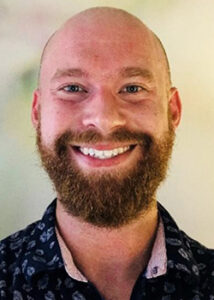
Ryan DelPercio is a postdoctoral researcher at the University of California, Davis, Genome Center, where he works with Dr. Blake Meyers to investigate the transcriptional and regulatory networks underlying symbiotic nitrogen fixation (SNF) and to develop advanced CRISPR-based molecular tools for crop improvement. His work bridges discovery and application-linking RNA biology, gene editing, and synthetic biology to improve nitrogen use efficiency and sustainability in agriculture. During his Ph.D. research at the University of Missouri–Columbia (with research at the Donald Danforth Plant Science Center), Ryan uncovered how soybean and its symbiotic partner Bradyrhizobium diazoefficiens coordinate their transcriptional programs through time. His recent MPMI paper coauthored with Madison McGregor, Stewart Morley, Nazhin Nikaeen, Blake Meyers, and Patricia Baldrich, “Transcriptional Dynamics of Symbiotic Nitrogen Fixation and Senescence in Soybean Nodules: A Dual Perspective on Host and Bradyrhizobium Regulation,” reveals that nitrogen fixation follows a striking molecular rhythm in which both partners synchronize their gene expression during development, peak activity, and senescence.
1. What do you think is the most important or exciting finding from your paper?
We discovered that symbiosis has a rhythm. The soybean–Bradyrhizobium partnership shows a coordinated, temporal cadence in gene expression, where both partners adjust their transcriptional programs in sync throughout the nodule’s life cycle. This rhythm reflects the well-defined stages of nodule development formation, active nitrogen fixation, and senescence.
What surprised me most was that Bradyrhizobium maintains specific gene-expression programs even during nodule senescence, suggesting it prepares for survival beyond the symbiosis. This finding highlights the remarkable flexibility of rhizobia and provides new insights into how plant and bacterial partners sustain and ultimately conclude their cooperative relationship.
2. Was there a piece of data that was particularly challenging to obtain?
Coordinating multi-omics datasets—RNA-seq and small RNA-seq—for both host and symbiont, alongside weekly acetylene reduction assays (ARAs), was incredibly demanding. The ARAs, a classic but labor-intensive method for measuring nitrogenase activity, had to be performed with precise timing across four weeks.
Maintaining experimental consistency required extraordinary teamwork. Every nodule had to be harvested and processed within hours to ensure accurate nitrogenase activity calculations. This experience ultimately inspired me to invent LERN-FASt (leaf expression ratio for nitrogen fixation activity status), a nondestructive diagnostic tool that estimates nitrogen fixation activity from leaf transcripts—an innovation I hope to publish soon.
3. What research project are you most excited about right now?
I’m currently developing a new CRISPR-based gene-editing platform that makes targeted gene integrations easier to identify and validate in plants. By improving detection of precise genetic events, this tool could accelerate studies on gene function, regulatory networks, and synthetic biology across diverse crops.
4. What advice would you give to graduate students who are just starting out?
Start by thinking about what comes next—choose projects that build the skills you’ll need for your future goals. Balance high-risk, high-reward experiments with steadier projects to ensure continued progress. And, when you feel nervous before presenting your work, take it as a good sign because it means you care, and that energy will help you perform your best.
5. Who has inspired you scientifically, and why?
My greatest scientific inspiration is my wife, Dr. Patricia Baldrich. She leads by example, combining rigorous science with collaboration and compassion. Her thoughtful approach to experimental design and mentorship reminds me that great science is not only about discovery, but also about responsibility, communication, and purpose.
6. Have been you involved in other professional development activities, and how have these influenced you?
Mentorship and outreach have been central to my scientific journey. I’ve mentored high school and undergraduate students through NSF-REU programs, cochaired the Committee for Scientific Training and Mentoring at the Danforth Center, and led community outreach through the Jackie Joyner-Kersee Foundation. These experiences reinforced my belief that science grows stronger when knowledge and opportunity are shared.
7. What is the greatest challenge you’ve faced in your career?
Transitioning across vastly different careers—from the U.S. Air Force and oil refining to plant molecular biology—was my biggest challenge. Each shift demanded learning new disciplines from the ground up. However, those experiences have broadened my perspective, teaching me resilience, adaptability, and empathy. They remind me daily that it’s never too late to start over and that diverse experiences can shape creative solutions in science.
8. How can people connect with you?
I’m always happy to connect on LinkedIn.
9. Is there anything else you’d like to share?
Never lose sight of your “why.” Understanding and communicating why your research matters is as important as the research itself. This philosophy inspired the Next Big Idea sessions that Patricia and I organized at ICAR 2022 (Belfast) and the 2023 IS-MPMI Congress (Providence), encouraging scientists to articulate the passion behind their work. When people sense that you care deeply, they are more likely to care too.
10. Bonus Question—What’s your favorite pathogen or disease?
I’ve always been fascinated by rhizobia bacteria that form symbiotic rather than pathogenic relationships. These microbes enrich soils and feed the world by supplying legumes with nitrogen. If we can extend this partnership to non-legumes, we could revolutionize agriculture by reducing fertilizer use, mitigating greenhouse gases, and promoting sustainability at a global scale.