Jawahar Singh and Meenu Singla-Rastogi, MPMI Assistant Features Editors
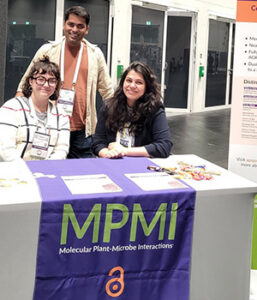
When we think about science, we often picture experiments, data, and breakthroughs. However, behind every discovery lies another essential ingredient: mentorship. Mentorship is a critical, although typically under-emphasized, part of the scientific journey. In the rapidly developing and cross-disciplinary world of molecular plant–microbe interactions, successful mentoring not only determines the way in which discoveries are made, but also shapes careers, determines whether promising young scientists stay in the field, and builds the kind of supportive community that science needs to thrive. At the 2025 IS-MPMI Congress in Cologne, Germany, we, with the support of highly enthusiastic early-career researchers (ECRs), hosted a satellite meeting on Building Careers in MPMI Through Effective Mentoring as an open forum for ECRs and senior scientists to exchange perspectives on mentorship practices. Unlike a traditional lecture, this workshop was designed as an open space for ECRs and senior scientists to come together, share experiences, and talk honestly about what mentorship looks like in practice. The session attracted participants with diverse backgrounds from academia, industry, and international institutions.
In this article, we summarize key highlights from the discussion, identify typical challenges, and provide actionable resources for the molecular plant–microbe interactions community. The discussions made it clear that mentorship is more than just advice or supervision. Done well, it builds confidence, accelerates professional development, and helps researchers feel a sense of belonging. Done poorly, or not at all, it can lead to frustration, lost opportunities, and talented people leaving science altogether. For many ECRs, especially those from underrepresented backgrounds, access to good mentorship can make the difference between staying engaged or walking away. By incorporating mentorship as an important aspect of research culture, we can strengthen streams of career development and build a more diverse, resilient, and collaborative worldwide society.
In the following section, we present the themes and takeaways from these discussions and offer practical recommendations for sustaining mentorship support post-event. We hope that these takeaways will not only provide an account of the event, but also a living document that can be added to as the community’s needs evolve.
Themes Discussed During the Cologne Satellite Meeting
1. Defining Effective Mentor–Mentee Relationships
Participants emphasized that the relationship between mentor and mentee is founded on respect and clarity. Well-defined expectations set early—project goals, writing strategies, and communication approaches—help avoid conflict down the road. Some of the mentors spoke about the utilization of mentorship agreements or lab charters, detailing responsibilities and rights for both parties. The two-way nature of mentorship also was emphasized. Mentees look for guidance, while mentors also receive new ideas, new technical skills, and greater cultural awareness. Open avenues for feedback, such as regular check-ins or anonymous questionnaires, provide an opportunity for both sides to be heard. Partnerships with researchers in molecular plant–microbe interactions from diverse cultural and educational backgrounds are not uncommon within countries. Spanning differences, such as hierarchical mindsets, gender roles, or conflict resolution, takes finesse. Speaking freely about these challenges in Cologne reminded most ECRs that such challenges are the norm, not their personal shortcoming.
2. Authorship and Collaboration
Authorship remains one of the most contested topics in research. ECRs are frequently confused or frustrated regarding the order, criteria, or recognition of contribution. Mentors stressed the importance of early, honest communication about authorship. Tools such as the CRediT taxonomy (contributor roles taxonomy) were proposed to aid in defining contributions other than writing and experiments (i.e., supervision, conceptualization, or data curation). Power imbalances may complicate these discussions. Junior researchers may be hesitant to voice concerns if they fear they will be victimized. Solutions put forward included developing department- or society-wide authorship policies, training to prepare mentors for initiating authorship discussions and initiating them proactively, and making written commitments to reduce misunderstandings. Authorship conflicts erode trust within groups; therefore, proactive steps or interventions are essential to prevent conflicts.
3. Time and Project Management
Dealing with the conflicting demands of experiments, publications, networking, and personal responsibilities is an issue common to many. Some of the ECRs expressed worry about being overcommitted and pressure to deliver on multiple fronts. Techniques such as sorting projects based on urgent versus important matrices that cause ECRs to say no to commitments not aligned with career goals and breaking down long-term projects into milestones with realistic short-term deliverables, were discussed by the mentors. Participants also discussed the importance of the mentor modeling healthy work-life boundaries. When older scientists honor weekends, holidays, and parental leave, this sends a message to protégés that these boundaries are okay. This role modeling is critical in the cutthroat and frenetic business of molecular plant–microbe interactions.
4. Leadership and Independence
Transitioning from being supervised to being an independent scientist is an important but not always transparent step. Mentees expressed a desire for structured opportunities for exercising leadership skills, such as overseeing undergraduates, leading small grant proposals, or delivering presentations at lab meetings. Mentors emphasized the necessity of gradually moving mentees from dependent to collaborative roles. A postdoc, for example, can coauthor a paper with their PI and gain leadership experience in authorship while still being supervised. Grant writing, lab management, and mentoring others were recognized as an area where organizations such as IS-MPMI can provide workshops or resources. These are competencies frequently omitted from formal graduate school or postdoctoral training, but that are crucial for long-term career success.
5. Well-being, Inclusivity, and Work-Life Balance
Science is not performed in a vacuum; scientists bring along their personal lives, identities, and responsibilities. Members discussed the specific challenges faced by caregivers, those in underfunded institutions, and those facing system-level prejudices. Some of the most obvious recommendations were making conversations regarding mental health part of the laboratory environment, providing flexible work schedules when feasible, providing conference travel support for parents of small children, and actively encouraging women and underrepresented groups to seek leadership positions within molecular plant–microbe interactions. By developing inclusive mentorship, not only are we able to retain talent, but the pool of diverse ideas that drive innovation is maximized as well.
Conclusions
The Cologne satellite meeting was a landmark for the acknowledgment of mentorship as one of the main pillars of the molecular plant–microbe interactions community. By summarizing lessons learned and proposing concrete resources, we aim to catalyze a culture in which mentorship is valued on par with grants and publications. We urge IS-MPMI and its members to encourage mentorship activities so that all ECRs get the guidance, support, and recognition they need to thrive. Well-practiced mentorship is not an add-on activity but a way of developing scientific excellence and community sustainability.
Acknowledgments
We wish to formally acknowledge the invaluable guidance provided by Tim Friesen (EIC MPMI), Tessa Birch-Smith (associate EIC MPMI), and Anjali Iyer-Pascuzzi (EIC Interactions) during the planning and execution of the satellite meeting. We also are grateful to our sponsors—Terrana Biosciences, the Donald Danforth Plant Science Center, Corteva Agrisciences, and the Root and Shoot organization—for their generous support. In addition, we extend our appreciation to our co-MPMI Assistant Features Editors Ruby Tiwari and Ved Prakash, as well as to student volunteers Ashley Nelson, Alyssa Flobinus, and Andrea Zanini, whose contributions were instrumental in facilitating the organization and logistical arrangements of the event. Finally, we wish to express our sincere appreciation to our mentors for their time and commitment in serving as speakers, facilitating group discussions, and leading a highly successful mentoring session that provided an impactful start to the 2025 IS-MPMI Congress.