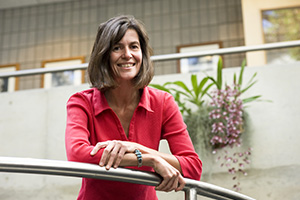
Established by the American Society of Plant Biologists (ASPB) in honor of the late
Dennis R. Hoagland, the
award has been given every three years since 1985 in recognition of outstanding plant research in support of agriculture. Hoagland was the first recipient of the Stephen Hales Prize in 1929 for his outstanding contributions and leadership in plant mineral nutrition.
On receiving this award from ASPB, Harrison recently told IS-MPMI staff, “It’s a great honor to be selected to receive this award from ASPB. Dennis R. Hoagland pioneered research on plant mineral nutrition and his discoveries have had a strong influence on research in my lab, so receiving this particular award has special meaning for me. In addition to my nominator and the selection committee, I would like to thank all the members of my lab whose hard work and discoveries contributed to my receipt of this award.”
Harrison’s research has identified key gene products required for phosphate transport and uptake and shown that redirected plant protein secretion mechanisms target transporters to symbiotic membranes. She has also worked to develop cell biology resources for in vivo cellular imaging in Medicago that expand research capabilities to further unravel the nutritional function of the AM symbiosis.
“I am fascinated by endosymbiosis and how one organism can live within the cell of another organism,” Harrison explained. “In the case of AM symbiosis, this occurs to mutual benefit, which adds a further dimension and relates to my interests in mineral nutrient transport as the fungal symbiont delivers significant quantities of phosphate to the plant.”
“An additional motivating factor,” she continued, “is the need for phosphate in agriculture and in particular our need to increase the efficiency with which we use it. Phosphate (phosphorus rock) reserves are being depleted at an alarming rate.”
You can learn more about Harrison’s research and the focus of her lab by visiting the BTI website and by connecting with her and her lab members at conferences or through e-mail.