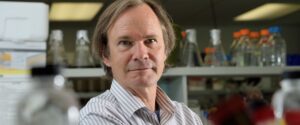
Several friends and colleagues have contributed remembrances of Jonathan’s impact on their lives and careers. Please feel free to share additional thoughts in the “Comments” section.
Sheng Yang He (Michigan State University, U.S.A.): Jon was a close colleague of mine at Michigan State University. In early days of my faculty career, Jon was a key mentor, whom I could talk to for a wide range of topics. I always admired his love for biochemical approaches, even though he was one of the pioneers who adopted molecular genetic approaches to tackle plant pathology questions. His expertise in biochemistry, along with the work of Steve Briggs, was crucial in unraveling the molecular action of fungal HC toxin and its host resistance mechanism in maize, which in my view is a classical achievement in molecular plant pathology. Jon also devoted substantial time to serving the MPMI community. He was IS-MPMI president from 2003 to 2005. He left us too early—very sad.
Steve Briggs (University of California [UC], San Diego, U.S.A.): With my post-doctoral associate Guri Johal, I had the pleasure of collaborating with Jonathan and his graduate student Bob Meeley on the characterization of the maize Hm1 gene for disease resistance. Jonathan was a fantastic scientist, and he excelled in biochemistry at a time when most biologists had adopted easier skill sets suitable for studies of DNA. Jonathan launched a fearless campaign to understand the relationship between maize and a fungal pathogen, Cochliobolus carbonum race 1. His work ultimately led to deep insights and constitutes some of the best explanations for pathogenicity and immunity known in plant science. Our collaboration married my work on the Hm1 gene with Jonathan’s work on HC-toxin reductase to produce a simple and conclusive explanation for plant immunity. Jonathan went on to explain much more about this system and to embrace additional fields of study. Jonathan was a model for how to do science. He trained many scholars and influenced countless others. I met him when we were both graduate students and was struck by his sharp intellect and clear judgment. These qualities remained central to his persona along with integrity, fairness, and generosity. We had recently corresponded about some experiments in my lab, and all of his wonderful qualities were on full display. I can’t believe he is gone at the age of 65 and that I’ll never again enjoy his wry humor and skepticism.
Shauna Somerville (UC, Berkeley, U.S.A.): Jonathan Walton was a colleague when I was a member of the MSU Plant Research Lab; we overlapped about 7 years. We moved into adjacent labs in a newly constructed wing of the plant biology building. Jonathan was generous with his ideas and broadly interested in science. He was someone I could talk over ideas for new projects with or discuss the pitfalls or merits of different experimental approaches. He had a stronger biochemical background than I did, and I, as a geneticist, always felt I came away from our discussions with better experimental strategies in mind. Jonathan was a great colleague and will be very much missed.
Jan Leach (Colorado State University, U.S.A.): I truly admired how Jonathan approached science and research collaborations. He enjoyed science and brought to it an intense focus. From the outside looking in, he contributed rigor and critical thinking to his collaborations, but at the same time, he generously shared his joy for science.
Felice Cervone (Sapienza University of Rome, Italy): Giulia, my wife, and I met Jonathan and Daphne 35 years ago when Jonathan was a post-doc fellow at the University of Rome. We soon became friends and enjoyed the birth of their first son, Nathaniel, and then Colin later. Sadly and unexpectedly, we cry now over the loss of Jonathan.Among many interests, Jonathan was particularly curious about Italy and Italian culture; he also spoke Italian and liked mozzarella cheese and, in general, Italian food. This may be one of the reasons that led us to a collaboration on “my” enzyme, the polygalacturonase, and “his” fungus, Cochliobolus carbonum. The project brought me to Michigan and Jonathan to Italy several times and was very successful, as we were able to clone by PCR a gene encoding a fungal polygalacturonase starting from the sequence data of the purified protein. This was not an obvious achievement at that time, when only a few PCR machines were available worldwide and the tools for purifying proteins were not as advanced as today. Our younger collaborators may still remember Jonathan and me struggling on the bench to obtain enough homogeneous protein for sequencing. It was fun and we enjoyed the bench work.We not only enjoyed science but also many recreational trips together in the United States, Italy, and elsewhere. Sailing from Gaeta to Ustica on my boat is one of the most vivid memories of those trips. The sky was clear, the wind was regular, and I pleasantly spent the night discussing science with my capable co-sailors, Jonathan and Jean Pierre (Metraux). This and other memories of the time spent together are painful in these days. I will miss you very much, Jonathan!
Nyerhovwo John Tonukari (Delta State University, Nigeria): I first met Jonathan Walton in the summer of 1996 when I arrived at Michigan State University to commence my PhD studies. I did my first rotation in his lab and returned there for the rest of my doctoral research. He was the best advisor a graduate student could ask for. He taught me how to review manuscripts for publication and painstakingly corrected my writings. And when I became an editor, he was happy to review manuscripts I sent to him. We had interesting discussions when I returned to the United States in 2013 to write a book. Jonathan was always open to new ideas and welcomed suggestions. I am still amazed at the depth of work I carried out in his lab. I will surely miss my mentor.
Yi-Qiang “Eric” Cheng (University of North Texas, U.S.A.): Jonathan was an influential scholar in the fields of fungal secondary metabolism and plant–pathogen interactions. My exposure to the biochemistry and genetics of natural product biosynthesis and in particular to a histone deacetylase (HDAC) inhibitor (HC-toxin) in his lab as a graduate student heavily impacted my career. As a faculty member for the past 15 years, I am proud to say that I have made significant contributions to the understanding of how FK228 (depsipeptide, an FDA-approved anticancer drug) and related HDAC inhibitors are biosynthesized; my group also discovered several new HDAC inhibitors as drug leads. Jonathan will be dearly missed.
Kazuya Akimitsu (Kagawa University, Japan): Jonathan Walton is my ideal researcher on host-selective toxin research. He comprehensively used plant pathology, biology, chemistry, biochemistry, and molecular biology for the toxin studies. My graduate school and post-doctoral days at Michigan State University, where I was able to do toxin research under the guidance of Jonathan, were wonderful days of my life. After nearly 7 years, East Lansing has become my second hometown, and many of my great memories are related to Jonathan. Jonathan took care of my career development even after I returned to Japan. His words have constantly given encouragement at the critical stage of my academic career. Somehow, I always felt a connection with Jonathan, and email canceled the distance between us. His last words for me were on July 9, 2018, this past summer. He was concerned about the flood in Japan and asked if my family and I were OK. His words—“Please give them our regards. You have our sympathies and best wishes. Our thoughts are with you.”—pierce my heart now. Jonathan Walton was definitely a good scientist and also an excellent educator. Many colleagues from Walton’s lab are still connected well, and we are enjoying our memories of days in Walton’s lab.
Thank you very much for everything, Jonathan. May your soul rest in peace.