Yeram Hong and Jennifer D. Lewis
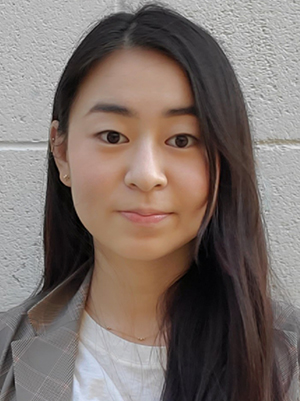
Yeram Hong is an undergraduate student at UC Berkeley in her third year. She is double majoring in forestry and genetics and plant biology. From a young age, Yeram was interested in the natural environment, with a particular interest in plant biology. Her current research interests include protein function in plant nuclear membranes and bacterial plant pathology. Outside of academia, Yeram enjoys drawing, caring for her many houseplants, and reading literary fiction.
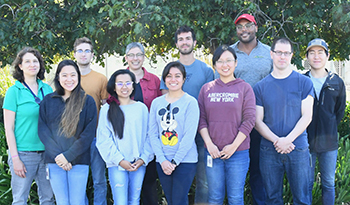
Jennifer Lewis is a principal investigator at the U.S. Department of Agriculture and an adjunct associate professor at UC Berkeley. Her lab studies the plant immune system and its response to the bacterial pathogen Pseudomonas syringae. The Lewis lab is committed to diversifying plant sciences. To encourage this, they are performing interviews with prominent scientists in the field to discuss their research and their perspectives on diversifying science.
Dr. Barbara Kunkel
Dr. Barbara Kunkel is a professor at Washington University in the Department of Biology, where she leads a research group and teaches courses in general and plant biology. Her lab is interested in the complex biological communication between bacterial plant pathogens and their hosts, as well as the bacteria’s virulence mechanisms. Her research group takes a genetic and molecular approach in looking at both bacteria and their plant hosts to develop a more clear and integrative view of disease.
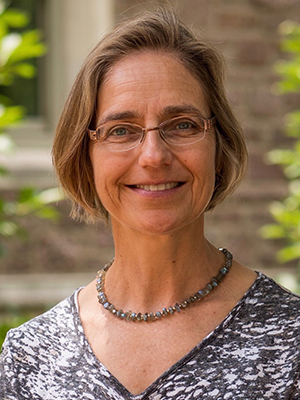
Currently, Dr. Kunkel is interested in investigating the molecular mechanisms of disease caused by Pseudomonas syringae in Arabidopsis thaliana. More specifically, she works to understand how auxin, a plant growth hormone, may play a role in these plant–bacteria interactions. She is particularly interested in understanding how bacteria sense auxin and respond to it and the significance of this interaction. Prof. Kunkel’s research is important in obtaining a fundamental understanding of the virulence strategies pathogens use. This knowledge can be used in the future to develop breeding, cultivation, and control strategies to address the global issues of crop failure and agricultural pathogen outbreaks. By providing fundamental knowledge about the interactions between bacterial pathogens and plants, she believes that her discoveries may be crucial to developing novel biological technologies to address crop losses from disease.
One of her major discoveries was the identification of the coronatine virulence factor as a jasmonic acid mimic in the Arabidopsis–Pseudomonas pathogenic interaction. Her lab stumbled upon CORONATINE INSENSITIVE 1 (COI1), a gene that encodes the coronatine receptor, while examining plant mutants that were particularly resistant to bacterial infection. At the same time, another researcher in her lab, who was focused on the bacterial side, isolated several mutants in a biosynthetic gene cluster in P. syringae that coded for coronatine. Connecting these observations, her lab realized coronatine was particularly significant. Although coronatine had been previously identified, her lab was able to find their “first indication that manipulation of plant hormone biology [aside from purely defense hormones] was important in these pathogen interactions.” They had discovered a virulence factor that the pathogen used as a hormone mimic to modulate the biology of its host!
To recognize her considerable and valuable contributions to the scientific community as an educator, mentor, and researcher, Dr. Kunkel was awarded the AAAS Fellowship as one of the elected Fellows of 2020. In response, Dr. Kunkel commented: “I was surprised to tell you the truth…but I was also very thrilled [as] it gives me some exposure that I would not have had otherwise.” This opportunity allows people to learn about her research and become more interested in the topics that she is researching. Through her achievement, she is paving the way in science as a role model for future women scientists to look up to and have the conviction that success is possible.
Despite her research successes, she had not originally planned on entering this career path. From a young age, Dr. Kunkel had a love for horses and other large animals and dreamed of becoming a veterinarian. Following her dreams, she attended the University of California, Davis. There, she became drawn to the pastoral life of working in the agricultural sector and began studying agricultural sciences. However, this was not meant to be, as she stated, “it was unrealistic because I’m not a farm kid, I’m a city kid.” In her second year of college, Dr. Kunkel found her true passion in a genetics course taught by Dr. Francisco Ayala. She became a genetics major, specializing in plant biology and bacteriology.
After graduating from UC Davis, Dr. Kunkel was unsure about her next steps. However, she loved to learn and was just being introduced to the world of scientific experimentation; graduate school seemed like the next step. Interested in symbiotic relationships, she looked for a graduate school where she could study plant–microbe interactions. Although she was not able to find the right opportunity in this line of interest, she obtained her Ph.D. degree at Harvard studying gene expression in Bacillus subtilis in Dr. Richard Losick’s Lab. For her postdoc, Dr. Kunkel decided to pursue research in the area of plant–pathogen interactions because she wanted to work with plants again and she “wanted to study a system where you could do the bacterial part and the plant host was genetically tractable.” She completed her postdoc at the University of California, Berkeley, with Dr. Brian Staskawicz, studying disease resistance in plants using a genetics approach to investigate which genes control the ability of a plant to detect the pathogen and activate defense responses.
Although Dr. Kunkel had never planned on becoming a university professor, she realized while obtaining her Ph.D. degree and completing her postdoc that she loved the scientific process. During her postdoc, Dr. Kunkel decided she wanted to run her own lab. While she was working in the Staskawicz lab researching disease resistance, she continued to wonder, “What’s the pathogen’s part in this?” She began planning to start a lab that would also study the pathogen as well as the plant host. At this time, researchers had discovered the type III secretion system (T3SS) in bacteria. Using this system, bacteria can inject into their plant hosts proteins that directly affect plant physiology and make the plant more susceptible to infection. Fascinated by the recent discovery of the T3SS, Dr. Kunkel decided that one of her first projects would be to study virulence mechanisms in P. syringae and find out more about the proteins being injected.
As a woman in science, Dr. Kunkel wondered if she could manage a full-time, professional career as a professor. Her mother expressed concerns about her career path as a researcher, intimately aware of the time and dedication required for the job as Dr. Kunkel’s father was a professor of physics at the University of California, Berkeley. Although her parents did encourage her curiosity and to pursue the opportunity, her mother did not believe that Dr. Kunkel, who was in a serious relationship at the time, would be able to “be a mom with kids and a homelife and be a professor.” Along with these concerns, Dr. Kunkel found there was a lack of role models who could show her that this was in fact possible. She stated, “I wanted to look around and try to find role models or examples of what I wanted to do…[but] there weren’t a lot of role models for me at the time.” From her perspective as a professor, Dr. Kunkel emphasized the importance of role models. She said,
There has to be that first role model…. I think if you’re going to be the only woman, and if everybody is white, the only woman of color, that’s two barriers. You have to be the first one, and you have to be the role model? That’s a lot to do…. I teach a freshman biology class in which we have a lot of attrition in that first semester because it’s a challenging class. A lot of people go, ‘Oh my gosh, I can’t handle this.’ And, what we think would be helpful would be…that all the students could see themselves as scientists regardless of their background, [whether they’ve] taken AP Biology [or are] the first generation to go to college [or if] they’re black. How can we help them see themselves as succeeding there?
Another difficulty with being a woman in science was that she found it hard to be recognized for her accomplishments. When she was receiving more opportunities than some of her male colleagues, she said, “Some of them [said], ‘You’re getting all of these interviews because you’re a woman.’ Like ouch, I’m a good scientist and I’m a woman.” She also recalled a story from her years as a postdoc:
I think I did experience some of that when I was a postdoc, and I remember at some point [my co-postdoc] was trying to tell the boss about my results. And finally I just said, ‘Let me tell him. I did this.’ I don’t know if he was consciously trying to grab the credit for it, if he was thinking I couldn’t speak for myself, or what was he doing. The funny thing is this guy is a very very good friend of mine to this day. We had a few rough times in there where I had to just say, ‘Back off guy!’
Despite these past experiences, Dr. Kunkel believes that things are changing for the better. She believes that while the situation is still not perfect, there has been an increase in the number of role models that women can look to to know that they can actively pursue science. With additional focus on the effect of implicit bias and more strategic dispersal of funding for small labs and minorities to pursue research, Dr. Kunkel believes that we can continue to work toward a more diverse and inclusive scientific community.
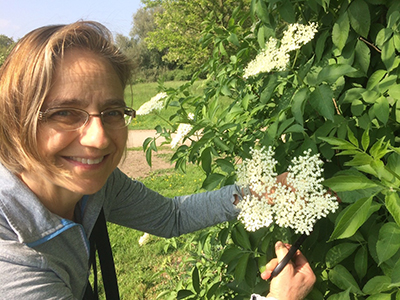
When she is not busy in her lab, Dr. Kunkel loves to be outdoors. She enjoys hiking and gardening, which she says could be why she likes plants so much. She is also an avid reader and is currently part of a book club where she is exposed to many different genres and authors. When asked about her favorite types of books she exclaimed, “I like books with strong women!”