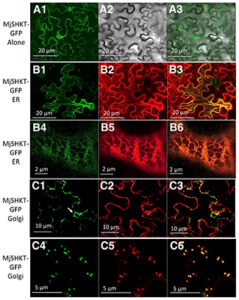
As one of the most destructive plant parasites, Meloidogyne root-knot nematodes infect thousands of plant species. Anil Kumar et al. used transcriptomic data from M. javanica on tomato to identify two candidate M. javanica effectors potentially involved in nematode infection. Functional characterization of these effectors showed that MjShKT is involved in the inhibition of programmed cell death and that MjPUT3 may be involved in modifying root morphology—both of which improve the in planta fitness of the pathogen. This work provides another step toward understanding the important interaction between plants and nematodes.
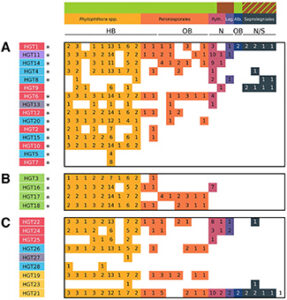
Plant pathogens in the genus Phytophthora cause major economic losses globally. Brent Kronmiller and colleagues evaluated the relationships among 31 newly sequenced individual Phytophthora species using comparative genomics and transcriptomics and found variation in effector compliments, as well as predicted genes, that were likely involved in horizontal gene transfer events. This work provides a substantial resource for future studies involving Phytophthora species.
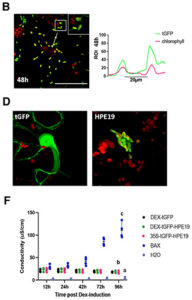
To combat the phloem-limited ‘Candidatus Liberibacter solanacearum’ pathogen, Paola Reyes Caldas and colleagues determined its effector repertoire by predicting proteins secreted via the general secretory pathway across four different haplotypes. Additionally, they investigated effector localization in planta and profiled effector expression in the vector and host. Their results reveal that ‘Candidatus Liberibacter solanacearum’ effectors possess complex expression patterns, target diverse host organelles, and the majority are unable to suppress host immune responses. This research opens the door for identifying novel targets of these effectors to manage vector-borne diseases.