
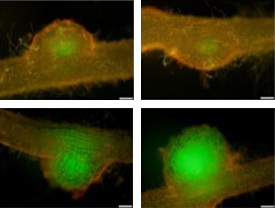
Exploring the role of O-antigen in rhizobium–legume symbiosis, Zhide Tang and colleagues constructed a deletion mutant of MCHK_1752, a lipopolysaccharide (LPS) O-antigen polymerase gene in Mesorhizobium huakuii.
The inoculation of six Astragalus sinicus accessions with MCHK_1752 resulted in highly different symbiotic phenotypes in the accessions, indicating that this O-antigen synthesis gene affects the symbiotic compatibility between M. huakuii and A. sinicus during symbiotic nitrogen fixation.
This study provides new insights into the important role of LPS in the establishment of symbiotic nitrogen fixation systems and lays the foundation for further dissection of the molecular mechanism underlying rhizobium–legume symbiotic nitrogen fixation.
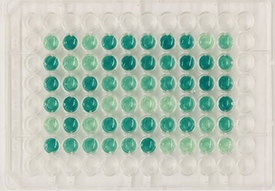
Eeva Marttinen and colleagues screened part of the Physcomitrium patens mutant collection to elucidate the pathway of peroxidase activity in response to chitosan treatment.
Screening of 385 plants for reduced extracellular peroxidase activity enabled the identification of candidate plants with altered responses to chitosan treatment and ultimately led to the discovery of a Rossmann fold protein in P. patens.
This study suggests that the NAD(P)-binding Rossmann fold protein is involved as a novel player in the pathway leading to increased peroxidase activity after chitosan treatment and normal expression of lipoxygenase (LOX)—indicating a complex regulation of the defense response against pathogens in this species of moss.