Earlier this year, MPMI journal Editor-in-Chief Jeanne Harris spearheaded an effort to add assistant feature editors to her editorial board. She looked for creative individuals who will explore new ways to present and amplify journal articles. She was specifically interested in early-career researchers who would best benefit from a behind-the-scenes look at the journal and the chance to work with the MPMI editorial board.
After reviewing submissions from many qualified applicants, Harris invited Morgan Carter, Elizabeth Deyett, and Juan S. Ramirez to be assistant feature editors for MPMI. They will serve two-year terms and contribute 5–8 hours a month.
“I selected these individuals for their interest and skill in science communication, as well as for their creativity. I’m really excited to start working with them!” said Harris. “My main goal is that they will work with us to help integrate the MPMI journal more deeply into the research community.”
Harris imagines the assistant feature editors working on paper summaries for newsletters and press releases, helping with social media promotion, working on the Microgreens podcast, and writing biographies for the first authors. MPMI assistant feature editors will also help with the journal’s big campaigns, including the Top 10 Unanswered Questions in MPMI, the transition to open access, and the January focus issue. She also anticipates that they will come up with their own ideas to amplify important MPMI research.
“I would love to have an MPMI blog, more intersection with IS-MPMI’s Interactions, increased representation of diverse voices, and also stronger links to the wider international community,” Harris said. “The assistant feature editors are all enthusiastic, engaged, and full of ideas. I can’t wait to see what will come out of this!”
Meet the Assistant Feature Editors!
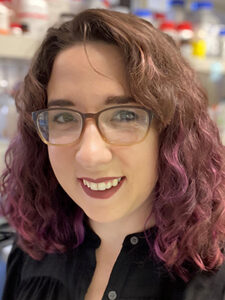
Morgan Carter
Postdoctoral Researcher
University of Arizona
1) Introduce yourself—your background, where you are now, and your current research focus?
I’m Morgan Carter, a postdoctoral researcher at the University of Arizona in Dr. David Baltrus’ lab in the School of Plant Sciences. I grew up in North Carolina, USA, and attended North Carolina State University for my bachelor’s degree in biochemistry. My first experience with plant–microbe interactions was working with tiny banana plants and a pink, fluffy, killer fungus—I was hooked. I graduated in May 2020 with my Ph.D. degree in plant pathology from Cornell University, where I worked on bacterial effector proteins and plant resistance genes. My current research focuses on plant–fungal–bacterial interactions and how bacterial endosymbionts impact fungal behavior. It’s a relatively new area, so there is a lot to discover about how bacteria manipulate fungal hosts and how that impacts plant health!
2) Why did you apply to be an assistant editor?
As an early-career researcher, I’m still learning about journals and was hoping to get a glance at the process, from reviewing to promotion to innovation. It seemed like a great opportunity to help promote a society journal that I’ve published in and care about. I appreciate all the new initiatives to build the MPMI community, especially virtually, and wanted to be a part of that.
3) What do you hope to accomplish during your time as assistant editor and what do you most look forward to in this position?
I’ve seen how affirming it can be to early-career researchers to not only have a paper published in a respected journal but then be an Editor’s Pick or other spotlighted study. I want to find other ways to promote first authors and other early-career researchers, giving them a positive experience with the MPMI journal and community. I’d also like to practice my own science communication skills by writing accessible technical and nontechnical summaries and tweets of articles. While I’m still trying to decide the specific focus of my time as an editor (there are so many options!), I am really excited to play a part in promoting the findings of outstanding plant–microbe research and directly connecting with a global community.
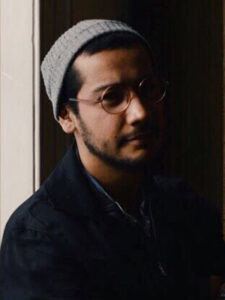
Juan S. Ramirez
Postdoctoral Fellow
Centre of Microbial and Plant Genetics, KU Leuven
1) Introduce yourself—your background, where you are now, and your current research focus?
I come from Bogotá, Colombia. I am a passionate plant molecular biologist interested in the molecular mechanisms underlying plant–microbe interactions and plant responses to environmental cues. In the past I have worked in various fields related to plant–microbe interactions, including plant–bacteria symbiosis and the epigenomic regulation of immunity. Currently, I am a postdoctoral fellow on the Plant–Fungi Interactions team from the Centre of Microbial and Plant Genetics, KU Leuven (Belgium). My current research project aims to identify and characterize regulators involved in induced systemic resistance (ISR) triggered by Trichoderma spp.
2) Why did you apply to be an assistant editor?
I applied to become an assistant editor because, apart from my scientific interest, I have always had a huge passion for reading and writing. I also really enjoy reviewing science and contributing to make research publications better—both content and form-wise. I am positive that as an assistant editor I will be able to contribute to MPMI with my scientific skills but also learn about the backstage behind the peer-review process and publication in science.
3) What do you hope to accomplish during your time as assistant editor and what do you most look forward to in this position?
I am aware of the need to communicate and divulge research to make it as available as possible for whoever wants or needs it. I want to increase the visibility and reach of the research published in MPMI. With the current technologies, there are plenty of tools we can use to ensure this, and I am convinced that the assistant editor initiative will have a positive impact on the journal’s trajectory, especially now that it is transitioning to open access. I look forward to seeing the results of this new collaboration and witnessing the journal grow during the process. I am also looking forward to learning from the editorial staff and their experience in the publishing world.
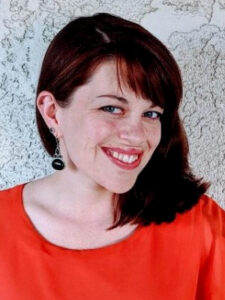
Elizabeth Deyett
Postdoctoral Researcher
University of California Riverside
1) Introduce yourself—your background, where you are now, and your current research focus?
I grew up in a town so small, my high school was more populated. After high school I went to the University of New Hampshire to become a genetic counselor but quickly changed majors to microbiology after my first microbiology course. Not really knowing what to expect in graduate school, I packed up all my worldly possessions and went on the classic Route 66 road trip with my boyfriend (now fiancé). For the last 5 years, we have immersed ourselves in California culture. Hiking in all the beautiful landscapes California has to offer, from the redwoods to Joshua Tree, we were determined to see them all! We completed our little nuclear family when we adopted a cat we named Ghost and a dog we named Yersinia (after the microbe that caused the black plague).
We both worked at the University of California Riverside. I was a Ph.D. student, and he was a lab manager. With no plant background, but the promise of pursuing microbiome research, I joined Philippe Rolshausen’s lab and quickly became the lab’s bioinformatician. My projects largely revolved around deciphering the endophytic (microbes living within the plant) microbiome of grapevines with the goal of finding healthy microbes to combat pathogens like Xylella fastidiosa, the causal agent of Pierce’s disease. I also dabbled in microbiome research of citrus and avocado, authoring five papers.
My doctoral defense was in March 2020, just days before the campus shut down. I decided to stay as a postdoc under the mentorship of Dr. Rolshausen to continue my work on Pierce’s disease biocontrols but also got involved in projects involving arbuscular mycorrhizal fungi, zero-waste agriculture, and grapevine nurseries. My fiancé got a job offer in Cambridge, MA, USA, so we flew back to the East Coast. While COVID has brought on new challenges for everyone, I am grateful I am able to be happily employed as a postdoc on the West Coast while working in the East Coast.
2) Why did you apply to be an assistant editor?
Writing is always something I’ve loved doing. When I was young I wanted to be a poet, then a novelist, then a journalist. Somewhere along the way I found science, and that was the track I took from college on.
In the past few months I’ve really been forced to think about my future and potential career tracks, and that’s when I discovered you could have a career in science writing and editing. Being an assistant editor is a great opportunity to understand the ins and outs of scientific journals. I’ve been an author on scientific papers, but I’m really excited to see the other side of things. It’s a much bigger picture of the whole publishing process.
3) What do you hope to accomplish during your time as assistant editor and what do you most look forward to in this position?
I’m really looking forward to communicating with all the amazing scientists and broadening my networking. I feel sometimes in research we can become very niche-oriented and only focus on the select few who are studying the same thing as us. I sometimes forget there’s so many other amazing people doing extraordinary work out there. I’m hoping that this assistant editor position will give me the opportunity to meet some really great people and share their stories with the broader communities.
Take a look at Deyett’s website.