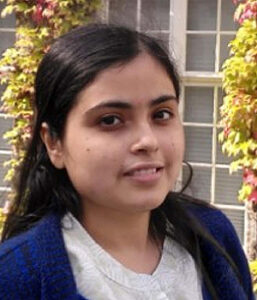
In 2020, MPMI spearheaded an effort to add assistant feature editors (AFEs) to the MPMI Editorial Board. AFEs have two-year appointments to explore new ways to present and amplify journal articles. After reviewing submissions from this year’s applicants, four new AFEs have joined the MPMI Board. AFEs will also contribute to Interactions content. Meet them here.
Ved Prakash
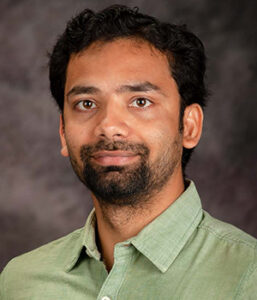
Position
Postdoctoral Fellow, Department of Plant Pathology, Kansas State University, Manhattan, KS, USA
Introduce yourself—your background, where you are now, and your current research focus.
I come from Varanasi, India. I have completed my B.S. degree in science from Udai Pratap Autonomous College and M.S. degree in applied microbiology from Banaras Hindu University. I studied host-virus interactions during my doctoral research at Jawaharlal Nehru University, New Delhi, India, under the supervision of Prof. Supriya Chakraborty. As a senior research fellow, I worked with Dr. Ramesh Sonti at NIPGR, New Delhi, generating a CRISPR/CAS9-edited rice variety for improved resistance against Xanthomonas oryzae. In 2021, I moved to Cornell University in Ithaca, NY, USA, as a postdoctoral associate in the lab of Dr. Clare Casteel, where I studied how viruses can help plants survive under drought stress.
At present, I am working as a postdoctoral fellow in the lab of Dr. Shahideh Nouri at Kansas State University. Here, I am trying to find new source(s) of resistance/tolerance against wheat streak mosaic virus and Triticum mosaic virus by utilizing wild wheat relatives, ultimately aiming to improve bread wheat.
Why did you apply to be an assistant editor?
I am very excited about my role as an AFE for the MPMI journal. Studying the mechanisms by which pathogens can cause disease in certain hosts and how some hosts show resistance to the disease fascinates me. This is why I applied for the AFE position, as working with the journal will enhance my understanding of the field. My expertise in reviewing scientific articles and my background in plant virology research have equipped me with a strong foundation in scientific knowledge and communication abilities. The chance to contribute to the journal, which publishes cutting-edge studies in the area of plant-pathogen interactions, excites me, and I’m looking forward to helping to expand the audience for the articles the journal publishes. Furthermore, this position presents a special opportunity for me to develop professionally and stay at the cutting edge of plant-pathogen interaction research.
What do you hope to accomplish during your time as an assistant editor, and what do you most look forward to in this position?
As an AFE, I would like to enhance the reach of the published articles to the audience. I can do this by writing commentaries about the published articles, interviewing the main/lead authors, and contributing to the press release for the journal. I am also looking forward to working with the editorial team to foster a collaborative and supportive environment that encourages the best scientific communication. I also will use this opportunity to make new connections and collaborations for scientific work. Additionally, I am excited about the opportunity to stay up-to-date on the latest advancements in plant-pathogen interactions and to broaden my knowledge in various subfields.
Jawahar Singh

Position
Postdoctoral Research Associate, Sainsbury Laboratory, University of Cambridge, Cambridge, UK
Introduce yourself—your background, where you are now, and your current research focus.
My name is Jawahar Singh, and I am currently a postdoctoral research associate at the Sainsbury Laboratory, University of Cambridge (SLCU), under the supervision of Dr. Sebastian Schornack. My academic journey began with perusing an M.S. degree in biochemistry at West Bengal State University, Kolkata, India. I then explored the proteomic responses of pearl millet to salinity stress during my tenure as a research Fellow at Jai Narain Vyas University (JNVU), Jodhpur, Rajasthan, India.
I completed my Ph.D. degree at the National Institute of Plant Genome Research (NIPGR), New Delhi, India, where my research focused on elucidating the molecular components and associated signaling involved in chickpea-rhizobia symbiosis. My expertise in symbiotic interactions was honed further during my postdoctoral fellowship at the Universidad Nacional Autónoma de México (UNAM), where I investigated the nodulation process in common bean under phosphorus deficiency.
Currently, my research at the SLCU focuses on understanding the molecular mechanisms of nitrogen acquisition in legumes, with an emphasis on improving nitrogen fixation and field performance in crops like cowpea and soybean through molecular, genetic, and cell-biology approaches.
Why did you apply to be an assistant editor?
I applied to be an assistant editor for MPMI because I am passionate about science communication and want to contribute to the dissemination of cutting-edge research in this field. Being an assistant editor provides a unique opportunity to stay abreast of the latest developments, engage with innovative research, and support the scientific community by ensuring high-quality publications. I firmly believe in the transformative power of science to improve lives, and I am thrilled at the prospect of contributing to MPMI‘s mission. My background as a researcher in plant-microbe interactions, coupled with my expertise in effectively communicating scientific concepts to diverse audiences, uniquely positions me to support the journal’s objectives.
What do you hope to accomplish during your time as an assistant editor, and what do you most look forward to in this position?
During my tenure as an assistant editor, I want to highlight and simplify the significant work done by first authors and early-career scientists. This role will also be a fantastic opportunity to broaden my knowledge on plant-microbe interactions beyond my personal research focus. I am excited about gaining insights into the editorial process and enhancing my editorial skills, which will be invaluable for my future career in academia and research.
Becoming an AFE with MPMI will not only strengthen my scientific network, but also accelerate my career progression. Ultimately, I aspire to become an independent researcher and lead a research group dedicated to exploring plant symbiotic interactions for sustainable agriculture. MPMI‘s esteemed reputation and commitment to impactful science communication make it an ideal platform for achieving these aspirations.
Meenu Singla-Rastogi
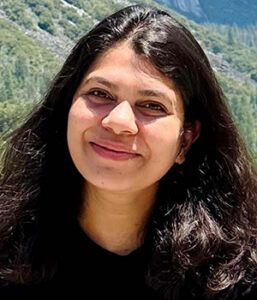
Position
Postdoctoral Researcher, Innes Lab, Indiana University Bloomington, Bloomington, IN, USA
Introduce yourself—your background, where you are now, and your current research focus.
I am Meenu Singla-Rastogi, a postdoctoral researcher in the lab of Prof. Roger W. Innes in the Department of Biology, Indiana University Bloomington. My current research focus is to investigate the role of biomolecules, including RNA and proteins, present in the plant apoplast and on the leaf surface, and whether their secretion in these extracellular compartments has biological significance in the context of plant-microbe interactions. My latest scientific obsession is to learn whether host-induced gene silencing is mediated by the silencing RNAs that we have recently discovered to be present on leaf surfaces and whether the phytopathogens can take up these RNAs much before penetrating the plant cell wall. Prior to this, I completed my Ph.D. degree in plant immunity under the supervision of Dr. Lionel Navarro at IBENS, Paris, in 2019. I elucidated the role of plant-encoded artificial small RNAs in targeting virulence genes of phytopathogenic bacteria, which lack a conventional eukaryotic-like RNAi machinery. Overall, this work unveiled a novel phenomenon of trans-kingdom regulation between a eukaryotic host and a prokaryotic pathogen, which was previously unknown. I have always been intrigued by the arms race between plants and their interactions with pathogens and wonder what role the secreted RNAs might play in this warfare.
Why did you apply to be an assistant editor?
I delved into the world of scientific editing and gained editorial experience when I served as a freelance specialist editor for Cactus Communications during the global pandemic. When I learned about the AFE position, I applied for it without a second thought, as I wanted to gain an insider view of the meticulous editorial process that is essential in maintaining the high standards of a reputable journal like Molecular Plant-Microbe Interactions (MPMI). I am drawn to the MPMI journal for its dedication to promoting fundamental, as well as cutting-edge, plant-microbe interaction research and facilitating cross-disciplinary dialogue in innovative ways. IS-MPMI was the first international scientific community I engaged with when I attended the IS-MPMI Congress in 2019. I then organized a plenary session titled “Who Wants to Be an (MPMI)llionaire?” at the 19th IS-MPMI Congress of held in Providence, RI, USA. My goal was to engage the undergraduate, graduate, and postdoc attendees with the diverse topics of plenary talks in a fun and novel way, even if the topics may not be of particular interest to them. This scientific society has provided me with immense opportunities and supported me to grow as an early-career researcher. The primary reason behind my applying for this position was to engage with the IS-MPMI community more intrinsically.
What do you hope to accomplish during your time as an assistant editor, and what do you most look forward to in this position?
This is a unique opportunity, and I am happy to become an integral part of a dynamic editorial team. I am sure that this opportunity will enable me to make meaningful contributions toward advancing the field of plant-microbe interactions while further developing my skills as an effective science communicator and editor. As an AFE, I am most excited about articulating nontechnical, but well-researched and -structured, content to feature or highlight the work published in the MPMI journal. This will not only allow me to communicate and network with peers at similar career stages, but also help me expand my knowledge on topics that are beyond my research interests. Given an opportunity, I wish to explore new ways of scientific storytelling to capture the interest of a broad readership, as I am deeply passionate about science communication and enjoy organizing fun and engaging activities to promote plant science. I also look forward to working closely with the editorial team and gaining insights into the editing, reviewing, and decision-making processes.
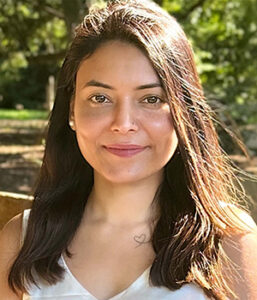
Ruby Tiwari
Position
Postdoctoral Associate, Donald Danforth Plant Science Center, Olivette, MO, USA
Introduce yourself—your background, where you are now, and your current research focus.
I am Ruby Tiwari, currently a postdoctoral associate in Dr. Dilip Shah‘s lab at the Donald Danforth Plant Science Center. Originally from Delhi, India, I completed my Ph.D. degree in genetics at the University of Delhi, South Campus, under the guidance of Prof. Manchikatla Venkat Rajam. My doctoral research focused on RNAi-mediated silencing of abiotic stress-related genes to engineer heat and drought tolerance in soybean.
In my current role at the Danforth Center, my research focus is on exploring the potential of antimicrobial peptides to raise crop productivity. I am investigating the mode of action of plant defensins and defensin-like peptides to combat fungal diseases. My work aims to advance our understanding of these peptides and their applications in enhancing crop resilience and agricultural productivity.
Why did you apply to be an assistant editor?
I am inspired by the innovative ways MPMI promotes research and supports researchers, and I am excited about the opportunity to contribute to these efforts. My experience during my Ph.D. studies highlighted the challenges of communicating scientific research to nonspecialists, such as explaining my work to my parents. This experience underscored the importance of effective science communication and inspired me to seek ways to simplify and clarify research for a broader audience.
This role offers a unique opportunity to develop and apply creative communication strategies, turning complex research into digestible content. I am eager to engage with cutting-edge research, refine my skills in science communication, and contribute to making significant scientific knowledge more accessible and impactful worldwide. Moreover, I am passionate about celebrating the achievements and diversity within the scientific community and am committed to promoting open, inclusive, and equitable access to knowledge.
What do you hope to accomplish during your time as assistant editor, and what do you most look forward to in this position?
I aim to explore and implement innovative ways to communicate complex research findings to a broader audience. By translating intricate scientific concepts into accessible and engaging content, I hope to contribute to a comprehensive understanding of plant-microbe interactions. I want to refine my scientific communication abilities, enhance my creative thinking, and strengthen my interpersonal skills. These competencies are crucial for effectively conveying research insights and fostering meaningful connections within the scientific community.
I look forward to engaging with scientists from diverse backgrounds, discussing their research, and integrating their perspectives into the journal. Building relationships within the plant-microbe community and contributing to collaborative efforts are important aspects of my role. I am excited to be part of a dynamic team that promotes and disseminates groundbreaking research. Overall, I am enthusiastic about the prospect of connecting with researchers and contributing to the multidisciplinary field of plant-microbe interactions.


 Best Student Paper
 Honorable Mentions