Category: ​​Issue 1 •​ 2023​

Savithramma Dinesh-Kumar wins the 2019 American Phytopathological Society Noel T. Keen Award

ISMPMI 285 2 1955560 removebg preview

Issue 3

2019

interactions

Did You Know

IMG 3368

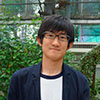
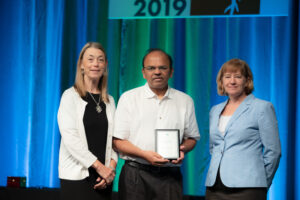
Savithramma Dinesh-Kumar, University of California-Davis, (center, with Immediate Past President Mary Palm and President Kira Bowen) is the 2019 winner of the American Phytopathological Society Noel T. Keen Award. The Keen Award recognizes research excellence in molecular plant pathology. Nominees have made outstanding contributions and demonstrated sustained excellence and leadership in research that significantly advances the understanding of molecular aspects of host–pathogen interactions, plant pathogens or plant-associated microbes, or molecular biology of disease development or defense mechanisms.

1. What area(s) of molecular plant-microbe interactions do you feel your research has impacted most?

NLR immune receptor function in pathogen recognition and immune signaling; role of inter-organellar communications during immunity; and the role of autophagy in programmed cell death and immunity.

2. What advice do you have for young scientists aspiring to achieve the level of science that has major impact?

Try to be broad in your thinking and ask questions that will lead to significant advances or a paradigm shift rather than just making incremental advances. Don’t hesitate to embark on questions that challenges established dogma(s).

3. When you were a postdoc, what had the largest influence on your decision to enter your specific research area in your permanent position? Was this a “hot topic” at the time, or did you choose to go in a different direction?

I joined Barbara Baker’s group at UC Berkley/PGEC as a post-doc because I wanted to combine my virology knowledge with plant genetics and answer questions from the host side on how viruses exploit hosts. I was involved in cloning one of the first NLR immune receptors that confers resistance to a virus in Barbara Baker’s group. Since we knew nothing about how NLRs function, I decided to work on this area in my permanent position. Although NLRs were cloned 25 years ago, it is still a hot topic today. I personally believe that in any area of research there is always a “hot topic” because there are so many fundamental unanswered questions in biology.
An interview with Saskia Hogenhout, winner of the British Society of Plant Pathology’s RKS Wood Prize

ISMPMI 285 2 1955560 removebg preview

Issue 3

2019

interactions

Did You Know

Saskia Hogenhout 3

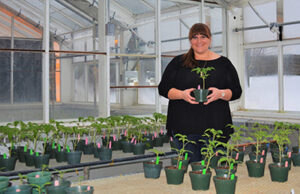
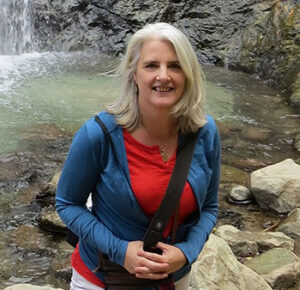
 Saskia Hogenhout (John Innes Centre) is the 2019 recipient of the British Society of Plant Pathology’s RKS Wood Prize. The prize is named and awarded in honor of Professor RKS Wood to acknowledge his role in driving the establishment of the discipline “Physiological Plant Pathology”. The prize celebrates excellent science in the study of plant disease biology and its application in the protection of plants against pathogens.

1.  What area(s) of molecular plant-microbe interactions do you feel your research has impacted most?

Genomics and mechanistic molecular research on insect-microbe-plant systems traditionally viewed as non-tractable, notably leafhopper-transmitted phytoplasma bacteria and the notorious aphid insect pests. Also, demonstrating that bacterial effectors act beyond suppressing plant immunity by reprogramming plant development and enhancing susceptibility to insect vectors. And, contributing evidence that phytoplasma effector genes lie on mobile genetic elements, knowledge that has been used in comparative phylogenomics analyses to show that effector genes move horizontally across phytoplasma genomes.

2.  What advice do you have for young scientists aspiring to achieve the level of science that has major impact?

Take leadership in pursuing your passion, be open to and creatively use opportunities that are presented to you, enjoy learning, seek advice from your colleagues, at all levels, without losing sight of your own goals, be grateful for all you achieved so far, and be patient.

3.  When you were a postdoc, what had the largest influence on your decision to enter your specific research area in your permanent position? Was this a “hot topic” at the time, or did you choose to go in a different direction?

I always have been intrigued by how parasites communicate with their hosts. Upon my PhD graduation, I considered to do a postdoc on Plasmodium (Malaria) – mosquitoes interactions and I wrote a research proposal for this. But then I got an opportunity to start my own research program on molecular insect-plant interactions at The Ohio State University. When Prof Lowell (Skip) Nault told me about his research program on spiroplasmas and phytoplasmas, I was sold. The rest is history.

Youssef Belkhadir Receives Weihenstephan Science Prize of the City of Freising

ISMPMI 285 2 1955560 removebg preview

Issue 3

2019

interactions

Did You Know

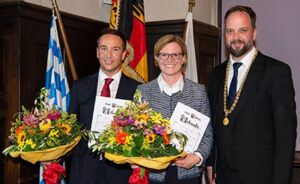
OB Eschenbacher honors Youssef Belkhadir (left) and Corinna Dawid Photo City of Freising

The Weihenstephan Science Prize of the City of Freising is awarded every two years in order to promote Freising as a university and science city of international standing, and at the same time to promote outstanding scientific achievements at the Freising-Weihenstephan location. Dr. Belkhadir received the award along with colleague Corinna Dawid. Both Belkhadir and Dawid worked as a team to study plant immune responses. More information can be found here.

Congratulations to 2019 IS-MPMI Congress Poster Award Winners

ISMPMI 285 2 1955560 removebg preview

Issue 3

2019

interactions

Did You Know

The poster sessions at this year’s IS-MPMI Congress in Glasgow, Scotland, spotlighted just some of the amazing work that’s being done by the society’s members. Past IS-MPMI President Regine Kahmann organized a competition for poster presenters, and the MPMI journal sponsored prizes for the top-five graduate student-presented posters. More than 300 poster presentations were evaluated for visual aesthetics, content organization, speaker communication, and scientific impact. Each of this year’s winners received a congratulatory certificate and £100.

2019 Winners

Emile

 Emile Gluck-Thaler, The Ohio State University

View their poster

View their abstract

Clemence

 Clemence Marchal, John Innes Centre

View their poster

View their abstract

Hector

 Hector Montero, University of Cambridge

View their poster

View their abstract

Meenu

 Meenu Singla Rastogi, IBENS-CNRS, France

View their poster

View their abstract

mamoru matsumura

 Mamoru Matsumura, Nagoya University

Poster will be available at a later date.

View their abstract

A huge thank-you is owed to Regine for organizing the competition. Sixteen other judges graciously agreed to evaluate and rank the posters. This was not a small undertaking, and the judges deserve tremendous recognition for their volunteer efforts.

Poster Competition Judges

Maria Alvarez

Laura Grenville-Briggs Didymus

Peter Dodds

Caroline Gutjahr

Jeanne Harris

Ping He

Sheng Yang He

Saskia Hogenhout

Regine Kahmann

Thomas Kroj

Erh-Min Lai

Mary Beth Mudgett

Uta Paszhowski

Keehoon Sohn

Jens Stougaard

Yuanchao Wang

Alga Zuccaro

Ko Shimamoto Travel Awardees Participate in Communication Workshop at IS-MPMI Congress

ISMPMI 285 2 1955560 removebg preview

Issue 3

2019

interactions

Did You Know

awardee workshop1

Have you ever found yourself talking with your aunt or uncle at a family gathering, a friend from secondary (high) school, or your rideshare driver—and you are asked the question, “So, what kind of work do you do?” You don’t want them to think, “Oh, something with plants,” right? Your work is much more important than that. How would you describe your research in a way that will be both understandable and memorable?

On the first day of the IS-MPMI Congress in Glasgow, the 2019 Ko Shimamoto Travel Awardees participated in a workshop on public communication and outreach. The goal of the workshop was to help each participant develop a 2-minute “elevator talk” that could be used to introduce a research project to a general audience. Why is it called an “elevator talk”? This type of summary is meant to be given in a short amount of time—about 2 minutes, which is the average time it takes to ride an elevator in New York City. The name is not meant to be taken literally. (An elevator ride is much shorter in many places!) Instead, it is meant to describe any kind of casual situation in which you find yourself wanting to summarize your project to someone who is not familiar with it.

The idea for the workshop was put together by Dr. Dennis Halterman and was part of a USDA-NIFA/NSF-funded research grant together with Dr. Wenbo Ma. The workshop was co-organized by Drs. Halterman, Ma, and Roger Innes. The awardees were asked to come to the workshop with drafts or outlines of their talks, and after a brief introduction and some pointers presented by Dr. Dennis Halterman (USDA-ARS, Madison, WI), awardees worked in small groups with IS-MPMI members (see below) to refine and enliven their talks. The awardees were encouraged to practice their talks (or variations of them) throughout the meeting. So, if you see a travel awardee in the hallway at work or at a future meeting, ask to hear his or her elevator talk and prepare to be fascinated.

A huge thank-you to the IS-MPMI members who helped the awardees develop their pitches during the workshop:

Andrew Bent, University of Wisconsin, Madison

Tolga Bozkurt, Imperial College, London

Eunyoung Chae, National University of Singapore

Tim Friesen, USDA-ARS, Fargo, ND

Dennis Halterman, USDA-ARS, Madison, WI

Roger Innes, Indiana University

Sophien Kamoun, John Innes Centre

Ksenia Krasileva, University of California, Berkley

Ann Lichens-Park, USDA-NIFA

Wenbo Ma, University of California, Riverside

John McDowell, Virginia Tech

Michael Mishkind, National Science Foundation

Mary Beth Mudgett, Stanford University

Sylvain Raffaele, INRA

Sebastian Schornack, University of Cambridge

Exciting Changes for MPMI! Single PDF Submissions Option Added for Authors and Technical Advances to Be Freely Available to All Readers

ISMPMI 285 2 1955560 removebg preview

Issue 3

2019

interactions

Did You Know

MPMI Authors Can Now Submit an Article in One PDF Upload

MPMI’s editorial board is looking for ways to improve and streamline the MPMI author experience. Authors now have the option to upload an article as a single PDF file for the initial submission. That file should include properly formatted text and tables and figures with captions. Implementing this new procedure eliminates the need for multiple file uploads and greatly simplifies the initial submission process.

When an article is accepted, the author will still need to upload text files for the main document and high-resolution image files for all figures. Go here​ to submit your paper as a single PDF file.

Technical Advances Now Freely Available

The MPMI journal is also excited to announce that all Technical Advances will now be freely available once they have been edited and formatted. This means they can be accessed, read, and downloaded by anyone. Technical Advance articles describe innovative experimental techniques and their uses, and like Resource Announcements, they are tools that are helpful to the MPMI community.

“It’s important to MPMI that we provide a service to the research community,” according to MPMI Editor-in-Chief Jeanne Harris. “By making the latest techniques and procedures freely available, we are broadening our base of people who are doing the kind of research that we would like to publish and read about.”

By making these article types freely available (along with Resource Announcements), MPMI hopes to stimulate the field to try new approaches. Explains Harris, “This is a way that people can stay up to date in the technical processes and get ideas for how to solve new problems, technical or experimental.”

Read some of the latest Technical Advances published in MPMI:

Defining Transgene Insertion Sites and Off-Target Effects of Homology-Based Gene Silencing Informs the Application of Functional Genomics Tools in Phytophthora infestans

Andrea L. Vu, Wiphawee Leesutthiphonchai, Audrey M. V. Ah-Fong, and Howard S. Judelson

Phytophthora infestans Sporangia Produced in Culture and on Tomato Leaflet Lesions Show Marked Differences in Indirect Germination Rates, Aggressiveness, and Global Transcription Profiles

William E. Fry, Sean P. Patev, Kevin L. Myers, Kan Bao, and Zhangjun Fei

Development of a Pseudomonas syringae–Arabidopsis Suspension Cell Infection System for Investigating Host Metabolite-Dependent Regulation of Type III Secretion and Pattern-Triggered Immunity​

Qing Yan, Conner J. Rogan, and Jeffrey C. Anderson

A Toolbox for Nodule Development Studies in Chickpea: A Hairy-Root Transformation Protocol and an Efficient Laboratory Strain of Mesorhizobium sp.

Drishti Mandal and Senjuti Sinharoy

InterConnections: A Reflection About Writing a Scientific Article for the MPMI Journal from Robyn Roberts

ISMPMI 285 2 1955560 removebg preview

Issue 4

2019

interactions

Did You Know

Editor’s note: This is the first article in a new series for IS-MPMI Interactions called InterConnections (because it connects Interactions with the MPMI journal), where we will highlight first authors of “Editor’s Pick” articles from the MPMI journal. The November “Editor’s Pick” is “Mai1 Protein Acts Between Host Recognition of Pathogen Effectors andMitogen-Activated Protein Kinase Signaling​”; the first author is Robyn Roberts and the corresponding author is Gregory B. Martin.

05 Robyn photo3

This project is a demonstration of how persistence is key to publication. Like many labs with “historical” projects that get passed down from postgrad to postgrad, this particular project began about a decade ago when Mai1 was discovered in a yeast-two-hybrid screen (by co-author Kerry Pedley). Several postdocs and undergraduates contributed to the project over the decade, but through the years, as people left the lab for other opportunities, this project followed a postdoc chain until it landed on my bench. With good timing between my other projects and the help of experienced undergrads, I was able to contribute some key experiments that supported the role and importance of Mai1 in NLR-triggered immunity (NTI).

I became interested in plant–microbe interactions when I was an undergraduate researcher in Roger Innes’s lab at Indiana University (IU), studying plant immunity in the arabidopsis–powdery mildew system. I was really surprised at how knocking out single genes in plants could have such drastic impacts on immunity. I found a lot of joy in working with plants (and microbes) in research, and after earning my BS degree in biology at IU, my interests in plant pathology led me to the University of Wisconsin–Madison, where I earned my PhD in plant pathology. There, I studied the molecular mechanisms of translation of a wheat virus, Triticum mosaic virus. While I found viruses really fascinating and clever in how they package so much information in their small genomes, I really wanted to move back to the plant side to study plant defense. This led me to a postdoctoral position in Greg Martin’s lab at the Boyce Thompson Institute (BTI) to work on tomato–bacterial interactions with a focus on plant immunity.

I really like postdoc life. Without the pressures of writing a thesis and facing a deadline to graduate, I can be more creative in my research and have more diverse projects. Compared with graduate school, I feel that I have a better handle on time management in the lab and have more experience training undergraduate researchers, so I can accomplish more in less time. I also really enjoy the opportunities to mentor students and work on my own professional development, including my writing and transferrable skills (soft skills). While there is sometimes more pressure to publish as a postdoc than a graduate student, I find that most of this pressure is self-driven and motivated by my desire to share my research with broader scientific audiences.

I participate in a number of extracurricular activities, both professionally and as hobbies. Professionally, I am actively involved in our BTI Postgraduate Society (PGS) and in scientific outreach. My hobbies include volunteering with my dog in Cornell Companions at a local nursing home, hiking around the Finger Lakes and in the Adirondacks, playing saxophone, and crocheting. In graduate school, I was also a part of deBary-tones, an outreach-based, plant pathology-themed band and received funds from the APS Foundation and OPRO to record an album of our music (titled Faster Than the Speed of Blight).

InterWorkings: National Mentoring Month

ISMPMI 285 2 1955560 removebg preview

Issue 4

2019

interactions

Did You Know

​January is National Mentoring Month in the United States, but awareness of the importance of mentoring in workplace interactions is essential everywhere. Whether you are hosting a summer research intern for the first time or have mentored students and postdocs for decades, it’s a good idea to think about the role of mentors in training the next generation of scientists.

Mentors play an important role in the success of students, postdocs, and other laboratory personnel, and both the mentor and the mentee share a responsibility to make their relationship productive and rewarding. Each connection between a mentor and a student is unique and will evolve over time, resulting in the need to make adjustments to the relationship periodically. Today’s workforce is composed of people with increasingly diverse backgrounds, which may add a layer of complexity. One goal of effective mentorship should be to allow this to enrich, rather than confound, the relationship.

Many of us recognize the importance of a healthy mentoring relationship. Even so, it’s useful to highlight the benefits to both the mentor and the mentee:*

Mentoring benefits students/postdocs because:

  • It supports their advancement in research activity, conference presentations, publication, pedagogical skill, and grant writing.
  • They are less likely to feel ambushed by potential bumps in the road, having been alerted to them and provided with resources for dealing with stressful or difficult periods in their graduate careers.
  • Mentors can provide experiences and networks to help them improve their prospects of securing professional placement.
  • It provides knowledge that someone is committed to their progress—someone who can give them solid advice and be their advocate and can help to lower stress and build confidence.
  • Constructive interaction with a mentor and participation in collective activities he or she arranges promote engagement in the field.

And it rewards mentors in an abundance of ways:

  • Your mentee will keep you abreast of new knowledge and techniques and apprise you of promising avenues for research.
  • Your reputation rests in part on the work of your former students; sending successful new scholars into the field increases your professional stature.
  • Your networks are enriched. Helping mentees make the professional and personal connections they need to succeed will greatly extend your own circle of colleagues.
  • Good students will be attracted to you. Word gets around about who the best mentors are, so they are usually the most likely to recruit—and retain—outstanding people.
  • It’s personally satisfying. Seeing your mentees succeed can be as rewarding as a major publication or significant grant.

If you are interested in resources to help you enhance your mentoring capabilities, consult the following resources:

Online Resources

  • Summary of a panel discussion of science-based studies to improve mentoring relationships.
  • The National Research Mentoring Network provides some resources for mentor training and networking opportunities for both mentors and students/postdocs.
  • This resource was developed by Jo Handelsman (University of Wisconsin–Madison) and provides an outline for leading an 8-session seminar on the process of learning to be a mentor.
  • Chapter 5 provides an overview of mentoring, including responsibilities and strategies to strengthen your mentoring relationship.
  • collection of articles from Nature Careers, profiles of Nature’s annual Mentoring in Science award winners, and relevant blog posts from Naturejobs.

Books

  • Barker, K. 2010. At the Helm: Leading Your Laboratory, 2nd ed. Cold Spring Harbor Laboratory Press, Cold Spring Harbor, New York.
  • Dean, D. 2009. Getting the Most Out of Your Mentoring Relationships: A Handbook for Women in STEM. Springer-Verlag, New York.
  • Institute of Medicine, National Academy of Sciences, and National Academy of Engineering. 1997. Adviser, Teacher, Role Model, Friend: On Being a Mentor to Students in Science and Engineering. National Academies Press, Washington, DC. DOI: 10.17226/5789

* Adapted from How to Mentor Graduate Students: A Guide for Faculty​ (2019), Rackham Graduate School, University of Michigan.

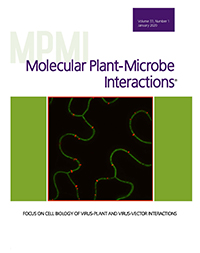
Watch for the upcoming MPMI Focus Issue on Cell Biology of Virus-Plant and Virus-Vector Interactions.

ISMPMI 285 2 1955560 removebg preview

Issue 4

2019

interactions

Did You Know

07 mpmi coversample1

Focus issue guest editors Aiming Wang, Tessa Burch-Smith, and Yi Li have compiled 10 research and review articles that explore aspects of the cell biology of virus interactions, both with the plant hosts and their insect vectors. Articles include:

Molecular Plant-Plum Pox Virus Interactions
Bernardo Rodamilans, Adrián Valli, and Juan Antonio García

Translatome Profiling of Plum Pox Virus–Infected Leaves in European Plum Reveals Temporal and Spatial Coordination of Defense Responses in Phloem Tissues
Tamara D. Collum, Andrew L. Stone, Diana J. Sherman, Elizabeth E. Rogers, Christopher Dardick, and James N. Culver

A Symbiotic Virus Facilitates Aphid Adaptation to Host Plants by Suppressing Jasmonic Acid Responses
Hong Lu, Junjie Zhu, Jinting Yu, Xiaofang Chen, Le Kang, and Feng Cui​

How do plant microbiota influence the immune system? A Microgreens interview with Jeff Dangl.

ISMPMI 285 2 1955560 removebg preview

Issue 4

2019

interactions

Did You Know

08 7 Sticker Microgreens

In the first full-length episode of the MPMI journal podcast, Microgreens host and biology professor Raka Mitra interviews Jeff Dangl, a professor at the University of North Carolina at Chapel Hill and an investigator at the Howard Hughes Medical Institute.

When she started as a postdoc in the plant pathogenesis field, Mitra was overwhelmed by the amount of literature she needed to read. She found herself drawn to reviews and perspective articles written by Dr. Dangl and his lab.

“I don’t think it’s overstatement to say that Jeff Dangl is a giant in the field of plant-microbe interactions,” says Mitra. “His group has made major strides in the study of plant pathogenesis, focusing mainly on the model plant, Arabidopsis thaliana.”

In this 13-minute episode, Mitra asks “What is one major unanswered question in the field of MPMI?” and “When did you first start thinking about microbiomes?”

Listen to the episode and follow Microgreens on Twitter to get the new alerts.

Scroll to Top