
 Sandra Gomez-Gutierrez, MPMI Assistant Feature Editor
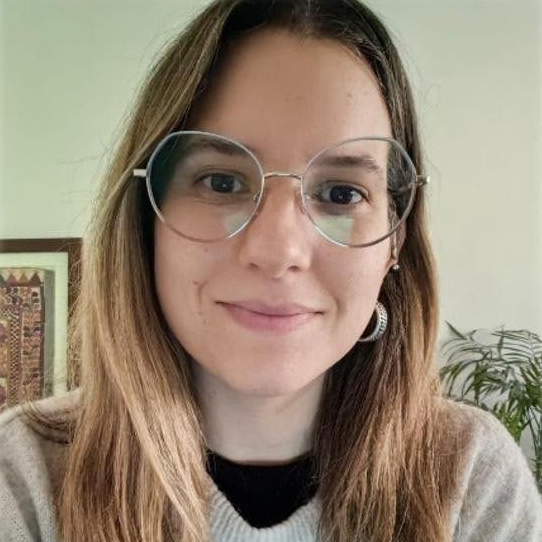
Micaela Peppino Margutti, Ph.D., is an FONDECYT Postdoctoral Researcher at the Center for Plant Biotechnology (CBV), Universidad Andrés Bello, Chile, where she leads an independent research project sponsored by Dr. Maria Francisca Blanco-Herrera. She earned her Ph.D. in Biological Sciences from the National University of Río Cuarto (Argentina), where she studied lipid signaling and phospholipase-mediated membrane remodeling during plant stress responses, developing expertise in lipid metabolism, membrane biology, and plant molecular signaling.
During her postdoctoral training at CIQUIBIC (Argentina) in the laboratory of Dr. Nicolás Cecchini, she expanded her research interests toward plant immunity and molecular mechanisms underlying host responses during biotic interactions. During this period, she contributed to the identification of BNT1 as the first chloroplast-associated TNL immune receptor and to the discovery that distinct BNT1 isoforms differentially regulate defense responses against bacterial pathogens and aphid infestation. These findings raised broader questions about how alternative isoforms diversify immune functions and how organelle-associated signaling contributes to the regulation of plant defense.
A major turning point in her scientific trajectory came through an international ICGEB-supported research stay in the laboratory of Dr. Maria Francisca Blanco-Herrera at CBV-UNAB, where she became interested in plant–aphid interactions and phloem-associated defense responses. This experience allowed her to integrate her background in lipid signaling and plant immunity with new questions related to insect–plant interactions, host susceptibility, and effector-mediated manipulation of plant responses. More broadly, her scientific career has been strongly shaped by collaborative research networks across Argentina and Chile, particularly through interactions with research groups at UNRC, CIQUIBIC, and CBV-UNAB, which have contributed to her interdisciplinary perspective on plant biology and biotic interactions. Throughout her early academic career, her work has received several scientific distinctions, including awards from the Argentine Society of Biochemistry and Molecular Biology Research (SAIB), the Argentine Society of Plant Physiology (SAFV), and the Chilean Society of Biochemistry and Molecular Biology (SBBMCh), as well as international fellowships supporting scientific training and collaborative research. Her long-term research interests focus on understanding how lipid-associated signaling and membrane remodeling pathways are reprogrammed during plant–biotic interactions, and how these processes shape host susceptibility, defense activation, and immune signaling
What do you currently study? What question(s) are you currently most excited about?
My current research focuses on aphid effectors, secreted molecules that interfere with host defense responses. I investigate how aphid-secreted effectors manipulate host molecular and metabolic pathways to promote colonization and susceptibility, particularly by targeting lipid-associated signaling and membrane remodeling pathways. What excites me the most is understanding the fundamental biology underlying compatible plant–pathogen and plant–insect interactions, particularly how pathogens and pests manipulate host immunity and cellular pathways to establish successful colonization.
Did you always want to be a scientist? What attracted you to plant-microbe interactions?
I have always been curious and motivated by trying to answer biological questions. My first real contact with science came during my undergraduate studies, when I became fascinated by microbiology and the incredible complexity of interactions between organisms. From that moment, I knew this was what I wanted to dedicate my life to. Today, I cannot imagine doing anything other than science: asking questions, contributing knowledge to the scientific community, and interacting with researchers from around the world to discuss ideas and discoveries.
Can you describe your path to graduate school or your current position?
Argentina gave me the opportunity to pursue both my Ph.D. and postdoctoral training through competitive fellowships and under the mentorship of outstanding scientists. Initially, I was deeply interested in biochemistry, lipid metabolism, and how plants use these pathways to adapt to stress conditions. Later, my curiosity progressively shifted toward biotic interactions and plant immunity, a field that immediately captured my attention and that I now consider central to my scientific career.
Through the mentorship of scientists such as Dr. Nicolás Cecchini and Dr. Maria Francisca Blanco-Herrera, I became increasingly interested in understanding how plant defense responses are regulated during interactions with pathogens and pests. Today, my research seeks to integrate my background in lipid biology with questions about immunity, particularly how host metabolic and signaling pathways can be manipulated by pathogens or insect effectors to promote colonization and susceptibility.
What are the best things but also the most challenging things scientifically for you now?
One of the best things about science is that you never stop learning. As you progress in academia, you not only learn how to generate new ideas and approach scientific problems, but also how to face challenges, collaborate with others, and mentor younger students. I really enjoy teaching and sharing knowledge with students, showing them both the beauty and the challenges of a scientific career.
At the same time, one of the biggest challenges for me now is consolidating my own academic path and establishing an independent research line focused on the topics I am most passionate about: lipid biology, plant immunity, and plant–biotic interactions. Building a scientific career requires responsibility, confidence, persistence, and collaboration, and I believe these aspects are just as important as technical expertise.
What advice would you give to starting graduate students?
Science can sometimes be stressful and challenging, but every difficulty, mistake, and learning experience contributes to your growth as a scientist. Over time, you realize how much you have learned, shared, and overcome. I would also encourage students to listen carefully to their mentors. Personally, every mentor I have had has left me valuable lessons that helped shape the scientist I am today and the scientist I hope to become in the future.
Are you involved in other scientific/professional development activities? And how do these contribute to your training?
I have always enjoyed communicating science and sharing knowledge with society, whether through teaching, mentoring students, or participating in outreach activities. I believe science communication is extremely important, especially for inspiring curiosity and critical thinking in younger generations. These experiences have also helped me grow as a mentor, communicator, and educator.
Where do you see yourself in 5 and 10 years in terms of your career?
I hope to continue building my scientific career in collaborative, inspiring research environments while progressively leading my own research line focused on plant biology and plant–biotic interactions. I would also like to contribute to the training of future scientists by mentoring undergraduate, master’s, and Ph.D. students in supportive, collaborative environments driven by curiosity, respect, teamwork, and a passion for science.
How can people find you on social media?
Twitter/X is probably the best platform for interacting with researchers and following scientific discussions. My account is: @peppinomicaela
Is there anything else you would like to share in your Spotlight? If so, what is it?
One idea that has always inspired me is that science constantly challenges us to adapt, learn, collaborate, and rethink our ideas. For me, science is not only about generating knowledge but also about curiosity, persistence, and building connections with people who share a passion for understanding nature.
Bonus question: What’s your favorite pathogen or disease? Or biological system to work?
I find plant–insect interactions, especially those involving sap-sucking insects such as aphids, fascinating. These organisms establish remarkably sophisticated and stealthy compatible interactions with a wide range of plant hosts. The molecular strategies they use to manipulate host responses and promote colonization are extraordinary. For me, understanding the biology of these interactions and uncovering the molecular “weapons” used by aphids to exploit their hosts is one of the most exciting questions in plant biology today.