
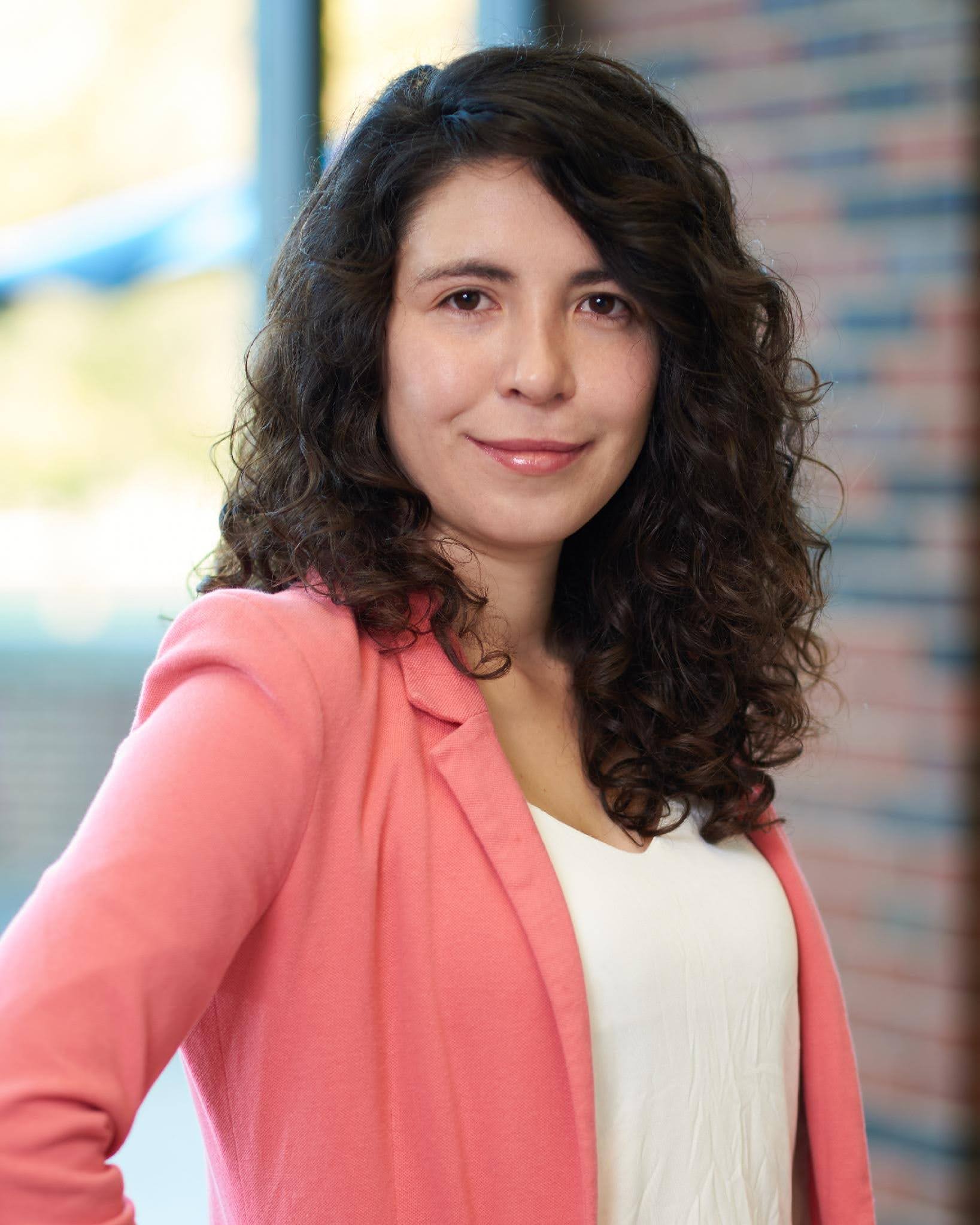
 Sandra V. Gomez-Gutierrez is a plant pathologist and evolutionary biologist currently working as a Postdoctoral Research Associate with Dr. Sergio Muñoz-Gómez at Purdue University, West Lafayette, Indiana. Her work focuses on understanding the molecular and evolutionary mechanisms that shape microbial evolution. Her research integrates molecular biology, transcriptomics, genome editing, and population genomics to investigate how microorganisms adapt to their hosts and environments. She is especially interested in uncovering the genomic and evolutionary determinants that drive pathogen emergence, virulence, and adaptation. Through her work, she aims to contribute to a deeper understanding of pathogen evolution and support the development of sustainable strategies for plant disease management. Her recent MPMI paper, coauthored with Cassidy Million, Namrata Jaiswal, Michael Gribskov, Matthew Helm, and Stephen Goodwin, “Comparative Transcriptomic Analysis of Zymoseptoria tritici Reveals Interaction-Specific Gene Expression Patterns During Susceptible, Resistant, and Nonhost Interactions,” reveals candidate effectors expressed early during Zymoseptoria tritici infection that have potential roles in suppressing plant immunity.
What do you think is the most important or exciting finding from your paper?
The most exciting outcome of our study is the discovery of distinct transcriptional reprogramming responses in Zymoseptoria tritici, particularly at two key time points. First, the pronounced differences in pathogen gene expression at 3 days post-inoculation in both susceptible and resistant interactions, compared to the non-host interaction, highlight that there is a remarkable difference in how the pathogen recognizes and initially interacts with a non-host species, in this case barley, versus how it interacts with a host species, independent of whether the host is susceptible or resistant. Second, the significant differential gene expression in Z. tritici exactly at 10 days post-inoculation, which coincides with the appearance of the first visible symptoms, reveals that a major transcriptional reprogramming event occurs in order to initiate disease progression and symptom development.
Was there a piece of data that was particularly challenging to obtain or a part of the project that was particularly difficult?
Yes, of course! The subcellular localization experiments to determine the localization of some candidate effectors in the heterologous system Nicotiana benthamiana were particularly challenging. The expression of some effectors was not always easy to obtain, and some of them were expressed at very low levels, making it difficult to detect the fluorescence signal. In addition, we were unable to transform a few candidate effectors into Agrobacterium tumefaciens, likely because they were toxic to the bacteria. In the end, we were able to overcome most of these challenges and obtain reliable protein expression and clear localization signals.
What research project are you most excited about right now?
I am very excited about our research project on genome editing in Z. tritici using CRISPR/Cas9. This is the first time that CRISPR/Cas9 has been successfully applied in Z. tritici to obtain knock-out mutants. We used CRISPR/Cas9 to functionally validate some of the candidate effectors identified in our transcriptional analysis, which is very exciting because it allowed us to confirm the role of these candidate effectors in the virulence of Z. tritici. We are currently working on finalizing the manuscript to share our results, and future work will involve implementing improvements to further standardize this technique in Z. tritici. Stay tuned for this upcoming manuscript!
What drew you to your current lab?
I am currently a Postdoctoral Research Associate in the Evolution of Cells, Symbionts and Organelles lab at Purdue University. What drew me most to this position is my strong interest in evolutionary biology and my desire to deepen my understanding of how microorganisms evolve. I am especially interested in understanding the genomic changes and evolutionary constraints that shape how microorganisms establish successful interactions with plants, whether detrimental or beneficial. My long-term goal is to integrate my background in molecular plant–microbe interactions and transcriptomics with new expertise in phylogenetics, population genomics, proteomics, and evolutionary biology. By doing so, I hope to better understand the determinants of pathogen evolution and contribute to efforts aimed at preventing future epidemics, outbreaks, and pathogen emergence under changing environmental and host conditions.
What advice would you give to starting graduate students?
I believe that drawing strength from each small achievement is key to continuing in academia. Many things do not go as expected, especially when working with biological systems, because uncertainty is part of the nature of research. You are often doing something that nobody has done before, or exploring a question from a completely new perspective, and that uncertainty can be very challenging at times. Once, a seminar speaker said that she took motivation from one success among one thousand failures, and that advice stayed with me because research is often like that. You need to keep trying, keep failing, and keep moving forward. This is resilience, and it is a fundamental part of being a graduate student.
Equally important, I encourage graduate students to practice self-compassion. We are often too hard on ourselves. We think we should know everything, and we constantly compare ourselves to others. But the truth is that we need to be our own strongest supporters. We should remind ourselves that we are strong and valuable, not because everything works perfectly, but because we continue trying, learning, and moving forward every day, even when things do not go as planned.
Who has inspired you scientifically? Why?
I have found inspiration in my advisors and mentors throughout my academic journey. My undergraduate advisors inspired me through their passion for plant pathology and molecular biology, while my graduate advisors showed me the vast range of knowledge and techniques that can be applied to address scientific questions from multiple perspectives. Their mentorship helped me see science not only as a discipline, but as a way of thinking and exploring the unknown. I have also been particularly inspired by many women scientists working in bioinformatics. For example, Dr. Alice Feurtey, whose work on Z. tritici I learned about at conferences and papers, inspired me to pursue expertise in genomics and evolution and to train myself in data science to answer complex biological questions. In addition, pioneering scientists like Dr. Margaret Dayhoff, who is considered one of the founders of bioinformatics, have been a great source of inspiration. Their contributions opened new paths for integrating computational and biological sciences, and motivate me to continue growing in this field.
Are/were you involved in other scientific/professional development activities? And how do/did these contribute to your training?
Yes, absolutely. These activities have been crucial for my training and professional development. I have participated in multiple conferences, including the International Plant Pathology Congress, the European Fungal Genomics Conference, and the Plant and Animal Genome Conference. These experiences allowed me to share my research, learn from other scientists, and stay connected with new advances in the field. I also completed a co-op internship at Corteva Agriscience, which significantly strengthened my data science and bioinformatics skills and gave me valuable insight into how research is conducted in an industry setting. In addition, I co-organized a plant science symposium with my fellow graduate classmates, which helped me develop leadership and organizational skills. I have also been actively involved in our academic community. I served multiple times on the board of the Colombian Student Association, and I am currently very excited about my role as an Assistant Feature Editor for the MPMI Journal. All of these experiences have helped me become more involved in the scientific community, support spaces for early-career scientists to share their work, and communicate my own research. They have also helped me strengthen essential skills such as scientific writing, science communication, and presentation.
What is the greatest challenge you have encountered in your career? What did you do to overcome this challenge?
I think one of the greatest challenges has been learning to recognize my strengths and weaknesses, and to feel proud of each step in my journey. Impostor syndrome was sometimes a real obstacle. I was able to overcome it by focusing more on what I truly enjoy about research and on continuously improving my skills, rather than trying to follow a traditional or predefined path. Over time, I realized that I could create my own path, one that makes me happy and allows me to enjoy my progress, learn from failures, and accept them as part of the process. I have learned that growth and new knowledge take time, and that being patient and resilient is essential. I keep reminding myself about that.
How can people find you on social media?
You can find me on LinkedIn (www.linkedin.com/in/sandra-gomez-29b17b128) and Bluesky (@sgomezguti).
Is there anything else you would like to share in your Spotlight? If so, what is it?
Yes! I think that every scientific career path is unique, and it is important to find what feels right for you and be proud of who you are and what you have achieved. Your journey is shaped by your resilience, your mentors, your family, and your personal and unique story. Each of these plays an important role in helping you grow, and they make your path truly your own.
Bonus question: What’s your favorite pathogen or disease?
Septoria tritici blotch is my favorite disease! The more I worked on it during my Ph.D., the more fascinated I became. The pathogen, Zymoseptoria tritici, has a very unique lifestyle transition that continues to puzzle scientists, especially what triggers its sudden shift to necrotrophic growth.
In addition, Z. tritici has become a model organism for evolutionary studies due to the large number of transposable elements in its genome, its rapid genome evolution, and its extensive accessory genome, one of the largest identified in fungal pathogens. I believe there are still many mysteries to uncover, and I hope to continue contributing to our understanding of this fascinating pathogen in the future.
Bonus question: What’s your favorite molecular plant pathology-related article?
One of my favorite articles is “A thousand-genome panel retraces the global spread and adaptation of a major fungal crop pathogen” published in Nature Communications. This study provides evidence of global invasion routes and genetic adaptation in Z. tritici through the analysis of a thousand genomes collected worldwide. It revealed increased transposable element activity and significant genetic variation associated with adaptation to different climates across global spread. I find it fascinating how much we can learn from population genomics analyses, and how these approaches allow us to reconstruct the evolutionary history and adaptive processes of important plant pathogens.