
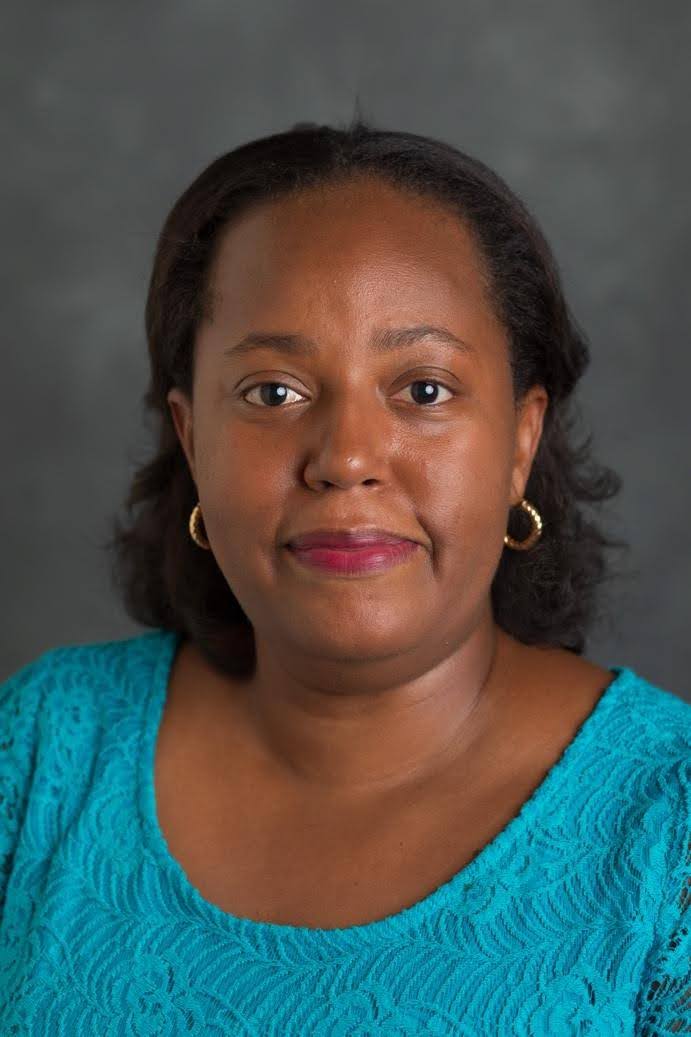
“Listen more than you talk, you will learn a lot more that way”: Reflections from Dr. Tessa Burch-Smith
Dr. Tessa Burch-Smith is a Principal Investigator at the Donald Danforth Plant Science Center, where she studies how plants defend themselves against viruses and communicate internally to survive in a constantly changing environment. Her research combines cell biology, advanced microscopy, and molecular genetics to uncover the mechanisms that allow plants to detect pathogens, transmit signals between cells, and mount effective immune responses. A major focus of her work is understanding plasmodesmata and systemic signaling pathways, with the long-term goal of developing innovative strategies to enhance plant antiviral resistance and improve global food security.
Originally from a tropical, agriculture-based country, Dr. Burch-Smith did not initially plan to pursue plant science. Her perspective shifted during graduate school, when she became fascinated by the molecular complexity and adaptability of plants. Since then, her career has been shaped by curiosity, technical innovation, and a strong commitment to translating fundamental discoveries into real-world impact. Her work has helped redefine how scientists understand plant immune receptors, intercellular communication, and plant defense signaling.
Beyond the laboratory, Dr. Burch-Smith is a dedicated mentor and an active leader in the molecular plant–microbe interactions community. She has served in multiple editorial and leadership roles with the Molecular Plant–Microbe Interactions journal and the IS-MPMI Society, contributing to the growth and sustainability of the field. She is passionate about fostering inclusive, collaborative, and supportive scientific environments, and she strives to lead with both rigor and kindness. In this interview, Dr. Burch-Smith reflects on her scientific journey, the mentors and pivotal moments that shaped her path, and the values she hopes to pass on to the next generation of scientists.
Can you briefly walk us through your past and present engagement with the MPMI journal and the IS-MPMI society?
My relationship with the MPMI journal began when I started reviewing manuscripts as a postdoctoral fellow. When I got my independent position as an Assistant Professor, I became an Associate Editor, then later a Senior Editor, and of course, I have been a member of the IS-MPMI Society for over 10 years. Eventually, I served as the first Associate Editor-in-Chief for the journal, and in that role, I became a member of the IS-MPMI Board of Directors. I attend the IS-MPMI Congresses at every opportunity I get and find them to be invaluable for learning about the latest progress and innovations in the field as well for professional interactions and network building. I publish in MPMI journal because of its significance to the field and for its importance to the sustainability of the IS-MPMI society.
Can you briefly share your journey into plant science and what first sparked your interest in the field of MPMI?
Before starting graduate school, I had no real interest in plant science. I was one of the folks with plant blindness, since I came from a tropical country with a (then) agriculture-based economy. In graduate school, I met my mentor Dr. S.P. Dinesh-Kumar and was exposed to the field of plant disease Resistance (R) genes. I became enthralled with uncovering possible molecular mechanisms behind their activity, and my thesis work focused on the N gene that gave resistance to tobacco mosaic virus (TMV). From there, my appreciation for plants as innovators and adaptors to their biotic and abiotic environment grew exponentially.
Were there any key mentors or moments that shaped your scientific path early on?
My Ph.D. advisor, Dr. Dinesh-Kumar, was key to helping me establish my identity as a scientist. His advice was to ‘follow the science’, an approach that I still use in my current research. I also met Dr. Kirk Cymmek when I was a graduate student. He introduced me to light and confocal microscopy in plant systems, and this changed my scientific path. Having veered into cell biology and imaging, I can no longer imagine doing science without that perspective.
Your research has had a significant impact on the field of MPMI. How would you describe your most influential work/s to your colleagues?
I think my most significant impact was in helping to develop some of the first cell biological investigations of R proteins. When I started working in the field, it was “believed” that R proteins were present at very low levels and could not be detected by Western blot or microscopy. I found that this was not the case, and contributed some of the first work reporting on the subcellular localization of R proteins, in my case, N. At first, N’s cytoplasmic and nuclear localization was puzzling, but subsequent decades have revealed the reason for this patterning. It has been fascinating to watch the field of R proteins make groundbreaking discoveries and reveal the molecular mechanisms used by these proteins.
Looking back, were there any surprising turns or discoveries in your research that changed your trajectory?
When I began my postdoc, a colleague advised me to never do electron microscopy (EM), because it was hard and had fallen out of fashion. Best advice I never took! Now, EM is an indispensable tool in my lab’s research arsenal as we study plasmodesmata and viral cell-to-cell movement. Learning this difficult technique has allowed us to answer challenging questions in interesting ways.
What is the biggest challenge you have faced in your research to date, and how did you overcome it?
Plasmodesmata are only ~20 nanometers in diameter, so they can only be seen in detail by EM. Using EM-based approaches as a tool for basic research is not a route for swift publication! So almost everyone in my lab who is learning or using EM also has a project that does not need EM.
Another challenge I have faced is figuring out how to transition from basic research to applied research that can have impact in the real world and people’s lives. I am learning from my colleagues at the Donald Danforth Plant Science Center how this is done, and I am beginning to think differently about what is interesting versus what is important that could be translated more immediately to the field for the benefit of society. We are now investigating novel ways to improve plant antiviral resistance for improved food security.
What advice would you give to early-career scientists hoping to make a lasting impact in the field of MPMI?
Take the time to learn the basics. It’s easy to get excited about a project and rush into it, but when failure comes (as it will), it is very helpful to know if your null hypothesis was supported or if your experimental technique was to blame. Also learn about the seminal discoveries and ideas that shaped the field of MPMI so that you can frame your work in an intellectual and historic context. For example, what observations led Flor to his gene-for-gene hypothesis? You should also not be afraid to think about revisiting old or answered questions or accepted dogma in new ways. As tools and ideas changes, revisiting these old concepts often can yield new insights and fertile ground.
It is important to be diligent and persevere, but to also know when to cut your losses. Sometimes a brilliant idea makes for a bad project for an early career scientist. Ask for and take advice from people who have been successful. It’s hard to hear critical feedback, but that is often the most useful to an early-career scientist.
Science is a team sport. Be helpful and you will be helped. Strong relationships need respect and cooperation, and strong collaborations result in great science.
“Listen more than you talk. You will learn a lot more that way”
What do you wish more people understood about MPMI research?
The importance of MPMI research is often overlooked. All organisms are host for other organisms or selfish genetic elements. This is the basis for life as we know it. MPMI research investigates these fundamental relationships, giving insight not only how these relationships exist today but also providing glimpses of the past. Further, for those of us in the developed world are fortunate to have a steady supply of food and other plant-derived products. Most of us are far removed from the crops and agricultural systems that support us. We view MPMI as an interesting scientific question, rather than keeping our focus on the potential impact of our work to provide food security through plants. For example, we need to understand how we can help plants better withstand pathogen challenge or be less reliant on fertilizer through enhanced relationships with beneficial microbes. We are studying important topics that can impact all of humanity.
Are there any emerging areas in your field of research that you think are particularly promising or underexplored?
I’m likely biased here, but I think the questions of intercellular and systemic signaling/communication in intact plants are underexplored. There are likely many molecules that act as systemic signals, but their identities remain elusive. Harnessing systemic signaling could result in novel routes for crop improvement.
How do you hope your legacy will influence the next generation of scientists?
As a black woman in science, I’m often only the person who looks like me in my professional settings. I hope my legacy can be two-fold. First, I hope that I show that anyone and everyone can be a good scientist if given the tools and space to grow and flourish. Second, I hope I set the example that kindness is possible even when you’re striving and working hard.