
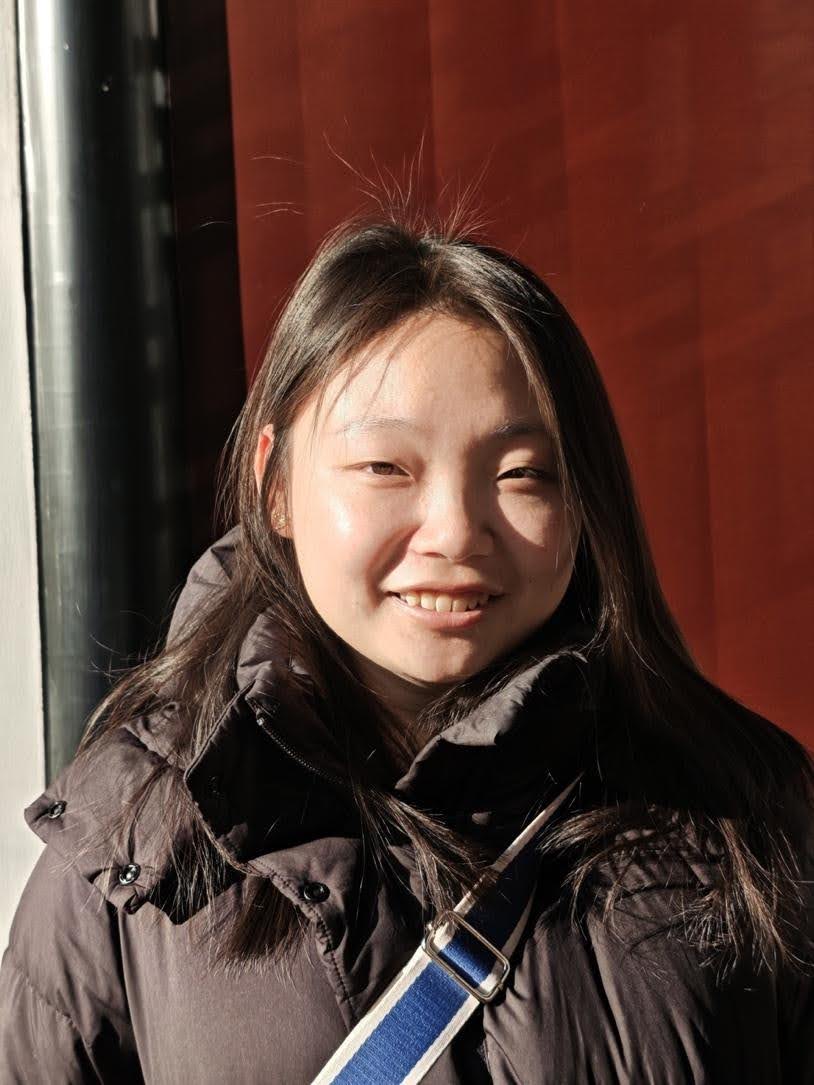
Meet Dr. Siyu Song, a postdoctoral scientist in Dr. Tatsuya Nobori’s lab at The Sainsbury Laboratory (Norwich, UK), where she studies the genetic mechanisms shaping plant–microbiome interactions. Previously, she trained at the University of British Columbia in Dr. Cara Haney’s lab, completing her PhD in Microbiology & Immunology and continuing as a postdoc there. In a recent first-author study published in MPMI, Siyu describes how the cell-wall proteins LRX1/2, together with the receptor kinase FERONIA (FER), act as key regulators of rhizosphere microbiome composition—supporting the idea that plants actively maintain microbiome homeostasis rather than shifting communities only as a secondary consequence of stress or impaired growth. Now in the Nobori Lab, she is pushing these questions to single-cell and spatial resolution by combining single-nuclei multiome and PHYTOMap approaches to map how different root cell types and positions coordinate plant–microbe interactions in space. To learn more about her research interests and scientific journey, and to celebrate her success, read this first-author interview by Meenu Singla-Rastogi.
What do you think is the most important or exciting finding from your paper?
Siyu: The most exciting finding of our paper is that LRX1/2, FER (FERONIA)-interacting cell wall extensin proteins, act as novel regulators of the rhizosphere microbiome alongside FER. By showing that lrx1/2 mutants phenocopy fer mutants in microbiome composition — even when their growth defects are rescued by adjusting the soil chemistry — we demonstrate that FER and LRX1/2 actively shape microbiome composition rather than altering it as a secondary consequence of plant stress or impaired growth phenotype. This work reveals a mechanistic signaling framework by which plants maintain microbiome homeostasis and opens new avenues for targeted manipulation of the rhizosphere to promote plant health.
Cara: I think the interesting part of this story is that the way we tell the story in the manuscript (a reverse genetics screen of LRXs) is not the way we actually came to finding LRXs. As Siyu describes, it was a case of finding a phenotype in a T-DNA line, realizing the phenotype wasn’t linked to the mutation, and then a heroic mapping effort by Siyu. THEN, Siyu found that linked mutation wasn’t a simple loss of function phenotype-to-genotype link. From here, we spent a while being stuck on how to tell this story. Figuring out how to move forward from here was really a tribute to Siyu’s intellect, resiliency, and ability to keep an open mind. She ultimately solicited feedback from a number of people through presenting the story at meetings and during the process of interviewing for postdocs. The end result is the published manuscript in MPMI!
Was there a piece of data that was particularly challenging to obtain or a part of the project that was particularly difficult?
Identifying the true causative mutation behind our mutant phenotype was both the most challenging and most exciting part of the project. While the final paper tells a clean story of discovering the lrx1/2 mutant through a reverse-genetic screen of the Arabidopsis LRX family for microbiome phenotypes, the real path was much more unexpected and intriguing.
We first began by selecting plant genes transcriptionally induced by the commensal bacterium P.fluorescens WCS365 and testing the corresponding T-DNA mutants for effects on rhizosphere colonization. One of these lines showed strong enrichment of WCS365 compared to wild type. But follow-up genetic analyses quickly revealed that the T-DNA insertion wasn’t the causative mutation. The microbiome phenotype was driven by a second mutation segregating in the population. Using bulk-segregant analysis and whole-genome sequencing, we eventually pinpointed a 33-bp insertion in LRX6 as the likely mutation. However, a loss of function of LRX6 did not phenocopy the mutant, the mutation might be some sort of gain of function or effects on other LRXs. However, this discovery motivated us to systematically screen the entire LRX gene family for microbiome phenotypes, ultimately shaping the narrative presented in the paper.
Untangling these misleading genetic signals to uncover the real driver of the phenotype was definitely the most challenging part of the project—but also the most rewarding and exciting. It was a great reminder of how powerful classical plant genetics is and and how we can use what we learned in the textbook to detangle real biological puzzles.
What research project are you most excited about right now?
This project reflects my PhD work in the Haney Lab, where I investigated plant genes that regulate the root microbiome using traditional genetic screens and molecular biology approaches. This valuable training process opened my door to the fascinating world of plant–microbiome interactions, but it also made me realize how heterogeneous these interactions truly are, as shaped by distinct responses from different root cell types, diverse microbial lifestyles, and uneven colonization patterns along the root surface.
Recognizing this complexity made it clear that resolving these questions requires single-cell and spatial resolution. I have recently transitioned to a Marie Curie postdoctoral fellowship with Dr. Tatsuya Nobori at The Sainsbury Laboratory in Norwich, UK, where I am now applying cutting-edge single-nuclei Multiome approaches and the spatial gene expression platform PHYTOMap to dissect how individual root cells shape the structure and function of the rhizosphere microbiome in a spatially resolved context. I believe this integrative approach will provide new insights into how plants interact with their microbial communities.
What drew you to your current lab?
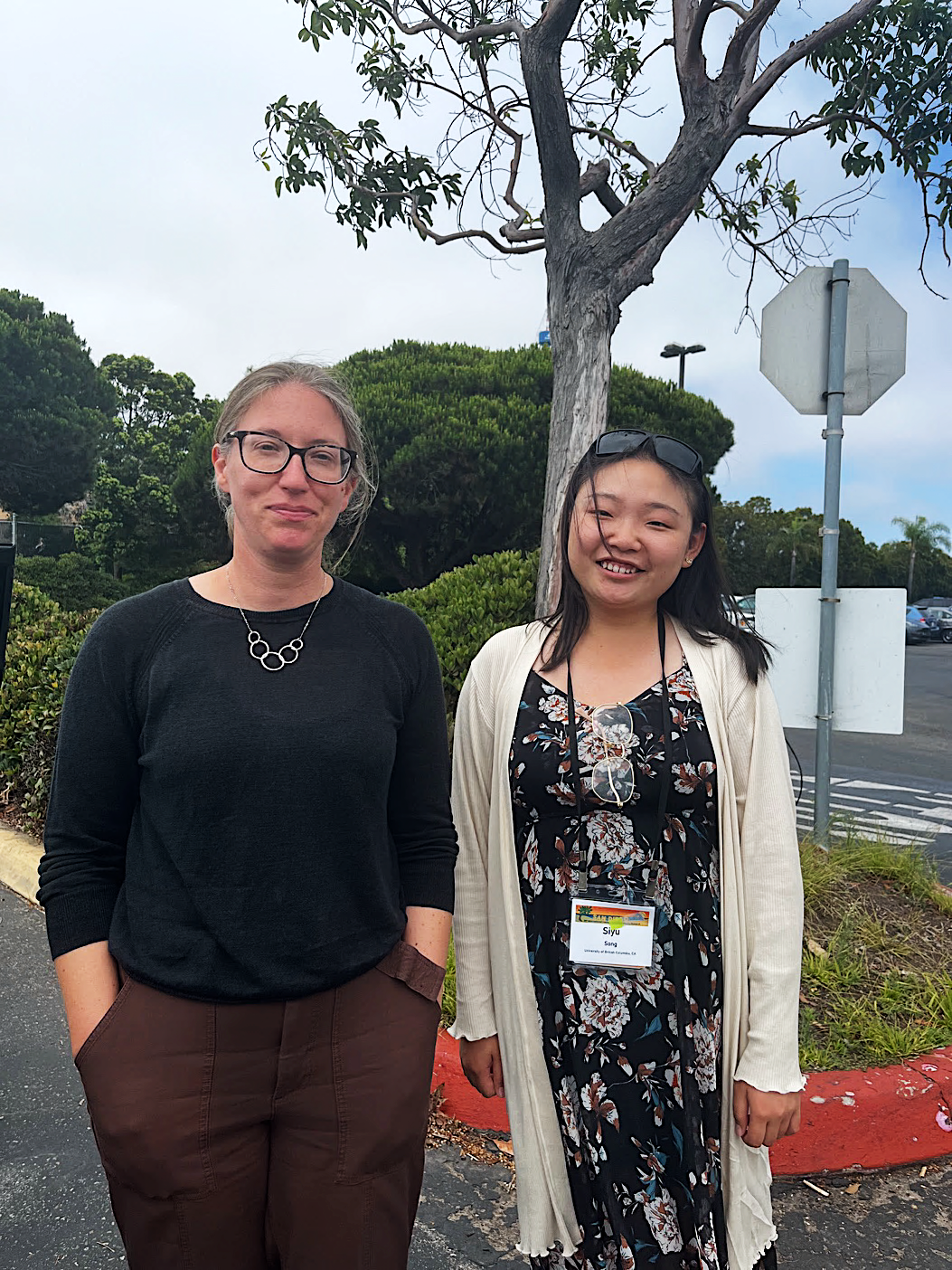
I was initially drawn to the Haney Lab for my PhD because of my long-standing interest in plant–microbe interactions. Before that, my work had focused primarily on plant immunity against pathogens using traditional molecular genetic approaches, but I became increasingly curious about whether these concepts could be extended to the more complex world of plant–microbiome interactions, where microbes with diverse lifestyles coexist and interact with the host. This curiosity ultimately guided me to reach out to Dr. Cara Haney for a PhD position.
My PhD training with Cara was truly fundamental in shaping my research direction and introducing me to the beautiful field of plant–microbiome interactions. A particularly pivotal moment came during the 2023 IS-MPMI Congress, where I attended a talk by Dr. Tatsuya Nobori. He presented how cutting-edge single-cell multiome and spatial approaches could be used to dissect the heterogeneity of plant–pathogen interactions. I found this approach incredibly inspiring and immediately felt that a similar framework could be transformative for studying plant–microbiome systems as well.
“Siyu is a phenomenally brilliant scientist, and also one of the nicest people I’ve ever had the privilege of working with. Sometimes as scientists we think brilliance and niceness are inversely correlated; Siyu is a shining example that shows that the two can also be positively correlated. While highly successful in her PhD, she also values positivity and inclusivity in academia. I’ve attended several meetings with her and she’s always the person to seek out and engage the student who is alone at their poster or eating by themselves. I’m delighted she has decided to continue her postdoc in plant-microbe interactions, I believe will be among the next generation of scientific leaders in MPMI.”
– Cara Haney
I approached Tatsuya after the talk to discuss these ideas, and that conversation ultimately led to my transition into his lab as a postdoc. The combination of my longstanding interest in plant–microbiome interactions and the innovative technical and conceptual environment of the Nobori Lab made this move feel like a natural and exciting next step in my scientific journey.
(For graduate students) How did you choose to join your current (previous?) graduate program ?
I chose to pursue my PhD in Microbiology & Immunology at UBC because I was looking for an environment that offered strong training in plant–microbe interactions. The Haney Lab really stood out to me as an ideal place to develop my specific interests in plant–microbiome research. I was especially drawn to its creative and collaborative culture, where lab members with different but interconnected expertise openly shared ideas, feedback, and support. This atmosphere not only shaped the way I approach research, but also continuously encouraged me to think critically and view scientific questions from multiple perspectives.
I feel incredibly fortunate to have had Dr. Cara Haney as my PhD supervisor. She is not only an outstanding scientific mentor, but also a generous career guide, a role model as a female scientist, and a constant source of encouragement. Working with her reinforced my belief that choosing the right supervisor — someone who truly believes in you and supports your growth — is one of the most important decisions a graduate student can make.
What advice would you give to starting graduate students?
For new graduate students, I think it is especially important to develop good research habits and to stay genuinely curious.
By good research habits, I mean all the little things that don’t always seem “scientific” but make a huge difference in the long run: figuring out how you like to keep lab notes, reading notes, and seminar notes, learning how to plan your experiments clearly, and even getting into the routine of cleaning up your bench after each experiment. Cara always tells us “an experiment is not done until everything is organized on the bench.” It does take extra effort, but I’ve found that being organized really improves my efficiency and helps my mind feel less chaotic.
The other thing I can’t emphasize enough is being brave enough to ask questions. At the beginning, it can feel very scary, especially when you worry your question might sound silly or underdeveloped. But honestly, asking those “not-perfect” questions was how I trained myself to think more critically. Over time, they naturally became more insightful. Don’t wait until you feel more senior or confident to start speaking up — because if you don’t practice it early, it’s surprisingly easy to stay silent forever.
Who has inspired you scientifically? Why?
The scientists who have inspired me most are my PhD supervisor, Dr. Cara Haney, and my postdoctoral supervisor, Dr. Tatsuya Nobori. I feel incredibly fortunate to have learned from two early-career scientists who each shaped a different but equally important part of my scientific identity. Cara introduced me to the world of plant–microbiome interactions and taught me how to approach science with curiosity, critical thinking, and an open mind. She has an incredible ability to generate ideas — almost like a fountain of endless creativity — and at the same time, she is deeply encouraging and thoughtful. She constantly reminded me that every biological discovery, no matter how small it may seem, carries its own value and beauty. Tatsuya, on the other hand, has inspired me through his visionary approach to technology development. Working at the frontier of methodological innovation, he truly demonstrates what it means to be both ambitious and grounded — someone who dreams boldly while maintaining clarity, precision, and rigor. From him, I have learned the mindset of a true technical innovator: to remain open-minded, think with long-term vision, and continuously integrate emerging knowledge into how we refine and optimize our own techniques. I feel deeply privileged to have learned from these two scientific mentors.
Are/were you involved in other scientific/professional development activities? And how do/did these contribute to your training?
Yes, I have attended domestic/international academic conferences, helped with journal peer review, and had the experience in teaching as a graduate student teaching assistant and attended teaching workshops. These experiences were all very helpful for my PhD training. In particular, I came to realize that while graduate training often emphasizes experimental progress, the ability to communicate science and give presentations effectively is just as essential. Delivering strong scientific presentations requires confidence, clarity, and storytelling skills — all of which can only be developed through practice. Presenting at conferences and lab meetings, and receiving constructive feedback from supervisors and lab members really helped me to become a better presenter. These experiences proved invaluable during key moments such as my exit seminar, thesis defense, and interviews.
What is the greatest challenge you have encountered in your career? What did you do to overcome this challenge?
One of the greatest challenges I have encountered in my career has been navigating language barriers and cultural differences as an international student. Adjusting to a new academic environment while using English as my primary working language was far more difficult than I initially imagined. In the early stages, I often struggled to clearly express my ideas and found academic writing especially overwhelming, which at times affected my confidence.
What helped me overcome this challenge was the patience, encouragement support from my supervisor Cara and my lab mates in the Haney Lab. They created a safe and inclusive environment where I felt comfortable making mistakes, asking questions, and learning at my own pace. It reminded me that growth takes time, and that seeking support is not a weakness but a powerful part of the learning process.
How can people find you on social media?
You can find me on X @SiyuSong3, BlueSky @siyusong.bsky.social or LinkedIn.
Is there anything else you would like to share in your Spotlight? If so, what is it?
I’d like to take this opportunity to express my sincere gratitude to my PhD supervisor Dr. Cara Haney and every Haney Lab member, especially my coauthors. Without their help and support none of this work will be possible.
Bonus question: What’s your favorite pathogen or disease?
My favorite microbe — though not exclusively a pathogen — is Pseudomonas. I like it because of its remarkable diversity in both host range and lifestyle, making it an exceptionally powerful model for exploring how plants interact with microbes across the spectrum from beneficial to pathogenic. And, on a more practical note, they are fast-growing and relatively easy to be transformed genetically, which you would come to truly appreciate if you’ve ever worked with a diverse range of microbiome members.