
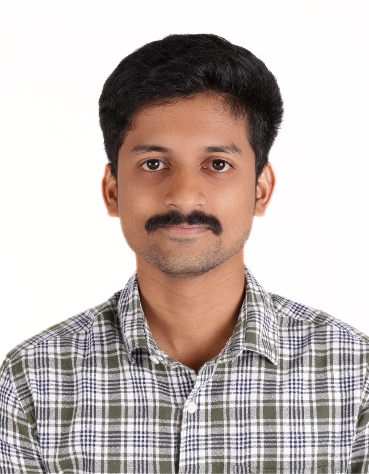
 By Ved Prakash, Assistant Feature Editor-MPMI
Dr. Naveen Arakkal Thaiparambil is a plant microbiologist and is currently a post-doctoral fellow at National Institute of Research and Innovation (NIRI), Latvia. His research focuses on plant–microbial interactions, particularly the development of microbial solutions to improve plant health, nutrition, and disease resistance. He earned both his master’s degree in biotechnology and Ph.D. in Plant-Microbe Interactions from Vellore Institute of Technology, where he developed plant growth-promoting bacterial consortia for sustainable agriculture. He was also a Golden Jubilee Fellow at the World Vegetable Center, where he worked on biocontrol strategies against soil-borne fungal pathogens affecting solanaceous crops.
In January 2026, Naveen served as the lead author of an MPMI study revealing how a beneficial fungus protects tomato plants by striking a perfect balance between attacking destructive pathogen and promoting plant growth. In the following interview, Naveen talks about his research and his journey.
What do you think is the most important or exciting finding from your paper?
The most important finding is that Trichoderma virens DM5 overcomes the typical trade-off between plant growth and disease defense by acting as a highly efficient genetic “switch.”
By triggering a rapid, hyper-efficient immune spike within 24 hours and quickly deactivating it once the threat is neutralized, Trichoderma virens DM5 saves vital energy that is redirected into growth.
Was there a piece of data that was particularly challenging to obtain or a part of the project that was particularly difficult?
The difficult part was simultaneously managing a three-way interaction between the tomato host, the biocontrol agent (T. virens), and the aggressive soil-borne pathogen (A. rolfsii) presented an immense technical hurdle. The team had to perfectly calibrate the timing and dosage of both fungi to ensure the pathogen did not instantly rot the crop before the biocontrol could colonize. If this delicate biological balance was slightly off, it would have been impossible to accurately measure the true growth-versus-defense metabolic trade-off
What research project are you most excited about right now?
I am currently working on an exciting project focused on developing a bioformulation combining plant growth-promoting bacteria (PGPB) and arbuscular mycorrhizal fungi (AMF) to enhance the growth, health, and development of Medicago plants. What makes this project especially interesting to me is that it brings me into a new area of research, where I can apply my expertise in PGPB while also expanding my knowledge of AMF biology and plant-fungal-bacterial interactions. The opportunity to integrate these two beneficial microbial systems for sustainable plant health makes this work both challenging and highly rewarding.
What advice would you give to starting graduate students?
My advice to starting graduate students is to stay curious, patient, and open to learning from both successes and failures. Research is a journey that often comes with unexpected challenges, but those challenges are also where the most valuable learning happens. Build a strong foundation in scientific thinking, communicate openly with mentors and peers, and do not hesitate to explore new ideas and techniques beyond your comfort zone. Most importantly, enjoy the process of discovery.
Who has inspired you scientifically? Why?
To be honest, I cannot name a single person as my scientific inspiration. Everyone I have encountered throughout my academic and research journey has inspired me in different ways, especially the professors at Vellore Institute of Technology and National Institute of Research and Innovations (NIRI), as well as the scientists at the World Vegetable Center. Each of them has played an important role in shaping my scientific perspective, guiding my career, and helping me become the researcher I am today.
Are/were you involved in other scientific/professional development activities? And how do/did these contribute to your training?
Yes, I have actively participated in several scientific conferences, workshops, and professional training activities throughout my research career. These include presenting my work at international conferences such as the 8th Asian PGPR International Conference for Sustainable Agriculture and the International Conference on Recent Advances in Biotechnology and Environmental Science, as well as attending specialized workshops like the TRANSCRIPT(AG’)OMICS workshop organized by VIT School of Agricultural Innovations and Advanced Learning (VAIAL). I also had the opportunity to work as a trainer for the “Advanced Technical Training in Pest and Diseases (ATTPD)” program at the World Vegetable Center. These experiences have significantly contributed to my scientific development by improving my research communication, technical expertise, teaching skills, and professional networking. They have also exposed me to diverse perspectives in plant microbiology and sustainable agriculture, which continue to shape my approach to research.
What is the greatest challenge you have encountered in your career? What did you do to overcome this challenge?
One of the greatest challenges I encountered in my career was during the COVID-19 pandemic, which interrupted my Ph.D. research. I was about six months into my work when the complete lockdown was imposed, forcing me to step away from the laboratory for an extended period. When I eventually returned, I had to restart much of my research from the beginning, which was both difficult and emotionally challenging. However, that experience taught me the importance of resilience, patience, and determination. Looking back, I believe the persistence and commitment I had toward my research helped me overcome that phase and continue progressing in my scientific career.
How can people find you on social media?
You can find me on the platforms below:
LinkedIn: https://in.linkedin.com/in/naveenat
Researchgate: https://www.researchgate.net/profile/Naveen-Arakkal-Thaiparambil
Is there anything else you would like to share in your Spotlight? If so, what is it?
Yes, apart from the success stories I have mentioned, I believe it is equally important to reflect on the challenges and failures encountered during research. One such experience was a project at the World Vegetable Center, where we aimed to investigate Fusarium pathogens infecting solanaceous crops and analyze their effector gene composition to understand whether it influences host specificity. Although we observed notable differences in effector gene composition among strains, we were unable to establish a clear link to host specificity, and the project was eventually discontinued. However, this experience was highly valuable, as it reinforced an important lesson in science that not all research leads to the expected outcomes. Such setbacks are an integral part of the scientific process and often provide deeper learning than successful results.
Bonus question: What’s your favorite pathogen or disease?
That would be Fusarium oxysporum.
Bonus question: What’s your favorite molecular plant pathology-related article?
One of my recent favorite molecular plant pathology-related articles is “Symphony of survival: Insights into cross-talk mechanisms in plants, bacteria, and fungi for strengthening plant immune responses”. I particularly appreciate this work because it aligns closely with my current research interests in plant-microbe interactions and highlights the complex signaling and communication networks between plants, bacteria, and fungi. The article provides valuable insights into how these interactions can be harnessed to enhance plant immune responses, making it highly relevant to my ongoing work on developing microbial solutions for sustainable plant health.