
 Sandra V. Gomez-Gutierrez, MPMI Assistant Feature Editor
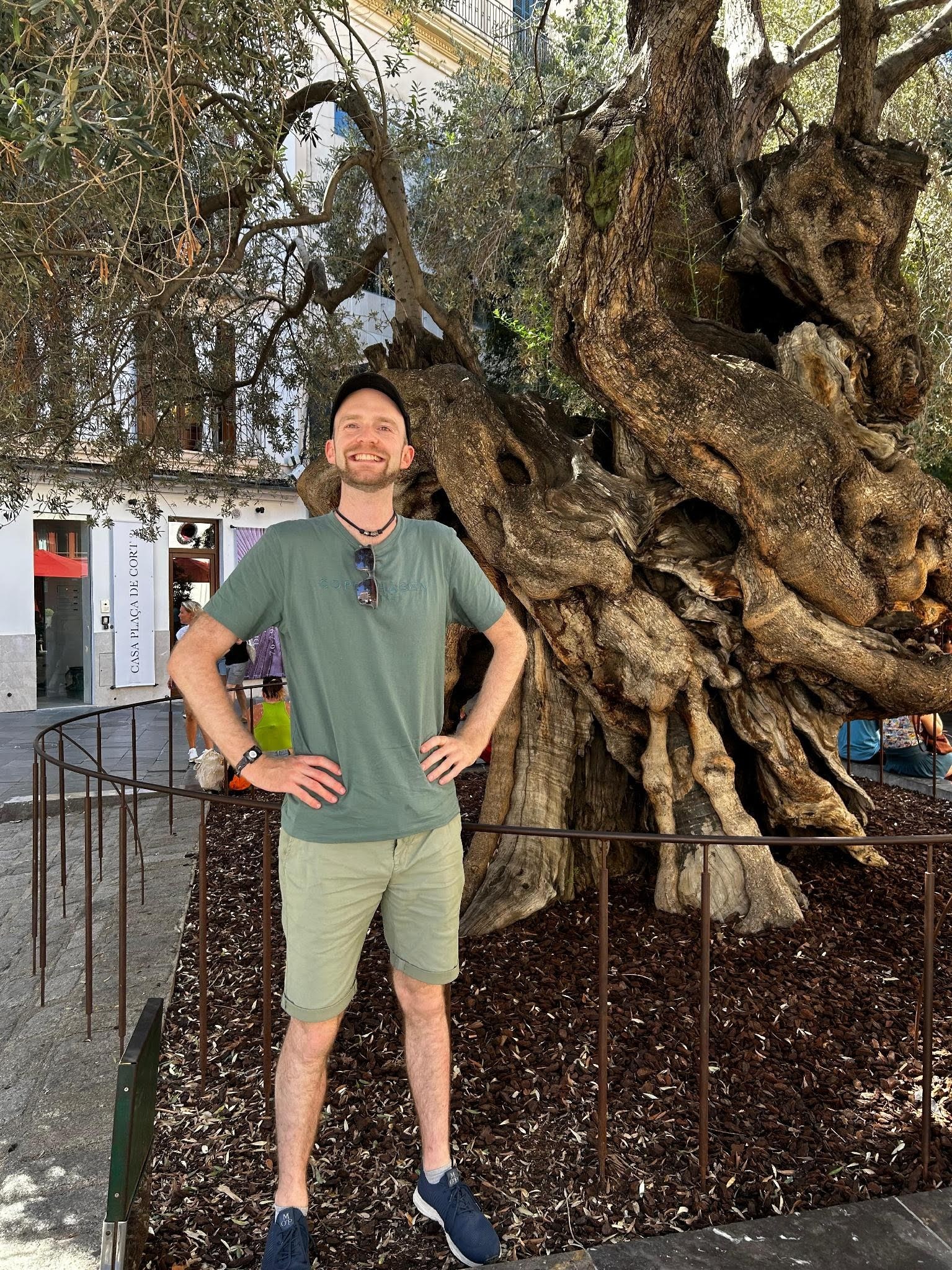
Rune Hansen is a Ph.D. student in the Environmental Genomics group of Dr. Eva Stukenbrock at the Christian Albrecht University of Kiel, Germany. He has always been fascinated by biology since his school years, so he decided to pursue a biology career. Soon after joining the university, he developed a strong appreciation for plant science and joined the lab of Professor Stukenbrock as a research assistant. He became deeply engaged in the research conducted in the Stukenbrock lab and decided to complete both his bachelor’s and master’s degrees there. During this time, he received the ZMB Student Award, which allowed him to work on his own research project. Upon completing his master’s degree on plant defense responses in wild grasses during Zymoseptoria infections, his thesis was awarded by the German Botanical Society. Rune also enjoys acting in theater and working with children, so he leads a children’s theater club as a creative balance in his life.
His recent MPMI publication, “Comparative Transcriptomic and Microscopic Analyses of a Wild Wheat Relative Reveal Novel Mechanisms of Immune Suppression by the Pathogen Zymoseptoria tritici” coauthored with Wagner C. Fagundes and Eva H. Stukenbrock identified new putative resistance mechanisms against Z. tritici and found that the infection by incompatible isolates is aborted at the substomatal cavity of the host plant. This work provides new valuable resource for wheat genetics and points to novel immune pathways that may determine resistance against Z. tritici.
What do you think is the most important or exciting finding from your paper?
We identified a close wild relative of wheat, Aegilops cylindrica, that is resistant to all Zymoseptoria tritici isolates collected from wheat plants. Z. tritici is responsible for the largest yield losses in European wheat production. By analyzing the resistance mechanism in this wild relative, we demonstrate its great potential as a novel reservoir of resistance genes for wheat improvement.
Was there a piece of data that was particularly challenging to obtain or a part of the project that was particularly difficult?
At the beginning of the project, our work on wild crop relatives relied on extensive herbarium collections containing both healthy and infected wild grass leaves that were sent to us from Iran by our colleague Alireza Alizadeh . Only because of this remarkable herbarium collection we were able to isolate a previously unknown wild Z. tritici lineage specialized on the wild grass Aegilops cylindrica.
What research project are you most excited about right now?
I am especially excited to unravel the mechanisms underlying host specialization in Zymoseptoria. Using different host plants and Zymoseptoria species, we screen for conserved and host-specific plant responses. We have developed a workflow that includes virus-induced gene silencing to test candidate genes identified through bioinformatic analyses directly in planta.
What drew you to your current lab?
I initially contacted my current lab as a student simply to earn some money alongside my studies. However, after only a few weeks, I became very fascinated by the research and the scientific questions being addressed. This enthusiasm led me to stay in the group not only for my master’s degree but ultimately to continue there for my Ph.D. project.
How did you choose to join your current graduate program ?
Joining the TransEvo graduate program was an easy decision for me. The program offers regular interactions with students from diverse research fields and provides the opportunity to gain experience in international research groups for several months during the Ph.D. From the very beginning, I knew that support would be available whenever needed and that the program would offer many opportunities for both scientific and personal development.
What advice would you give to starting graduate students?
It is always worth investing time in finding both people and a research topic that truly inspire you. Once you find the right combination, you can achieve everything.
Who has inspired you scientifically? Why?
When I was a small kid, my parents often took me into the forest, always equipped with magnifying glasses and insect identification books. While I had long been fascinated by biology, working closely with my supervisor and my colleague Wagner Fagundes sparked my interest in the scientific process itself. That was when I truly understood the potential of science and discovered the beauty of spending time in greenhouses and laboratories.
What is the greatest challenge you have encountered in your career? What did you do to overcome this challenge?
I joined my current lab as a student about one year after the first COVID-19 outbreak. At that time, all courses were held online, so I had no hands-on laboratory experience – not even pipetting. Thanks to the patience and support of my supervisor and co-author Wagner Fagundes, as well as many hours spent in the lab, I gradually became confident with routine laboratory work and eventually learned to truly enjoy it.
How can people find you on social media?
You can find me on Bluesky (ruhansen.bsky.social).
Is there anything else you would like to share in your Spotlight? If so, what is it?
Don’t lose your fascination and inspiration for science during your daily work routine. Take a step back and appreciate how amazing our work truly is. Never has science been more important than it is today.
Bonus question: What’s your favorite pathogen or disease?
I have to say Zymoseptoria. It surprises me every time I work with it and is a textbook example of evolution in action.
Bonus question: What’s your favorite molecular plant pathology-related article?
The first scientific article I ever read during my bachelor’s degree was the review article published in 2006 by Jones and Dangl titled “The Plant Immune System”. Although many important discoveries have been made since then, it is always a nice read. Seeing Jonathan Jones in person at the IS-MPMI conference in Cologne last year was a particularly exciting moment for me.